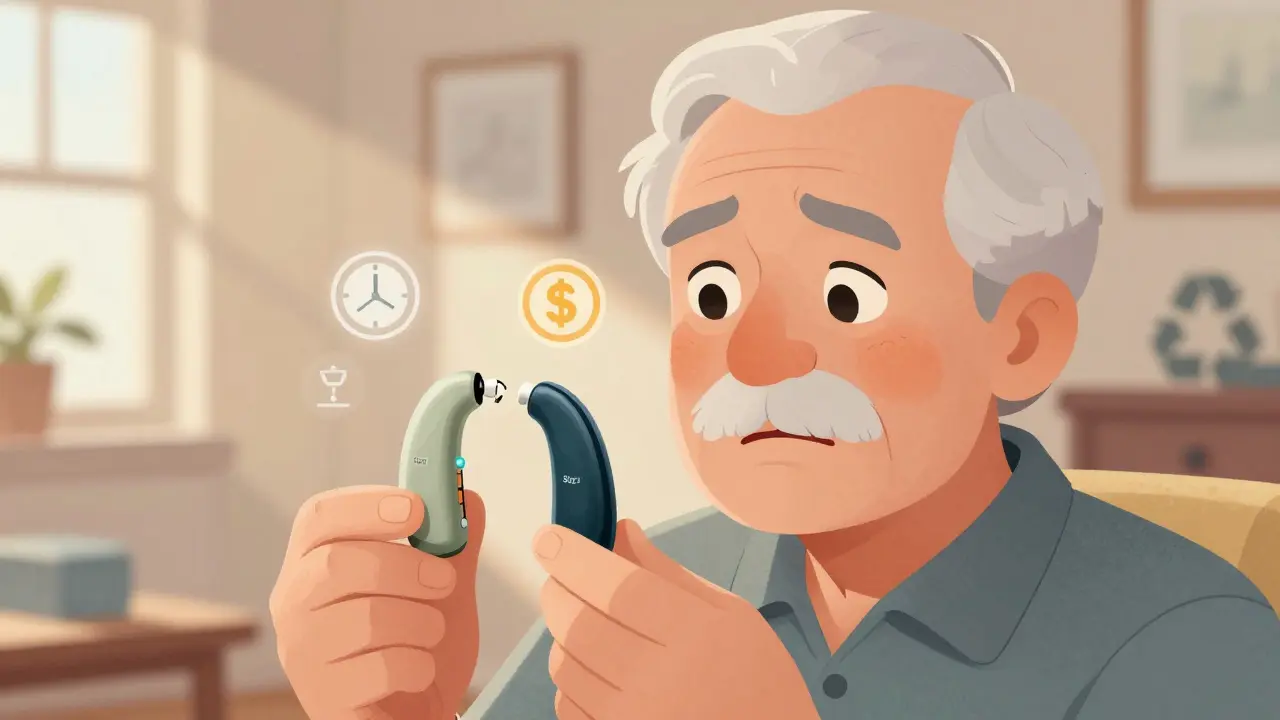
When you’re choosing a hearing aid, one of the most practical - and often overlooked - decisions is how it gets its power. Should you go with disposable hearing aid batteries or switch to a rechargeable system? It’s not just about convenience. It’s about your daily life, your budget, your environment, and even your dexterity. Let’s cut through the noise and lay out exactly what each option offers - and what it costs you in the long run.
How Disposable Hearing Aid Batteries Work
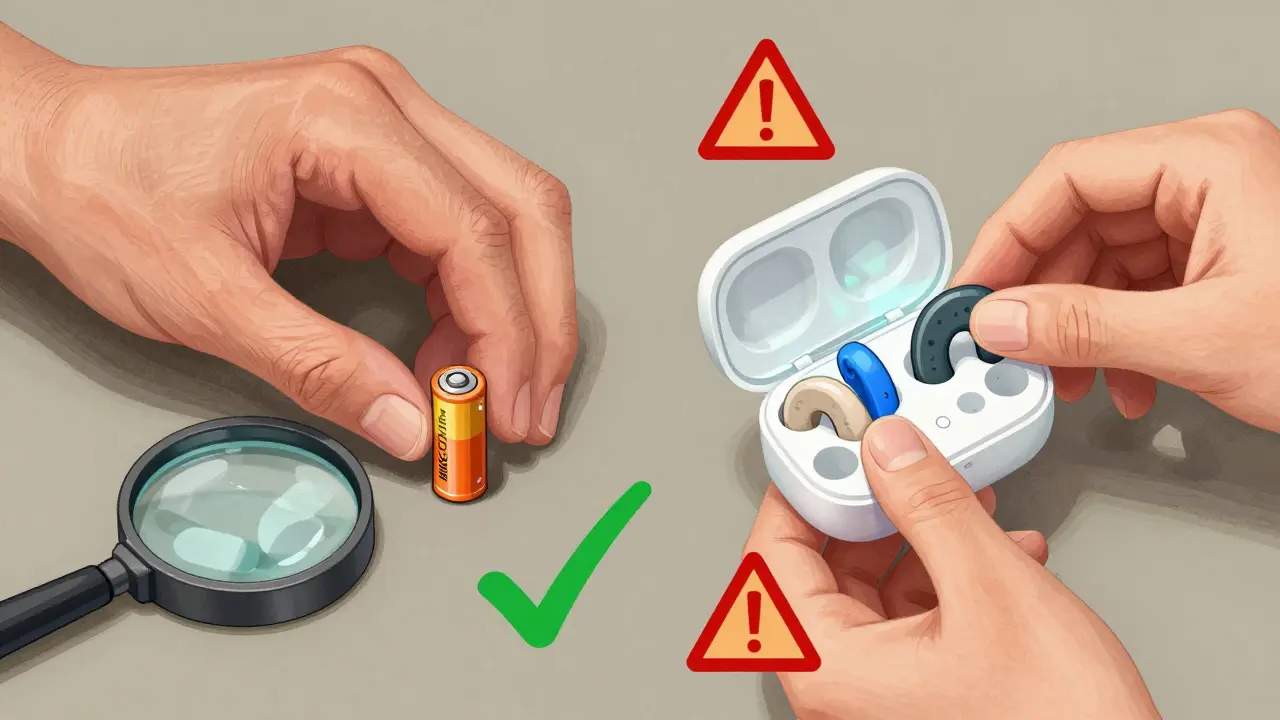
Disposable hearing aid batteries have been the standard for decades. These are small zinc-air batteries, activated when you pull off the tab and let air in. They come in four standard sizes: Size 10 (yellow), Size 312 (brown), Size 13 (orange), and Size 675 (blue). Each size matches different hearing aid models based on power needs. Size 10 lasts about 80-100 hours, while the larger Size 675 can go up to 325 hours.
One big advantage? You can carry spare batteries anywhere. A tiny case with 6-12 batteries fits in a wallet or pocket. If your hearing aid dies mid-meeting or while you’re traveling, you can swap it out in seconds. No charging. No waiting. Just pop in a fresh battery and you’re back in the game.
But here’s the catch: you’re constantly replacing them. Depending on how often you use your hearing aids - and whether you use features like Bluetooth streaming - you’ll go through one battery every 5 to 16 days. That adds up. For two hearing aids, you might use 50-100 batteries a year. At $6-$9 per 6-pack, that’s $50-$150 annually just for power.
And changing them isn’t always easy. If you have arthritis, shaky hands, or vision issues, handling those tiny batteries can be frustrating. The tab is hard to grip, the battery compartment is small, and inserting it wrong means you’re stuck until you try again. One user on Reddit said, “I used to cry trying to change my batteries. My fingers just wouldn’t cooperate.”
How Rechargeable Hearing Aids Work
Rechargeable hearing aids use built-in lithium-ion batteries - the same kind you find in smartphones and earbuds. Most models give you 16-30 hours of use per charge, with some newer ones like the Phonak Audeo reaching 8 hours from just a 30-minute quick charge. A full charge usually takes 3-6 hours, and most people plug them in overnight.
The big win? No more fumbling with tiny batteries. Just place your hearing aids in the charging case before bed, and they’re ready to go in the morning. For people with arthritis or limited hand mobility, this is a game-changer. A 2023 Arthritis Foundation survey found that 35% of hearing aid users over 70 struggle with fine motor tasks. For them, rechargeables aren’t a luxury - they’re essential.
Rechargeable systems also deliver more consistent sound. Unlike disposable batteries that slowly lose power (leading to quieter sound as they drain), lithium-ion batteries hold steady voltage until they’re nearly empty. That means your hearing aid doesn’t fade out mid-conversation.
But there’s a downside. If your charger breaks, your hearing aids are useless until you fix or replace it. And if you’re traveling without access to power - say, on a multi-day hike or a flight with no outlets - you’re stuck. Unlike disposables, you can’t just pull a spare from your pocket.
Also, rechargeable batteries don’t last forever. After 300-500 charge cycles (roughly 1-1.5 years), their capacity drops below 80%. At that point, you’ll need a professional to replace the internal battery - which can cost $100-$200, depending on the model. That’s not something you can DIY.
Cost Comparison: Upfront vs. Long-Term
Let’s talk money. Disposable batteries have a low upfront cost. You buy the hearing aid, and the batteries are extra - about $6-$9 for a 6-pack. No charger needed. Simple.
Rechargeable hearing aids? They cost more at first. The device itself is usually $200-$500 more than a comparable disposable model. And you’ll need to buy the charging case, which is often included but adds to the initial price.
But here’s where it flips: over time, rechargeables save you money. After 18-24 months, the cost of replacing disposable batteries equals the extra upfront cost of a rechargeable system. After that? You’re basically getting free power for years.
Think about it: if you spend $100 a year on batteries, that’s $500 in five years. A rechargeable system might cost $400 more upfront, but you’ll never buy another battery. Plus, most manufacturers include one or two battery replacements in the warranty. That’s another $200-$400 saved.
Environmental Impact Matters More Than You Think
Every year, the average hearing aid user throws away 300-400 disposable batteries. That’s over 1,500 tons of battery waste in the U.S. alone. Zinc and manganese in these batteries can leach into soil and water if not disposed of properly. In 38 U.S. states, you’re legally required to recycle them separately from household trash.
Rechargeable systems cut that waste dramatically. Instead of replacing batteries every week, you swap out the entire internal battery once every 1-1.5 years. That’s about 1-2 batteries per user per year. Multiply that across millions of users, and you’re talking about preventing over a million pounds of battery waste annually.
According to the EPA’s 2023 hearing aid waste report, 65% of new hearing aid users in 2023 said environmental impact was a factor in their choice. That’s not just buzzword talk - it’s a real shift in consumer behavior.
Who Should Stick With Disposable Batteries?
Despite the rise of rechargeables, disposables still have their place.
- Travelers - If you’re going camping, on a long flight, or to a country with unreliable electricity, carrying a few spare batteries is safer than relying on a charger.
- Users of CIC hearing aids - Completely-in-canal models are too small to fit a rechargeable battery. If you need the most discreet option, you’re stuck with disposables.
- People who hate routines - If you forget to charge your phone, you’ll probably forget to charge your hearing aids. For those who prefer “set it and forget it” without needing to remember a nightly ritual, disposables are simpler.
Also, if you live in an area with frequent power outages, or if you’re unsure about the longevity of your device, having a backup battery option gives you peace of mind.

Who Should Go Rechargeable?
Rechargeables are the clear winner for most people today - especially if:
- You’re over 65 and have arthritis, tremors, or weak grip
- You use your hearing aids 12+ hours a day
- You want to reduce clutter and simplify your routine
- You’re tired of buying batteries every few weeks
- You care about reducing waste
On HearingTracker.com, 68% of users over 65 prefer rechargeables. That number drops to 52% for users under 50 - not because they dislike the tech, but because they’re more likely to be tech-savvy enough to manage chargers and still value the backup option of disposables.
And let’s not forget reliability. While rechargeables score high on convenience (4.2/5 in Consumer Reports), they score lower on reliability (3.7/5). Why? Because chargers break, cords fray, and batteries eventually wear out. Disposable batteries, despite being a hassle to change, score 4.3/5 for reliability. No electronics. No charging. Just replace and go.
What’s Next? The Future of Hearing Aid Power
The market is shifting fast. In 2018, only 28% of new hearing aids were rechargeable. By 2023, that jumped to 72%. Experts predict 85% of new hearing aids will be rechargeable by 2027. Why? Because battery tech is improving.
Widex’s 2023 Evoke CR model now works reliably between 32°F and 104°F - no more worrying about cold weather killing your battery. Starkey introduced wireless charging, so you just drop your aids in a pad instead of lining them up perfectly. Rayovac’s new Ultra Plus batteries last 25% longer, extending disposable battery life without changing anything else.
And the next leap? Hybrid systems. Researchers at Stanford are testing micro-batteries that can be replaced like disposables - but are rechargeable. Imagine a tiny, replaceable power cell you swap monthly, not daily. That could bridge the gap between the two worlds.
For now, though, the choice is yours. Rechargeables are the future - and for most people, they’re the smarter, easier, greener choice. But if you’re on the move often, have a tiny hearing aid, or just don’t want to deal with tech, disposables still work.
Final Tip: Try Before You Buy
Many audiology clinics now let you test both systems for a week. Ask for a trial. See how you feel changing batteries versus plugging them in. See if you forget to charge. See if your hands still hurt. Don’t just go by what’s popular. Go by what fits your life.
Can I use rechargeable batteries in my existing hearing aids?
No. Rechargeable hearing aids have built-in batteries and charging circuits that aren’t compatible with disposable batteries. If your current hearing aids were designed for disposable batteries, you can’t retrofit them. You’d need to replace the entire device with a rechargeable model.
How long do rechargeable hearing aid batteries last before needing replacement?
Most lithium-ion batteries in hearing aids last 300-500 charge cycles, which typically translates to 1-1.5 years of daily use. After that, their capacity drops below 80%, and performance becomes unreliable. Replacement requires a professional technician and usually costs between $100 and $200.
Are disposable hearing aid batteries dangerous to the environment?
Yes, if thrown in the trash. Modern disposable hearing aid batteries are mercury-free but still contain zinc and manganese, which can leak into soil and water. In 38 U.S. states, they must be recycled separately. Improper disposal contributes to over 1,500 tons of battery waste in the U.S. each year.
Do rechargeable hearing aids work during power outages?
Not if they’re completely drained. If your hearing aids are out of charge and you don’t have a backup, you’re without sound until power returns. That’s why many users keep a small supply of disposable batteries on hand - just in case. Some newer models offer USB-C charging, so you can use a power bank during outages.
Which is cheaper in the long run: disposable or rechargeable?
Rechargeable systems become cheaper after 18-24 months of use. While they cost more upfront, you eliminate ongoing battery purchases. Over five years, most users save $200-$500 by switching to rechargeables, even after factoring in battery replacement costs.
Can I travel internationally with rechargeable hearing aids?
Yes - but you need to plan. Most charging cases work with standard USB-C or wall adapters, which are available worldwide. However, if you’re going somewhere with unreliable electricity or no outlets, carry a small supply of disposable batteries as backup. Some manufacturers sell travel cases with built-in power banks for exactly this reason.





14 Comments
So let me get this straight - we’re paying $500 extra for a hearing aid just so I can remember to plug it in at night? My phone forgets to charge itself and I’m supposed to babysit my hearing aids? Nah. I’ll keep my $6 batteries and my peace of mind.
I switched to rechargeables last year and I don’t know how I lived without them. My hands shake from arthritis - changing those tiny batteries was like doing surgery with oven mitts. Now I just drop them in the case like my AirPods. No more crying. No more frustration. Just silence when they die, not because I’m weak, but because the tech finally works for me.
Rechargeable hearing aids have improved dramatically since 2020. The lithium-ion cells now maintain 90% capacity after 400 cycles, and many models include automatic low-power mode that extends battery life by 15-20%. Also, most new chargers have USB-C and power bank compatibility - you can charge them from your car, laptop, or even a solar charger. The real issue isn’t the tech - it’s people still thinking in 2015 terms.
Disposable batteries cost less over time if you don’t use Bluetooth. If you just listen to TV and talk to people, you’ll go 10-14 days per battery. That’s like $40 a year. Rechargeable models start at $2,500. You’d need to use them for 8 years to break even. For most people, that’s longer than the device lasts.
Oh wow, so now we’re supposed to feel guilty for using batteries? Like, what, we’re polluting the planet by changing a tiny thing that fits on a fingernail? Meanwhile, my iPhone 15 gets thrown in the trash every 2 years and no one’s writing essays about it. This whole ‘eco-friendly hearing aid’ thing is just another way for companies to charge more and make you feel bad for not buying their overpriced gadget.
I’ve been using hearing aids for 17 years now, and I’ve tried everything - from zinc-air to lithium-ion. The truth is, no system is perfect. But I’ve learned that the real problem isn’t the battery - it’s the lack of support. No one tells you how to clean the charging contacts. No one shows you how to store them during travel. No one warns you that humidity kills rechargeables faster than cold weather. And when your charger breaks? Good luck finding a repair shop that doesn’t charge you half the price of a new hearing aid. It’s not about disposable vs rechargeable - it’s about how little the system cares about the people who depend on it.
So let me get this - you’re telling me that in 2024, we’re still debating whether people should be able to change a battery with their fingers? Like, is this a metaphor for capitalism? You want people to suffer through tiny plastic tabs because ‘tradition’? Meanwhile, the same companies that sell these devices also sell $800 smartwatches that charge wirelessly. Hmm. Interesting.
Rechargeables win for most people. But if you travel, have power issues, or just hate routines - stick with disposables. No shame. No guilt. Just pick what works. Simple.
It’s fascinating how we’ve anthropomorphized technology in this space. We don’t just use hearing aids - we bond with them. We resent the rechargeable case like it’s a lazy roommate. We curse the battery tab like it’s a personal insult. This isn’t just about power sources - it’s about autonomy, dignity, and the quiet desperation of aging in a world that assumes you’re either tech-savvy or broken. Maybe the real innovation isn’t the battery - it’s the empathy we’re finally starting to design into the system.
As an Indian engineer who worked on lithium-ion battery systems for 8 years, I can confirm: rechargeable hearing aids are superior in every technical metric. The energy density, cycle life, and voltage stability are orders of magnitude better than zinc-air. Anyone still using disposables is either clinging to outdated norms or hasn’t done the math. Also, if you’re worried about charging - buy a power bank. It’s 2024. Not 1994. 😎
Rechargeables are great until you forget to charge them. Then you’re deaf for 6 hours. Disposables? You’re never really out of luck. I keep 12 batteries in my glovebox. I’ve got one in my pocket. One in my wallet. One taped to my fridge. I don’t trust tech. I trust a tiny metal cylinder that lasts 100 hours. That’s real reliability. Not some app that says ‘battery at 78%’ while you’re on a plane with no outlets.
Let’s be real - the entire ‘rechargeable revolution’ is just a marketing ploy by companies who realized they could sell you a $3,000 device instead of a $1,500 one. And then they make you pay $150 to replace the battery after 18 months. It’s a trap. A beautifully designed, Bluetooth-enabled, eco-friendly trap. Meanwhile, my 2018 hearing aid with disposables still works fine. I don’t need a smartphone on my ear. I need to hear my granddaughter say ‘I love you.’ Not check a battery status.
I used to hate changing batteries until I started using the ones with the pull-tab that has a little grip. Now it’s easy. And I don’t have to remember to plug anything in. I just grab a new one. It’s like changing a lightbulb. Simple. Reliable. No tech. No drama. No guilt trips from strangers on the internet.
Here’s the real insight nobody’s talking about: the difference between disposable and rechargeable isn’t about power - it’s about identity. Disposable batteries = independence. You control the supply. Rechargeables = integration. You’re now part of a system - a charging ecosystem, a firmware update cycle, a warranty service chain. For some, that’s liberation. For others, it’s surrender. The tech didn’t change - our relationship with dependency did. And that’s the quiet revolution happening in every hearing aid case.