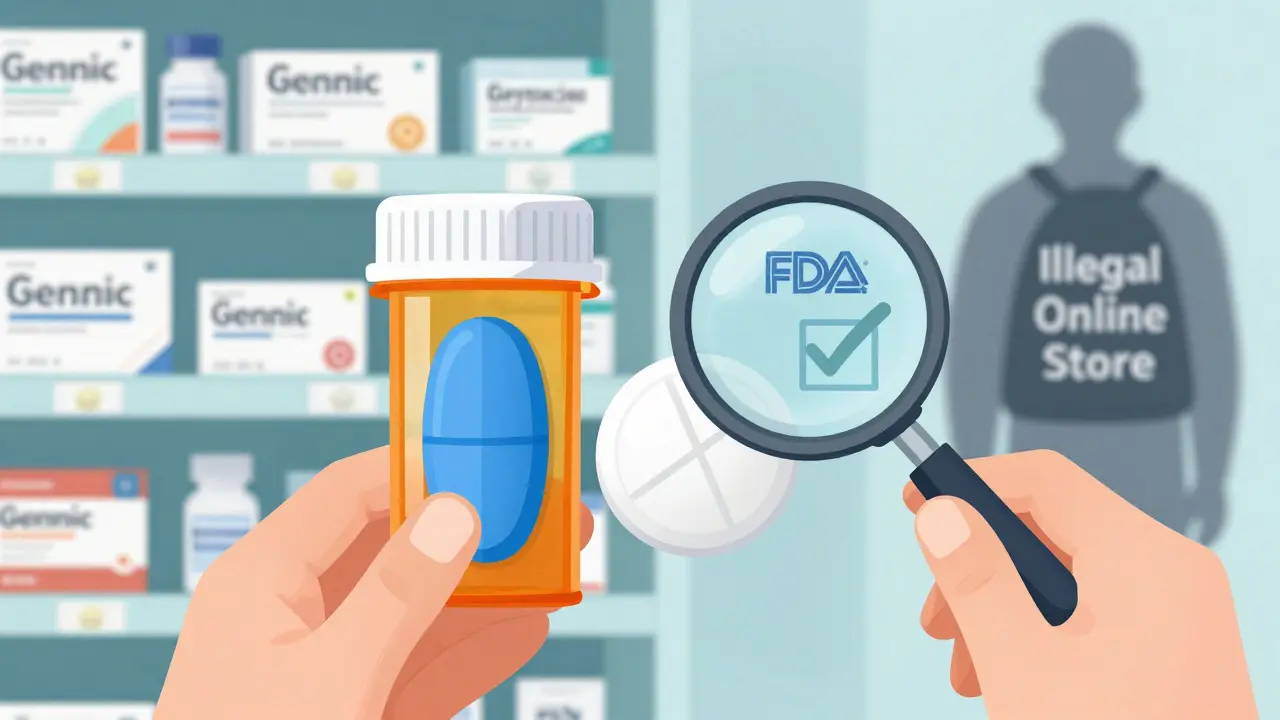
When you pick up a prescription, you might notice your pill looks different than last time. Maybe it’s a different color, shape, or has strange markings. If you’re worried it’s not the real thing - you’re not alone. Many people assume generic drugs are cheaper because they’re lower quality. But that’s not true. Legitimate generic drugs are just as safe and effective as brand-name versions. The real danger isn’t the generics themselves - it’s the fake ones slipping through unregulated channels.
What Makes a Generic Drug Legitimate?
A legitimate generic drug contains the exact same active ingredient as its brand-name counterpart. It works the same way in your body. The FDA requires these drugs to meet strict bioequivalence standards: the amount of drug absorbed into your bloodstream must be within 80% to 125% of the brand-name version. In practice, most generics perform nearly identically. A 2021 study of over 2,000 generic drugs found that 98.7% met this standard, with average absorption levels matching the brand within 1%. The difference you see? That’s not quality. It’s the law. Brand-name companies hold patents on the pill’s appearance - color, shape, coating. Once the patent expires, generic makers can’t copy that look. So they change it. A blue pill might become white. A capsule might turn into a tablet. That’s normal. What’s not normal? Cracked tablets, uneven edges, or powdery residue in the bottle.How to Spot a Fake Generic Drug
Counterfeit drugs are a real threat. The World Health Organization estimates 1 in 10 medicines in low- and middle-income countries are fake. Even in the U.S., illegal online pharmacies sell dangerous imitations. Here’s what to look for:- Physical appearance: Legitimate generics have clean, factory-made surfaces. No cracks, bubbles, or crumbling edges. If the tablet looks like it was hand-pressed, walk away.
- Imprinting: Every FDA-approved pill has a unique code stamped on it - letters and numbers that identify the drug, strength, and manufacturer. If the imprint is blurry, missing, or looks hand-drawn, it’s suspicious.
- Labeling: The container must show the manufacturer’s name, drug name, strength, lot number, and expiration date. If it’s missing any of these, or if the text is smudged or in a foreign language on a U.S.-sold product, it’s likely illegal.
- Packaging: Legitimate drugs come in sealed, tamper-evident containers. If you’re handed a generic drug in a plastic bag from a non-pharmacy source - that’s a red flag. In fact, 63% of counterfeit reports to the FDA involved drugs in unmarked bags.
- Odor or taste: If your medication has a strange chemical smell or bitter aftertaste you’ve never noticed before, it could be a sign of contamination.
Verify the Pharmacy First
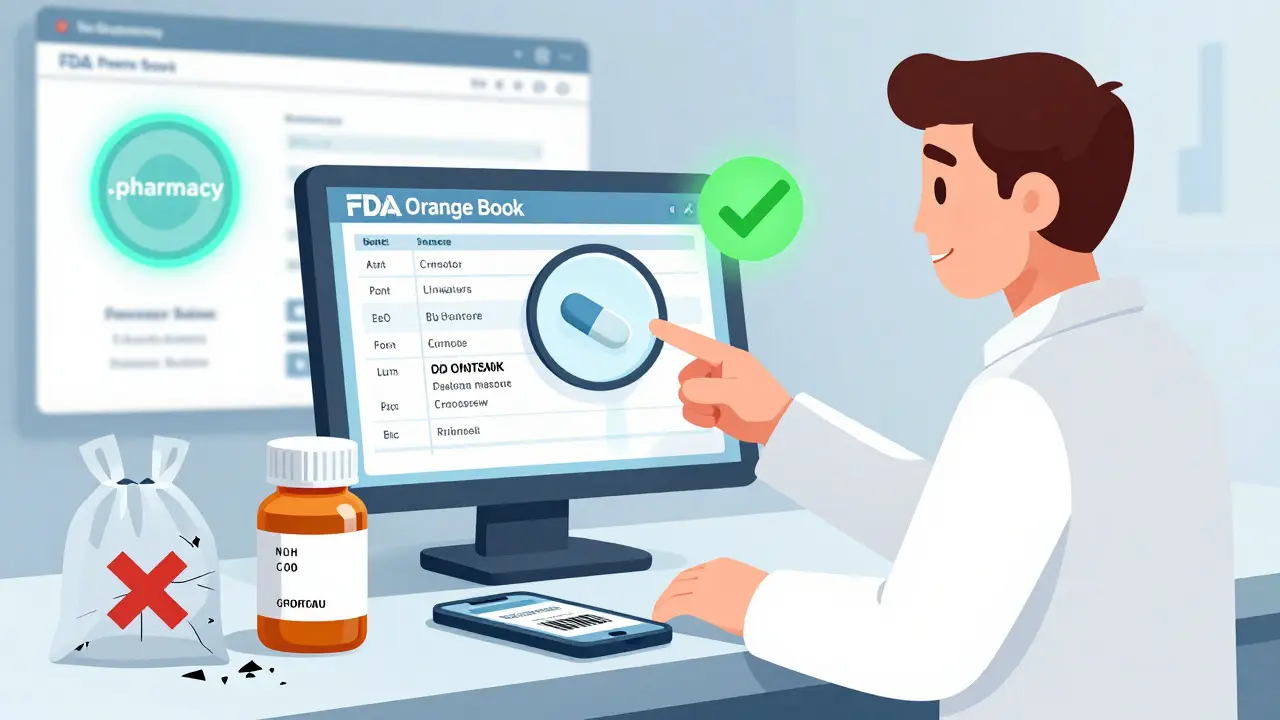
Where you buy the drug matters more than you think. Over 96% of websites selling counterfeit drugs operate outside legal supply chains. The safest way to avoid fakes? Buy from a licensed pharmacy.- Look for the .pharmacy seal on websites. This means the pharmacy has been verified by the National Association of Boards of Pharmacy (NABP).
- Check if the pharmacy requires a valid prescription. Legitimate pharmacies never sell prescription drugs without one.
- For local pharmacies, confirm they’re licensed by your state board. Most state boards have online directories.
- Stick to well-known chains like CVS, Walgreens, or Costco. They follow strict FDA supply chain rules.
Use the FDA’s Tools
The FDA doesn’t just approve generics - it tracks them. You can verify your drug using two free tools:- The Orange Book: This database lists all approved generics and their brand-name equivalents. Search by drug name and find the approved manufacturer and product code. If your pill doesn’t match the listed version, ask your pharmacist.
- Drug Supply Chain Security Act (DSCSA): Since late 2023, every prescription drug in the U.S. has a unique serial number. Many generics now have a 2D barcode on the packaging. Use your phone’s camera or apps like MediSafe to scan it. The app will confirm if the drug is legitimate and traceable through the supply chain.
What to Do If Something Feels Off
If your pill looks wrong, doesn’t work as expected, or causes new side effects, don’t ignore it. Here’s what to do:- Stop taking it.
- Call your pharmacist. Ask if they can check the lot number against FDA recall databases.
- Take a photo of the packaging and pill.
- Report it to the FDA’s MedWatch program. You can file a report online in under 5 minutes. This helps the FDA track counterfeit trends.
Why Legitimate Generics Are Safe - and Smart
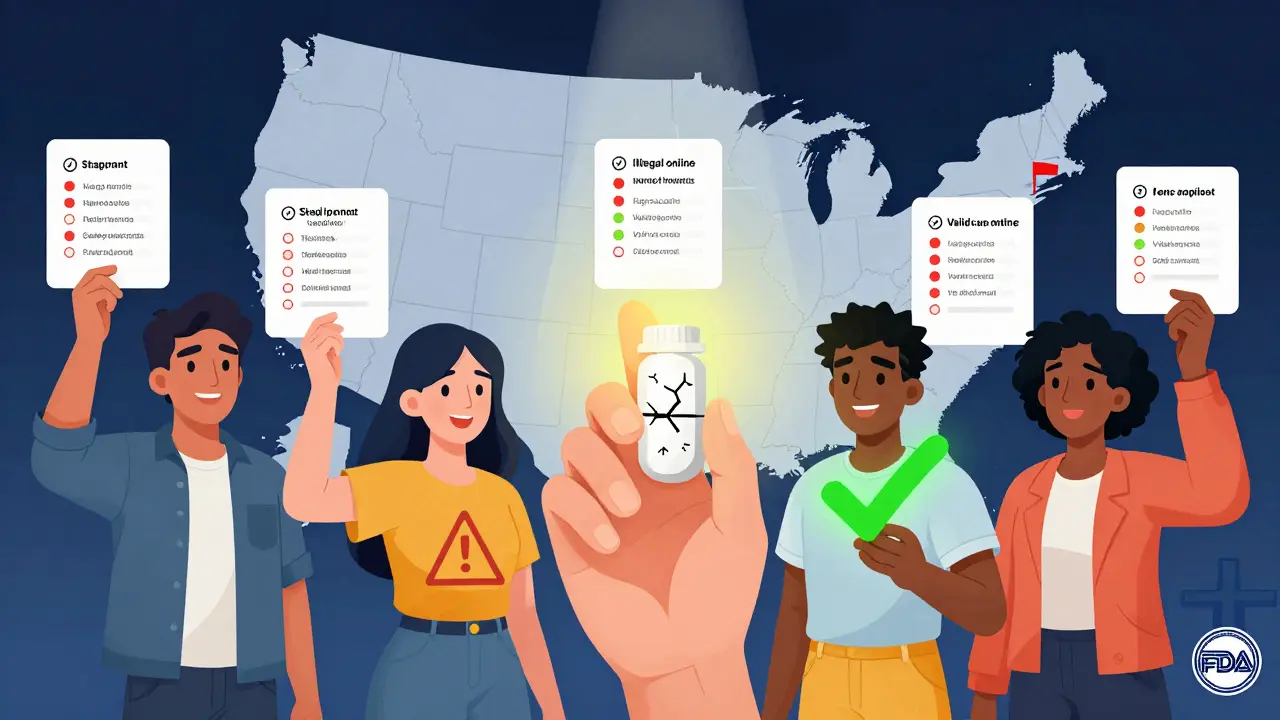
Generic drugs save the U.S. healthcare system over $370 billion a year. They’re not second-rate. They’re regulated just as strictly as brand-name drugs. Manufacturers must pass FDA inspections every 2-3 years. The FDA tests over 1,000 generic samples annually. Companies like Teva and Sandoz, which produce millions of doses, have quality ratings above 4.5 out of 5 based on verified consumer reviews. The only time a generic drug fails is when it’s not made by a licensed manufacturer - or when it’s sold through illegal channels. That’s why verification matters. Not because generics are risky - but because criminals are getting smarter.Quick Checklist: Is Your Generic Drug Legitimate?
Before you take your next generic prescription, run through this quick checklist:
- ✅ The pill has a clear, sharp imprint (not smudged or missing)
- ✅ The packaging has the manufacturer’s name, lot number, and expiration date
- ✅ The pharmacy is licensed or has a .pharmacy website
- ✅ The drug was dispensed with a valid prescription
- ✅ The pill has no unusual smell, taste, or texture
- ✅ The container is sealed and tamper-evident
- ✅ The color/shape matches the description in the FDA’s Orange Book
If all these boxes are checked - you’re good. If even one isn’t, ask questions. Don’t guess.
Are generic drugs as effective as brand-name drugs?
Yes, when they’re legitimate. The FDA requires generic drugs to prove they deliver the same amount of active ingredient into your bloodstream at the same rate as the brand-name version. Studies show 98.7% of approved generics meet this standard. If your generic works the same way and you don’t notice a change in effectiveness, it’s doing its job.
Why do generic pills look different than brand-name ones?
Brand-name companies own patents on the pill’s color, shape, and coating. Once those patents expire, generic manufacturers can’t copy them exactly. So they change the appearance - but not the active ingredient. A blue, oval pill might become a white, round tablet. That’s normal. If the pill looks handmade or has uneven markings, that’s not.
Can I trust online pharmacies that sell generics?
Only if they’re verified. Look for the .pharmacy seal on the website. That means the pharmacy has been checked by the National Association of Boards of Pharmacy. Avoid sites that don’t require a prescription, offer drugs at prices that seem too good to be true, or ship from overseas. Over 96% of online pharmacies selling counterfeit drugs operate illegally.
What should I do if I think I got a fake generic drug?
Stop taking it immediately. Keep the packaging and take photos. Call your pharmacist to check the lot number. Then report it to the FDA’s MedWatch program. You can file a report online in minutes. This helps the FDA track fake drugs and protect others.
Do generic drugs have the same side effects as brand-name drugs?
The active ingredient is the same, so the main side effects should be identical. But inactive ingredients - like fillers, dyes, or coatings - can vary. Sometimes these cause minor differences in how the drug is absorbed or how it feels in your stomach. If you notice new side effects after switching to a generic, talk to your doctor. It’s rare, but possible.

13 Comments
Let me tell you something real quick - generics aren't just safe, they're genius. The FDA doesn't mess around. They test every batch like it's their job (because it is). I've been taking generic metformin for five years. Same results. Same side effects. Same damn life. The only difference? My wallet stopped crying.
And yeah, the pill looks different. Big deal. Your iPhone doesn't look like the first model either. That doesn't mean it's broken. Stop judging a drug by its outfit.
Also, if you're buying from some sketchy website that says '24-hour delivery' and 'no prescription needed' - you're not saving money. You're just funding a Russian bot farm. Don't be that guy.
Oh honey. You think the FDA is some saintly guardian of your health? Please. They approve 98.7% of generics because they're overwhelmed, not because they're meticulous. I worked in pharma compliance. The inspections? A joke. Two guys in a van show up, take a selfie with the factory sign, and leave. Meanwhile, some factory in Mumbai is printing pills with chalk and glitter.
And don't get me started on the Orange Book. It's like a 1998 Geocities page with a .gov domain. If you actually trust that, you probably still believe the moon landing was real.
Always check the lot number. If your pharmacist can't verify it in seconds, find a new one. Simple.
I used to freak out every time my generic looked different. Then I started scanning the barcode with MediSafe. Turns out 9 times outta 10, it's legit. The app even tells you where it came from. Mind blown.
Now I just trust the system. And my pharmacist. She's got a tattoo of a pill bottle. That's commitment.
They’re lying to you. The FDA doesn’t test every batch. They rely on ‘self-reporting’ from manufacturers. That’s why 63% of counterfeit drugs are found in unmarked bags - because they’re never supposed to be in bags at all. The system is rigged. Big Pharma wants you scared of generics so you’ll keep paying $300 for the same pill with a different logo.
And don’t even get me started on the .pharmacy seal. That’s just another marketing gimmick. I’ve seen legit pharmacies without it and sketchy ones with it. It’s all smoke and mirrors.
Only way to be safe? Buy from Canada. They actually regulate stuff. 🇨🇦
Yo, I get it. Change is scary. But your meds aren't a fashion show. If the pill looks weird, sure - ask questions. But don't panic. The system works way better than you think.
I switched my blood pressure med to generic last year. Saved $120 a month. Still feels great. My doctor even said, 'Good job being smart.'
Don't let fear of a different color stop you from living. The real risk? Not taking your meds at all. That's the real villain here.
Generic drugs are fine I guess. I mean, if you're okay with maybe dying because you saved $20. The FDA doesn't care. They're just happy the cost went down. My cousin took a generic and had a stroke. Coincidence? Probably. But I'm not risking it.
Brand name. Always. I don't care how much it costs. My life isn't a spreadsheet.
There is a sacred covenant between patient and pharmacy. When you hand over your prescription, you are entrusting your very being to the integrity of the supply chain. To reduce this to a barcode scan or a color comparison is to reduce medicine to a commodity. This is not a product. This is a lifeline.
And yet - we allow it. We let algorithms decide our health. We let corporations choose our dosage. We let convenience override conscience.
Perhaps the real danger is not the counterfeit pill… but our willingness to accept it.
I think we're missing the bigger picture here. The fact that we even have to question whether our pills are real says something about how broken our healthcare system is. We live in a world where a man can't trust the medicine he needs to survive because the profit motive drowned out the duty to care.
Generics aren't the problem. The system is. Why should I have to scan a barcode to feel safe? Why should my life depend on whether a pharmacy has a .pharmacy seal?
We need systemic change. Not just better tools. We need a moral compass back in medicine.
Oh look, another post from someone who thinks ‘FDA approved’ is a magic spell. You know what’s FDA approved? Snake oil. And that one weird Russian vitamin that claims to cure cancer and give you abs. Just because something has a stamp doesn’t mean it’s not garbage.
Also, ‘teva and sandoz’ - names that sound like failed rock bands. You really trust your heart to a company called ‘Sandoz’? Sounds like a villain from a 90s cartoon.
And don’t even get me started on the Orange Book. That thing hasn’t been updated since the Bush administration. I bet half the entries are still in Comic Sans.
My mom took a generic and it made her vomit for 3 days. So yeah, they’re not all the same. Just saying. 😒
AMERICA IS BEING POISONED BY CHINA AND INDIA AND NOBODY CARES 😭
THE FDA IS A CORPORATE TOY
BRAND NAME ONLY OR WE ALL DIE 🇺🇸💊
STOP LETTING THEM STEAL OUR HEALTH
BUY LOCAL OR DIE TRYING
Good info. I always check the imprint and the pharmacy. Simple. Works. No drama.
Also, if your pill tastes weird - just ask. Pharmacists love explaining this stuff. They're basically medicine detectives.