

Walking outside in Dunedin on a gray winter day, you might notice how little the sun seems to do. That’s exactly why buying Vitamin D online has become such a critical part of daily health routines for millions of people. It’s not just about avoiding rickets or brittle bones anymore; it’s about immune support, mood stability, and muscle function. But with thousands of bottles sitting on virtual shelves, knowing where to click and what to look for can feel overwhelming.
You don’t need a prescription to get this essential nutrient, but you do need a strategy. Buying online offers convenience, yes, but it also carries risks if you pick the wrong retailer or the wrong form. This guide cuts through the noise to show you exactly where to buy, what forms work best, and how to ensure you’re getting a product that actually works.
Why You Should Consider Buying Vitamin D Online
The shift toward purchasing supplements online isn’t just about laziness; it’s about access and consistency. In many parts of the world, including New Zealand, sunlight exposure is insufficient for optimal Vitamin D synthesis during autumn and winter. Your skin needs direct UVB radiation to produce Vitamin D, but cloud cover, sunscreen use, and indoor lifestyles often block that pathway.
When you buy online, you gain three distinct advantages:
- Consistency: Subscriptions from retailers like Thrive Market or major pharmacies ensure you never run out mid-cycle.
- Selection: Physical stores often stock only a few brands. Online platforms offer dozens of formulations, from high-potency softgels to sublingual drops.
- Price Transparency: You can easily compare cost per milligram (mcg) or International Unit (IU), which is crucial because Vitamin D is a long-term supplement.
However, convenience shouldn’t compromise quality. The market is flooded with unregulated products. Choosing a reputable seller is your first line of defense against ineffective or contaminated supplements.
Where to Buy Vitamin D: Trusted Retailers
Not all online sellers are created equal. Some prioritize speed, while others prioritize third-party testing and purity. Here is a breakdown of the most reliable places to purchase Vitamin D supplements online, categorized by their strengths.
| Retailer | Best For | Key Feature | Shipping/Convenience |
|---|---|---|---|
| Walgreens | Immediate Access | Buy online, pick up in-store same-day | Fast local pickup or standard delivery |
| Puritan's Pride | Quality Assurance | Products tested up to 15 times for potency | Direct-to-consumer shipping |
| Thrive Market | Budget & Bulk | Free shipping on most orders; membership discounts | Subscription model saves money |
| Walmart | Brand Variety | Wide range of big-name brands like Nature Made | Same-day delivery via grocery partners |
| CVS Pharmacy | Expert Guidance | Dedicated pharmacist support for dosage questions | Pharmacy pickup or home delivery |
Walgreens and CVS Pharmacy are ideal if you want the security of a brick-and-mortar presence. You can order online and pick up your bottle at the pharmacy counter within hours. This is perfect if you need advice from a pharmacist about interactions with other medications.
On the other hand, Puritan's Pride stands out for rigorous quality control. Their Vitamin D3 supplements are manufactured in the U.S.A. with globally sourced ingredients and undergo extensive inspection. If you are skeptical about supplement purity, this is a safe bet. Meanwhile, Thrive Market appeals to those who view Vitamin D as a staple rather than an occasional fix. Their subscription model lowers the long-term cost significantly.
Choosing the Right Form: Softgels, Gummies, or Drops?
The format of your supplement matters more than you might think. Absorption rates vary wildly between types. Here is how to choose based on your lifestyle and biology.
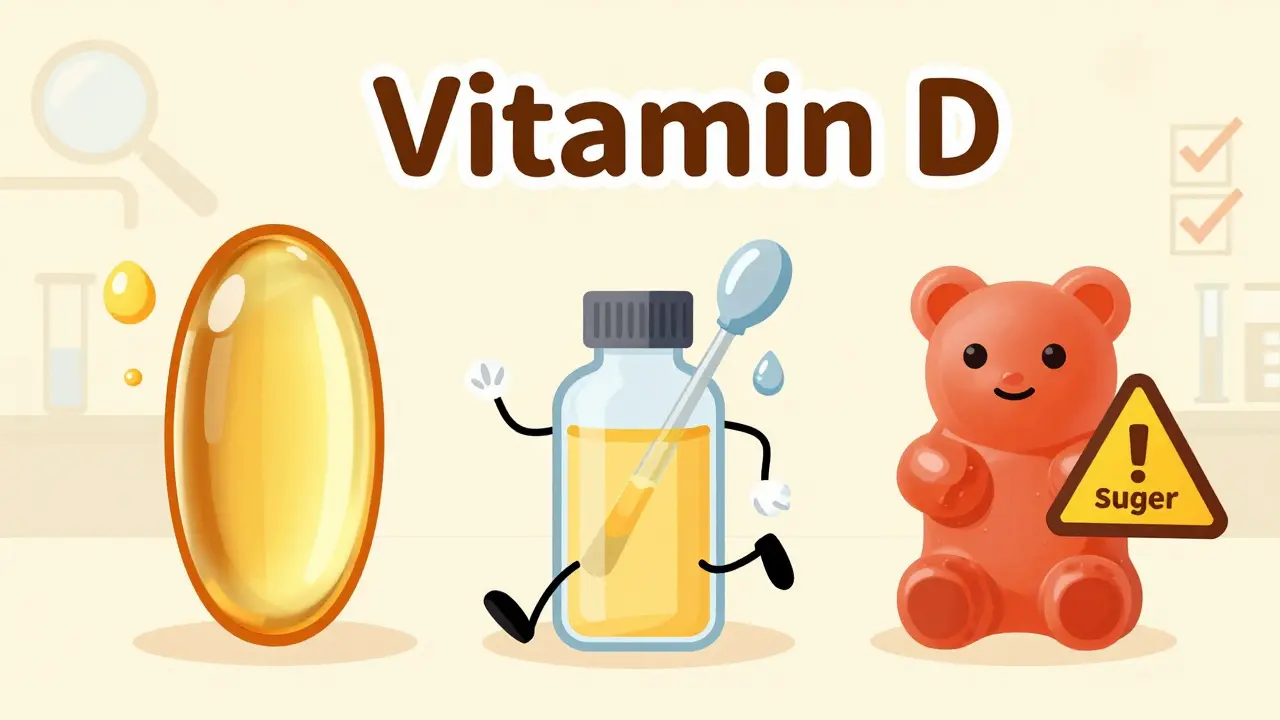
Softgels: These are the gold standard for most adults. They usually contain Vitamin D3 (cholecalciferol) suspended in oil, which aids absorption since Vitamin D is fat-soluble. Brands like Nature Made offer 2000 IU softgels that are easy to swallow and highly bioavailable. If you have no trouble swallowing pills, start here.
Liquid Drops: Liquid forms bypass the digestive breakdown required for tablets. They absorb quickly into the bloodstream through the mucous membranes under the tongue (sublingual) or directly in the stomach. This is excellent for seniors or anyone with digestive issues. Just remember to store them properly, as light can degrade liquid vitamins over time.
Gummies: Popular for taste, gummies are great for kids or people who hate pills. However, be cautious. Gummies often contain sugar and may have lower doses per piece compared to softgels. Also, some gummies use Vitamin D2 (ergocalciferol), which is less effective at raising blood levels than D3. Always check the label for "D3" specifically.
Chewables and Wafers: These are convenient for travel but can leave a chalky aftertaste. Ensure they include fats or oils to help your body absorb the nutrient, otherwise, you might be flushing expensive nutrients down the drain.
Understanding Dosage: How Much Do You Actually Need?
This is where most people make mistakes. They assume more is better, or they stick to the minimum recommended daily allowance without considering their current deficiency levels.
The general recommendation for maintaining healthy bone density and immune function is between 600 and 800 IU (15-20 mcg) per day for most adults. However, recent research suggests that many individuals, especially those with limited sun exposure, may benefit from 1000 to 2000 IU (25-50 mcg) daily.
If you suspect a severe deficiency-symptoms include chronic fatigue, bone pain, or frequent illnesses-you should consult a healthcare provider before jumping to high-dose supplements (5000 IU+). Taking too much Vitamin D can lead to toxicity, causing calcium buildup in the blood, which harms your kidneys and heart.
A simple blood test for 25-hydroxyvitamin D can tell you exactly where you stand. Use this data to tailor your online purchase. If you are deficient, you might buy a higher potency bottle for a short period, then switch to a maintenance dose available at Star Market or Haggen for everyday use.
Safety First: What to Look for on the Label
Before you add any bottle to your cart, scrutinize the label. The supplement industry is not as tightly regulated as pharmaceuticals, so vigilance is key.
- Type of Vitamin D: Look for Vitamin D3 (cholecalciferol). It is the natural form found in humans and is more effective at raising blood levels than Vitamin D2 (ergocalciferol), which is derived from plants.
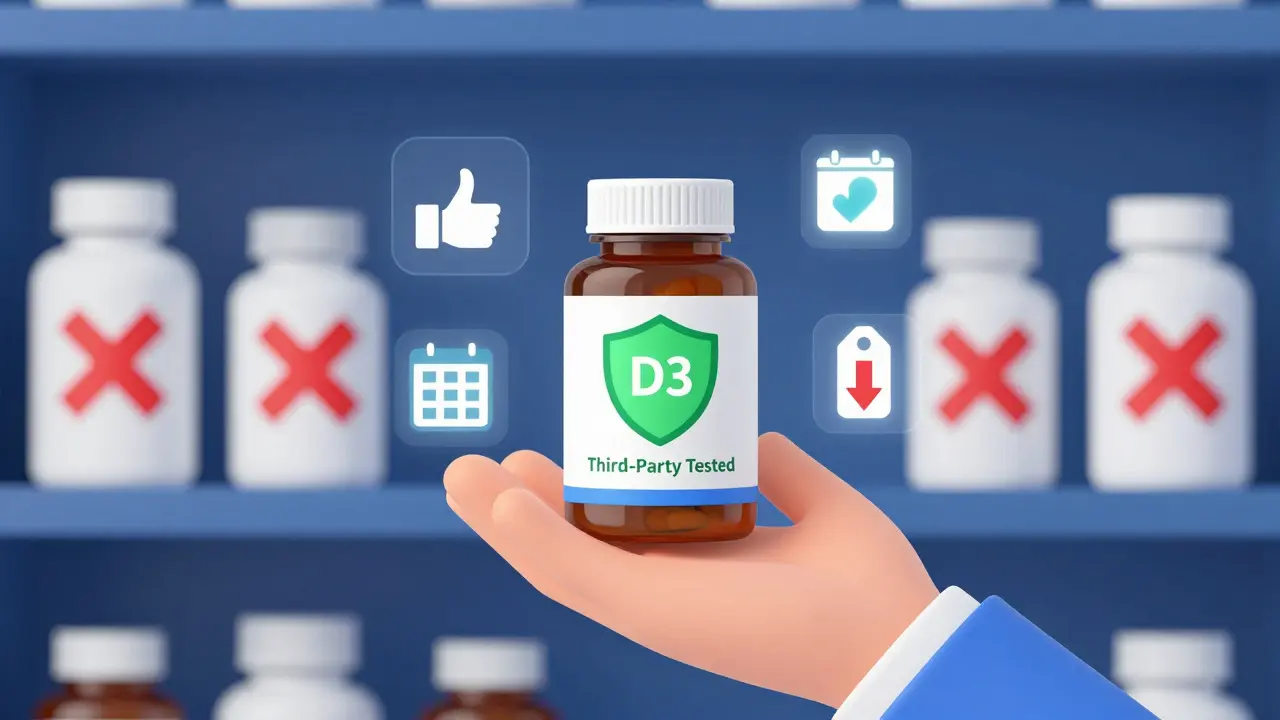
- Third-Party Testing: Look for seals from organizations like USP (United States Pharmacopeia), NSF International, or ConsumerLab. These indicate the product has been tested for purity, potency, and absence of contaminants like heavy metals.
- Carrier Oil: Since Vitamin D is fat-soluble, it absorbs best when taken with a meal containing fat. Softgels often include olive oil, coconut oil, or MCT oil. If you buy a dry tablet, plan to take it with avocado, eggs, or nuts.
- Allergen Information: Gelatin capsules are common in softgels. If you are vegan, look for vegetable-based capsules or liquid drops. Gummies often contain gelatin unless specified otherwise.
Reputable retailers like Puritan's Pride explicitly state their testing protocols on their websites. Don’t hesitate to email customer service if the information isn’t clear. A legitimate company will provide certificates of analysis upon request.
Common Mistakes to Avoid When Buying Online
Even experienced shoppers slip up. Here are the pitfalls to avoid to ensure your investment pays off.
Ignoring Expiration Dates: Vitamin D degrades over time, especially when exposed to heat and light. When buying online, check the estimated delivery date. If the product sits in a hot warehouse for weeks before reaching you, its potency may be compromised. Buy from retailers with fast shipping options like Walmart’s same-day delivery or Walgreens’ rapid fulfillment centers.
Falling for "Natural" Marketing Hype: Terms like "natural," "organic," or "wild-crafted" sound appealing but mean little for synthetic vitamins. Vitamin D3 is chemically identical whether it comes from lanolin (sheep’s wool) or lichen (vegan source). Focus on the chemical structure and dosage, not the marketing buzzwords.
Buying Unbranded Products: Stick to known brands like Nature Made, Puritan's Pride, or house brands from trusted pharmacies like CVS. Random brands sold on open marketplaces often lack quality control. If the price seems too good to be true, it probably is.
Next Steps: Building Your Routine
Once you’ve selected your supplier and form, consistency is the final hurdle. Set a reminder on your phone to take your supplement with your largest meal of the day, preferably breakfast or lunch, to maximize absorption. Pair it with other fat-soluble vitamins like K2 and E if your doctor recommends it, as they work synergistically.
Re-evaluate your needs every six months. Seasonal changes affect your sun exposure. In summer, you might reduce your dose; in winter, you might increase it. By understanding how and where to buy Vitamin D online, you take control of your health proactively, ensuring you stay strong and resilient year-round.
Is it safe to buy Vitamin D online?
Yes, it is safe provided you purchase from reputable retailers like Walgreens, CVS, Puritan's Pride, or Thrive Market. Avoid unknown sellers on open marketplaces. Look for third-party testing seals (USP, NSF) to ensure the product contains what the label claims and is free from contaminants.
What is the difference between Vitamin D2 and D3?
Vitamin D3 (cholecalciferol) is the form naturally produced by your skin and is more effective at raising blood levels of Vitamin D. Vitamin D2 (ergocalciferol) is derived from plants and fungi. For supplementation, D3 is generally preferred by experts for its superior bioavailability and longer half-life in the body.
How much Vitamin D should I take daily?
Most adults need between 600 and 2000 IU (15-50 mcg) daily to maintain healthy levels. However, individual needs vary based on sun exposure, skin tone, age, and existing deficiency. A blood test is the best way to determine your specific requirement. Consult your doctor before taking high doses (above 4000 IU).
Which form of Vitamin D is absorbed best?
Liquid drops and softgels containing oil are typically the most bioavailable because Vitamin D is fat-soluble. Sublingual liquids absorb quickly through the mouth lining. If you take dry tablets or gummies, ensure you consume them with a meal containing fat to aid absorption.
Can I get Vitamin D from food alone?
It is difficult to get sufficient Vitamin D from food alone. Fatty fish (salmon, mackerel), egg yolks, and fortified foods like milk and cereal contain small amounts. For most people, especially in regions with limited sunlight, supplements are necessary to reach optimal levels.
Do I need a prescription to buy Vitamin D?
No, Vitamin D supplements are available over-the-counter (OTC) at all major retailers like Walgreens, CVS, Walmart, and online platforms. No prescription is required for standard dosages. High-dose prescriptions exist but are rare and managed by doctors.
What are the signs of Vitamin D deficiency?
Common signs include persistent fatigue, bone or back pain, frequent infections, slow wound healing, muscle weakness, and mood changes like depression. If you experience these symptoms, consider getting your Vitamin D levels checked and discuss supplementation with your healthcare provider.
Is there a risk of Vitamin D toxicity?
Yes, though it is rare. Toxicity occurs from excessive supplementation, not sun exposure. Symptoms include nausea, vomiting, weakness, and confusion. Long-term high doses can lead to hypercalcemia (high blood calcium), damaging kidneys and heart. Stick to recommended doses unless directed otherwise by a doctor.