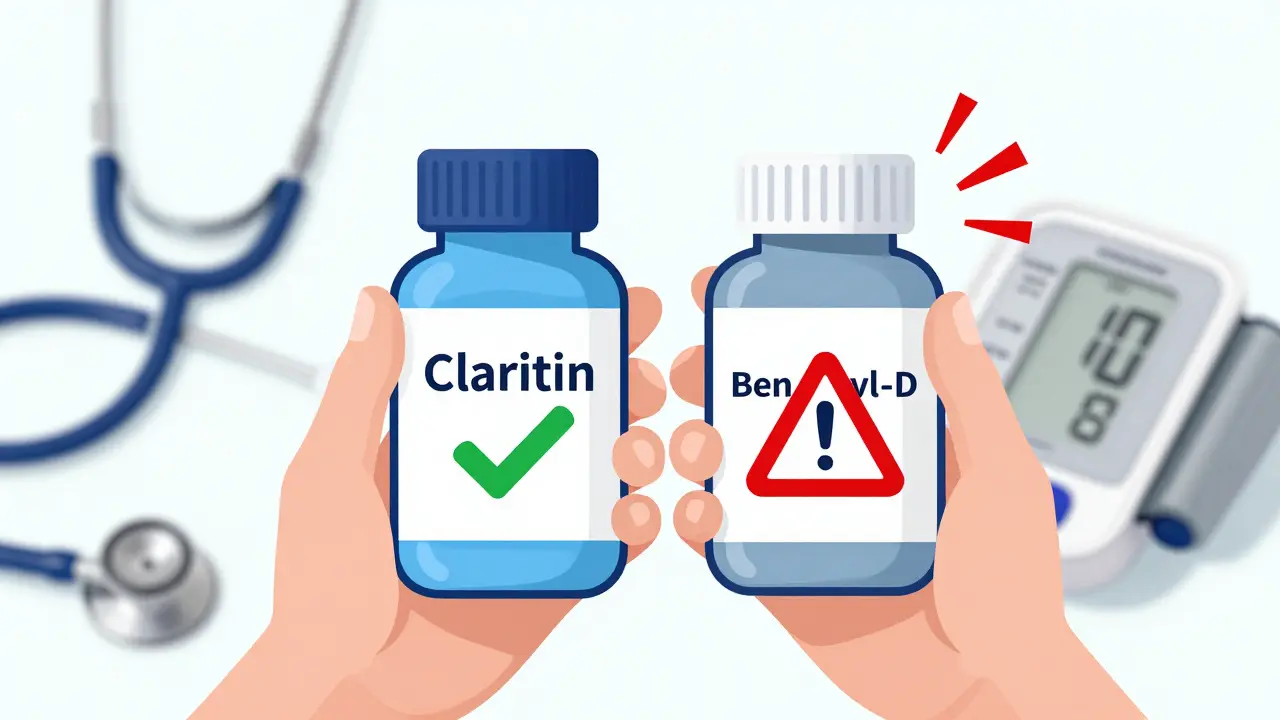
When you’re sneezing, itchy, and stuffed up, antihistamines can feel like a lifesaver. But if you have high blood pressure, you might be wondering: are antihistamines safe? The answer isn’t simple-it depends on which one you take, how you take it, and what else you’re on.
Not All Antihistamines Are the Same
There are two main types of antihistamines: first-generation and second-generation. They work the same way-blocking histamine to stop allergy symptoms-but their effects on your body, especially your blood pressure, are very different. First-generation antihistamines like diphenhydramine (Benadryl) and chlorpheniramine cross into your brain easily. That’s why they make you sleepy. But they also affect blood vessels directly. When you take them orally, most people won’t see a big change in blood pressure. But if you get it as an IV-like during an allergic reaction in the ER-systolic pressure can drop 8 to 12 mmHg within minutes. That’s not just a number. It can make you dizzy, lightheaded, or even cause you to faint when you stand up. Second-generation antihistamines like loratadine (Claritin), cetirizine (Zyrtec), and fexofenadine (Allegra) were designed to stay out of your brain. That means less drowsiness. But it also means less effect on your blood pressure. Studies show that in 97% of cases, loratadine doesn’t change blood pressure at all. Cetirizine is just as safe, and some research even suggests it might help reduce inflammation in blood vessels over time.Decongestants Are the Real Problem
Here’s where things get tricky. Many allergy meds aren’t just antihistamines-they’re combo packs. Look at the label: “Claritin-D,” “Zyrtec-D,” “Allegra-D.” The “D” stands for pseudoephedrine, a decongestant. That’s the part that raises your blood pressure. Pseudoephedrine tightens blood vessels to unclog your nose. But it also makes your heart work harder. In clinical studies, it raises systolic blood pressure by about 1 mmHg on average. Sounds small? For someone with uncontrolled hypertension, that’s enough to push them into danger. One 2023 analysis of over 4,000 patients found that 47% of people using decongestant combos saw their blood pressure rise by 5 to 10 mmHg. That’s enough to undo weeks of careful management. Even other common ingredients in allergy meds can cause trouble. Ibuprofen in combination products can raise pressure by 3-4 mmHg. Acetaminophen, when taken at the max daily dose of 4,000 mg, can nudge it up by 5 mmHg. If you’re already on blood pressure meds, these small bumps can add up.What About Heart Rhythm Risks?
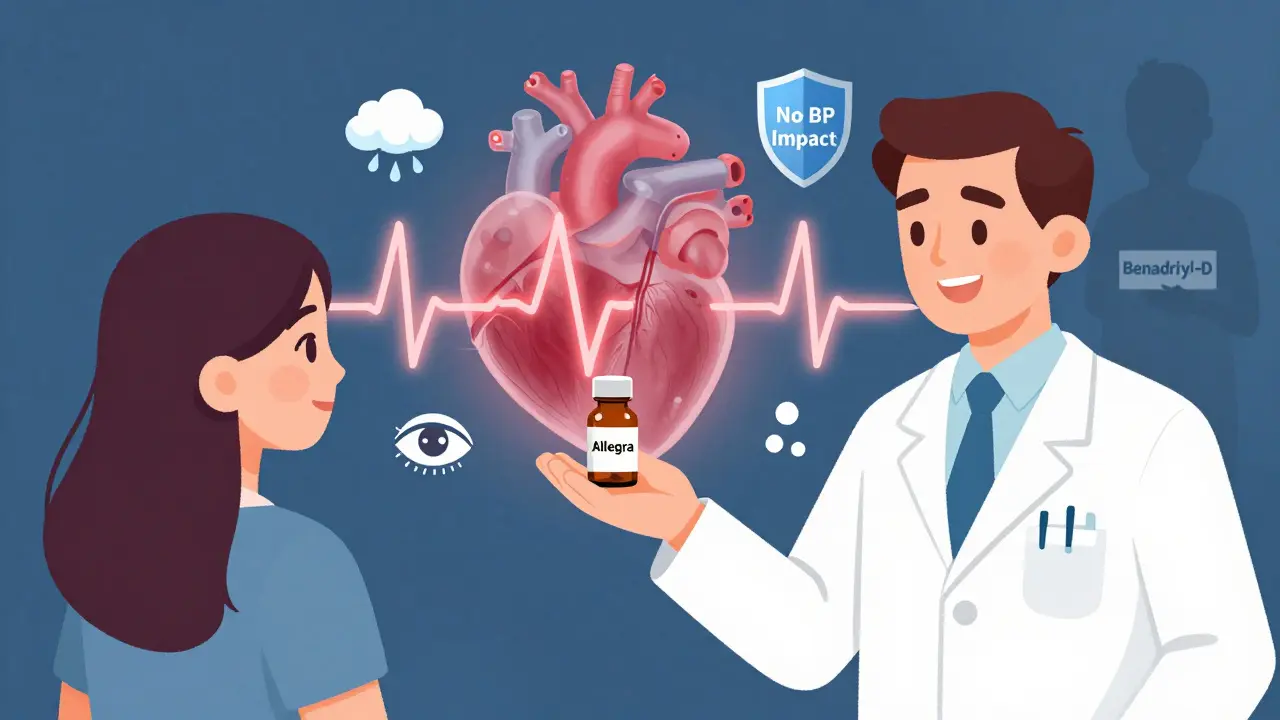
Years ago, two antihistamines-terfenadine and astemizole-were pulled off the market because they caused dangerous heart rhythms. They blocked a specific potassium channel in heart cells, leading to a condition called QT prolongation. In rare cases, this triggered sudden cardiac arrest. Those drugs are gone now. But the lesson stuck. Today, even second-generation antihistamines can become risky if you have liver problems or take other meds that interfere with how your body breaks them down. Grapefruit juice, ketoconazole, or erythromycin can raise drug levels in your blood. That’s why doctors now avoid prescribing cetirizine or fexofenadine to people with severe liver disease or those on multiple interacting drugs. For most people, though, the risk is extremely low. The American Heart Association says that if you’re healthy and take a standard dose of loratadine or fexofenadine, your heart is fine. Only those with pre-existing long QT syndrome or on multiple CYP3A4-inhibiting drugs need an ECG check before starting.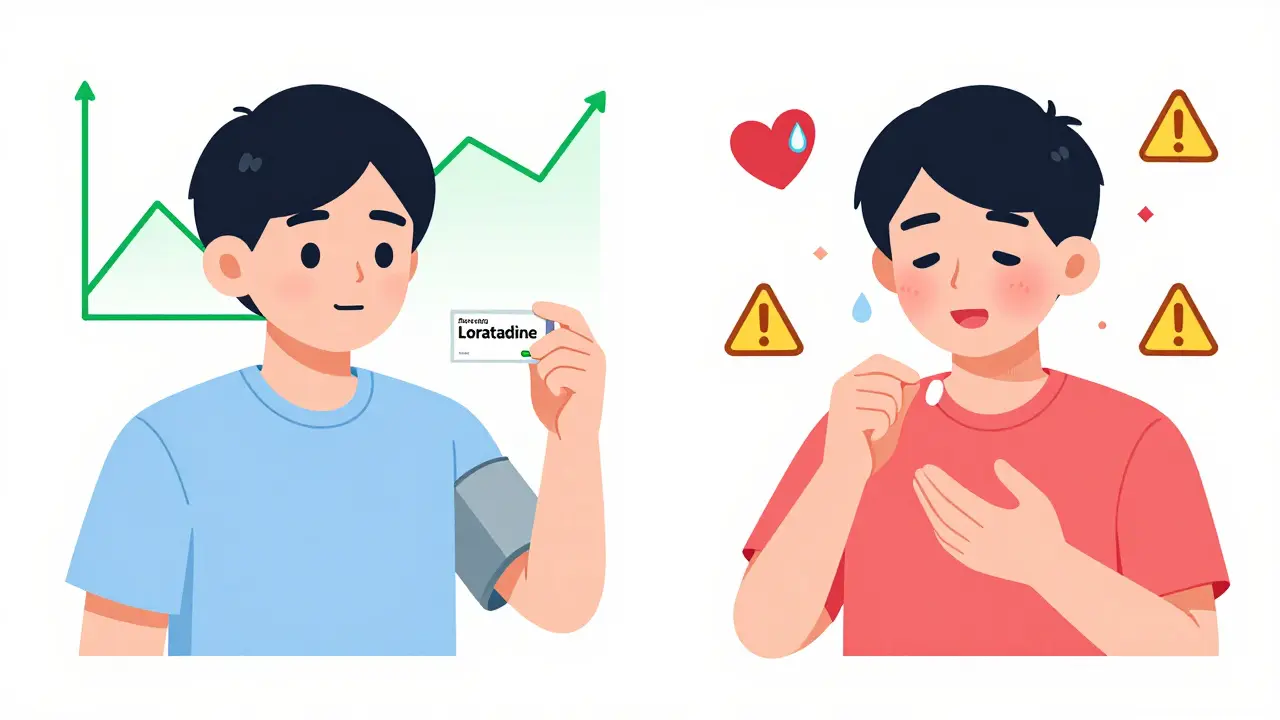
Who Should Be Extra Careful?
You’re at higher risk if:- You have uncontrolled high blood pressure (systolic over 140 mmHg)
- You’re taking three or more blood pressure medications
- You have heart failure, kidney disease, or a history of arrhythmias
- You’re older than 65 and taking multiple medications
- You drink grapefruit juice regularly
How to Monitor Your Blood Pressure Safely
The American Heart Association doesn’t recommend routine blood pressure checks for everyone taking antihistamines. But if you’re in a higher-risk group, here’s what to do:- Take your blood pressure at home before you start the medication. Write it down.
- If you’re taking a first-generation antihistamine like diphenhydramine, check again 30 to 60 minutes after the first dose. Watch for drops below your normal range.
- If you’re using a combo product with pseudoephedrine, check at 2 to 4 hours after taking it. Look for rises above your usual baseline.
- Keep a log for 3 days. Note the time, reading, and any symptoms like dizziness, headache, or palpitations.
- If your systolic pressure jumps more than 15 mmHg or drops more than 10 mmHg from your baseline, stop the med and call your doctor.
Real People, Real Experiences
Online forums are full of stories. On Reddit, a user named u/HypertensionWarrior wrote about getting IV Benadryl during allergy testing and seeing their systolic pressure drop 10-12 mmHg within 30 minutes. They had to sit for half an hour before being cleared to leave. Another user said they switched from Benadryl to Claritin after noticing they felt faint every time they stood up. After a week on loratadine, the dizziness vanished. A 2022 survey of 4,328 patients found that 89% of people using second-generation antihistamines alone saw no change in blood pressure. But among those using decongestant combos, nearly half saw spikes. That’s not coincidence-it’s data.What’s the Best Choice for People With High Blood Pressure?
If you have high blood pressure and need an antihistamine, here’s your clear path:- Best pick: Loratadine (Claritin) or fexofenadine (Allegra). No drowsiness. No blood pressure impact. Minimal drug interactions.
- Good alternative: Cetirizine (Zyrtec). Also safe, but slightly more likely to cause drowsiness in older adults.
- Avoid: Diphenhydramine (Benadryl) unless it’s an emergency. It’s not worth the risk for routine allergies.
- Never use: Any product with pseudoephedrine, phenylephrine, or ephedrine unless your doctor approves it.
The Bigger Picture
Over 100 million Americans have both allergies and high blood pressure. That’s a huge overlap. Yet most people don’t connect the two. Pharmacists and doctors are getting better at it-89% of allergists now recommend second-generation antihistamines for hypertensive patients. But primary care doctors still prescribe decongestant combos in nearly a quarter of cases. New research is even exploring whether some antihistamines might do more than just block allergies. Cetirizine has shown signs of reducing inflammation in blood vessels. That could mean long-term benefits beyond symptom relief. For now, the message is clear: You don’t have to suffer through allergies just because you have high blood pressure. But you do need to choose wisely. The right antihistamine won’t just help your nose-it could protect your heart too.Can antihistamines raise your blood pressure?
Pure antihistamines like loratadine, cetirizine, and fexofenadine do not raise blood pressure in most people. However, combination products that include decongestants like pseudoephedrine can increase systolic pressure by 5-10 mmHg. Always check the label for “-D” or “decongestant” on the ingredient list.
Is Benadryl safe if you have high blood pressure?
Oral Benadryl (diphenhydramine) usually doesn’t raise blood pressure, but it can cause a drop, especially if taken in higher doses or via IV. It also causes dizziness and drowsiness, which increases fall risk in older adults. For routine allergies, it’s not the best choice. Safer alternatives like Claritin or Zyrtec are preferred.
Which antihistamine is safest for heart patients?
Fexofenadine (Allegra) is considered the safest for heart patients because it has minimal interaction with liver enzymes and doesn’t affect heart rhythm. Loratadine (Claritin) is a close second. Both are non-sedating and have been studied in thousands of patients with cardiovascular disease without significant risk.
Can I take Zyrtec if I have high blood pressure?
Yes, cetirizine (Zyrtec) is generally safe for people with high blood pressure. It does not raise blood pressure and has a strong safety record. However, avoid Zyrtec-D, which contains pseudoephedrine. Stick to the plain version.
How long does it take for antihistamines to affect blood pressure?
Oral antihistamines usually take 1-2 hours to reach peak levels. Blood pressure changes, if they occur, typically happen within 30 minutes to 4 hours after taking the dose. IV antihistamines like diphenhydramine can lower blood pressure within 10-15 minutes. Always monitor closely after the first dose if you’re at risk.
Do antihistamines interact with blood pressure meds?
Most second-generation antihistamines don’t interfere with blood pressure medications. However, diphenhydramine can increase drowsiness when combined with beta-blockers or diuretics. The bigger risk is with decongestants in combo products-they can reduce the effectiveness of some blood pressure drugs and cause dangerous spikes. Always check with your pharmacist before mixing meds.



15 Comments
Been on loratadine for years with my hypertension and never had an issue. The real danger is those combo pills with pseudoephedrine-you don’t even realize you’re taking it until your head feels like it’s gonna explode.
Just read the label. Simple.
Why do people still grab the D version? I don’t get it.
From a pharmacokinetic standpoint, the differential distribution profiles of first-gen vs second-gen H1 antagonists are critical here. First-gen compounds exhibit high CNS penetration due to lipophilicity and lack of P-glycoprotein efflux, which correlates with both sedation and vasomotor instability. Second-gen agents like fexofenadine are substrates for OATP1A2 and P-gp, limiting systemic exposure and minimizing cardiovascular effects.
That said, CYP3A4 inhibition remains a clinically relevant risk factor-even for ‘safe’ agents-especially with concomitant macrolide use or grapefruit consumption. The data is robust, but real-world adherence to labeling is abysmal.
It is of paramount importance to recognize that the pharmacological properties of antihistaminic agents are not uniformly benign, particularly in populations exhibiting comorbid cardiovascular pathology. The regulatory frameworks governing over-the-counter formulations remain insufficiently stringent, thereby exposing vulnerable demographics to preventable iatrogenic harm. One must exercise the utmost diligence when selecting therapeutic agents, as the consequences of negligence may be irreversible.
Everyone’s scared of pseudoephedrine but nobody talks about how the FDA let these drugs stay on shelves while banning real dangerous stuff like phenylpropanolamine. And why are they still selling Claritin-D like it’s candy? I bet Big Pharma knows exactly what they’re doing-keep people dependent on combo pills so they keep buying. Also, did you know Zyrtec was originally developed as a military drug to keep soldiers awake? Yeah, I read it on a forum. Don’t trust anything you don’t verify.
I just wanted to say thank you for this post. I’ve had hypertension for 12 years and just last year realized my dizziness was from Benadryl. Switched to Allegra and my life changed. I didn’t even know there was a difference between the types. So glad I found this.
My grandma used to take Benadryl every night for allergies and sleep-she’d get up to go to the bathroom and fall. Twice. I didn’t realize it was the med until I read this. Now she’s on Zyrtec and she’s walking around like she’s 50 again. Honestly, I think doctors should be required to explain this stuff when they write prescriptions. People just grab what’s on the shelf. And it’s not their fault-they’re not pharmacists.
Also, grapefruit juice? I had no idea it messed with meds. I drink it every morning. Guess I’m switching to orange now.
Claritin all the way
no drama
no dizziness
just chill
In India, most people still use cetirizine or chlorpheniramine without knowing the risks. Doctors rarely explain the difference between plain and D versions. Even pharmacies sell combo packs like they’re normal medicine. We need more awareness campaigns-not just in the US. This is a global issue. Many elderly patients here are on multiple drugs and just take whatever’s cheap. The consequences are silent but deadly.
Second-gen antihistamines are safe unless you’re on something that blocks CYP3A4
that’s the only real red flag
everything else is noise
I’m so glad someone finally broke this down in plain terms. I used to think all allergy meds were basically the same. Now I actually read the labels. It’s crazy how something so small can make such a big difference. My husband’s BP has been stable since we switched him to Allegra. Small changes, big results.
Let’s be real-this whole post is just corporate pharma propaganda. Loratadine is made by Bayer, and they own the FDA’s advisory panels. They’ve been pushing second-gen antihistamines for 20 years to kill off generics like Benadryl so they can charge $30 a bottle. The truth? Diphenhydramine has been used safely for 70 years. The real problem is that doctors don’t want to spend time educating patients. They just want you to buy their branded version. Wake up.
The QT prolongation risk with older antihistamines was never about the drug itself-it was about metabolic saturation in the presence of CYP3A4 inhibitors. Modern agents like fexofenadine have negligible hepatic metabolism and are excreted largely unchanged via renal pathways. This makes them uniquely suited for polypharmacy patients. The real clinical takeaway: avoid concomitant use with azole antifungals, macrolides, and fluoxetine. Not the drug. Not the class. The interaction profile.
bro i just take benadryl and chill
never had a problem
stop overthinking it
This is exactly the kind of information we need to spread more. I shared this with my mom who’s 68 and on three BP meds. She didn’t know about the D versions either. Now she only buys plain Zyrtec. Small wins matter. Thank you for making this so clear.
Great breakdown. I work in a pharmacy in Delhi and see this every day. People ask for ‘the strongest allergy pill’ and we hand them Claritin-D without realizing the risk. We need better training. Also, many patients think ‘natural’ means safe-so they take herbal mixtures with ephedra. That’s way worse than pseudoephedrine. Education is the real medicine here.