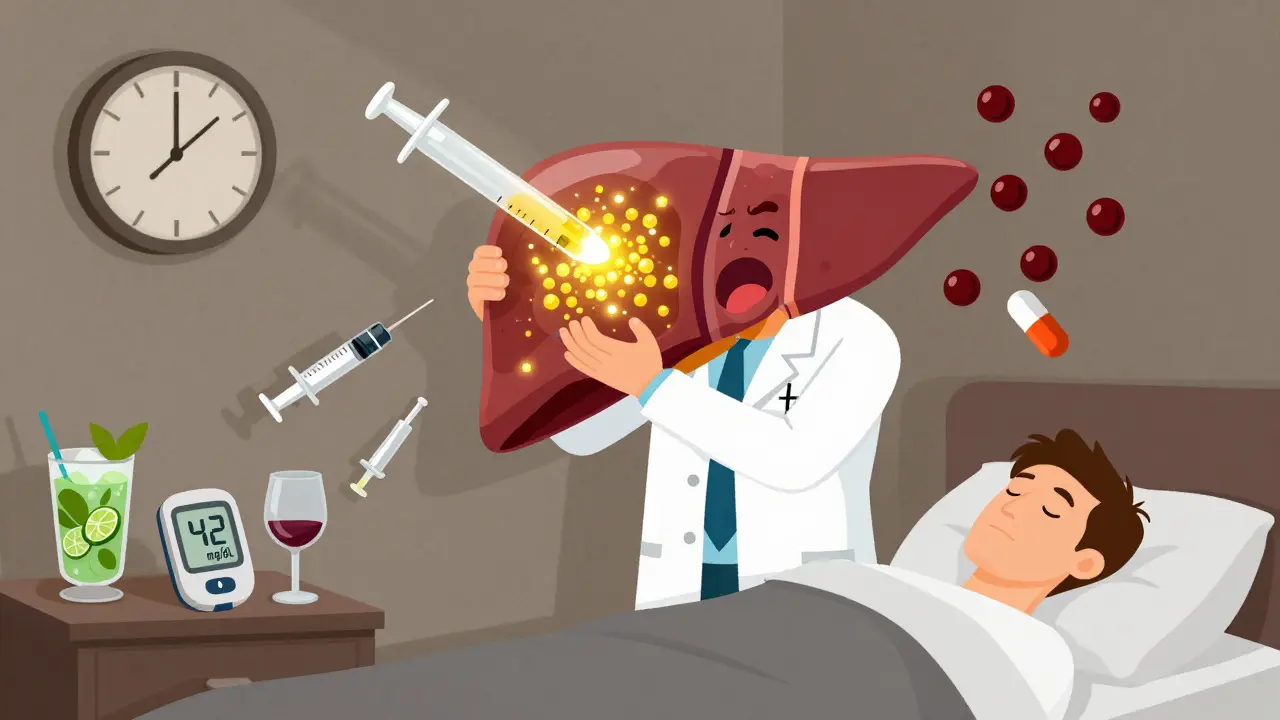

Drinking alcohol with diabetes medications isn’t just a bad idea-it can be life-threatening. Many people with diabetes don’t realize that even one drink can send their blood sugar crashing hours later, especially while they’re asleep. This isn’t about being careful-it’s about understanding how alcohol and your meds work together to turn a simple evening out into an emergency.
Why Alcohol and Diabetes Meds Don’t Mix
Your liver is the hero that keeps your blood sugar stable when you’re not eating. It stores glucose and releases it when needed. But when you drink alcohol, your liver prioritizes breaking down the ethanol instead. That means it stops releasing glucose. If you’re taking insulin or sulfonylureas like glipizide or glyburide, your body is already pushing blood sugar down. Alcohol doesn’t just add to that-it multiplies it.Studies show alcohol can drop blood sugar by 15-20 mg/dL within just a few hours. And it doesn’t stop there. The effect can last 12 to 24 hours. That’s why someone might feel fine after a drink at dinner, only to wake up in the middle of the night with a blood sugar of 42 mg/dL. No warning signs. No shaking. Just confusion, sweating, and then unconsciousness.
What makes this worse is that alcohol dulls your body’s natural defenses. Normally, when blood sugar drops, your body releases epinephrine to trigger hunger, shakiness, and sweating-signs that tell you to eat. But alcohol cuts that response by up to 42%. You won’t feel the warning. And if you’re already drunk, you might mistake low blood sugar for intoxication.
Which Medications Are Most Dangerous?
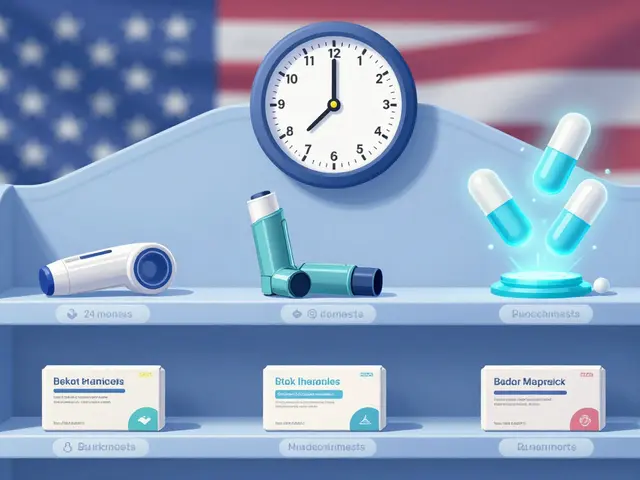
Not all diabetes drugs react the same way with alcohol. Some are far riskier than others.- Insulin: This is the biggest concern. Alcohol can cause delayed hypoglycemia up to 24 hours after drinking, especially if you’ve taken a long-acting insulin like glargine or degludec.
- Sulfonylureas (glyburide, glipizide, glimepiride): These force your pancreas to pump out more insulin. When combined with alcohol, the risk of severe low blood sugar jumps by 2.3 times. Chlorpropamide, an older sulfonylurea, can even cause flushing, nausea, and rapid heartbeat if you drink-even a small amount.
- Metformin: This one’s tricky. It doesn’t cause hypoglycemia on its own, but alcohol increases the risk of lactic acidosis-a rare but deadly buildup of acid in the blood. The FDA requires a boxed warning on metformin labels because alcohol raises this risk by 5.7 times. Symptoms include muscle pain, fast heartbeat, dizziness, and stomach upset.
- Other drugs: DPP-4 inhibitors, GLP-1 agonists, and SGLT2 inhibitors carry much lower risk. But that doesn’t mean you’re safe. Alcohol still affects your liver’s glucose output, so monitoring is still critical.
What Counts as a "Drink"?
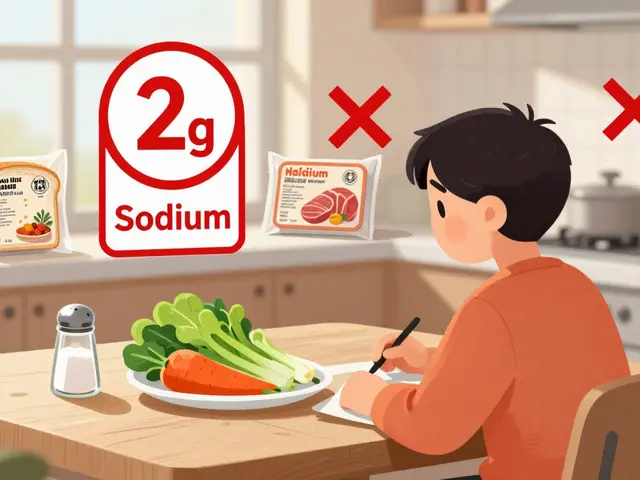
Not all alcoholic drinks are created equal. The real danger isn’t just the alcohol-it’s the sugar and carbs hiding in your drink.A standard drink is:
- 12 oz of regular beer (about 12-15g carbs)
- 5 oz of wine (5-8g carbs for sweet wines, under 1g for dry wines)
- 1.5 oz of distilled spirits (vodka, gin, whiskey-0g carbs if neat or with soda water)
But here’s where people get fooled:
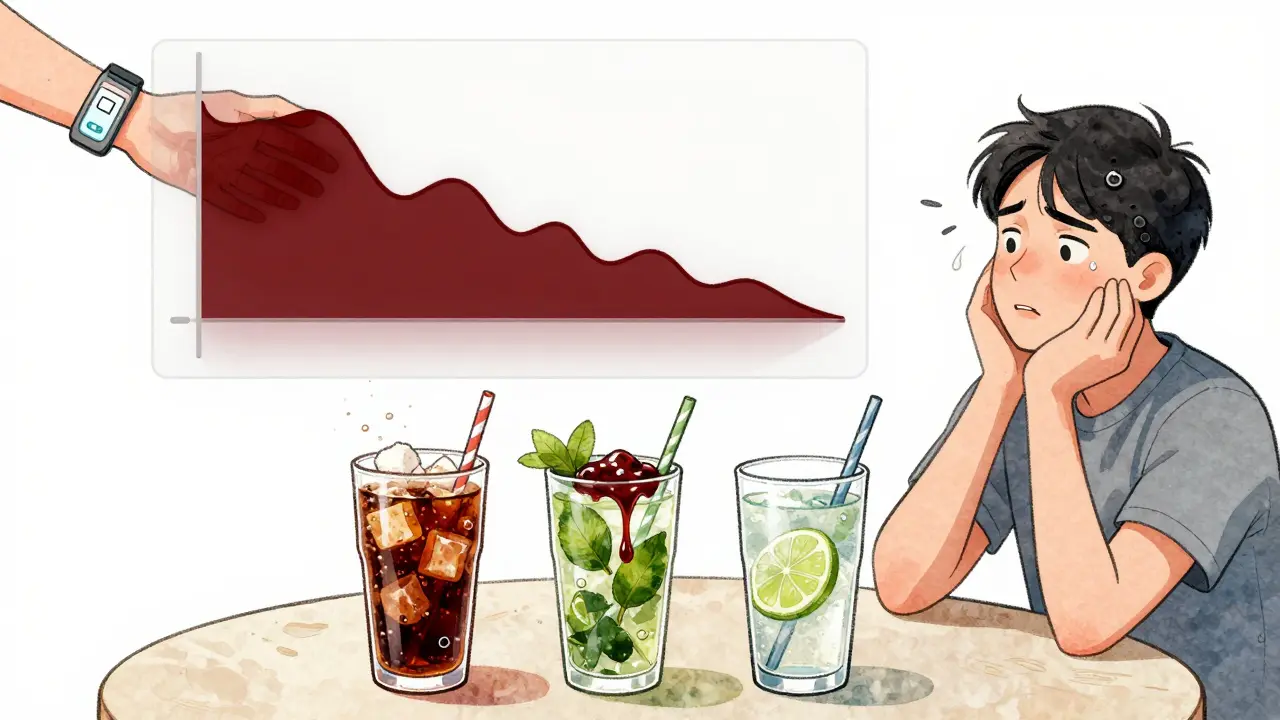
- A mojito has 24g of carbs-mostly from simple syrup and lime juice.
- A rum and Coke can pack 30g of sugar.
- Low-carb beer still has 3-5g carbs and doesn’t stop alcohol from blocking glucose production.
The safest choices? Vodka or gin with soda water and lime. Dry white wine. Light beer in moderation. Skip the sweet mixers. They don’t just spike your sugar-they make your body work harder to recover after the alcohol hits.
How to Drink Safely (If You Choose To)
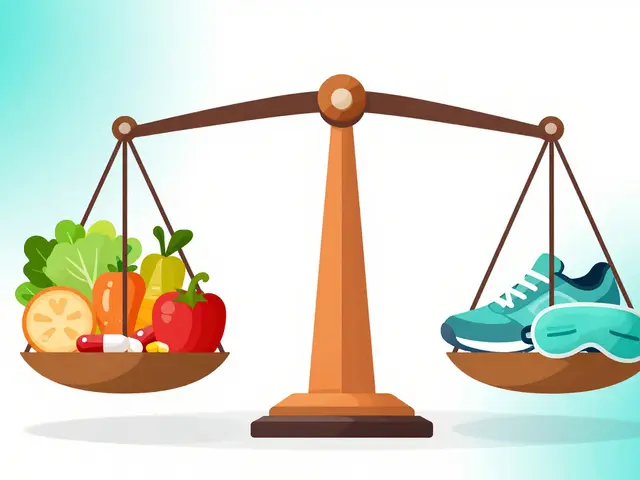
The American Diabetes Association says moderate drinking is possible-but only if you follow strict rules.- Never drink on an empty stomach. Always eat food with carbs before and while drinking. A small sandwich, a handful of crackers, or even a piece of fruit can help.
- Limit intake. One drink per day for women, two for men. That’s it. No "saving up" drinks for the weekend.
- Check your blood sugar before, during, and after. Test right before you drink, 2 hours after, and again before bed. If your reading is below 100 mg/dL, eat 15-30g of fast-acting carbs-like 4 oz of juice or 3-4 glucose tablets.
- Set an alarm. If you’ve had alcohol, check your blood sugar again between 2-3 AM. Nocturnal hypoglycemia is silent and deadly.
- Wear medical ID. If you pass out, paramedics need to know you have diabetes. Studies show wearing a bracelet or necklace cuts emergency response time by nearly half.
- Tell someone. Make sure a friend or partner knows you have diabetes and what to do if you seem confused or unresponsive. Glucagon kits save lives-but only if someone knows how to use them.
The Hidden Danger: You Don’t Feel It
A 2023 Kaiser Permanente report found that 38% of people who had alcohol-related hypoglycemia didn’t recognize their symptoms because alcohol made them feel dizzy, sluggish, or confused-exactly like being drunk. They thought they just needed to sleep it off.One Reddit user, SugarFreeSince19, passed out after tequila shots and woke up in the ER with a blood sugar of 42 mg/dL. His friends thought he was just drunk. He didn’t even know he was low until he was in the hospital.
This isn’t rare. A 2024 survey of 1,245 people with diabetes found that 73% had at least one alcohol-related low blood sugar episode in the past year. Nearly a third needed help from someone else to treat it.
And here’s the kicker: people who think "low-carb alcohol" is safe are wrong. Even a sugar-free vodka soda doesn’t protect you from alcohol’s effect on your liver. The danger isn’t the sugar-it’s the ethanol.
What Your Doctor Should Be Asking
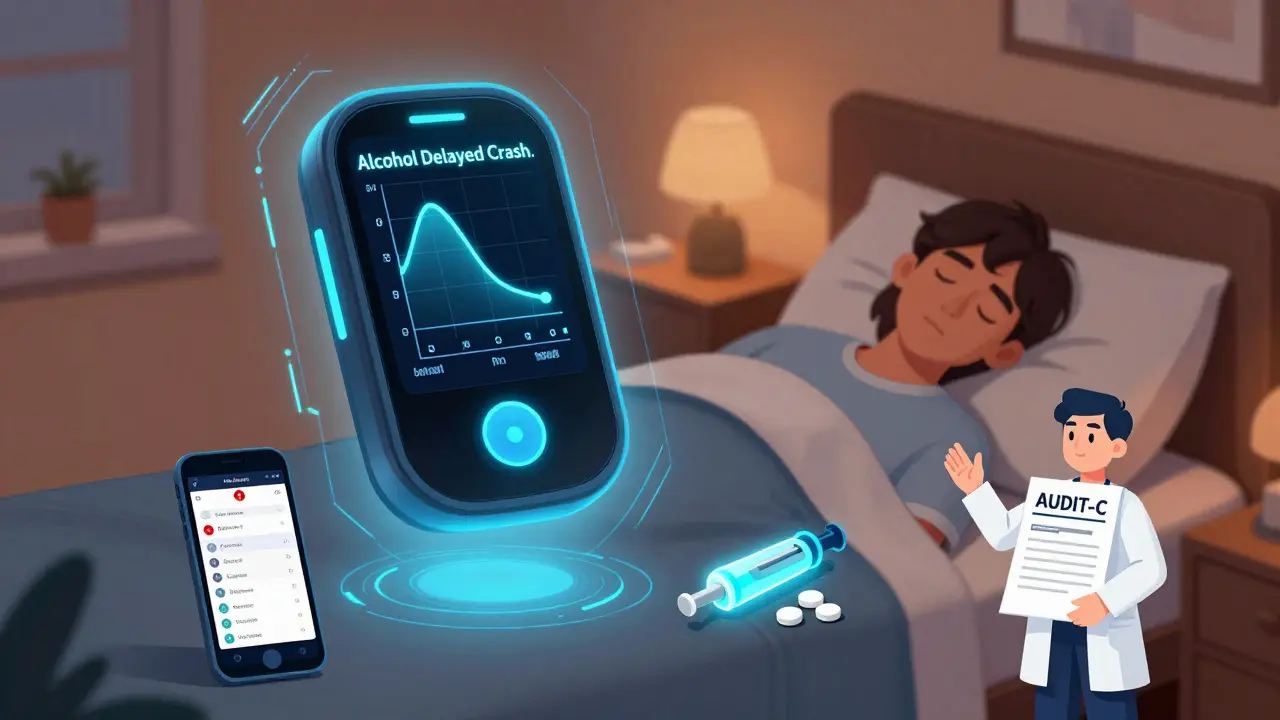
Most doctors now screen for alcohol use during diabetes visits. The AUDIT-C questionnaire-a simple 3-question tool-is becoming standard. It asks:- How often do you have a drink containing alcohol?
- How many drinks do you have on a typical day?
- How often do you have six or more drinks on one occasion?
But many patients still lie-or downplay it. They don’t think it’s relevant. They don’t realize their doctor needs to know to adjust their meds or warn them properly.
If your doctor doesn’t ask about alcohol, bring it up. Say: "I sometimes have a glass of wine or beer. Is that safe with my meds?" Don’t wait for them to guess.
What’s New in 2026?
Technology is helping. Dexcom’s G7 continuous glucose monitor, released in late 2023, now lets you log alcohol intake directly in the app. It then adjusts its low-glucose alerts to account for delayed drops. Some apps now use machine learning to predict your personal risk based on your medication, past readings, and drinking patterns.Research is also looking at time-restricted eating. A 2024 study found that people who only drank alcohol within 4 hours after dinner had 31% fewer nighttime lows than those who drank later. It’s not a cure-but it’s a smart strategy.
Future tools may even screen for genetic differences in how people metabolize alcohol. Some people have slower liver enzymes, making them far more vulnerable. That’s still experimental-but it’s coming.
Bottom Line: It’s Not About Abstinence. It’s About Awareness.
You don’t have to give up alcohol forever. But you do need to treat it like a medication-with rules, timing, and constant monitoring. The goal isn’t fear. It’s control.If you’re on insulin or sulfonylureas: drink with food, check your blood sugar like clockwork, and never go to bed without knowing your level. If you’re on metformin: skip the binge drinking. One drink is fine. Four? That’s a gamble with your liver.
And if you’ve ever woken up confused, sweaty, or shaky after drinking-don’t ignore it. That wasn’t a bad night. That was your body screaming for help.
Can I drink alcohol if I have type 2 diabetes and take metformin?
Yes, but with serious limits. One drink occasionally is usually safe if you eat food with it. But heavy drinking or bingeing while on metformin can cause lactic acidosis-a rare but life-threatening condition. Symptoms include muscle pain, fast heartbeat, dizziness, and stomach upset. Never drink heavily if you’re sick, dehydrated, or have kidney issues. Always check with your doctor first.
Why does alcohol cause low blood sugar hours after drinking?
Alcohol blocks your liver from making new glucose. Normally, your liver releases stored glucose between meals or overnight. But when it’s busy breaking down alcohol, it stops. If you’re on insulin or sulfonylureas, your body is already lowering blood sugar. The result? A delayed crash-often 6 to 24 hours later-while you’re asleep. That’s why checking your blood sugar before bed is non-negotiable.
Is wine safer than beer or liquor for people with diabetes?
Dry wine (like Pinot Noir or Sauvignon Blanc) has very little sugar-under 1 gram per 5 oz serving-making it a better choice than sweet wines, beer, or cocktails. Beer has carbs from grains, and cocktails often have sugary mixers. But even dry wine still affects your liver’s glucose production. So while it’s a lower-sugar option, it’s not risk-free. Always pair it with food and monitor your blood sugar.
What should I do if I suspect I’m having alcohol-induced hypoglycemia?
Don’t wait. If you feel dizzy, shaky, confused, or sweaty-especially after drinking-check your blood sugar immediately. If it’s below 70 mg/dL, treat it with 15g of fast-acting carbs: 4 oz of juice, 3-4 glucose tablets, or 1 tablespoon of honey. Wait 15 minutes and check again. If you’re too confused to treat yourself, you need help. Glucagon kits work fast-but only if someone else knows how to use them. Always tell someone you’re diabetic before drinking.
Can I use a continuous glucose monitor (CGM) to track alcohol effects?
Yes. Modern CGMs like Dexcom G7 let you log alcohol intake, and the system adjusts alerts for delayed lows. Many users report fewer nighttime crashes after logging drinks. But CGMs don’t replace manual checks. Alcohol can cause erratic readings or delays in glucose trends. Always confirm with a fingerstick if you feel symptoms or if your CGM shows a sudden drop.
Is it safe to drink alcohol if I have diabetes but don’t take any medication?
It’s still risky. Even without medication, alcohol can lower blood sugar by blocking your liver’s glucose production. People with diabetes who aren’t on meds can still experience hypoglycemia, especially if they skip meals, exercise, or drink on an empty stomach. The risk is lower than for those on insulin or sulfonylureas, but it’s not zero. Always eat with alcohol, monitor your levels, and avoid binge drinking.
10 Comments
Wow, so now we're telling people with diabetes they can't even have a glass of wine? Next they'll ban chocolate and sunshine. I'm Canadian, I've had diabetes for 12 years, and I've had tequila shots at 2 AM while skiing in Whistler - no issues. This article is fearmongering dressed up as science. Alcohol doesn't magically turn your liver into a glucose-hating robot. My CGM shows zero drops if I eat a damn sandwich first. Stop scaring people into abstinence - education, not paranoia, is the answer.
Thank you for writing this 💙 I was diagnosed last year and had no idea alcohol could cause a crash HOURS later. I thought "low-carb beer" meant I was safe... I cried reading about the 42% drop in warning signs. My sister almost lost me last Christmas because I passed out and she thought I was just drunk. I now check my sugar before bed like it's my job. Please, everyone - if you drink, tell someone. Glucagon saves lives. And yes, I still have a glass of dry wine. Just not alone. And never without crackers. ❤️
Good info. Real talk: if you're on insulin, don't drink unless you're ready to treat it like a medical procedure. No exceptions. I've seen too many ER visits because someone "just had one." Your liver doesn't care if it's Friday night. It's just doing its job - and alcohol hijacks it. Stick to the rules. Simple.
As a nurse who works in endocrinology, I see this EVERY WEEK. One patient came in with a BG of 38 after a "light" vodka soda. She thought "no sugar = safe." Nope. Ethanol = liver shutdown. Period. And yes, CGMs help - but they lag. I always tell my patients: if you're going to drink, treat it like you're taking a new high-risk med. Test before, during, after, and at 2 AM. Set an alarm. Wear your ID. Tell your buddy. And if you're on metformin? Don't binge. One drink. With food. Done. This isn't about restriction - it's about survival.
While the information presented is largely accurate and clinically sound, I must respectfully note that the assertion regarding metformin and lactic acidosis requires contextual clarification. The risk elevation of 5.7 times is statistically significant only in the context of excessive alcohol consumption, acute renal impairment, or concurrent illness. In otherwise healthy individuals consuming moderate alcohol, the absolute risk remains exceedingly low. Therefore, blanket warnings may inadvertently discourage beneficial social engagement. A nuanced, individualized approach - rather than generalized fear - is more aligned with patient-centered care.
bro i had a rum and coke at a wedding last year and woke up at 3am thinking my phone was on fire lmao turned out i was at 41. my bf had to poke me with a spoon. i thought i was just hungover. now i carry glucose tabs in my bra. also, why does everyone say "dry wine" like it's a cult? it's just wine without sugar. jk. but seriously. i'm still alive. barely.
This is a very thoughtful and well-researched piece. I appreciate how it acknowledges that complete abstinence isn't necessary - awareness is key. As someone from India, where alcohol is often consumed in social gatherings, I've seen friends with diabetes avoid checking their levels because they fear being judged. This article helps normalize responsible drinking without stigma. I will share it with my diabetes support group. Thank you.
ALERT: BIG PHARMA IS USING THIS TO MAKE YOU AFRAID OF ALCOHOL SO YOU BUY MORE CGMS AND GLUCAGON KITS!! 🚨 They know if you drink, you might skip meds... so they scare you with "24-hour crashes" and "lactic acidosis" - but what if your liver is fine? What if you're just tired? They don't want you to know the truth!! 🤫 I only drink gin with lemon and I feel FINE. My CGM says nothing. They're lying to you. #FreeTheLiver
Could you please provide the primary sources for the 2023 Kaiser Permanente report and the 2024 survey of 1,245 individuals? Additionally, I would appreciate clarification on the statistical methodology used to determine the 5.7-fold increase in lactic acidosis risk with alcohol and metformin. The cited figures appear to be derived from case-control studies, but without access to the original data or peer-reviewed publications, the clinical applicability remains uncertain. Transparency in evidence is paramount in medical communication.
Y’all need to stop overcomplicating this. I’m on metformin. I had a margarita last night. Ate a burrito. Checked my sugar at 11pm - 108. Woke up at 3am - 97. No drama. No panic. No fear. If you eat, check, and don’t chug like it’s a frat party, you’ll be fine. Stop acting like alcohol is poison. It’s not. Your fear is.