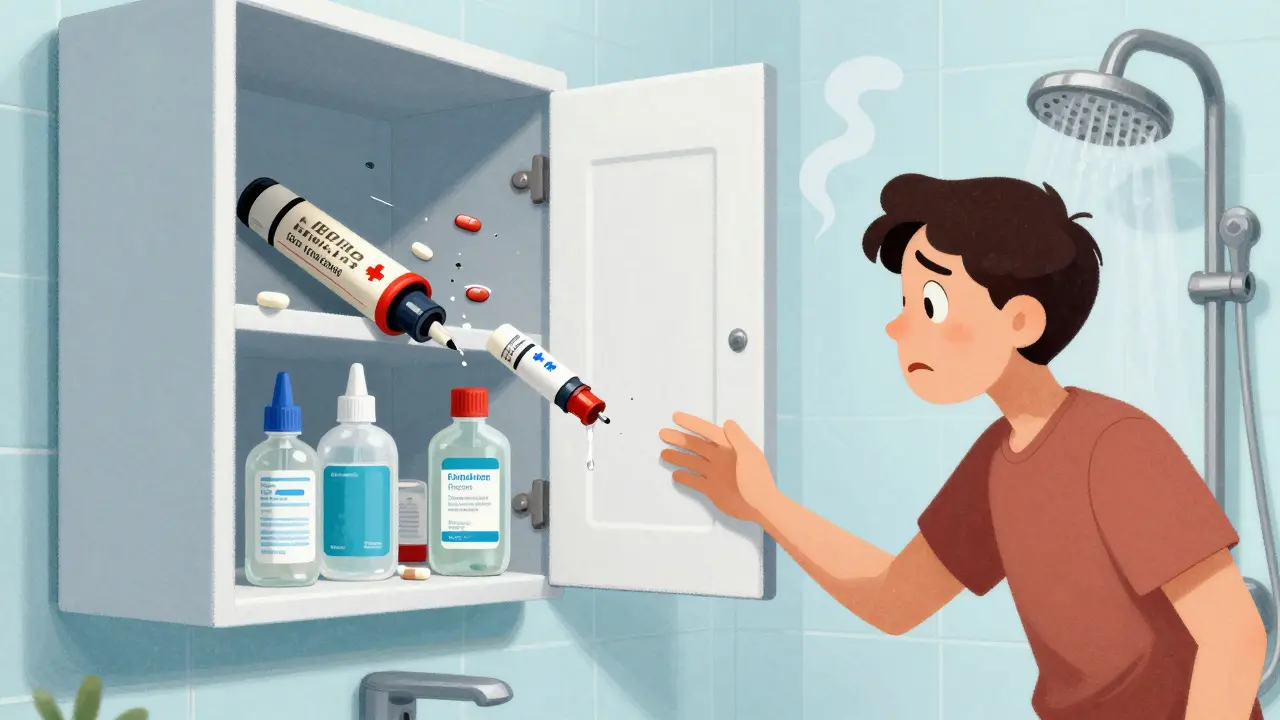

Most households keep a first-aid kit tucked away in a bathroom cabinet or kitchen drawer-ready for cuts, headaches, or allergic reactions. But how many of those kits actually contain medications that still work? A 2023 survey found that 68% of homes have at least one expired item in their first-aid supplies. That’s not just sloppy housekeeping-it’s a safety risk. You don’t want to reach for your epinephrine pen during a severe allergic reaction only to find it’s lost half its power. Or use an old antiseptic cream that’s grown bacteria instead of killing it.
Not All Expired Medications Are Created Equal
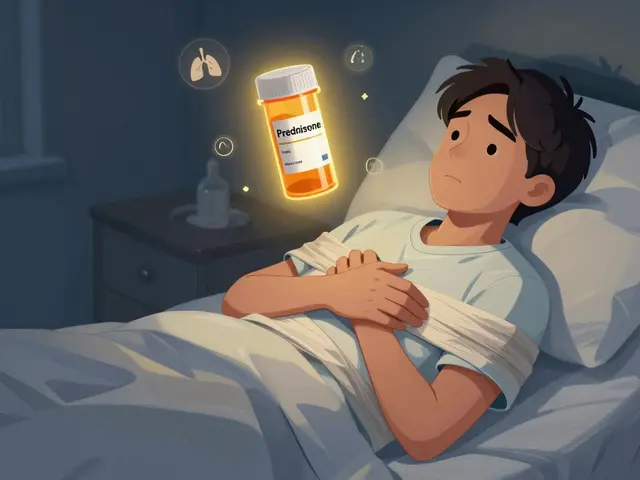
The big myth? All expired medicines are dangerous. That’s not true. Most solid pills-like ibuprofen, acetaminophen, or aspirin-don’t suddenly turn toxic after their expiration date. In fact, a U.S. Department of Defense study found that 80% of unopened, properly stored pain relievers still had at least 90% of their original potency 15 years after expiration. But that doesn’t mean you should keep them forever. The real danger lies in the type of medication and how it’s stored. Liquid medications, creams, and emergency drugs degrade fast-and their failure can be life-threatening. Here’s the split:- Safe to use (with caution) past expiration: Solid pain relievers (ibuprofen, acetaminophen), antihistamines (like Benadryl), and some topical antiseptics (like isopropyl alcohol). These lose potency slowly, but rarely become harmful.
- Replace immediately after expiration: Epinephrine auto-injectors (EpiPens), nitroglycerin tablets, liquid antibiotics, eye/ear drops, and rescue inhalers. These lose effectiveness quickly, and using them past expiration could mean the difference between life and death.
Why Some Medications Fail Faster Than Others
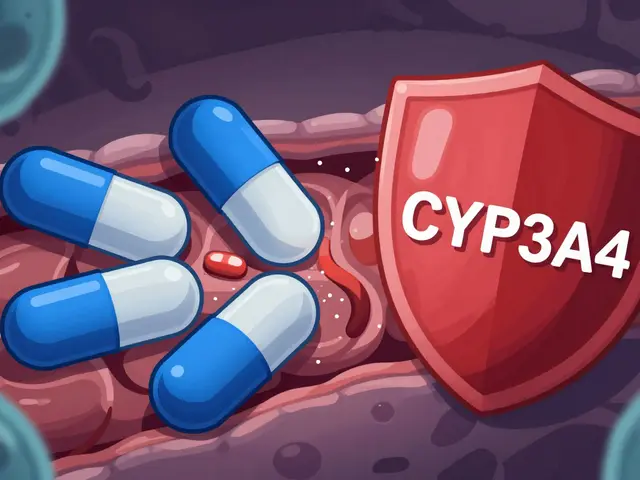
It comes down to chemistry and packaging. Solid tablets are stable because they’re dry and sealed. Liquids, creams, and sprays? They’re exposed to air, moisture, and temperature swings. Epinephrine, for example, breaks down when exposed to light and heat. A 2021 study showed that just six months after expiration, EpiPens can lose 20-30% of their potency. By 12 months, it’s often over 50%. Hydrogen peroxide? It fizzles out fast. Once you open the bottle, it starts losing strength within days. After 30 days, it’s basically salt water-useless for cleaning wounds. Meanwhile, isopropyl alcohol (70%) stays effective for up to two years if the cap stays tight. Creams and ointments are another hidden risk. A 2023 FDA lab analysis found that 47% of hydrocortisone cream samples tested six months past expiration had bacterial contamination. That’s not just ineffective-it’s dangerous. Applying contaminated cream to a cut could turn a minor scrape into a serious infection.Storage Matters More Than You Think
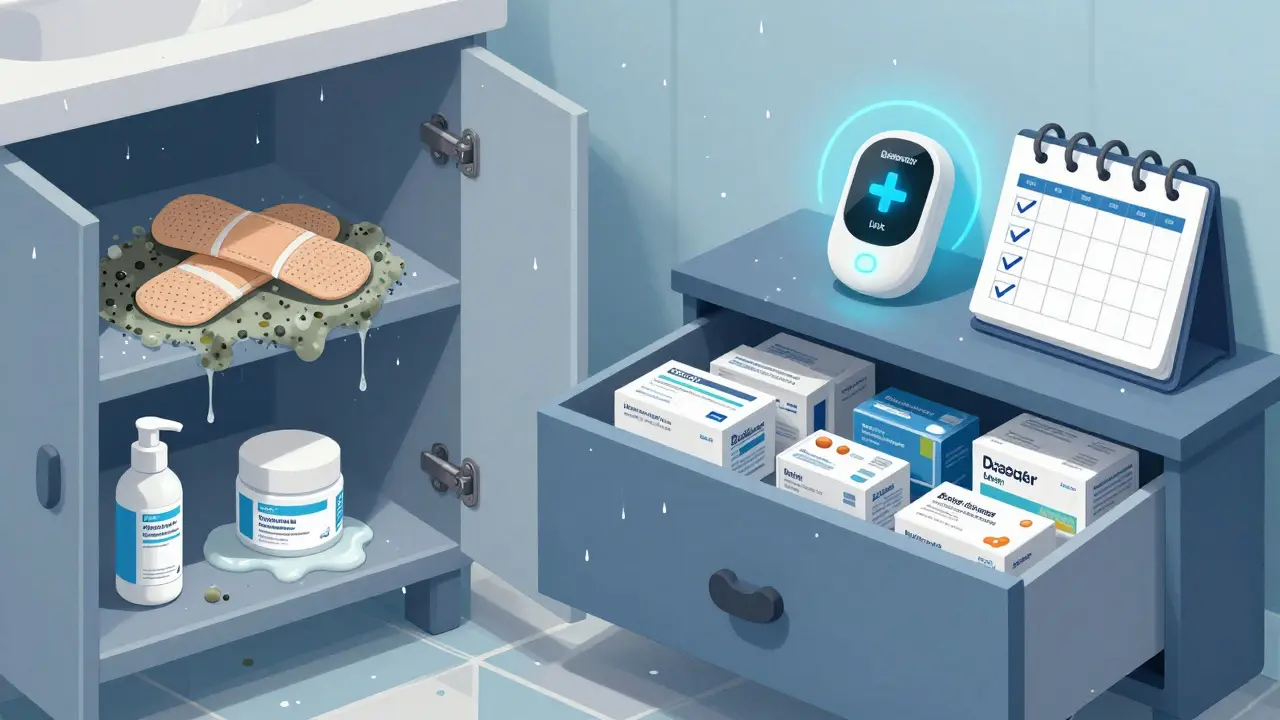
You can have the freshest medicine in the world, but if you store it wrong, it won’t last. The bathroom is the worst place. Humidity from showers, heat from hot water, and fluctuating temperatures wreck medications. A 2022 Johns Hopkins study showed that pills stored in a bathroom cabinet lost potency 40% faster than those kept in a bedroom drawer. Here’s what works:- Keep medications in their original bottles with the moisture-absorbing packet still inside.
- Store them in a cool, dry place-like a closet or bedroom drawer.
- Avoid transferring pills to pill organizers unless you plan to use them within a few weeks. Once they’re out of the original packaging, their shelf life drops by 35-50%.
- Don’t leave your EpiPen in the car. Even a hot summer day can ruin it.
What to Replace-and When
You don’t need to toss everything on the day it expires. But you do need a system. The American Red Cross recommends this simple routine:- Quarterly check: Look at every item. Is the liquid cloudy? Does the cream smell off? Is the tablet cracked or discolored? If yes, toss it.
- Biannual review: Every six months, go through the expiration dates. Mark them on your calendar.
- Replace emergency meds 30 days early: EpiPens, nitroglycerin, rescue inhalers-don’t wait until the last day. Replace them before they expire. If you’re using one that’s expired, you’re gambling.
- Annual overhaul: Every year, empty the whole kit. Throw out anything expired, damaged, or questionable. Restock with fresh items.
What Happens If You Use an Expired Emergency Medication?
Let’s be clear: using an expired EpiPen isn’t the same as taking an old ibuprofen. In 2022, a Healthline community thread collected 43 stories from people who used expired epinephrine during allergic reactions. Many reported partial relief-but needed multiple doses. One person said their EpiPen only worked after they used it twice. Another said their child’s swelling didn’t stop until they got to the hospital. In a 2023 Reddit analysis of over 1,200 posts, users who used expired epinephrine were 3x more likely to need emergency medical care than those who used fresh ones. And here’s the scary part: 27% of those users said they didn’t realize their EpiPen had expired. The FDA says this: If you’re in a life-or-death situation and have no other option, use an expired EpiPen anyway. But they also say: Get to a hospital immediately after. That’s not a recommendation-it’s damage control.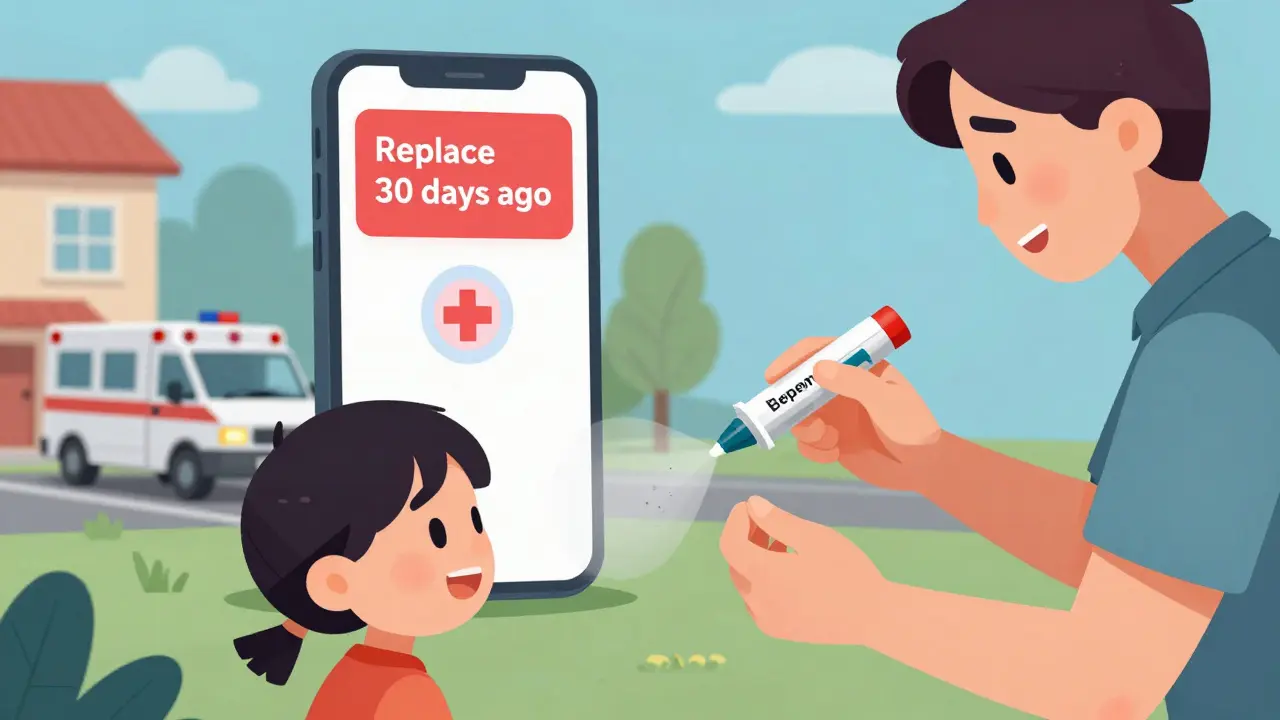
Smart Kits and New Tech Are Changing the Game
More people are realizing how bad the expiration problem is. In 2024, the FDA launched its “Check. Toss. Restock.” campaign to push awareness. Meanwhile, tech companies are stepping in. Brands like First Aid Only now make Bluetooth-enabled kits that send phone alerts 60 days before anything expires. Bayer and 3M are testing smart packaging: QR codes that show real-time potency estimates based on how hot or humid your storage area has been. Some labels even change color if the medicine got too warm. There’s also a new mobile app from the American Pharmacists Association. You scan the barcode on your medicine, and it tells you: “Your hydrocortisone cream was stored in a humid bathroom. Replace it now.” It’s already been downloaded over 450,000 times in six months.What to Do With Expired Medications
Don’t flush them. Don’t throw them in the trash. The DEA’s National Prescription Drug Take Back Day collected over a million pounds of expired meds in October 2023. That’s because flushing or trashing them pollutes water and attracts wildlife. Instead:- Find a local drug take-back program. Pharmacies, police stations, and hospitals often host them.
- If none are available, mix pills with coffee grounds or cat litter, seal them in a bag, and throw them in the trash. This makes them unappealing and harder to misuse.
- Never pour liquids down the drain.
Final Rule: When in Doubt, Toss It
The bottom line? You’re not saving money by keeping expired meds. You’re risking your family’s health. Solid painkillers? Maybe okay for a mild headache if they’re only a few months past date. But if it’s something you rely on in an emergency-epinephrine, nitroglycerin, eye drops-replace it before it expires. Your first-aid kit isn’t a time capsule. It’s a tool. And tools need to work when you need them. Don’t wait for a crisis to find out your medicine has gone bad.Can I still use expired ibuprofen or acetaminophen?
Yes, if they’re solid tablets and stored properly. Studies show many pain relievers retain 90%+ potency for years past expiration. But if they’re discolored, cracked, or smell strange, toss them. Never use expired pain meds if you’re treating a serious injury or chronic condition-always use fresh ones.
Is it safe to use an expired EpiPen in an emergency?
The FDA says it’s better to use an expired EpiPen than nothing at all during a life-threatening allergic reaction. But it may not work as well-some users need multiple doses. After using an expired EpiPen, get to a hospital immediately. Never rely on it long-term. Replace it 30 days before expiration.
Why do some medications expire so quickly after opening?
Once you open a bottle-especially liquids, eye drops, or creams-they’re exposed to air, moisture, and bacteria. Hydrogen peroxide breaks down in 30 days. Eye drops lose sterility after 28 days. Epinephrine oxidizes. The expiration date on the bottle is for unopened storage. After opening, follow the “discard after” date on the label or replace within 3 months if none is given.
Where’s the best place to store a first-aid kit?
A cool, dry, dark place like a bedroom drawer or closet. Avoid the bathroom-humidity and heat destroy medications. Don’t leave it in the car or near a stove. Keep it out of reach of kids but easy to grab in an emergency.
Do bandages and gauze expire too?
Yes. Adhesive bandages lose stickiness after 18 months. Sterile gauze pads can become contaminated after 24 months-even if unopened. Check for discoloration, brittleness, or odor. Replace them during your annual kit overhaul.
How often should I check my first-aid kit?
Check it every three months for visible damage or changes. Review expiration dates every six months. Do a full restock once a year. Set calendar reminders so you don’t forget.
Can I use expired antiseptic wipes?
If they’re dry or smell off, toss them. Alcohol-based wipes lose effectiveness once the liquid evaporates. Even if they’re not expired, if the packet is torn or the wipes are brittle, they won’t clean properly. Replace them every 6-12 months.
What’s the safest way to dispose of expired meds?
Use a drug take-back program at a pharmacy or police station. If none are available, mix pills with coffee grounds or cat litter, seal them in a plastic bag, and throw them in the trash. Never flush them unless the label says it’s safe.
12 Comments
I can't believe people still keep expired EpiPens in their medicine cabinets like it's a collectible. That's not saving money-that's playing Russian roulette with your kid's life. Replace them. Period.
If you're using anything past its date in the US, you're doing it wrong. We have laws for a reason.
The pharmacokinetics of epinephrine degradation under ambient thermal stress is non-linear and highly dependent on packaging permeability-most users don't realize that the 20-30% potency loss at 6 months isn't uniform; it's exponential after 9 months due to oxidative degradation of the catechol ring. Also, the FDA's 'use if no alternative' guidance is a liability shield, not medical advice. You're not 'saving' anything-you're gambling with neurovascular collapse.
It is an incontrovertible fact that the storage of pharmaceutical agents in environments characterized by elevated humidity and thermal fluctuation-such as the typical domestic bathroom-constitutes a flagrant violation of Good Storage Practices as delineated by the United States Pharmacopeial Convention (USP <665>). The degradation of active pharmaceutical ingredients under such conditions is not merely a matter of diminished efficacy; it is a biohazardous negligence that undermines the foundational principles of public health stewardship. One must ask: if you cannot properly store a bottle of ibuprofen, how can you be entrusted with the care of a dependent individual?
You know what's worse than expired meds? People who think the FDA knows what they're talking about. The real expiration dates are set by manufacturers to force repeat purchases. I've got ibuprofen from 2012 that still works fine. The system is rigged.
i heard the gov t puts chemicals in meds to make them expire faster so u keep buying them. my grandma used her 15 yr old benadryl and lived to 102 so...
I appreciate the thorough breakdown. It's easy to overlook these details when you're not in the medical field. I've started using the app mentioned-it's surprisingly intuitive. My kit hasn't been this organized since college.
In Nigeria, we do not discard medications based on arbitrary printed dates. We rely on empirical observation: if the tablet is intact, the solution clear, and the odor unchanged, it remains efficacious. Western over-regulation has created a culture of disposability that is neither sustainable nor scientifically sound.
why are we even talking about this? just keep your meds in the fridge and you're fine. also, why do we trust the FDA? they let aspartame in. 🤡
We treat medicine like a commodity when it's really a covenant between body and chemistry. The expiration date isn't a deadline-it's a reminder that everything decays, even our attempts to control nature. Maybe the real question isn't when to toss it... but why we're so afraid of imperfection.
I just started using those smart kits. Got a notification last week that my hydrocortisone was getting sketchy. Tossed it, bought new. Feels good to be proactive. No drama, just smart.
Funny how the same people who ignore expiration dates will freak out if their yogurt is one day past the date. Double standards are the only thing more expired than their first-aid kit.