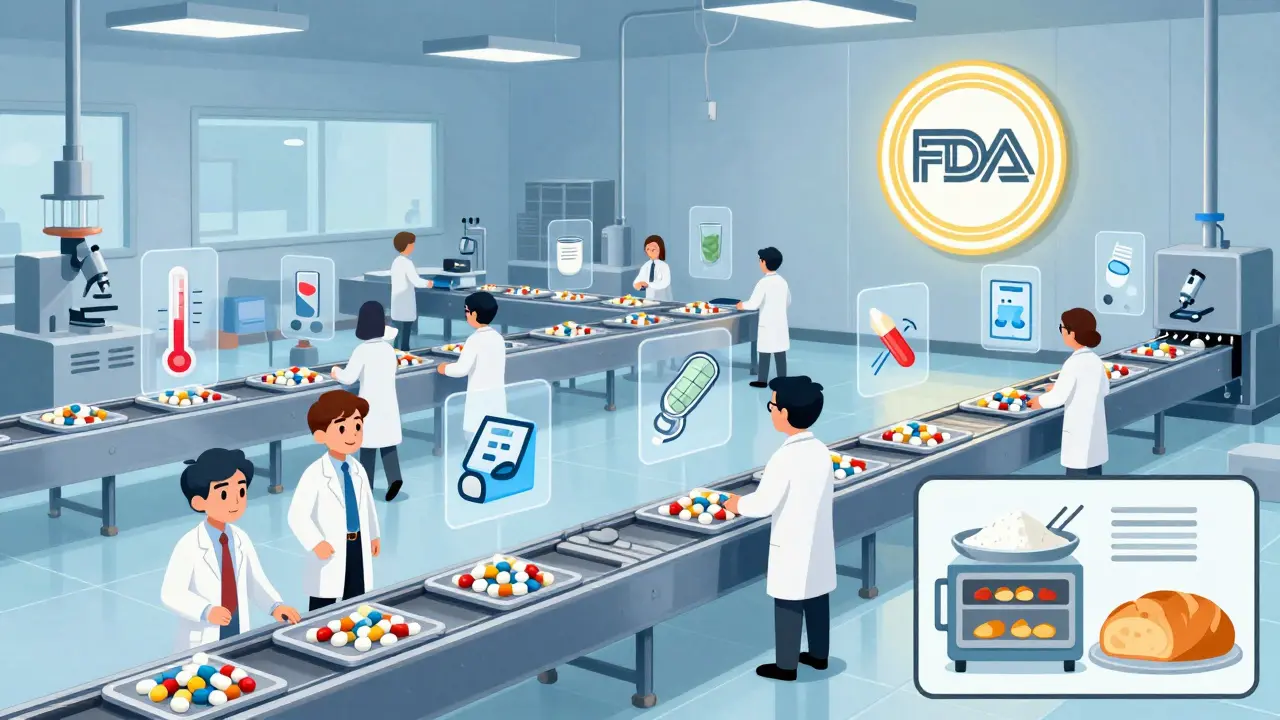

The U.S. Food and Drug Administration doesn’t wait for a bad batch of generic pills to hit the shelf before acting. Instead, it builds quality into every step of the manufacturing process - from the moment raw ingredients arrive at a factory to when the final blister pack leaves the warehouse. This isn’t just about checking labels or running spot tests. It’s about making sure the entire system is designed to prevent mistakes before they happen.
Why Process Over Product Testing?
Back in the 1960s, the FDA tested 4,600 drugs and found that about 8% didn’t deliver the right dose - some were too strong, others too weak. That discovery changed everything. Instead of relying on testing the final product, the agency shifted focus to how drugs are made. The result? Current Good Manufacturing Practices, or cGMP. These aren’t suggestions. They’re federal law under Title 21 of the Code of Federal Regulations. If a factory doesn’t follow them, its drugs can’t be sold in the U.S.Think of it like baking bread. You don’t just taste the final loaf and hope it’s good. You check the flour quality, the oven temperature, the proofing time, and the cleanliness of your workspace. The FDA does the same - but for life-saving medicine.
The Five Pillars of FDA Quality Control
The FDA’s system rests on five non-negotiable pillars. Each one has specific rules, and skipping any one of them means rejection.- Control of Materials: Every raw ingredient must be traced back to its source. Suppliers are vetted. Materials are tested for purity before they’re even touched. No guessing. No shortcuts.
- Production and Process Controls: Every step in manufacturing has a written procedure. If a machine runs too hot or a mixer spins too slow, the system flags it. Operators can’t just wing it. Deviations are documented, investigated, and corrected.
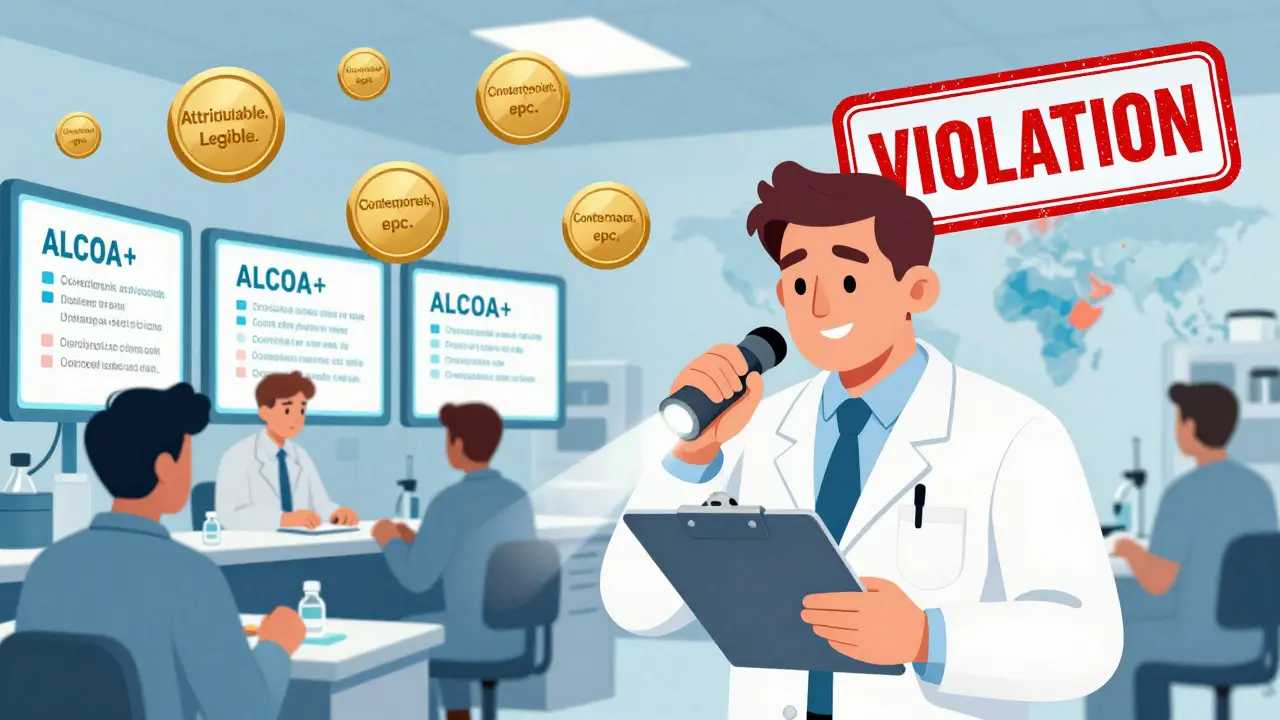
- Quality Control and Laboratory Testing: Samples are taken at every stage - raw materials, halfway through production, and the final product. Tests must be validated, accurate, and recorded under the ALCOA+ standard: attributable, legible, contemporaneous, original, accurate, complete, consistent, enduring, and available. That’s not just paperwork - it’s proof.
- Packaging, Labeling, and Distribution: Wrong label? Wrong dose? That’s a recall waiting to happen. The FDA requires exact matching of drug strength, name, and instructions. Packaging must protect the drug from moisture, light, and contamination during transport.
- Documentation and Record Keeping: Every action, every test, every adjustment must be written down. No digital files that disappear. No handwritten notes that fade. Everything is stored for years, ready for inspection.
Unannounced Inspections - No Warning, No Exceptions
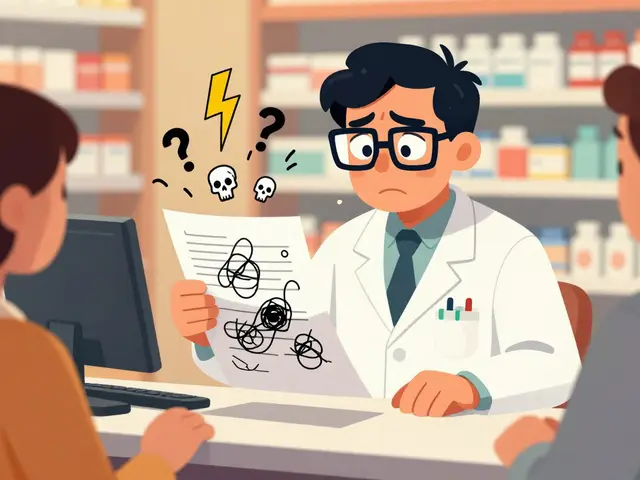
The FDA doesn’t call ahead. Inspectors show up without notice, sometimes staying for days. They walk through production floors, review records, interview staff, and even check the sanitation of bathrooms. The Office of Manufacturing Quality handles these inspections, and they’re not just checking boxes. They’re looking for patterns - signs that a facility is cutting corners or hiding issues.In 2023, the FDA conducted about 1,200 inspections across 1,700 global facilities that make generic drugs for the U.S. market. About 17% of foreign sites had violations, compared to 8% of U.S. sites. That gap isn’t because foreign factories are worse - it’s because the FDA holds everyone to the same standard, no matter where they are.
What Happens During Generic Drug Approval?
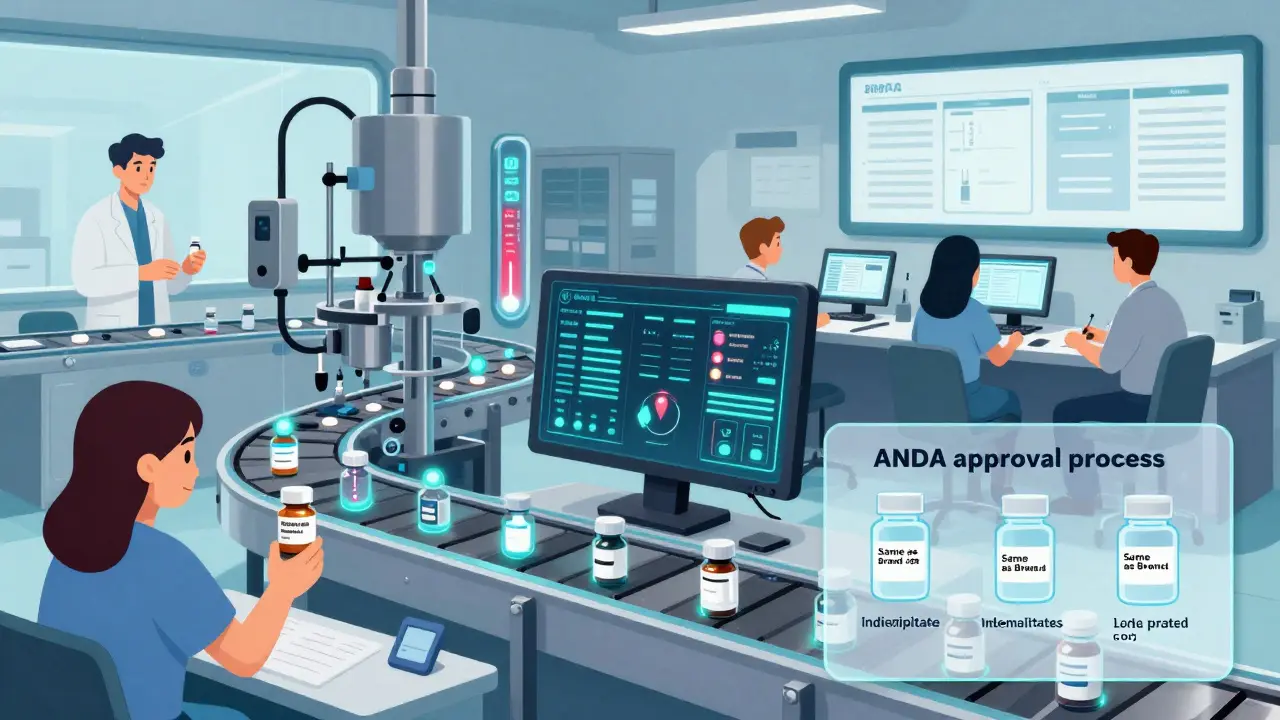
Getting a generic drug approved isn’t fast. It’s not supposed to be. Manufacturers submit an Abbreviated New Drug Application (ANDA), which includes detailed data on chemistry, manufacturing, and controls. But here’s the catch: they must submit three separate batches of the drug’s intermediate form. One batch is used to make all strengths of the drug. The other two are used to test the lowest and highest doses. This ensures that changing the dose doesn’t mess up the drug’s performance.The review process takes months - sometimes over a year. And it’s not just one team doing the work. The Office of Generic Drugs works side-by-side with the Office of Pharmaceutical Quality. That means the same experts who review the science also check the manufacturing plan. No disconnect. No handoffs. Just one tight, focused review.
How the FDA Stays Ahead of Problems
The FDA doesn’t wait for complaints. It uses data to predict trouble. The Drug Quality Reporting System (DQRS), launched in January 2023, lets manufacturers report issues faster. The agency also runs a risk-based sampling program. If a company changes its supplier or switches to a new machine, the FDA might test samples before the change even goes live. This proactive approach helped avoid drug shortages during the pandemic.Remote inspections became common after 2020. In 2022, 35% of inspections were done partially or fully online. Inspectors review digital records, video tours of facilities, and live-streamed lab tests. It’s not perfect - but it’s a tool that keeps oversight going when travel isn’t possible.
Costs, Challenges, and Real-World Impact
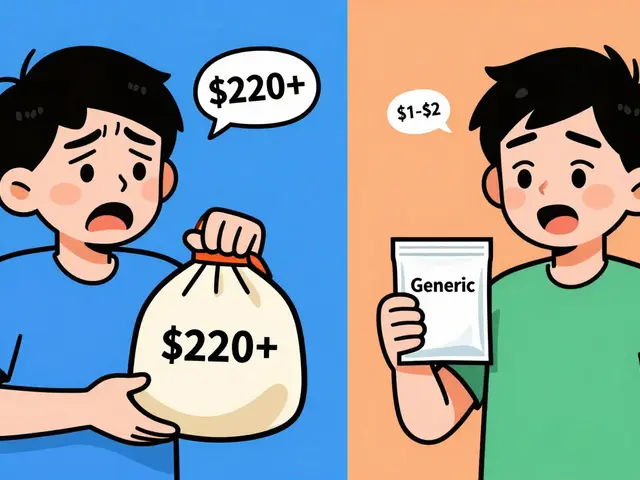
Implementing cGMP isn’t cheap. New manufacturers spend $2 to $5 million just to set up their quality systems before submitting their first application. Documentation alone can eat up 30-40% of development time, according to industry reports. Smaller companies struggle with the paperwork. But the payoff is real.Generic drugs make up 90% of all prescriptions filled in the U.S. - that’s 6.8 billion pills a year. And they cost 80-85% less than brand-name versions. Studies show they work just as well - 98-99% of the time. The FDA’s system doesn’t just protect patients. It keeps the entire system affordable.
Even with all this, the system isn’t flawless. The Government Accountability Office found that FDA inspectors are stretched thin. Some facilities go years without a visit. And while most manufacturers follow the rules, some still try to game the system. That’s why the FDA is pushing new tech - like real-time release testing and continuous manufacturing - to make quality easier to prove and harder to fake.
What’s Next for Generic Drug Quality?
The FDA’s Pharmaceutical Quality for the 21st Century initiative is already testing new ways to monitor drug quality. Imagine a production line where sensors track drug purity as it’s made - no waiting for lab results. That’s the goal. The Generic Drug User Fee Amendments III (GDUFA III), which started in October 2022, gave the FDA $650 million over five years to hire more inspectors, upgrade labs, and build better data systems.By 2025, manufacturers may be required to disclose every source of active ingredients - down to the country and factory. Supply chains are getting longer, and the FDA wants to see them all. Transparency isn’t optional anymore.
At the end of the day, the FDA doesn’t just approve drugs. It builds trust. When you pick up a generic pill, you should feel confident it’s as safe and effective as the brand name. That’s not luck. It’s a system designed to make sure quality isn’t an afterthought - it’s built in.
Are generic drugs really as good as brand-name drugs?
Yes. The FDA requires generic drugs to have the same active ingredient, strength, dosage form, and route of administration as the brand-name version. They must also be bioequivalent - meaning they’re absorbed into the body at the same rate and extent. Studies show generics work just as well in 98-99% of cases. The only differences are in inactive ingredients like fillers or dyes, which don’t affect how the drug works.
How often does the FDA inspect generic drug factories?
The FDA inspects about 1,200 facilities each year - including both U.S. and foreign sites. Inspections are unannounced and can last several days. While not every factory is inspected annually, high-risk facilities or those with past violations are prioritized. On average, foreign plants get inspected every 2-3 years, while domestic ones may be seen more frequently due to easier access.
What happens if a generic drug factory fails an FDA inspection?
If serious violations are found, the FDA issues a Form 483 listing the issues. The company must respond with a correction plan. If problems aren’t fixed, the FDA can block the drug from entering the U.S. market. In extreme cases, the agency can issue an import alert, stopping all shipments from that facility. Some factories have been shut down permanently for repeated failures.
Why do generic drugs cost so much less than brand-name drugs?
Generic manufacturers don’t have to repeat expensive clinical trials because they prove bioequivalence instead. They also don’t spend money on marketing or advertising. But they still must meet the same strict manufacturing standards. The cost savings come from competition - when multiple companies make the same drug, prices drop. On average, generics cost 80-85% less than brand-name versions.
Can the FDA approve a generic drug made overseas?
Yes. Over 80% of generic drugs sold in the U.S. are made outside the country, mostly in India and China. The FDA holds foreign factories to the same standards as U.S. ones. Inspectors travel globally to check facilities. If a foreign plant doesn’t meet cGMP rules, its drugs are blocked from import - no exceptions.
What is ALCOA+ and why does it matter?
ALCOA+ is a set of data integrity standards: Attributable, Legible, Contemporaneous, Original, Accurate, plus Complete, Consistent, Enduring, and Available. It means every record must be traceable to who made it, written clearly at the time it was made, and kept securely for years. If a lab report is missing, altered, or poorly stored, the FDA considers it a violation. This prevents fraud and ensures that quality data can’t be erased or faked.


9 Comments
Quality isn’t something you test at the end. It’s something you bake in from day one. The FDA gets this. Most people think pills are pills - but this system? It’s the quiet hero keeping millions alive every day.
I used to think generics were just cheap knockoffs. Then I learned about cGMP. Now I take them without a second thought. The real miracle isn’t the drug - it’s the system that makes sure it works.
Let’s be real - the FDA doesn’t give a damn about your ‘quality systems.’ They’re just protecting American pharma profits. India and China make 80% of our generics, and yet they’re treated like criminals. Meanwhile, American companies outsource everything and still get a free pass. This isn’t safety - it’s economic nationalism dressed up in lab coats.
The rigor of the FDA’s approach to generic drug manufacturing is a model of public health stewardship. The integration of ALCOA+ principles into record-keeping, the unannounced inspections, and the multi-tiered batch validation process collectively form a robust defense against substandard medication. This is not merely regulatory compliance - it is institutional integrity in action.
Have you ever wondered who really controls the data? What if the ‘inspections’ are staged? What if the ‘validated tests’ are cooked before the inspector walks in? I’ve seen videos - labs with identical results every time. No variation. No human error. That’s not quality. That’s a script.
This is why I trust my generic blood pressure med. The FDA doesn’t rely on luck - they design systems that make failure nearly impossible. Every step, from raw material sourcing to final packaging, is locked down. It’s not sexy, but it’s the reason millions aren’t dying because their pills were weak. Thank you, FDA - quietly doing the hard work.
I’m from Nigeria. We get these generics too - but the ones here? They’re different. Sometimes the pills are too small. Sometimes they don’t dissolve. I’ve seen people get sick from them. The FDA does great work - but why doesn’t it extend to the rest of the world? We pay the same price. Why are we treated like second-class patients?
They call it ‘built-in quality.’ But isn’t that just another way of saying they’re controlling the narrative? You can’t measure trust. You can’t audit intention. And when you force everyone into the same rigid framework - you don’t get quality. You get conformity. And conformity is just obedience with a badge.
ALCOA+? Really? That’s the gold standard? Let me translate: ‘We’re so afraid of being caught, we made 9 rules just to make sure no one can ever say we didn’t document something.’ And yet - you still have recalls. You still have adulterated batches. So what’s the point? You’re not preventing failure - you’re just making sure you have paperwork when it happens. And let’s not forget: 17% of foreign facilities fail - but 8% of U.S. ones do too. So who’s really fooling whom?