


When someone is diagnosed with amyotrophic lateral sclerosis (ALS), the world changes in an instant. It’s not just a diagnosis-it’s a countdown. ALS, also known as Lou Gehrig’s disease, attacks the nerve cells that control your muscles. These cells, called motor neurons, start dying. At first, you might notice a weak grip, trouble climbing stairs, or slurred speech. Then, over months or years, those symptoms get worse. Muscles weaken. Paralysis spreads. Breathing becomes harder. Most people live only 3 to 5 years after symptoms begin. There’s no cure. But there is riluzole-one of the few tools we have to slow it down.
How ALS Destroys Movement
ALS doesn’t attack every part of the nervous system. It picks on two specific types of motor neurons: those in the brain (upper motor neurons) and those in the spinal cord (lower motor neurons). When these cells die, the brain can’t send signals to your muscles anymore. Your arms, legs, throat, and lungs slowly go quiet. You don’t lose your mind. You don’t lose your senses. You’re still fully aware, trapped inside a body that’s failing. That’s what makes ALS so cruel.
What kills these neurons? No one knows for sure. But one big clue is glutamate. Glutamate is a chemical in your brain that helps nerve cells talk to each other. Too much of it, and it becomes toxic. In ALS, glutamate builds up around motor neurons, overstimulating them until they burn out. This is called excitotoxicity. It’s like leaving a faucet running nonstop until the pipes burst.
Riluzole: The First Real Hope
In 1995, after decades of failed experiments, the FDA approved riluzole. It was the first drug ever approved to treat ALS. Before that, there was nothing. No slowing. No delay. Just decline.
Riluzole doesn’t fix the damage. It doesn’t bring back dead neurons. But it does something remarkable: it buys time. Clinical trials showed that people taking riluzole lived 2 to 3 months longer on average than those on placebo. That might sound small. But in a disease where death comes quickly, those extra months mean more birthdays, more conversations, more time with loved ones.
The drug works in three ways. First, it reduces the amount of glutamate released by nerve cells. Second, it blocks sodium channels on those cells, making them less likely to overfire. Third, it interferes with the signals that glutamate sends after it binds to receptors. Together, these actions calm the overactive nerve cells and protect them from self-destruction.
It’s not perfect. In one major study, 100mg per day reduced the risk of death or needing a breathing tube by 35%. A 200mg dose worked even better-but caused too many side effects. So 100mg daily became the standard: two 50mg pills, once in the morning and once at night.
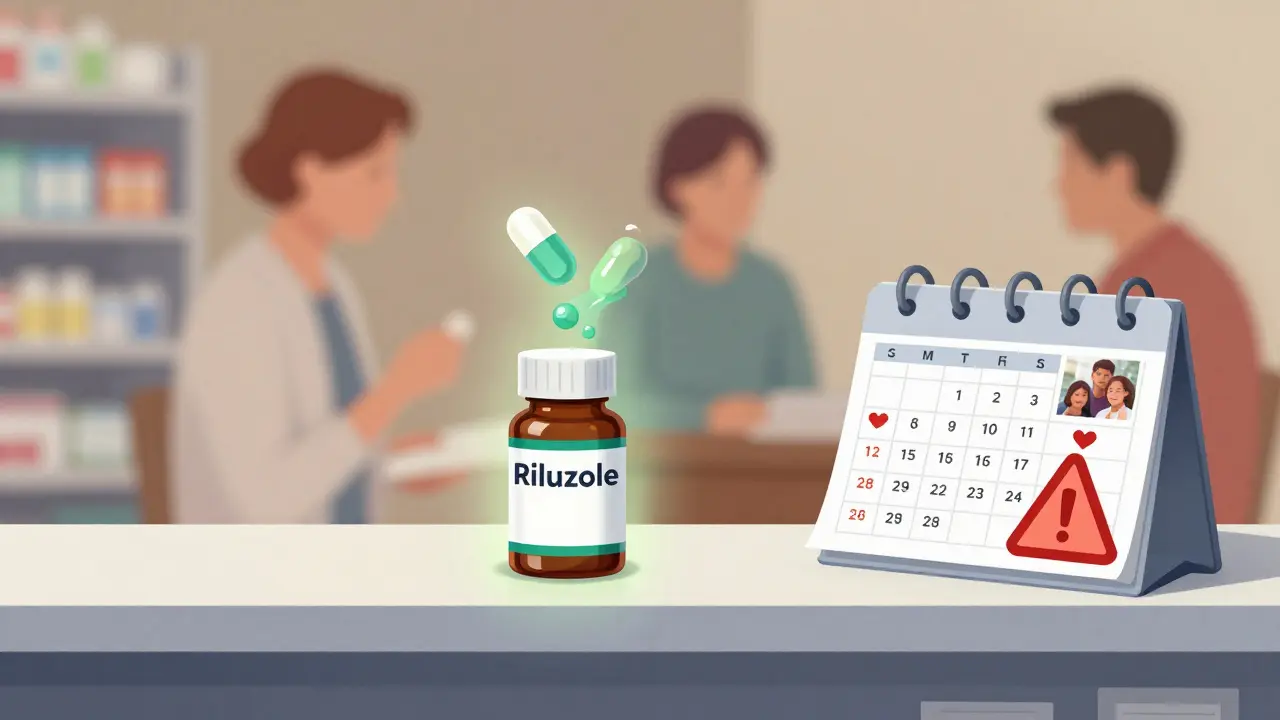
How Riluzole Is Taken-and What Goes Wrong
Riluzole comes in three forms: tablets, oral suspension, and a thin film that dissolves on your tongue. The tablets (Rilutek) are the most common. But if swallowing is hard, the suspension (Tiglutik) or thin film (Exservan) can help.
Doctors usually start patients on 50mg once a day for a week, then bump it up to 50mg twice daily. Why? Because riluzole can hurt your liver. About 12% of people develop elevated liver enzymes. That’s why blood tests are required before starting and every month for the first three months. If liver numbers climb too high, the drug gets stopped.
Side effects are common. Nausea hits 25% of users. Diarrhea? 15%. Fatigue? 20%. Some people feel dizzy or weak. A few stop because it’s just too hard to live with. In one patient survey, 8% quit riluzole because of side effects. But 62% kept taking it-even with nausea-because they believed it gave them more time.
One Reddit user wrote: "Nausea was brutal the first 3 months. Now it’s manageable. My neurologist says my progression is slower than average. I’d take any chance for more time." Another shared: "My liver enzymes were 3x normal. I stopped. Frustrating when the only drug that might help damages your liver."
Who Benefits? Who Doesn’t?
Not everyone responds the same way. Some studies show riluzole extends life by 6 to 19 months. Others show no benefit at all. Why the difference? Real-world patients are more varied than clinical trial participants. Some have faster-progressing ALS. Others have slower forms. Some are younger. Others have other health problems.
The American Academy of Neurology gives riluzole a Level A recommendation-meaning it’s proven to work. But experts like Dr. Merit Cudkowicz say its mechanism is still "frustratingly opaque." We don’t fully understand how it works, and that makes it hard to predict who will benefit.
There’s also a big gap in access. In North America and Europe, 80-85% of newly diagnosed ALS patients start riluzole. But in low- and middle-income countries, only 15-20% can afford it. The cost isn’t just the drug-it’s the monitoring, the blood tests, the follow-ups. Without insurance or government support, many never even begin treatment.
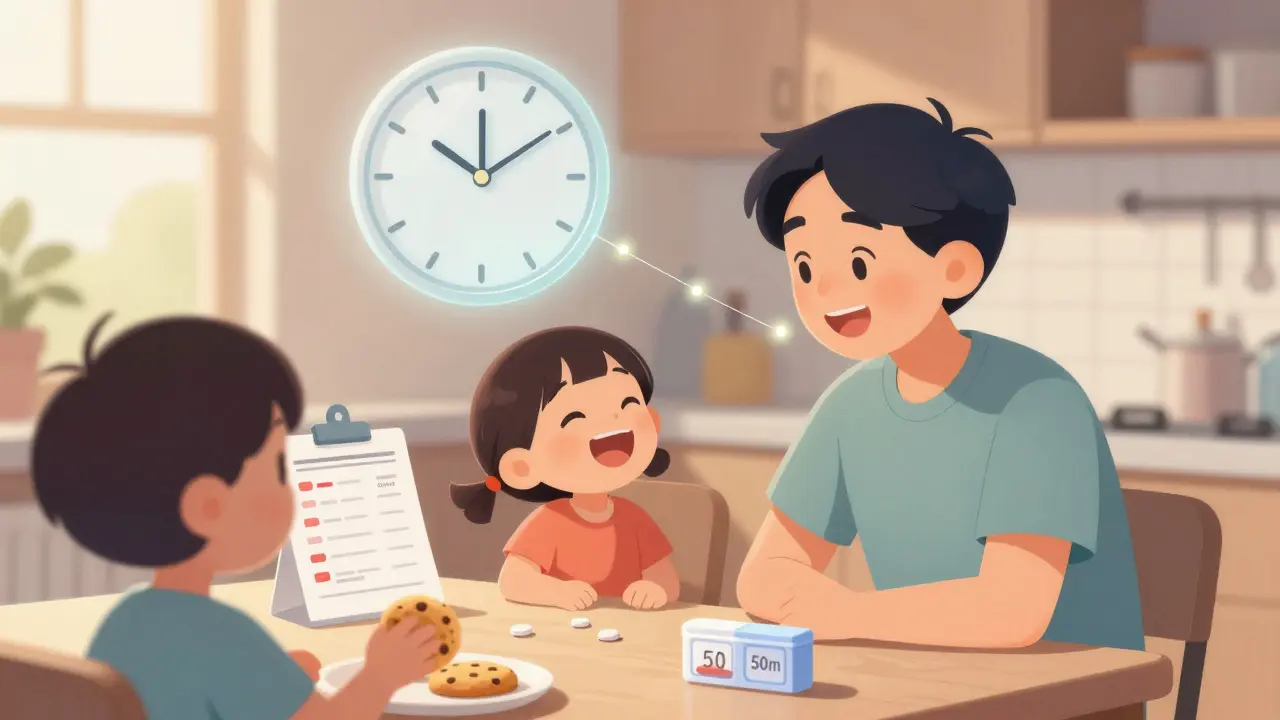
What’s Next? New Forms, New Hope
Riluzole has been around for nearly 30 years. But it’s not standing still. In 2020, the FDA approved Exservan-an oral thin film that dissolves under the tongue. It’s absorbed faster, causes less stomach upset, and improves adherence. One trial showed 30% fewer gastrointestinal side effects compared to tablets.
Researchers are now testing riluzole in combination with other drugs. A trial at the University of Michigan is pairing it with sodium phenylbutyrate, hoping the two together offer stronger protection. Results are expected in 2024.
And while riluzole remains the most prescribed ALS drug globally, new therapies are entering the scene. Edaravone, approved in 2017, slows functional decline. Tofersen, approved in 2023, targets a specific genetic form of ALS (SOD1 mutations). These aren’t replacements for riluzole-they’re additions. For now, most patients still start with riluzole, then add others if they can.
Is Riluzole Worth It?
It’s not a miracle. It doesn’t reverse paralysis. It doesn’t stop the disease. But it does change the trajectory.
Think of it this way: ALS moves fast. Riluzole doesn’t slow the car-it just puts on the brakes a little. It’s not enough to stop the crash. But it might mean you reach your child’s graduation. Or hear your grandchild’s first word. Or have one more quiet morning with your partner.
That’s why, despite side effects, cost, and uncertainty, riluzole remains the foundation of ALS care. It’s the first line of defense. The only drug that’s been shown, again and again, to give people a few more months. In a disease with no cure, that’s not small. It’s everything.

12 Comments
This is why America needs to stop funding foreign medical research and focus on our own. Riluzole? That's a Band-Aid on a gunshot wound. We got the smartest scientists in the world here, and we're letting some 30-year-old drug be the 'foundation' of ALS care? Pathetic. We should be investing billions into gene editing, not babysitting glutamate levels. The real problem isn't ALS-it's our broken healthcare system that lets Big Pharma milk this for profit while patients suffer.
I just lost my dad to ALS last year. I want to say thank you for writing this with so much humanity. It’s rare to see the emotional truth of this disease laid out like this-not just stats and mechanisms, but the quiet mornings, the missed graduations, the weight of awareness. Riluzole didn’t save him, but it gave us 14 extra months to laugh, to cry, to hold his hand when he couldn’t speak anymore. That’s worth more than any clinical trial number. You didn’t just explain a drug-you honored the people who take it.
I’m sorry, but this is why people hate modern medicine. You act like riluzole is some miracle when it’s literally just a delay tactic with liver damage on the side. And don’t get me started on how they charge $100k a year for this. If you’re poor, you’re just supposed to accept dying faster? No wonder people turn to alternative medicine. At least with CBD or stem cells, you don’t need a blood test every month just to stay alive. This isn’t care-it’s a luxury.
lol so riluzole is like the only thing we got and its kinda trash but we use it anyway bc nothin else? sounds like america in general tbh. also why is it 2 pills a day? cant they make it one? and why does it make you puke? like come on. also i heard some guy in india is making a cheaper version. why cant we just import that? #freehealthcare
Riluzole is the only thing we got? 🤡
Oh wow, a 3-month life extension? That’s like getting a 10% discount on your funeral. So helpful. Next up: a pill that lets you say goodbye in slow motion.
If ALS is just glutamate toxicity, why hasn’t anyone tried a vegan ketogenic diet? I mean, if you cut out all the excitotoxins from processed food, maybe the body can heal itself. Also, I read somewhere that ALS is caused by 5G towers. Coincidence? I think not.
In India, my cousin was diagnosed with ALS last year. We couldn’t afford riluzole. But we gave him turmeric tea every morning, massaged his limbs with coconut oil, and played his favorite Bollywood songs. He smiled more in those 6 months than he had in years. I don’t know if it slowed the disease-but it gave him peace. Maybe medicine isn’t just about molecules. Maybe it’s about love too.
The FDA approved riluzole in 1995. That’s 29 years ago. We’ve had CRISPR, mRNA vaccines, AI diagnostics. And we’re still stuck on a drug that barely works? This isn’t progress. This is surrender.
Bro i just saw a video of a guy in usa using riluzole and he was like crying and saying thank you and i was like wow this is so emotional but in india we dont even have this drug and people are just dying at home with no help and no money and i feel so bad for them like why is this so unfair? i wish we had this too
While the pharmacological action of riluzole is modest in its efficacy, its symbolic value as the first FDA-approved intervention for ALS cannot be understated. It represents a paradigm shift from nihilism to therapeutic possibility. The systemic inequities in access, however, remain a profound moral failure. We must not celebrate the drug while ignoring the structural barriers that prevent its global distribution. Compassion without justice is performative.
Let’s be real: riluzole isn’t helping anyone. It’s just making people feel like they’re doing something while the real solution-funding real research-is ignored. And don’t even get me started on how they push this on vulnerable people. I’ve seen families sell their homes to pay for it. Then the drug doesn’t even work for half of them. This isn’t medicine. It’s exploitation dressed in lab coats.