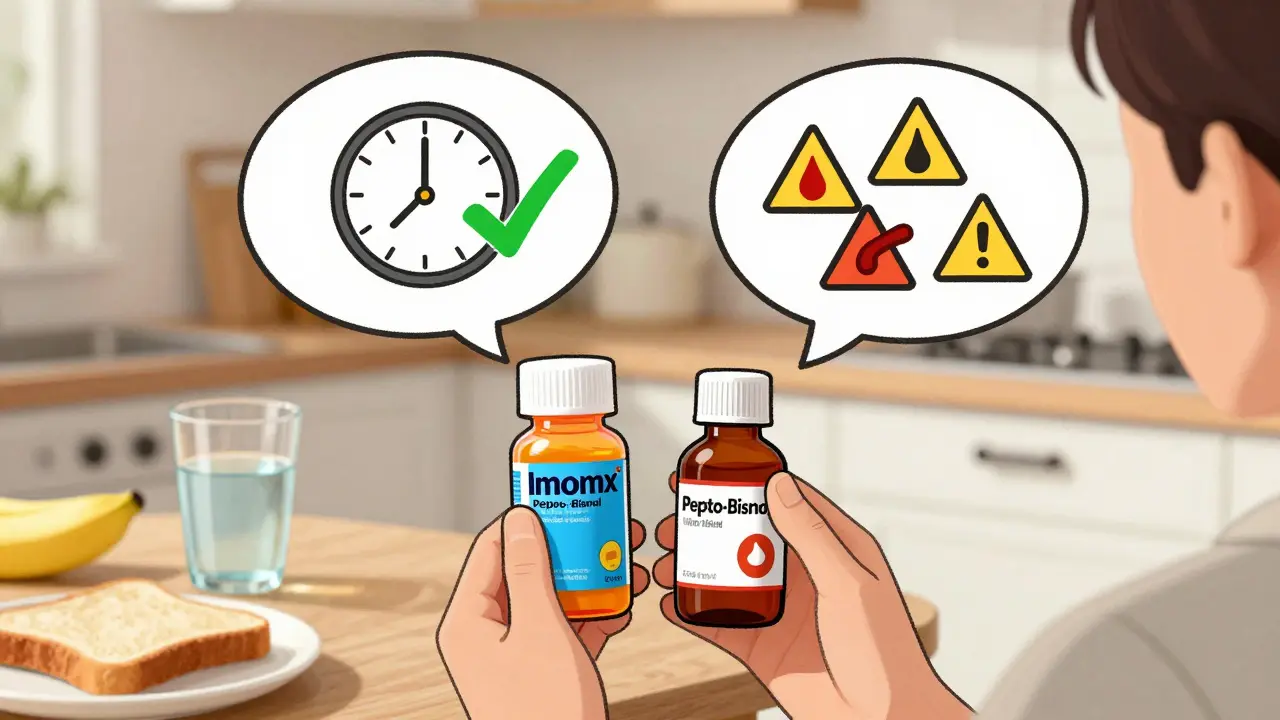


Diarrhea is one of those things everyone experiences at least once - maybe after a bad taco, a flight overseas, or a stomach bug going around the office. It’s uncomfortable, inconvenient, and sometimes embarrassing. But here’s the thing: most cases go away on their own in a couple of days. That doesn’t mean you have to suffer. Over-the-counter (OTC) treatments like Imodium and a brand name for loperamide, a medication that slows down gut movement to reduce stool frequency and Pepto-Bismol a brand name for bismuth subsalicylate, which coats the gut, reduces inflammation, and kills certain bacteria can help you get back on track. But using them the wrong way can make things worse. Knowing when to reach for the medicine cabinet - and when to call your doctor - matters more than you think.
What OTC Diarrhea Treatments Actually Do
There are two main types of OTC diarrhea meds, and they work in completely different ways. Loperamide, sold as Imodium, is a synthetic opioid that doesn’t cross into your brain like morphine or oxycodone. Instead, it targets the muscles in your intestines. Think of it like hitting the brakes on your gut. It slows down how fast food moves through your system, letting your body absorb more water and turning loose stools into something more solid. Clinical studies show it reduces bowel movements by about 62% within 24 hours. It kicks in within 30 to 60 minutes, which is why so many people swear by it for last-minute travel or workday emergencies.
Bismuth subsalicylate, the active ingredient in Pepto-Bismol and Kaopectate, is older and does more than just slow things down. It coats the lining of your stomach and intestines like a protective bandage. It also reduces inflammation, neutralizes toxins from bad bacteria like E. coli, and even kills some of them. It’s why you’ll often hear travelers take it before heading abroad. It doesn’t just treat diarrhea - it helps prevent it. And unlike loperamide, it also tackles nausea and stomach cramps. One study found it reduced nausea by 37% and cramps by 42% in people with traveler’s diarrhea.
Both come in multiple forms: caplets, liquids, softgels, and chewables. Imodium has a standard adult dose of 4mg after the first loose stool, then 2mg after each additional one - but never more than 8mg in a day. Pepto-Bismol liquid gives you 524mg per 30mL dose, and you can take up to 8 doses in 24 hours. Chewable tablets contain 262mg per tablet. For kids, the rules change. Imodium liquid is approved for kids 6 and up, while caplets are for 12+. Pepto-Bismol’s Children’s formula is only for ages 12 and older. Never give adult formulas to younger kids without a doctor’s okay.
When to Use OTC Treatments
These meds are great for mild, short-term diarrhea. If you’ve had three or four loose stools in a day, no fever, no blood, and you’re not feeling dizzy or dehydrated, then yes - reach for an OTC option. That’s exactly what they’re designed for. Most people use them for:
- Traveler’s diarrhea (especially in countries with questionable water quality)
- Food poisoning from a bad meal
- Stomach bugs from coworkers or kids
- Stress-induced or dietary-triggered episodes
Here’s how to use them right:
- Take the first dose after your first loose stool - don’t wait until it gets worse.
- After each additional loose stool, take another dose - but stick to the max daily limit.
- Stop after 48 hours, even if you still feel off. If it’s still going, it’s not just a bug - it’s something else.
Pair your meds with hydration. Drink fluids with electrolytes - not just water. WHO-recommended oral rehydration solutions have 75mmol/L sodium and help your body absorb fluid better. If you can’t find those, a simple mix of water, a pinch of salt, and a teaspoon of sugar works in a pinch. Avoid dairy, caffeine, spicy foods, and high-fiber stuff like broccoli or beans. Stick to the BRAT diet: bananas, rice, applesauce, toast. It’s boring, but it’s gentle.
When to Stop and See a Doctor
This is where most people get it wrong. You think, “I just need more pills,” and keep taking them. That’s dangerous. There are clear red flags that mean your diarrhea isn’t just a bug - it’s something serious.
Stop using OTC meds and see a doctor if you have:
- Fever above 100.4°F (38°C) - this suggests an infection that needs more than symptom control
- Bloody or black, tarry stools - could mean internal bleeding, ulcers, or inflammatory disease
- Severe abdominal pain or cramping that doesn’t improve
- Signs of dehydration: dry mouth, no tears, dizziness, or urinating less than once every 8 hours
- Diarrhea lasting more than 48 hours - especially if it’s getting worse
- Weight loss over 5% of your body weight in a few days
These aren’t just “maybe” signs. The Mayo Clinic, NHS, and American Gastroenterological Association all say the same thing: if you have any of these, you need medical evaluation. Using loperamide when you have a fever or bloody stool can trap harmful bacteria inside your gut, making the infection worse. In rare cases, it can even cause toxic megacolon - a life-threatening swelling of the colon.
And here’s something you won’t hear on the bottle: loperamide abuse is real. Some people take 20, 50, even 100mg a day to manage opioid withdrawal symptoms. That’s not just risky - it’s deadly. The FDA has documented at least 48 cardiac deaths linked to loperamide misuse between 1976 and 2015. At high doses, it can cause irregular heart rhythms, fainting, or sudden cardiac arrest. That’s why the package now says “Do not exceed 8mg in 24 hours” in big letters.
Imodium vs. Pepto-Bismol: Which One Should You Choose?
It’s not about which is “better.” It’s about what your body needs.
| Feature | Loperamide (Imodium) | Bismuth Subsalicylate (Pepto-Bismol) |
|---|---|---|
| Primary Action | Slows gut movement | Cools, coats, kills bacteria, reduces inflammation |
| Onset Time | 30-60 minutes | 30-60 minutes |
| Best For | Fast relief from frequent loose stools | Traveler’s diarrhea, nausea, cramps, and mild infection |
| Common Side Effect | Constipation (12% of users) | Black stools and tongue (98% and 85% respectively) |
| Contraindications | Fever, bloody stool, children under 12 | Aspirin allergy, children under 12, flu-like symptoms |
| Max Daily Dose (Adults) | 8mg | 8 doses (524mg each) |
If you’re on a trip and just want to stop the diarrhea fast - go with Imodium. If you’re feeling nauseous, have cramps, and aren’t sure if it’s food poisoning or a virus - Pepto-Bismol gives you more bang for your buck. But never mix them. Taking both increases your risk of salicylate toxicity (like aspirin overdose) and makes side effects worse.
What You’re Not Being Told
Most people think OTC meds are harmless. They’re not. The FDA’s own data shows 19% of adverse events from these drugs come from people taking too much. One Reddit user posted about taking 6 Imodium caplets in four hours because “it wasn’t working.” They ended up in the ER with severe constipation. Another user on WebMD said they took Pepto-Bismol for five days straight because “I didn’t want to miss work.” They developed a stomach ulcer.
Also, don’t assume it’s “just a stomach bug.” Diarrhea can be a sign of:
- Chronic conditions like Crohn’s disease or IBS
- Food intolerances (lactose, gluten)
- Antibiotic side effects
- Parasites like giardia
- Even colon cancer
That’s why if it keeps coming back - even if it’s mild - you need to get checked. OTC meds mask symptoms. They don’t fix causes.

What to Do Instead
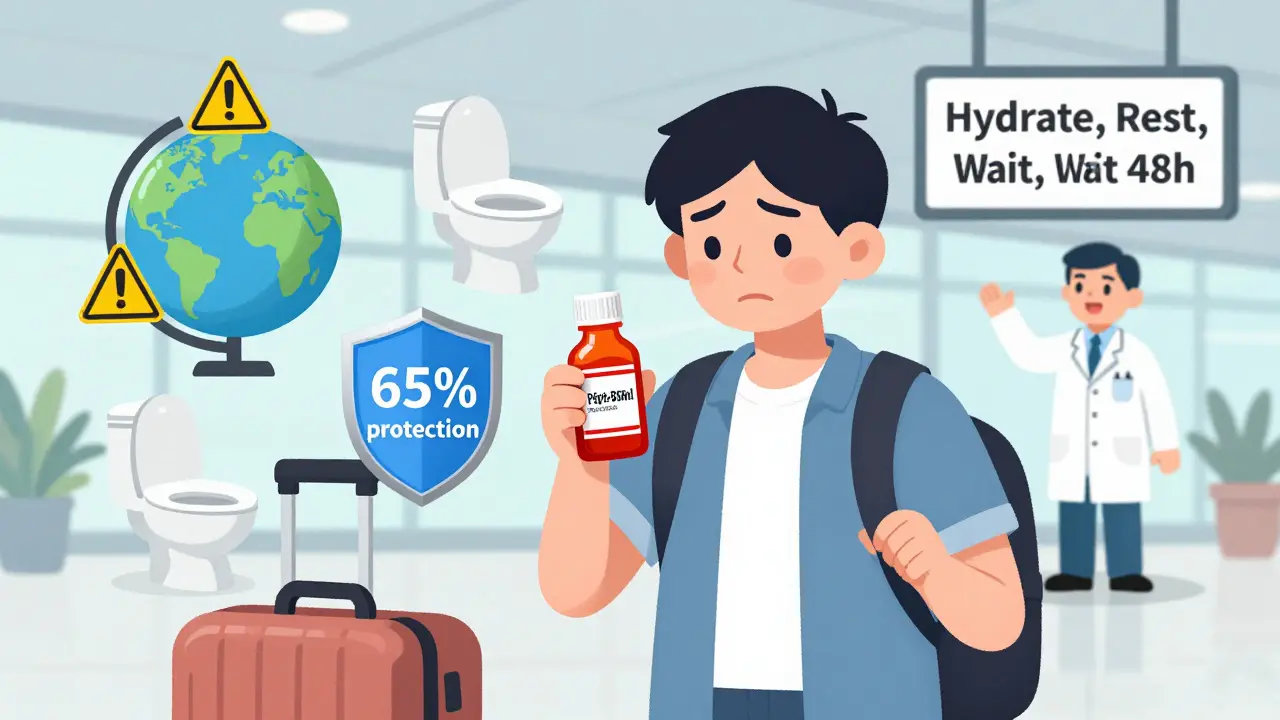
If you’re unsure, here’s a simple rule: hydrate, rest, wait 48 hours. If you’re not improving, see a doctor. No shame in it. Most doctors will ask you three questions:
- How many stools a day?
- Any blood, fever, or vomiting?
- How long has it lasted?
That’s it. No fancy tests needed right away. But if you’ve been taking OTC meds for more than two days, they’ll want to rule out infections or inflammation. They might order a stool test or blood work. It’s faster than you think.
And yes - probiotics help. Not always. But studies show certain strains like Lactobacillus rhamnosus GG can shorten diarrhea by a day in kids and adults. You can find them in yogurt or supplements. They won’t stop diarrhea overnight, but they help your gut heal.
Also - don’t use anti-diarrheals as prevention. Taking Pepto-Bismol before a trip might reduce your risk by 65%, but it’s not foolproof. Wash your hands. Drink bottled water. Avoid raw veggies in places with poor sanitation. Prevention beats treatment every time.
Final Takeaway
OTC diarrhea treatments are useful - but they’re not magic pills. They’re tools. Use them the right way, and they’ll help you bounce back. Use them wrong, and you could end up in worse shape than before. Know the limits. Respect the warnings. And if something feels off - don’t push through it. Your body’s telling you something. Listen.
Can I take Imodium and Pepto-Bismol together?
No. Combining loperamide and bismuth subsalicylate increases your risk of side effects and toxicity. Pepto-Bismol contains salicylate (similar to aspirin), and taking it with other meds can lead to stomach bleeding or salicylate poisoning. Stick to one at a time, and only if you’re sure it’s appropriate for your symptoms.
Is it safe to use OTC diarrhea meds for kids?
Only under specific conditions. Imodium liquid is approved for children 6 and older. Imodium caplets are for 12+. Pepto-Bismol is only for 12 and up. Never give adult doses to children. For kids under 6, focus on hydration and see a doctor before using any OTC product. Pediatric guidelines recommend avoiding anti-diarrheals in young children unless prescribed.
Why does Pepto-Bismol turn my stool black?
It’s harmless and normal. Bismuth reacts with sulfur in your digestive tract, creating bismuth sulfide - a black compound. It’s not blood. It goes away once you stop taking it. But if you’re also vomiting, have abdominal pain, or the black stool looks tarry, see a doctor - that could be a sign of bleeding.
Can I use these meds if I’m pregnant?
Loperamide is generally considered low-risk in pregnancy and is sometimes used under medical supervision. Bismuth subsalicylate should be avoided because it contains salicylate, which is linked to complications in pregnancy - similar to aspirin. Always talk to your doctor before taking any OTC medicine while pregnant.
What if I accidentally took too much Imodium?
Call poison control or go to the ER. Symptoms of overdose include dizziness, slow or irregular heartbeat, fainting, or difficulty breathing. Even if you feel fine, take it seriously. Loperamide overdose can cause cardiac arrest. Don’t wait. Bring the bottle with you.


15 Comments
I took Imodium on a business trip last year and thought I was a genius until I got constipated for a week. Never again. Just hydrate and wait. Your gut knows what it's doing.
Pepto-Bismol is the real MVP for travel diarrhea. I take it before every international flight. Black stools? Cool. I know it's working. No shame in that.
You people don't understand how loperamide works. It's not just slowing things down. It's binding to peripheral opioid receptors in the myenteric plexus. The FDA limit exists because at 100mg+ it crosses the BBB. You think you're just treating diarrhea but you're basically self-medicating opioid withdrawal. Stop.
I used to think OTC meds were magic. Then I got sick for 12 days straight and realized I was just masking a food intolerance. Diarrhea isn't a problem to solve. It's a signal. Listen to your body. It's smarter than the bottle.
In India we don't rush to pills. We drink buttermilk with roasted cumin. It's natural. It balances. We've been doing this for centuries. Western medicine wants to fix everything with a pill. Sometimes the cure is slower than the problem.
I used to give my kid Pepto-Bismol when he had a stomach bug. Then I read the label. 12+. I felt like an idiot. Kids aren't small adults. Always check the age. Your kid's gut is still learning. Don't force it.
I don't understand why people are so eager to medicate every little discomfort. Diarrhea is your body flushing out toxins. You're just suppressing it. Let it run. It's not a race to feel better. It's a process. Be patient. Or don't. I'm not your mom.
I once took Imodium before a wedding because I was nervous. Ended up in the ER with a bowel obstruction. Never again. I now carry ginger tea bags. They're cheaper, tastier, and won't turn your colon into a brick.
i just want to say i love how this post says 'dont mix them' like its common sense but i swear half the people i know do it. i had a friend take both because 'pepto helps nausea and imodium stops the runs' and then she was in the hospital for 3 days. just... please read the label. i'm begging you.
You're all missing the real point. The real danger isn't overdosing. It's using these to avoid the real issue. I had chronic diarrhea for 8 months. Took Pepto-Bismol daily. Thought I was fine. Turns out I had Crohn's. If you're relying on OTC meds for more than a week, you're not treating the problem. You're ignoring it.
I took 12 Imodium in one day. I was trying to get through a work meeting. Felt fine. Then I passed out. Cardiac arrest. Resuscitated. Now I have a pacemaker. Don't be me.
i had a weird thing happen last year where i took pepto-bismol and my stool turned black and i thought i was bleeding so i went to the er and they were like oh that's normal lol. i felt so dumb. but also like why isn't this on the bottle in big red letters??
the fact that people think 'brat diet' is a real medical recommendation is wild. bananas rice applesauce toast. like we're feeding a toddler. if you're eating that for more than 2 days you're not healing. you're starving. get real food. protein. veggies. your gut needs fuel not punishment.
I used to be the kind of person who took Imodium at the first sign of a loose stool. Then I went to Thailand. I didn't take anything. I drank coconut water. I rested. I let my body do its thing. I didn't get sick. Not once. I learned that sometimes the best medicine is not medicine at all. Just time. And trust. Your body isn't broken. It's trying to heal.
Westerners always want a pill for everything. In my country we have turmeric, ginger, and yogurt. No chemicals. No side effects. Just nature. You think you're modern by popping pills. You're just lazy. Let your body work. It's not that hard.