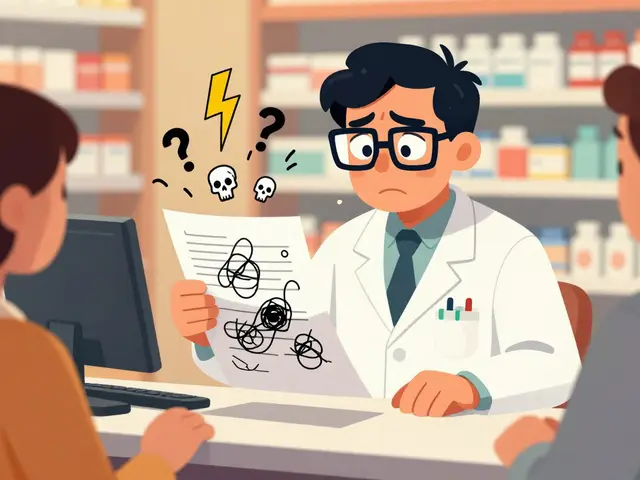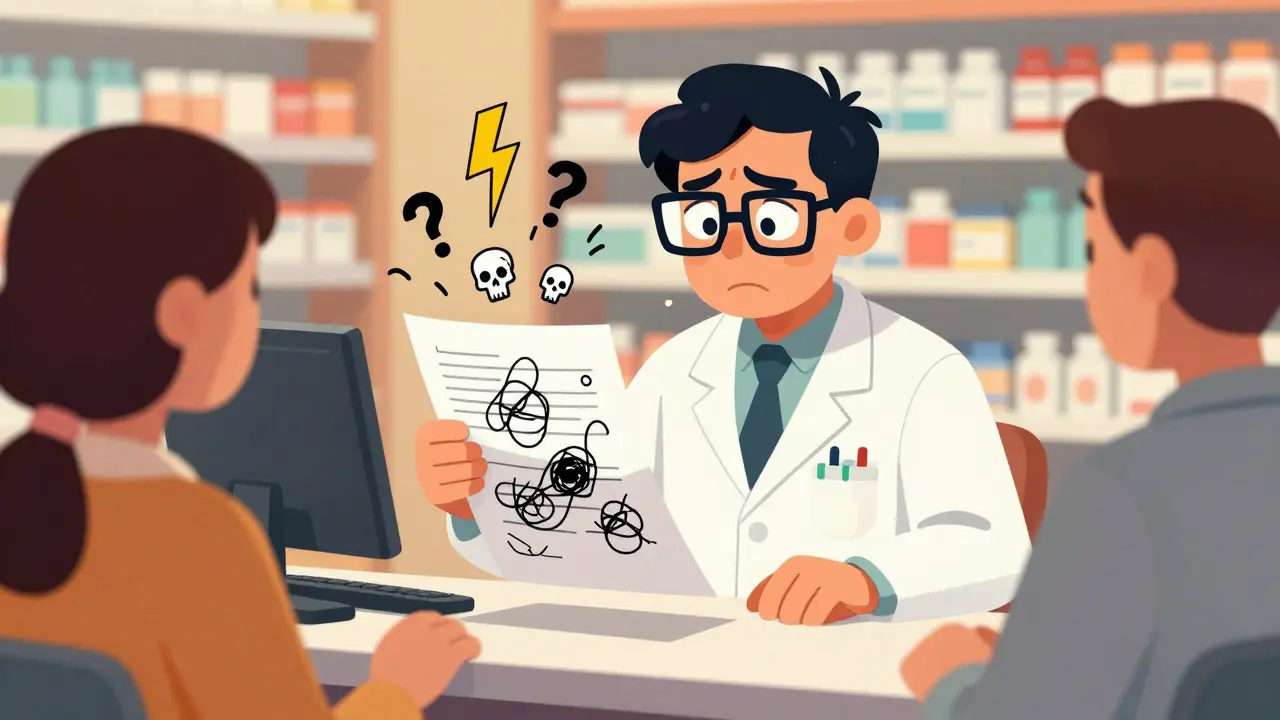


Imagine picking up your prescription at the pharmacy, only to have the pharmacist call you back five minutes later. They can’t read the dosage. Or worse, they guess wrong, and you end up with a dose that’s either ineffective or dangerous. This isn’t a rare nightmare; it is a daily reality for millions of patients. Illegible handwriting on medical prescriptions is more than an annoyance-it is a critical patient safety hazard that contributes to thousands of preventable deaths every year.
We used to accept messy doctor’s notes as part of the job. But in modern healthcare, we know better. The shift from pen and paper to digital systems has been slow, but the data is clear: handwritten prescriptions are a leading cause of dispensing errors. If you are a patient, a provider, or a healthcare administrator, understanding why this happens-and how to stop it-is essential for keeping people safe.
The Hidden Cost of Messy Scripts
It is easy to dismiss bad handwriting as a quirky professional trait, but the consequences are severe. According to the Institute of Medicine (IoM), medical errors cause between 44,000 and 98,000 preventable deaths annually in the United States. Of those, approximately 7,000 are directly linked to illegible handwriting alone. That number represents real people who suffered because a symbol was misread or a decimal point was missed.
The problem extends beyond mortality. Unreadable orders create a massive operational burden. Pharmacists make an estimated 150 million calls annually to providers just to clarify what a scribble means. This delays treatment, increases stress for staff, and wastes valuable time. In a study published in the MMS Journal (2022), researchers found that 92% of medical students and doctors made prescription errors, averaging two errors per person. These aren’t just typos; they include missing initials, incorrect dosages, and wrong administration frequencies.
Consider the perspective of a nurse. A study by Sendlhofer et al. (2019) revealed that nurses spend an average of 12.7 minutes trying to decipher each illegible prescription. Multiply that by hundreds of prescriptions a day across a hospital, and you lose hours of direct patient care time. The frustration is palpable among healthcare professionals, yet many feel trapped by time pressures and multitasking demands.
| Metric | Estimated Value | Source/Context |
|---|---|---|
| Annual Deaths | ~7,000 | Institute of Medicine (IoM) |
| Clarification Calls | 150 Million/year | Veradigm (2023) |
| Nurse Time Wasted | 12.7 mins/prescription | Sendlhofer et al. (2019) |
| Error Rate (Medical Students) | 92% | MMS Journal (2022) |
Why Doctors’ Handwriting Is So Poor
You might wonder why such a serious issue persists. The answer lies in the workflow of modern medicine. Physicians are under immense pressure. They see patients quickly, manage complex cases, and document everything in real-time. Michaelson et al. (2017) identified time constraints and multitasking as primary drivers of poor legibility. When a doctor is rushing, cursive writing becomes a blur of shapes rather than distinct letters.
There is also a cultural component. For decades, messy handwriting was almost seen as a badge of honor-a sign that a doctor was too busy saving lives to worry about neatness. However, experts like Leape and Berwick called out this attitude early on, labeling handwritten notes as “a dinosaur long overdue for extinction” in a 2000 BMJ editorial. Despite this warning, the habit stuck because there was no easy alternative until recently.
Furthermore, some medical trainees believe that improving their handwriting takes too much time during patient encounters. A 2017 study by Jadhav et al. reported that 68% of medical trainees felt this way, even though they recognized the safety risks. This mindset creates a cycle where speed prioritizes volume over accuracy, leaving patients vulnerable.
E-Prescribing: The Digital Solution
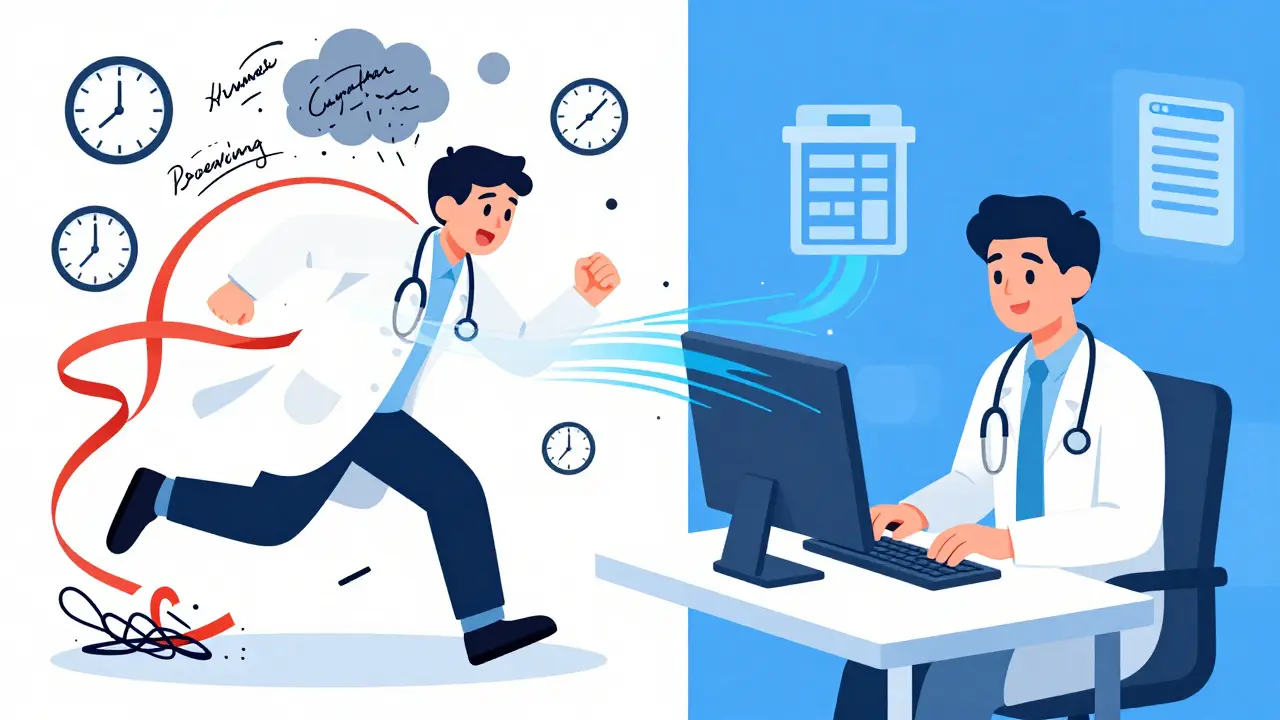
If handwriting is the problem, Electronic prescribing (e-prescribing) is the solution. Introduced in 2003, e-prescribing allows providers to send prescriptions directly to pharmacies via secure digital networks. By 2019, adoption reached 80% among office-based providers in the United States, according to Veradigm (2023). This shift has dramatically improved safety metrics.
The numbers speak for themselves. Research published in JMIR (2025) showed that electronic prescriptions achieved an 80.8% accuracy rate in compliance with safety criteria, compared to just 8.5% for handwritten ones. Even manually entered electronic prescriptions-those created without templates-showed a 56% accuracy rate, still far superior to pen and paper. E-prescribing reduces errors of illegibility by 97%, effectively eliminating the guessing game for pharmacists.
Beyond legibility, e-prescribing offers other benefits. It checks for drug interactions, allergies, and dosage limits in real-time. It ensures that all required elements-patient name, drug name, dosage, frequency, route, and prescriber information-are included automatically. This systematic approach addresses the root causes of many medication errors.
| Feature | Handwritten | Electronic (E-Prescribing) |
|---|---|---|
| Safety Compliance | 8.5% | 80.8% |
| Illegibility Errors | High | Reduced by 97% |
| Pharmacist Clarification Calls | Frequent | Rare |
| Drug Interaction Checks | Manual/None | Automated |
Challenges of Going Digital
While e-prescribing is clearly superior, it is not without challenges. Transitioning to digital systems requires significant investment and workflow adaptation. Initial costs for comprehensive systems average $15,000-$25,000 per provider. Staff training takes 8-12 hours per clinician, and integration with existing electronic health record (EHR) systems can be complex.
Moreover, digital systems introduce new types of risks. Researchers Osmani et al. (JMIR, 2025) noted concerns about workflow disruptions and increased documentation time. There is also the issue of “alert fatigue,” where clinicians override important safety alerts too frequently because they receive too many notifications. If not managed properly, this can offset some of the safety benefits of e-prescribing.
Reliability and maintenance are also key concerns in rapidly evolving digital environments. Systems must be updated regularly to ensure security and functionality. For smaller practices or resource-limited settings, these barriers can be significant. However, the long-term viability of handwritten prescriptions is extremely limited, and most experts agree that digital transition is inevitable.

Best Practices for Remaining Handwritten Prescriptions
In some settings, particularly in resource-limited areas or during system outages, handwritten prescriptions may still be necessary. If you must use pen and paper, follow these best practices to minimize risk:
- Print, don’t write in cursive. Printed letters are easier to distinguish and less prone to misinterpretation.
- Avoid dangerous abbreviations. Use The Joint Commission’s “Do Not Use” list as a guide. For example, never write “U” for unit or “QD” for once daily.
- Include all required elements. Ensure patient name, drug name, dosage, frequency, route, and prescriber information are clearly visible.
- Use specific measurements. Avoid vague terms like “take as needed” without specifying conditions.
- Self-assess regularly. Studies suggest that self-assessment using a checklist can help decrease illegibility and incorrectness over time.
For institutions not yet ready for full e-prescribing implementation, these steps offer a transitional approach to improve safety while planning for digital adoption.
The Future of Prescription Safety
The trajectory is clear: handwritten prescriptions will become increasingly rare in developed healthcare systems by 2030. Regulatory trends, including the Centers for Medicare & Medicaid Services’ emphasis on electronic health record meaningful use criteria, are accelerating this shift. The e-prescribing market, valued at $1.8 billion in 2022, is projected to reach $4.2 billion by 2027, reflecting growing investment in patient safety solutions.
Emerging technologies like artificial intelligence-assisted handwriting recognition may offer transitional solutions for settings where full e-prescribing is not yet feasible. Early studies show 85-92% accuracy in interpreting common medication names, providing a bridge until digital infrastructure is fully established. However, as researchers emphasize, electronic systems must be carefully designed to avoid introducing new errors while solving old ones.
Ultimately, patient safety depends on clear communication. Whether through digital networks or printed scripts, the goal remains the same: ensuring that every patient receives the right medication, at the right dose, at the right time. By embracing technology and adhering to best practices, we can eliminate the dangers of illegible handwriting once and for all.
How many deaths are caused by illegible handwriting on prescriptions?
Approximately 7,000 deaths annually in the United States are attributed specifically to illegible handwriting on prescriptions, according to the Institute of Medicine (IoM).
What is e-prescribing?
E-prescribing is the electronic transmission of prescriptions from providers to pharmacies via secure digital networks. It eliminates the need for handwritten scripts, reducing errors and improving safety.
Why do doctors have poor handwriting?
Time constraints, multitasking demands, and historical cultural norms contribute to poor handwriting among physicians. Many feel pressured to prioritize speed over legibility during patient encounters.
How does e-prescribing improve patient safety?
E-prescribing reduces illegibility errors by 97%, automates drug interaction checks, and ensures all required prescription elements are included. Studies show an 80.8% safety compliance rate compared to 8.5% for handwritten prescriptions.
What should I do if my prescription is hard to read?
Contact your pharmacist or provider immediately to clarify the instructions. Never guess the dosage or medication based on unclear writing. Ask for an electronic prescription if possible.
Are there any downsides to e-prescribing?
Yes, potential downsides include high initial costs, staff training requirements, workflow disruptions, and alert fatigue, where clinicians may override important safety notifications due to excessive alerts.
When will handwritten prescriptions be completely phased out?
Experts predict that handwritten prescriptions will become increasingly rare in developed healthcare systems by 2030, driven by regulatory mandates and technological advancements.
What are the best practices for writing prescriptions by hand?
Print instead of using cursive, avoid dangerous abbreviations, include all required elements (patient name, drug, dosage, etc.), use specific measurements, and regularly self-assess for clarity.