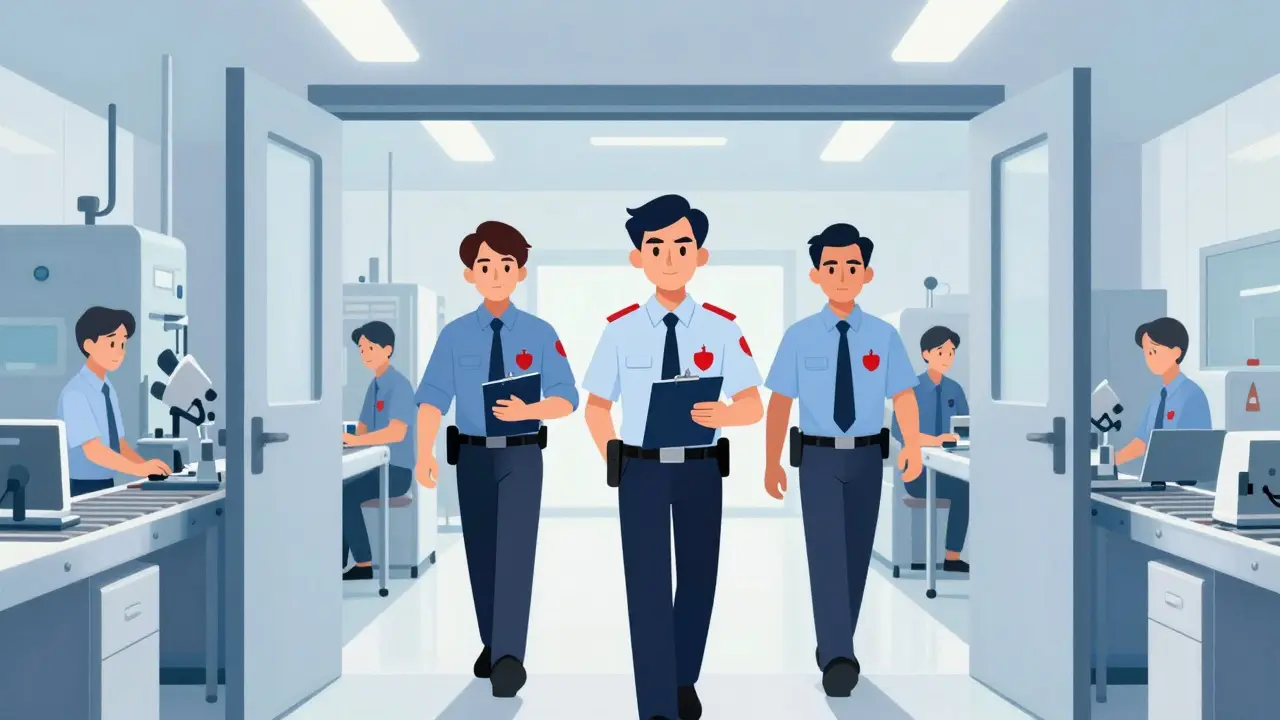


Imagine walking into your manufacturing facility on a Tuesday morning. The doors open, and three strangers in badges walk in. They aren't there to buy anything. They are FDA investigators who have the legal authority to look at almost every record you keep about how you make your drugs or devices. For manufacturers, this moment defines everything. It’s not just about passing a test; it’s about proving that your entire system is transparent, compliant, and safe. But here is the tricky part: while the Food and Drug Administration (FDA) has broad power to inspect, they don’t look at *everything*. In fact, some of your most critical internal documents might be off-limits-unless things go wrong.
Navigating manufacturing transparency isn't just about following rules. It's about understanding the fine line between what the government needs to see to protect public health and what you need to keep private to improve your own processes. If you get this balance wrong, you could face warning letters, production halts, or even criminal charges. Let’s break down exactly what the FDA can see, what they can’t, and how you should prepare for their arrival in 2026.
What the FDA Can Actually See During an Inspection
The foundation of FDA access rights lies in Section 704(a)(1) of the Federal Food, Drug, and Cosmetic Act (FD&C Act). This law gives the agency the power to inspect manufacturing facilities and review current Good Manufacturing Practice (CGMP) records. When inspectors arrive, they don't just glance around. They systematically dig into your procedures, production logs, validation protocols, and deviation investigations.
For pharmaceutical companies, the rule is simple under 21 CFR 211.180: you must keep CGMP records for at least one year after a drug product’s expiration date. Medical device manufacturers fall under 21 CFR 820.180, which requires keeping quality system records for the device’s lifespan plus two years. These aren't suggestions; they are hard deadlines. If the FDA asks for a record from three years ago, and it’s gone, you’re already failing.
During a routine surveillance inspection-which makes up about 75% of all pharmaceutical inspections-the FDA looks for specific evidence of control. They want to see:
- Production records: Batch-by-batch documentation showing exactly how each unit was made.
- Validation protocols: Proof that your equipment and processes consistently produce the right results.
- Deviation investigations: Detailed reports on when things went wrong and how you fixed them.
- CAPA documentation: Corrective and Preventive Action plans that show you’re stopping errors before they happen again.
If any of these are missing, incomplete, or clearly falsified, the inspector will note it on Form FDA 483. This form is not a final verdict, but it is a serious warning sign. You have exactly 15 business days to respond with a detailed root cause analysis. According to FDA data from 2024, companies that follow the recommended root cause methodology close 89% of these observations within six months, compared to only 62% for those who use simplified approaches.
The "Safe Space" Policy: What Internal Audits Are Protected
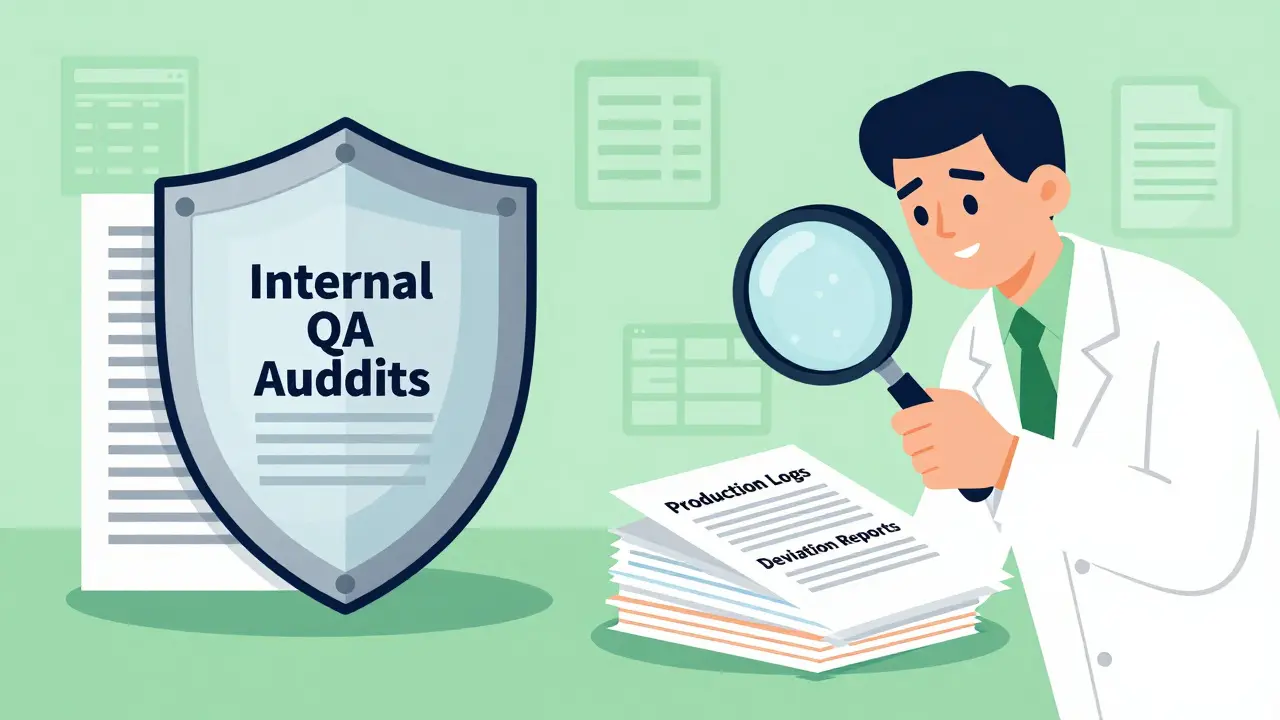
Here is where many manufacturers get tripped up. Not all records are fair game. Under Compliance Policy Guide (CPG) Sec. 130.300, issued in 1996, the FDA generally does not review or copy internal quality assurance (QA) audit reports. Why? Because the agency wants to encourage candid internal reviews. If your team knows the government will see every self-critique, they might stop being honest about small issues, hiding bigger problems instead.
This policy creates a "safe space" for companies to conduct meaningful internal audits without fear of immediate regulatory repercussions for candid findings. Dr. Jane Axelrad, former FDA Deputy Center Director for Policy, explained that this approach helps build a robust quality culture. However, this protection is not absolute. It applies strictly to audits conducted according to your written QA program. It does not cover quality control investigations of actual product failures. Those records are fully accessible.
In practice, this distinction is blurry. A 2025 survey by TheFDAGroup found that 63% of quality professionals accidentally over-disclose protected audit reports during inspections because they’re nervous or confused. Susan Martinez, a Manufacturing Director at Pfizer, noted in an ASQ webinar that this confusion leads to unnecessary scrutiny. To avoid this, you need clear internal protocols that separate "protected QA audits" from "mandatory QC investigations." Setting this up takes time-about 200-300 hours of documentation work-but it saves you from accidental violations later.
When the Rules Change: For-Cause Inspections vs. Routine Checks
The type of inspection matters more than you might think. During a routine check, the CPG 130.300 shield protects your internal audits. But during a "for-cause" inspection-triggered by complaints, adverse events, or prior failures-the game changes completely. In 2024, for-cause inspections accounted for 18% of all checks, but in these scenarios, the FDA gains full access to all records, including those internal audit reports you thought were safe.
Why the difference? Because when something goes wrong publicly, the FDA needs to know if your internal systems caught it early. If they find that your internal audits ignored a major flaw, that’s a huge red flag. Professor Daniel Troy, former FDA Chief Counsel, argued in a 2025 article that this policy can create "regulatory blind spots" where systemic issues hide behind protected documents until a crisis hits.
You also need to watch out for Remote Regulatory Assessments (RRAs). Finalized in July 2025, RRAs allow the FDA to evaluate your compliance virtually. They might ask for read-only database access or remote interactive evaluations. While RRAs don’t generate Form 483s like physical inspections do, they still require transparency. Companies with RRA-ready systems saw a 65% reduction in inspection-related downtime in 2025. By Q1 2025, 73% of Fortune 500 pharma companies had implemented these digital setups.
Foreign Facilities Face Stricter Scrutiny
If you manufacture outside the U.S., the landscape is shifting rapidly. Historically, foreign facilities enjoyed more scheduled, predictable inspections. That era is ending. In May 2025, FDA Commissioner Robert Califf announced a major shift: unannounced inspections for foreign facilities will jump from 12% in 2023 to a targeted 35% by the end of 2025. Domestic facilities, by contrast, still maintain scheduled protocols 92% of the time.
This change comes directly from concerns raised in a 2024 GAO Report (GAO-24-105123) about foreign compliance gaps. The message is clear: if you’re making drugs or devices abroad, you need to be ready for inspectors to show up without notice. This means your daily operations must always meet CGMP standards, not just when you’re expecting a visit. Delays or denials of access now carry heavier penalties, with enforcement actions rising 40% among facilities that resist inspection access in early 2025.
| Inspection Type | Frequency (2024-2025) | Access to Internal QA Audits | Form 483 Issued? |
|---|---|---|---|
| Routine Surveillance | ~75% | Generally No (Protected) | Yes |
| For-Cause | ~18% | Full Access | Yes |
| Unannounced (Foreign) | Targeting 35% by 2025 | Depends on Cause | Yes |
| Remote Regulatory Assessment (RRA) | ~8% (H1 2025) | Requested as Needed | No |

Practical Steps to Build Inspection Readiness
Preparation isn’t a last-minute scramble. It’s a continuous process. Industry surveys show that 78% of pharmaceutical manufacturers now have dedicated inspection readiness teams. These teams spend an average of $385,000 annually on preparation, training, and documentation cleanup. Is it worth it? Absolutely. The cost of a warning letter or shutdown far exceeds this investment.
Start by training your staff. New quality personnel typically need 6-9 months of specialized training to understand the nuances of FDA expectations. Certification through organizations like the Regulatory Affairs Professionals Society (RAPS) can boost preparedness by 37%. Your team needs to know the difference between a deviation investigation (which must be shared) and an internal QA audit (which might be protected).
Next, digitize your records. Contemporaneous records-those created in real-time-are a gold standard. In 2024, 22% of warning letters cited failures in maintaining these real-time logs. Digital systems with strict access controls and audit trails make it easier to prove that records weren’t altered after the fact. Plus, they help you handle RRAs smoothly, allowing the FDA to view data remotely without disrupting your floor operations.
Finally, run mock inspections. Invite third-party auditors to simulate both routine and for-cause scenarios. Test your response time for Form 483s. Can your team draft a credible root cause analysis within 15 days? If not, you’re vulnerable. David Chen, a QA Manager at Merck, noted that the 15-day window creates immense pressure during peak business periods. Practicing this response reduces stress and improves accuracy.
Looking Ahead: Legislative Pressures and Future Trends
The conversation around manufacturing transparency is heating up in Congress. The 2024 bipartisan Pharmaceutical Supply Chain Transparency Act (S. 2884) proposes mandatory public disclosure of certain inspection findings. If passed, this would dramatically increase external pressure on manufacturers. PhRMA opposes this, arguing it undermines the protected space for internal audits. Regardless of the outcome, the trend is toward greater openness.
FDA’s 2025-2027 Strategic Plan aims to cut inspection cycle times by 25% using enhanced digital record systems. This means faster decisions, quicker closures, and less downtime for compliant firms. But for those lagging behind, the risk is higher. Enforcement actions are up, and the agency is renewing its focus on Section 301(f) of the FD&C Act, which prohibits delaying or denying inspection access. With a 17% year-over-year increase in related warning letters in Q1 2025, the message is loud and clear: transparency is no longer optional. It’s the price of admission to the market.
Can the FDA see my internal quality assurance audit reports?
Generally, no. Under CPG Sec. 130.300, the FDA does not review internal QA audit reports during routine inspections to encourage candid self-assessment. However, during "for-cause" inspections triggered by safety issues or complaints, the FDA may gain full access to these documents. Always distinguish between protected QA audits and mandatory quality control investigations.
How long must I retain manufacturing records?
For pharmaceuticals, CGMP records must be kept for at least one year after the drug’s expiration date (21 CFR 211.180). For medical devices, quality system records must be maintained for the device’s lifespan plus two years (21 CFR 820.180). Failure to retain these records is a common cause of warning letters.
What happens if I receive a Form FDA 483?
Form FDA 483 lists inspectional observations that suggest violations. You have exactly 15 business days to respond with a detailed root cause analysis and corrective action plan. Companies using rigorous root cause methodologies achieve an 89% closure rate within six months, compared to 62% for those using simpler approaches.
Are foreign facilities inspected differently than domestic ones?
Yes. As of 2025, the FDA is significantly increasing unannounced inspections for foreign facilities, targeting 35% of visits, up from 12% in 2023. Domestic facilities remain mostly on scheduled protocols (92%). Foreign manufacturers must ensure daily compliance, not just pre-inspection readiness.
What are Remote Regulatory Assessments (RRAs)?
RRAs are virtual evaluations finalized in July 2025 that allow the FDA to assess compliance without a physical site visit. They may involve read-only database access or remote interviews. While they don’t generate Form 483s, they require robust digital infrastructure. Companies with RRA-ready systems reduced inspection downtime by 65% in 2025.