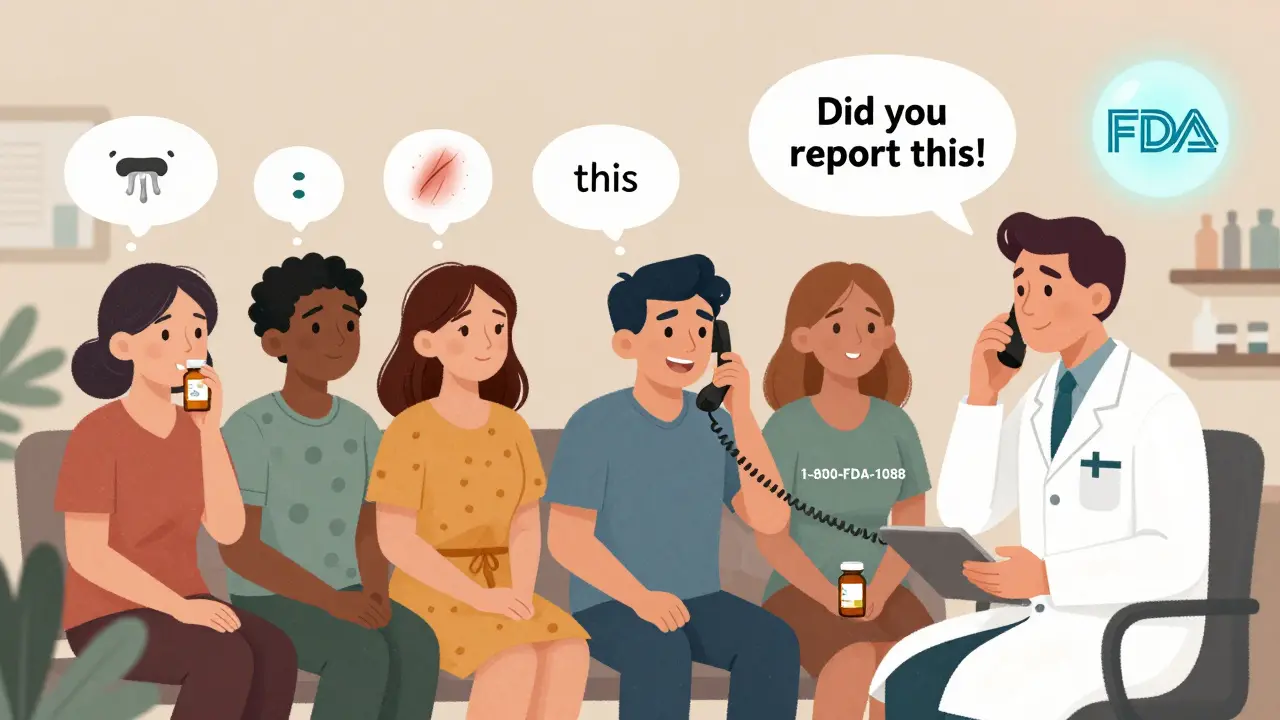


When you start a new medication, your doctor explains the benefits. But what about the side effects? Many people assume their doctor will report any problems they mention - but that’s not always true. In fact, medication side effects are often missed, ignored, or never documented at all. And that’s dangerous. Every year, millions of Americans take drugs that cause unexpected reactions - some mild, some life-threatening. But without you speaking up, those reactions stay invisible to regulators, researchers, and future patients.
Why Your Voice Matters
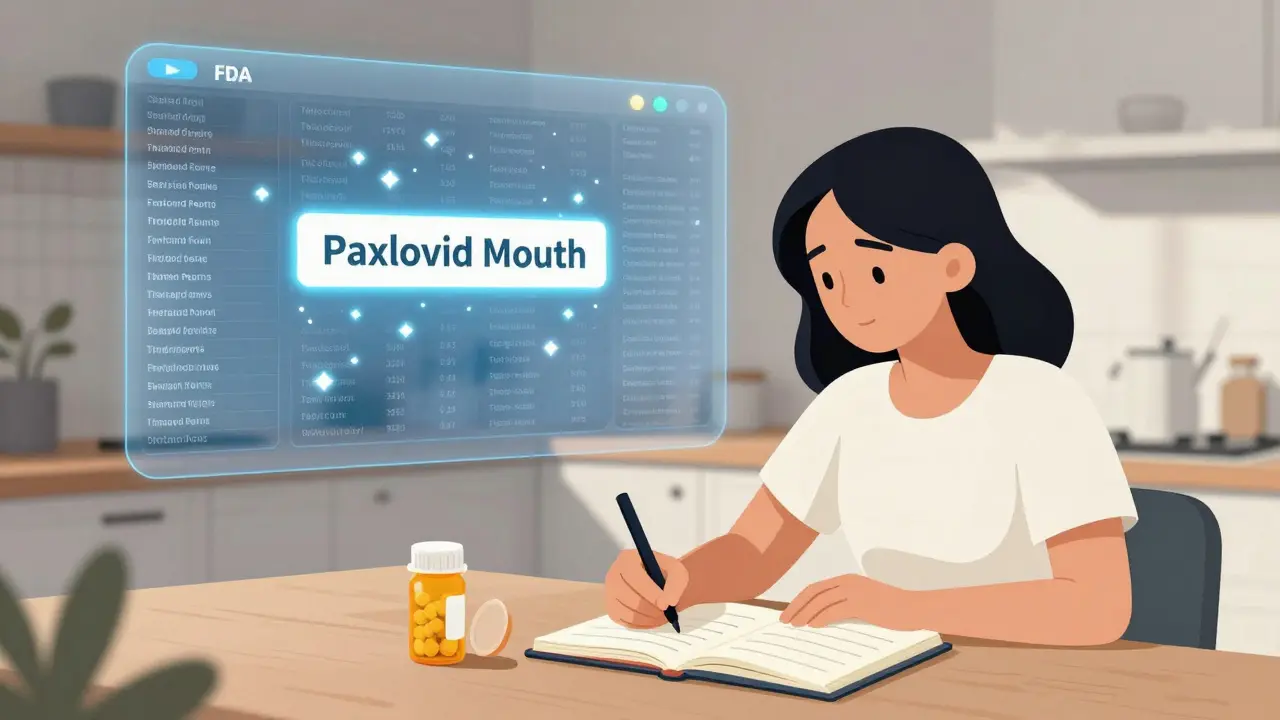
The U.S. Food and Drug Administration (FDA) doesn’t have a crystal ball. It can’t predict every possible side effect before a drug hits the market. Clinical trials involve thousands of people - but real-world use involves millions. That’s where spontaneous reporting comes in. In 2022 alone, the FDA received over 2.2 million reports of adverse drug events. That’s a 37% jump from just four years earlier. These aren’t just numbers. Each one represents someone who noticed something off, spoke up, and helped protect others. Think about Paxlovid. In early 2022, patients started reporting a strange metallic taste - so bad they couldn’t eat. It wasn’t listed in the original prescribing info. But because enough people told their doctors and filed reports through the FDA’s MedWatch system, the agency updated the label. Now, that side effect - nicknamed "Paxlovid mouth" - is officially recognized. Without patient reports, it might have taken years to catch.Who’s Responsible for Reporting?
You might think doctors handle all the reporting. But here’s the truth: healthcare providers report fewer than 10% of serious side effects. A 2021 study found community pharmacists reported just 3.2% of events they saw. Why? Many don’t know how. Others assume it’s not their job. Some fear they’ll be wrong. But the FDA is clear: you don’t need proof. If you suspect a drug caused a problem, report it. Manufacturers have to report serious side effects within 15 days. Hospitals and clinics must have systems in place. But patients? You’re voluntary. And that’s the gap. Only about 15% of reports to the FDA come directly from patients. That means 85% of real-world experiences are missing.What Counts as a Side Effect Worth Reporting?
Not every weird feeling is a crisis. But the FDA defines a serious adverse event as anything that:- Causes death
- Is life-threatening
- Leads to hospitalization
- Results in permanent disability
- Causes a birth defect
- Requires medical intervention to prevent permanent harm
How to Report: Step-by-Step
You don’t need to be a doctor. You don’t need to fill out a 20-page form. Here’s how to report in under 15 minutes:- Call 1-800-FDA-1088 - This toll-free number is now required on every prescription label since 2022. It’s free, confidential, and available 24/7.
- Go to www.fda.gov/medwatch - Click "Consumer/Patient Form" (Form 3500). It’s available in English and Spanish.
- Have these details ready:
- Drug name (include brand and generic)
- When you started and stopped taking it
- What happened - be specific (e.g., "severe headaches that started 3 days after starting the pill")
- How long it lasted
- Any other meds or supplements you’re taking
- Your age and gender (optional, but helpful)
- Submit. No ID needed. No insurance required. Just your story.
Common Barriers - And How to Overcome Them
Most people don’t report because they believe one of these myths:- "My doctor will report it." - False. Studies show 42% of patients assume this - but providers rarely do. Always ask: "Should this be reported to the FDA?"
- "It’s probably normal." - Fatigue, dry mouth, nausea - these are common. But if they’re worse than expected, or new, they’re worth noting. What’s normal for one person isn’t for another.
- "I’ll get dismissed." - 58% of patients fear this. But if your doctor brushes you off, ask for a second opinion. Or report anyway. The FDA doesn’t need your doctor’s approval.
- "I don’t know how." - 72% of patients surveyed didn’t know reporting was even possible. Now you do.
Real Stories Behind the Data
In 2022, a nurse in Ohio reported severe blood clots in patients after receiving the Johnson & Johnson COVID-19 vaccine. That report - filed through VAERS - helped identify a rare but deadly condition called TTS (thrombosis with thrombocytopenia syndrome). Within 15 days, the CDC issued a warning. That’s the power of one person speaking up. On the other end, a man in Florida took a new blood pressure med and felt constant exhaustion. He told his doctor, who said, "That happens sometimes." He didn’t report it. Two months later, he was hospitalized with low blood pressure. His report might have helped others avoid the same fate.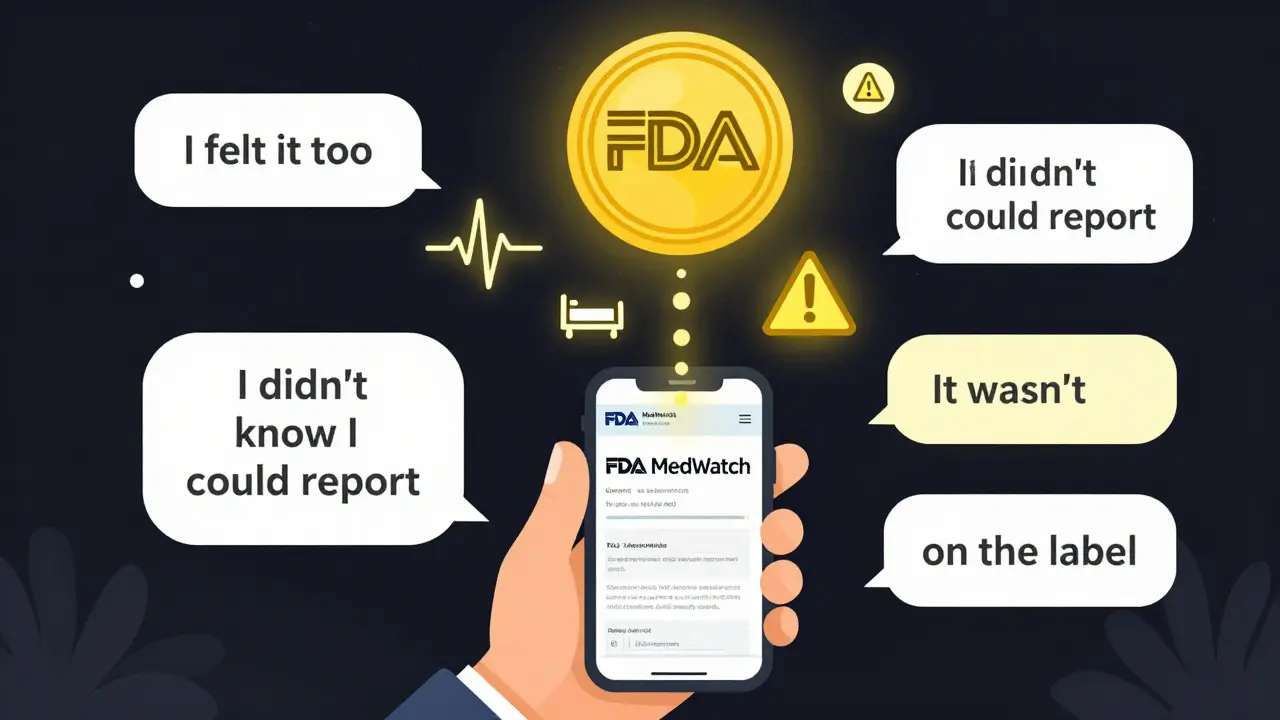
What Happens After You Report?
Your report goes into the FDA’s database. It’s combined with thousands of others. Analysts look for patterns - clusters of similar events, timing trends, or unexpected reactions across different drugs. If enough reports point to a risk, the FDA may:- Update the drug label
- Send safety alerts to doctors
- Require new warnings or restrictions
- Launch further studies
What You Can Do Today
Don’t wait until something serious happens. Start now:- Keep a simple journal: Write down new symptoms, when they started, and what meds you took.
- Ask your pharmacist: "Are there side effects I should report to the FDA?"
- Share this info with family. Many older adults take 5+ medications - they need this knowledge too.
- When you get a new prescription, check the label. That 1-800-FDA-1088 number is there for a reason.
FAQ
Can I report side effects even if I’m not sure the medication caused them?
Yes. The FDA encourages reporting even when you’re unsure. Causality is rarely proven in early reports. The goal is to catch patterns - not to assign blame. If you noticed a new symptom after starting a drug, report it. Experts say it’s better to report too much than too little.
Do I need to give my name when reporting?
No. You can report anonymously. But if you leave your contact info, the FDA may follow up for more details - which can improve the quality of the report. Your information is confidential and protected under federal privacy rules.
What if I report a side effect and nothing changes?
Change doesn’t always happen fast. But each report adds to the evidence. One report might not trigger an alert - but 50 reports from different people might. The system works through volume. Your report is part of a larger picture. Even if you don’t see results, you’re helping science.
Can I report side effects from over-the-counter drugs or supplements?
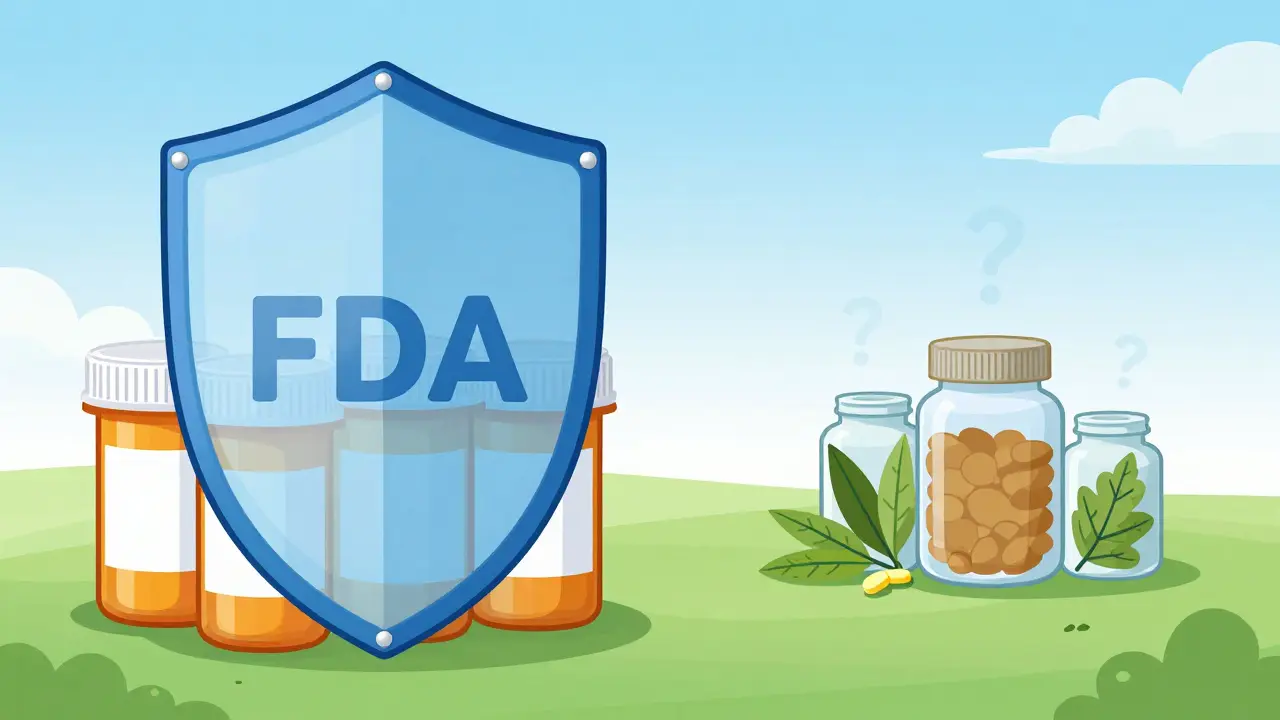
Yes. The FDA accepts reports for prescription drugs, OTC medications, vitamins, herbal products, and even dietary supplements. Many serious reactions come from products people assume are "safe." Always report unusual symptoms - regardless of whether the product needs a prescription.
Is there a deadline for reporting?
There’s no official deadline for patients. But the sooner you report, the better. Early reports help catch emerging patterns before more people are affected. If you’re unsure how long ago the side effect started, just report what you remember. Approximations are better than silence.


9 Comments
I just started a new blood pressure med last month and got this weird metallic taste like I was chewing aluminum foil. Thought I was going crazy. Then I remembered reading about Paxlovid mouth and realized maybe it’s not just me. Filed a report today. Feels good to know I’m not just some weirdo who can’t taste food anymore.
My grandma takes 6 different pills. I printed out the FDA form and filled it out with her last week. She didn’t even know you could report side effects. Now she asks her pharmacist every time she gets a new script. Small thing, big difference.
Y’all need to stop assuming doctors are gonna catch this. I worked in a clinic for 8 years. Docs are drowning in charts. They don’t have time to document every weird symptom. If you feel off after a new med? Report it. Don’t wait. Don’t hope. Just do it. It takes 10 minutes. Could save someone’s life.
so we’re saying the system works because we’re all unpaid lab rats now? 🤡
I used to think reporting side effects was for emergencies only. Then my sister had this weird tingling in her fingers after starting a new antidepressant. Her doctor said it was ‘anxiety’ and told her to relax. She didn’t report it. Six weeks later, she had a seizure. Turns out it was a rare neurological reaction. The med got pulled from shelves 3 months later. If she’d reported it? Maybe someone else wouldn’t have ended up in the ICU. Don’t wait for it to be ‘serious.’ If it’s new, unusual, or scary? Report it. Your silence doesn’t protect anyone.
This is just another way for Big Pharma and the FDA to gaslight us into thinking we’re part of the solution while they keep raking in billions. You think they care about your ‘report’? They use it to tweak dosages so they can say ‘we warned you’ while keeping the profit machine running. This isn’t safety. It’s damage control wrapped in a pink ribbon.
I’ve been saying this for years. Vaccines and meds are just government mind control. They don’t want you to know the truth. Reporting side effects? That’s just feeding the algorithm. They’re tracking you. They’re watching. You think this is about safety? Nah. It’s about control. And the 1-800 number? That’s a honeypot. Don’t fall for it.
In my village in Nigeria, we have no access to such systems. We use herbs. We pray. We trust the body. But when I saw this post, I thought - maybe the West has lost its way. You report a metallic taste? You fear a rash? You call 1-800? You have forgotten that medicine was once about listening, not logging. You have turned healing into data entry. And for what? A label update? A bureaucratic footnote? The real cure is not in forms. It is in presence. In care. In human connection. Not in cold, digital reports from a screen.
This is why America is collapsing. You people report side effects like it’s some kind of civic duty. Meanwhile, in India, we just take the medicine and deal with it. No drama. No forms. No crying to the FDA. We have 1.4 billion people. We don’t need your little reports. We have resilience. You have anxiety. Fix your mindset, not the label.