

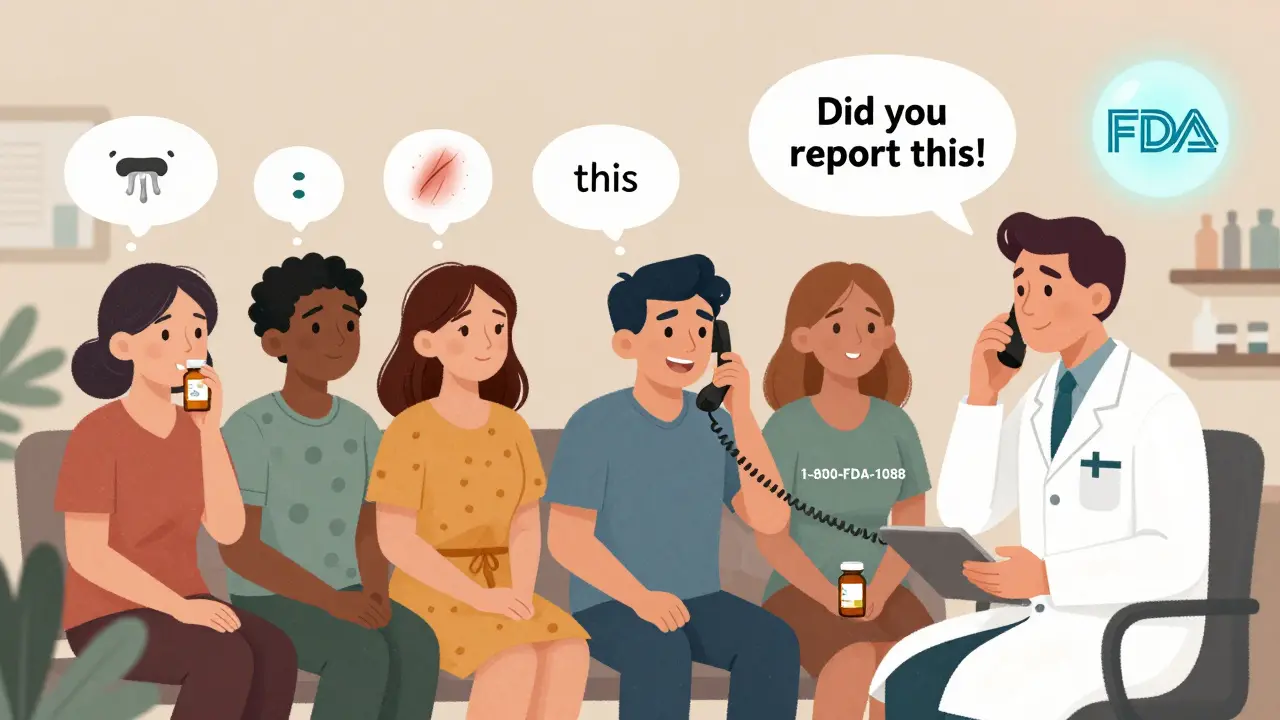
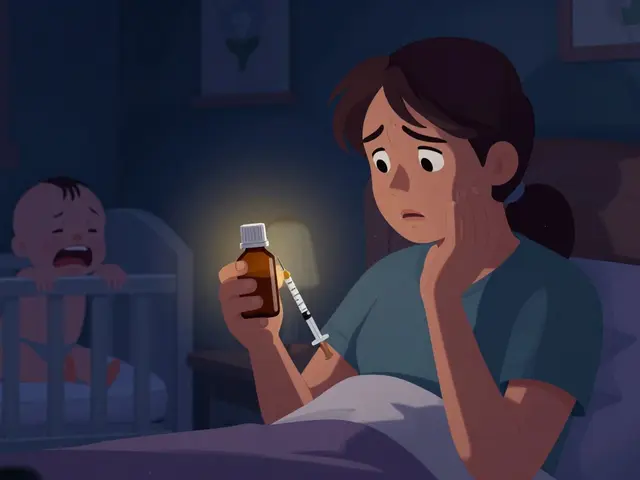
Imagine this: you’re handed a new prescription. The doctor says, "Common side effects include headache and dizziness." That’s it. You leave the office feeling relieved you got the medication you needed-but confused about what "common" really means. Is it 1 in 10 people? 1 in 100? And what if you get something worse-like nausea that lasts for days, or fatigue so bad you can’t work? You don’t ask. You’re afraid you’ll sound like you’re complaining. Or worse, you think maybe it’s just "in your head."
Here’s the truth: side effect burden isn’t just about physical symptoms. It’s about fear, confusion, and the silent way people stop taking meds they need because no one ever told them what to expect-or how to handle it.
Studies show 90% of patients want their doctor to talk about side effects. But only 66% actually hear about the common ones. And 25% of people stop taking their medication because of side effects they weren’t warned about. That’s not just bad communication. That’s a breakdown in care.
Why Talking About Side Effects Matters More Than You Think
Side effects aren’t just annoying-they’re a major reason people quit life-saving treatments. High blood pressure meds? Stopped because of dizziness. Cholesterol pills? Dropped due to muscle pain. Diabetes drugs? Discontinued after unexplained weight gain. Each time someone stops a drug because they weren’t prepared, it increases their risk of hospitalization, stroke, or worse.
It’s not that doctors are hiding information. It’s that they’re overwhelmed. A typical 15-minute appointment has to cover diagnosis, treatment, follow-up, and now, side effects for multiple medications. On average, doctors mention just 3.2 side effects per drug-even though each medication can have 15 to 25 potential reactions listed in medical databases.
But here’s the fix: it doesn’t take more time. It takes better structure.
What Patients Actually Want to Know
Not everyone wants the same level of detail. Some people want every possible risk spelled out. Others just want to know if something could kill them. And some don’t want to hear anything at all-because the fear makes them feel worse.
Research from 2023 shows:
- 49% of patients want details on both common and serious side effects
- 26% only want to hear about dangerous ones
- 17% only care about the mild, everyday ones
And here’s the kicker: patients who get information matched to their preference are 22% more likely to stick with their meds. That’s not a small boost. That’s the difference between staying healthy and ending up in the ER.
So how do you tell your doctor what you need? Start with this simple line:
"How much detail do you think I should know about the side effects? I’m happy to hear everything-or just the big risks. What do you recommend?"
That opens the door. It gives your doctor permission to tailor the conversation. And it shows you’re not just passively accepting information-you’re an active partner in your care.
The Three-Step Framework for Clear Side Effect Conversations
Effective communication isn’t random. It’s structured. Experts recommend a three-step approach that works in under five minutes:
- Ask about preference: "How much do you want to know about possible side effects?" This isn’t a yes/no question-it’s a way to find out if they’re the type who wants all the details or just the red flags.
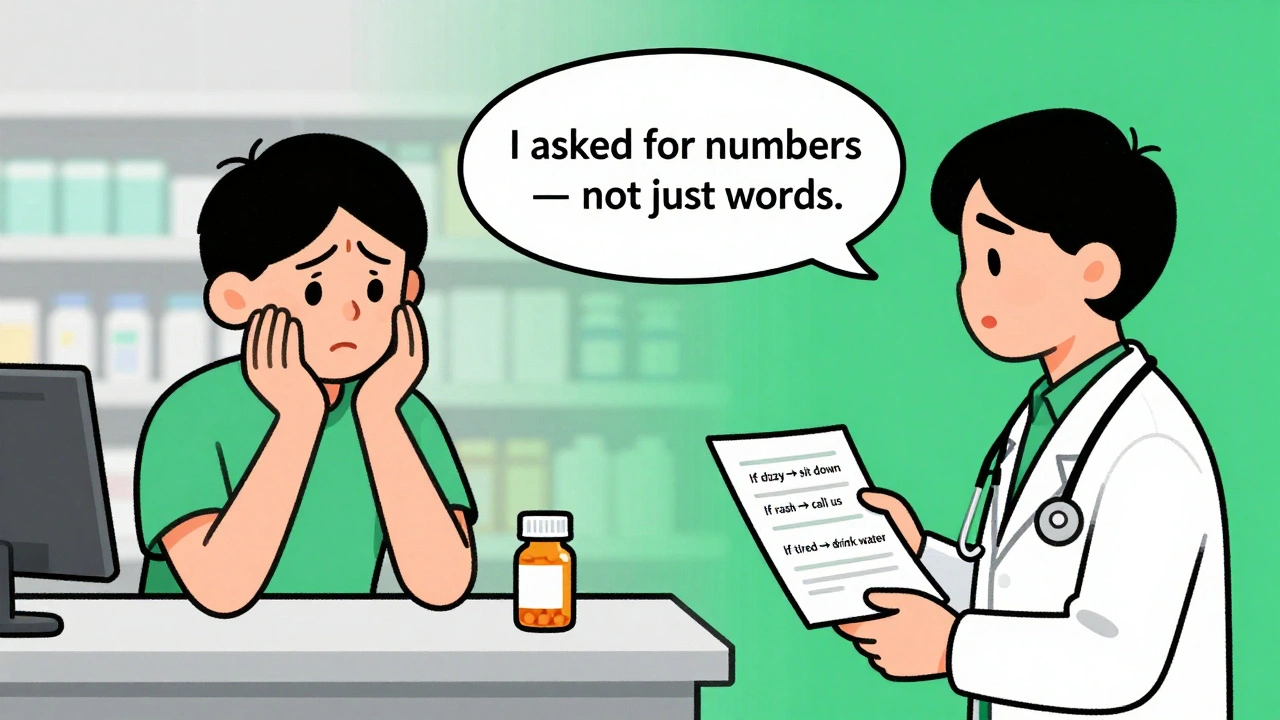
- Give clear, specific numbers: Don’t say "some people get nausea." Say: "About 1 in 5 people experience nausea, usually in the first week. It tends to go away on its own." Or: "Liver problems happen in fewer than 1 in 1,000 people, but if you notice yellowing of the skin or dark urine, call us right away."
- Plan together: "If you do get headaches, try drinking more water and taking it with food. If it lasts more than three days, let us know. We can adjust the dose or switch meds."
This isn’t just about listing risks. It’s about giving people control. When you know what to expect and what to do, the fear fades. And adherence goes up.
What “Common” and “Rare” Really Mean
One of the biggest complaints from patients? Vague language.
"Common side effects" could mean anything. One patient heard that and thought, "It’s common, so it won’t happen to me." Another heard it and panicked: "If it’s common, why didn’t you warn me it would knock me out for hours?"
Here’s what the medical community is now standardizing:
- Very common: More than 1 in 10 people (10% or higher)
- Common: 1 in 10 to 1 in 100 (1-10%)
- Uncommon: 1 in 100 to 1 in 1,000 (0.1-1%)
- Rare: 1 in 1,000 to 1 in 10,000 (0.01-0.1%)
- Very rare: Less than 1 in 10,000
Ask your doctor to use these terms. If they say, "It’s rare," ask: "What does that mean in numbers?" That small question can save you from unnecessary fear-or dangerous surprise.
The Nocebo Effect: When Talking About Side Effects Makes Them Worse
Here’s the paradox: telling you about side effects can sometimes make you more likely to feel them.
This is called the nocebo effect. Studies show that when patients are told about a side effect-like fatigue or dizziness-they’re 26-40% more likely to report it, even if they’re on a placebo. It’s not in your head. It’s your brain expecting it, so your body reacts.
That’s why the best conversations don’t just list risks. They frame them with context:
"About 1 in 5 people feel a bit tired at first. Most get used to it in a week or two. If it’s worse than that, or lasts longer, we can change things. But don’t assume every tired day is from the pill-stress, sleep, and diet play a big role too."
That’s not sugarcoating. That’s balancing honesty with reassurance.
What to Do If Your Doctor Doesn’t Bring It Up
Don’t wait. Bring it up yourself. You have every right to know.
Try one of these lines:
- "I’ve heard that side effects are a big reason people stop taking meds. Can we go over what I might feel with this one?"
- "I don’t want to be the person who stops taking this because I didn’t know what to expect. What should I watch for?"
- "I’m worried about [specific side effect]. Is that likely? What would I do if it happened?"
And if your doctor brushes you off? Say: "I’m not trying to argue-I just want to make sure I can take this safely. Can we schedule a quick follow-up next week to check in?"
Most doctors want to help. They just need a nudge to slow down and listen.
Use Tools to Stay in Control
You don’t have to remember everything in one visit. Use these simple tools:
- Medication list: Keep a paper or digital list of every drug you take, including doses and why you’re taking it. Update it after every appointment.
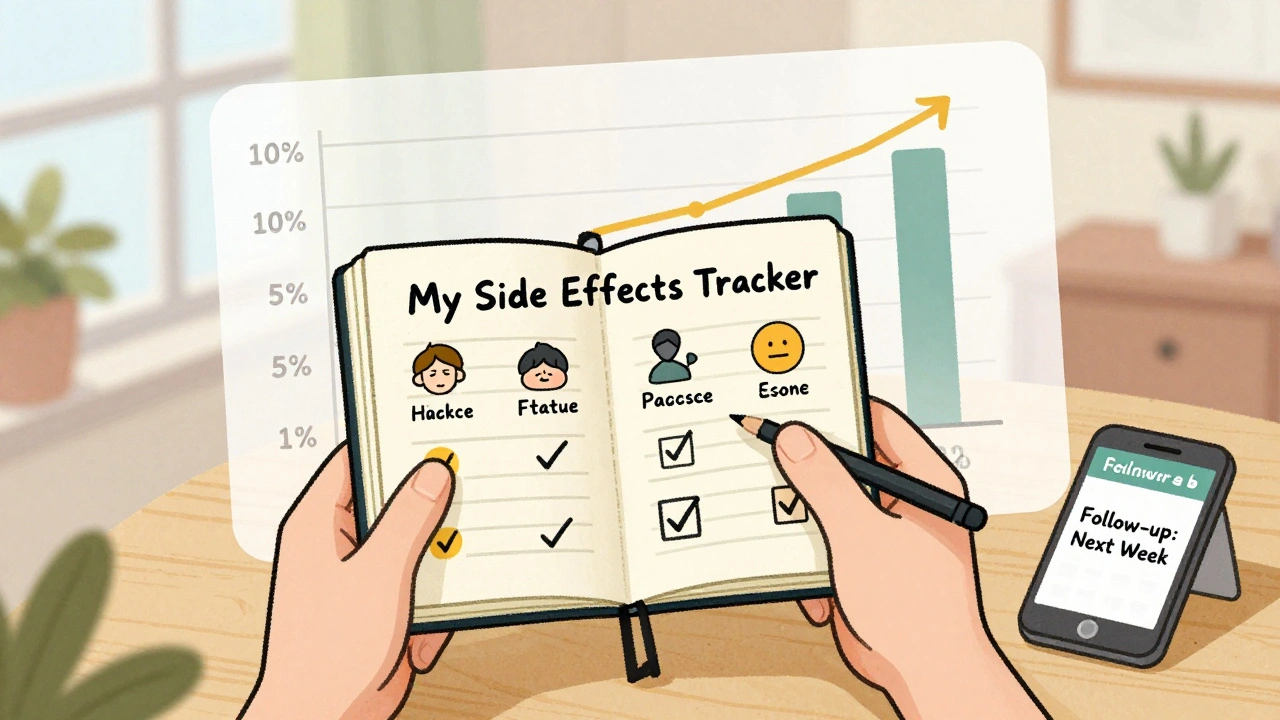
- Side effect journal: For the first two weeks on a new med, jot down how you feel each day. Note timing, severity, and what you did to cope. Bring it to your next visit.
- Ask for a written summary: Many clinics now give you a printed or emailed after-visit summary. Ask if yours includes side effect info. If not, say: "Can you add the key side effects and what to do if they happen?"
Patients who use these tools are 29% more likely to remember what they were told. That’s huge.
When to Call Your Doctor-Not Wait
Not every side effect needs an emergency room. But some do. Know the difference:
- Call within 24 hours: Severe rash, swelling of face/throat, trouble breathing, chest pain, sudden confusion, or yellow skin/eyes.
- Call in 3-5 days: Persistent nausea/vomiting, dizziness that stops you from walking, new depression or suicidal thoughts, or side effects that get worse instead of better.
- Wait and monitor: Mild headache, dry mouth, mild fatigue, or occasional upset stomach-unless it lasts more than a week.
And if you’re ever unsure? Call. Better safe than sorry. Your doctor would rather hear from you early than find out you waited too long.
It’s Not Just About Pills
Side effect burden isn’t just about prescription drugs. It applies to supplements, over-the-counter meds, even vitamins. If it affects your body, it can have side effects.
And it’s not just about what you take-it’s about what you don’t take. People who stop meds because of unexplained side effects are more likely to suffer heart attacks, strokes, or worsening chronic disease. That’s the real cost of poor communication.
The good news? You don’t need to be a medical expert to have this conversation. You just need to speak up.
Final Thought: You’re Not a Passive Patient
Healthcare isn’t a one-way street. You’re not just a recipient of prescriptions. You’re the one living with the side effects. You’re the one who knows your body best.
Asking about side effects isn’t being difficult. It’s being responsible. It’s the difference between surviving treatment and thriving through it.
Next time you get a new prescription, don’t just take it. Talk about it. Ask for numbers. Ask for plans. Ask for support. Your future self will thank you.



11 Comments
Man, this hit me right in the soul. I remember taking that blood pressure med and just nodding along while the doctor rattled off ‘common side effects’ like it was a grocery list. Then I spent three weeks convinced I was dying because I got a headache. Turns out it was just my brain screaming ‘I’m not used to this!’ But no one told me that. No one said, ‘Hey, this might feel like the world’s ending for a few days, but it’ll chill.’ That’s the gap. Not ignorance-just silence.
It’s not about fear. It’s about feeling like you’re not alone in the storm. When you hear ‘1 in 5,’ it stops being abstract. It becomes ‘oh, so it’s not just me being weak.’ That’s power. That’s dignity.
Doctors aren’t villains. They’re drowning in 15-minute slots and 20 tabs open. But we’re the ones living with the aftermath. So yeah-I’ll ask. I’ll say, ‘What does common mean here?’ And I’ll bring my journal. Because my life isn’t a bullet point.
Wow. Another feel-good, corporate-approved, ‘you’re empowered!’ pamphlet disguised as medical advice. Let me guess-this was written by a pharma marketing intern who got a bonus for ‘patient engagement metrics.’
‘Ask your doctor how much detail you want?’ What a revolutionary idea. Next you’ll tell us to ‘bring a snack to the appointment’ and ‘use a calendar.’
Real talk: doctors don’t have time. They’re not trained to be therapists. And patients? Most don’t want details-they want the pill to work. This whole thing is performative empathy. It’s not fixing anything. It’s just making people feel like they’re ‘participating’ while the system stays broken.
Also-‘nocebo effect’? Please. That’s just a fancy word for ‘your brain is weird.’ Stop pathologizing normal human anxiety.
Okay, but can we talk about how wild it is that we have to *ask* for basic info like ‘will this make me vomit?’ Like, I didn’t sign up for a medical scavenger hunt. 🙄
I once took a pill that made me feel like a zombie. I didn’t say anything because I thought, ‘Maybe I’m just lazy now?’ Turns out, 1 in 4 people get this. FOUR. I could’ve had a chat, not a breakdown.
Also-‘common’ = 1 in 10? That’s like saying ‘this elevator has a 10% chance of falling.’ I’d still wait for the stairs. 😅
Bring the numbers. Bring the plan. Bring the damn empathy. We’re not asking for a PhD-we’re asking not to feel stupid for being scared.
While the sentiment expressed herein is undoubtedly well-intentioned, the pedagogical framework presented is fundamentally flawed in its epistemological underpinnings. The assumption that patients possess the requisite cognitive apparatus to interpret statistical risk profiles within a 15-minute clinical encounter is not only empirically unsupported but also patronizing in its presumption of agency.
Furthermore, the suggestion that physicians ought to adopt a ‘three-step framework’ reduces the clinical encounter to a transactional script, thereby undermining the hermeneutic nature of medical dialogue. The nocebo effect, while acknowledged, is not sufficiently contextualized within the broader sociocultural paradigm of pharmaceutical commodification.
One must question: Is this not merely a neoliberal solution to a systemic failure? The burden of communication is displaced onto the patient, while structural inefficiencies within healthcare delivery remain unaddressed.
This whole thing is just a bunch of fluff. Doctors are busy. Patients are dumb. You want info? Google it. Stop making everything a therapy session. I took a pill. Got side effects. Didn't like it. Stopped. Done. No drama. No journal. No questions. Just life.
Bro this is what happens when you let people write their own rules
My uncle took diabetes meds for 10 years never asked questions never kept a journal never even knew what common meant
Still alive still working still got his grandkids
Why do we need all this noise
Just take the pill dont overthink
Also why are we using percentages in a 15 min visit
My doctor says 'it might make you sleepy' I say 'ok' done
Why are we turning medicine into a TED talk
THIS. I’ve been waiting for someone to say this out loud 😭
I took that antidepressant and got the worst headaches. Thought I was going crazy. Then I read the leaflet and saw ‘common: 1 in 6’. I was like… wait, I’m not the only one??
And the nocebo thing? SO TRUE. I started feeling tired because I was told I might. Then I realized: I was just sleep-deprived from stress. The pill wasn’t the problem.
Also-yes, ask for numbers. Say ‘what’s 1 in 10?’ If they say ‘some people’ again, just smile and say ‘cool, I’ll Google it’. 🧠💊
The structural inefficiencies in physician-patient communication are not merely logistical-they’re epistemic. The current paradigm assumes a binary model of patient agency: either you’re a passive recipient or an empowered co-decision-maker. But the reality is far more nuanced.
Patients exhibit variable health literacy, anxiety thresholds, and risk tolerance. The three-step framework is a necessary heuristic, not a panacea. The real innovation lies in institutionalizing decision aids-digital, tiered, and customizable-that pre-populate with the patient’s prior preferences, reducing cognitive load during the visit.
Additionally, the nocebo effect is not a flaw in communication-it’s a feature of predictive processing in the human nervous system. Framing matters. ‘This may cause fatigue in 20% of patients, usually transient’ is radically different from ‘you might feel tired.’ The former is evidence-based; the latter is suggestive.
What’s missing from this piece? Systemic support. Clinics need embedded pharmacists, AI-assisted summaries, and post-visit nudges. The burden shouldn’t fall on the patient to remember.
I just took my meds. Didn’t ask anything. Didn’t need to. If it breaks, I’ll go back. Simple.
Oh great. Another article telling Americans they’re too lazy to ask questions. Meanwhile, in other countries, people take their meds without a 20-minute TED Talk.
Why is this even a problem? Because we’ve turned healthcare into a consumer product. You don’t ask your mechanic for a 10-slide breakdown of your transmission. You just pay and drive.
Doctors aren’t failing. We are. We want everything explained like we’re 5 years old. We want emojis. We want journals. We want to feel ‘heard.’
Maybe the solution isn’t more talk. Maybe it’s less whining.
One must interrogate the ontological assumptions embedded in this discourse. The premise-that patients are rational actors capable of digesting probabilistic medical data-is a vestige of Enlightenment rationalism, now rendered obsolete by the postmodern fragmentation of clinical authority.
Moreover, the notion that ‘asking for numbers’ constitutes empowerment is a performative gesture, a neoliberal co-optation of agency. The real power resides in the institutional apparatus that dictates which side effects are disclosed, and which are buried in fine print.
One wonders: if a patient asks for ‘common’ side effects, and the physician responds with ‘1 in 10,’ has communication occurred-or merely a ritualized exchange of symbolic tokens?
Perhaps the true revolution lies not in asking better questions, but in dismantling the system that makes such questions necessary in the first place.
…Also, I took my statin. No side effects. Probably because I didn’t read this article. 🤷♂️