
Side Effect Frequency Calculator
How Side Effects Are Reported
When you see side effects listed in a drug's postmarketing experience section, the terms like "rare" or "very rare" indicate how frequently the reaction occurs. This calculator helps you understand what these terms mean in real-world terms.
Important Note: A "rare" side effect might still be dangerous or life-threatening. These classifications only indicate frequency, not severity.
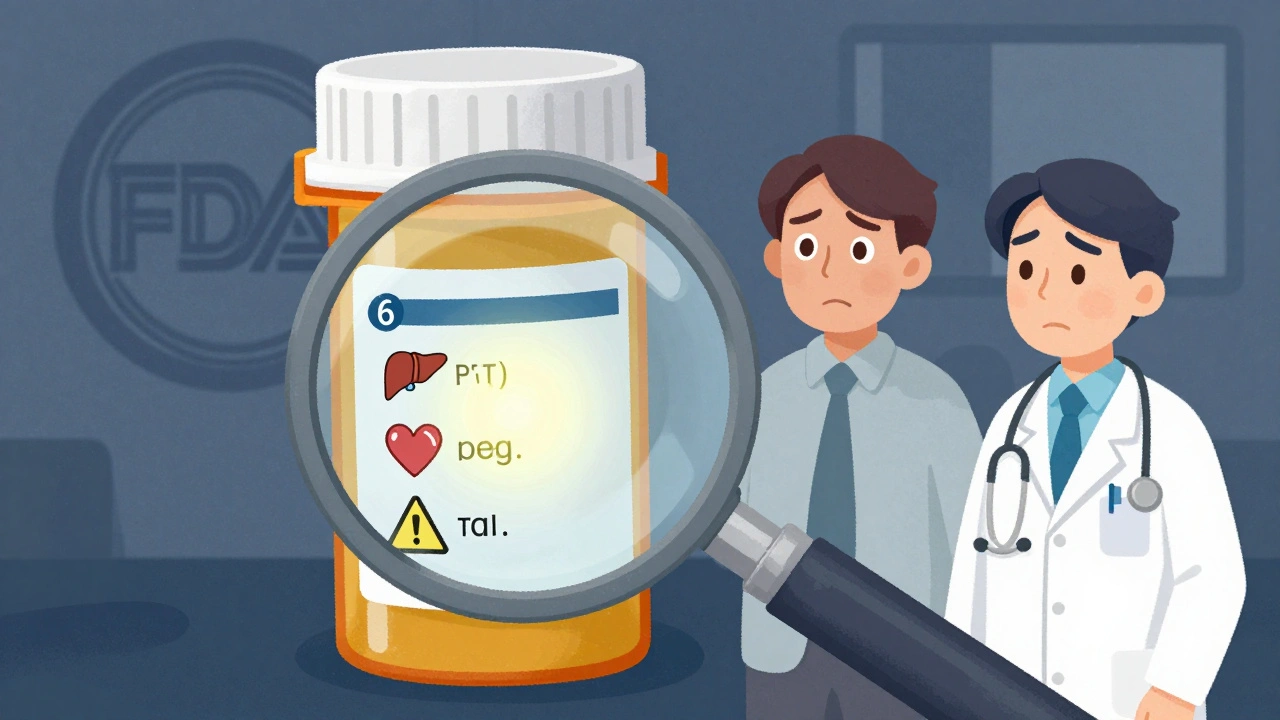
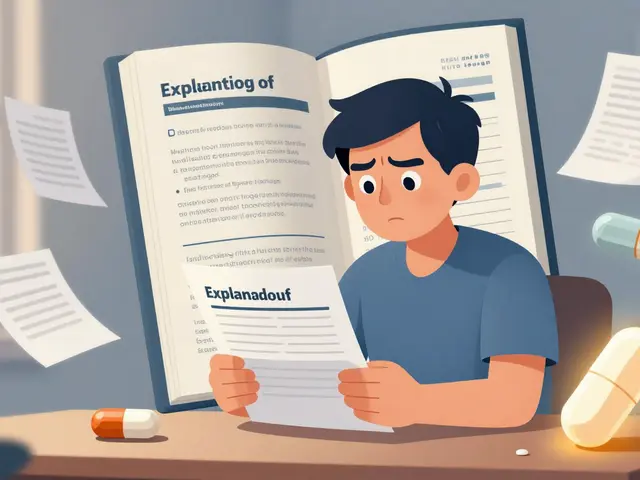
When you pick up a new prescription, the tiny print in the prescribing information isn’t just filler. One section-Section 6, labeled Postmarketing Experience-holds critical safety clues most patients and even some doctors miss. These aren’t the side effects you see in clinical trials. These are the reactions that only show up after thousands, sometimes millions, of people have taken the drug. And understanding what they mean could literally save your life.
What Exactly Is Postmarketing Experience?
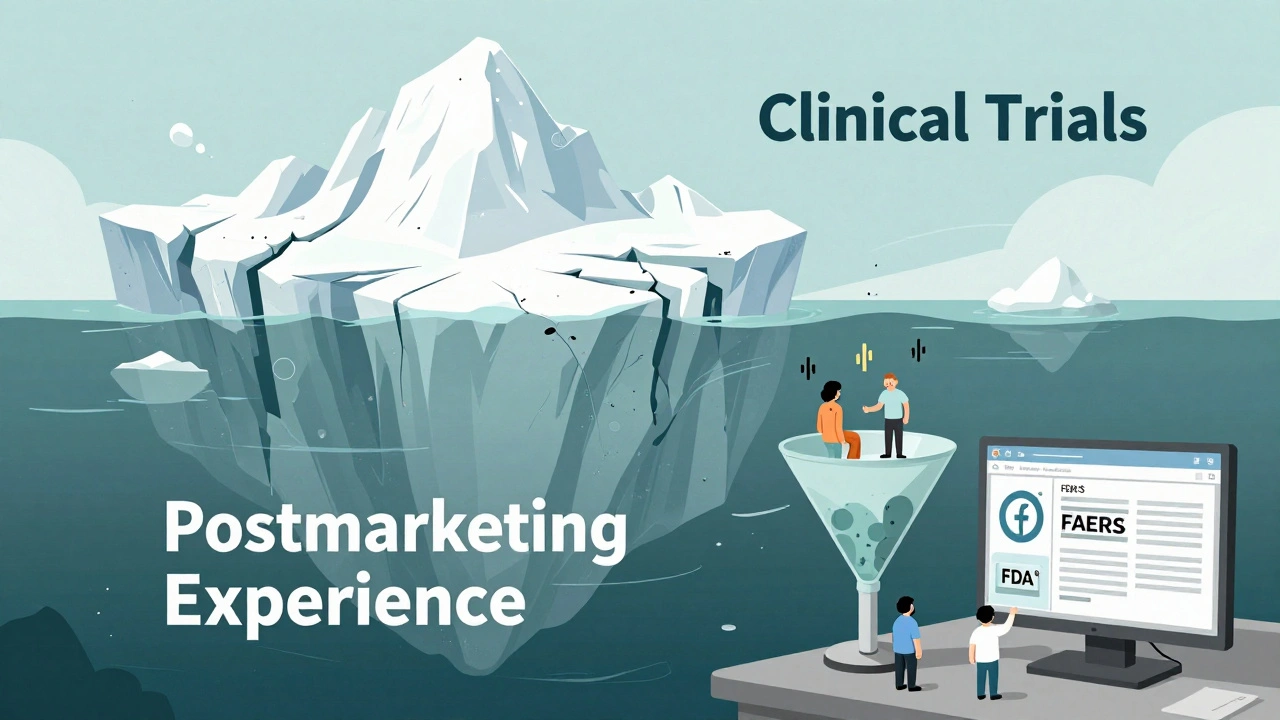
Postmarketing experience refers to adverse reactions reported after a drug has been approved by the FDA and is being used by the general public. Before approval, drugs are tested in clinical trials with a few hundred to a few thousand people. That’s not enough to catch rare side effects. Maybe one person in 10,000 gets a dangerous reaction. In a trial of 5,000 patients, you’d never see it. But once the drug hits the market-used by people with other health conditions, taking other meds, different ages, different genetics-that rare reaction shows up. And when it does, doctors report it. Those reports build the postmarketing section.
This section appears in the Full Prescribing Information (FPI) that comes with every FDA-approved prescription drug in the U.S. It’s not optional. It’s required by law under 21 CFR 314.80. Drug makers must report serious and unexpected side effects within 15 days of learning about them. The FDA’s Adverse Event Reporting System (FAERS), which holds over 35 million reports as of 2023, is the backbone of this system. Every report is reviewed, analyzed, and-if there’s enough evidence-added to the drug’s label.
Why This Section Is Different From Clinical Trial Data
Look at Section 6 and you’ll see phrases like “reported cases,” “isolated reports,” or “few cases.” That’s not random wording. It’s a signal. In clinical trials (Section 5), side effects are listed with clear frequencies: “occurred in 12% of patients.” That means the drug was given to hundreds of people, and 12 out of every 100 had it. In postmarketing, you rarely get numbers like that. Instead, you get categories: “very common,” “common,” “uncommon,” “rare,” “very rare.”
Here’s the catch: just because a side effect is listed as “rare” in Section 6 doesn’t mean it’s harmless. It means it was seen in fewer than 1 in 1,000 patients. But if that reaction is liver failure, stroke, or a life-threatening skin condition, “rare” doesn’t make it insignificant. A 2022 analysis by the Institute for Safe Medication Practices found that 62% of serious drug reactions were first detected through postmarketing reports-not clinical trials.
Dr. Dina Demner-Fushman, a senior NIH researcher, warns that many clinicians misread the language. “Reported cases” doesn’t mean “not serious.” It means “we don’t know how often it happens yet.” One pharmacist on the ASHP forum described a case where a new anticoagulant had 17 fatal bleeding events labeled as “isolated reports.” It took months for the pattern to be recognized. By then, more patients had been harmed.
How to Read the Language Correctly
There’s a system behind the words. The FDA requires drug labels to use standardized terms from the Medical Dictionary for Regulatory Activities (MedDRA), version 26.0 as of 2022. That means “myocardial infarction” is always called that-not “heart attack” or “heart episode.” This helps doctors compare data across drugs.
But the biggest trap is assuming that if a side effect isn’t listed, it doesn’t happen. The FDA explicitly says: “The absence of a particular adverse reaction in the postmarketing section does not mean the drug does not cause the reaction.” That’s written into every label since 2016. Just because you don’t see “kidney failure” listed doesn’t mean it can’t occur. It just means no one has reported it yet-or not enough people have to meet the threshold for inclusion.
Also, pay attention to qualifiers:
- “Reported cases” = some evidence, but causality isn’t confirmed
- “Rare” = fewer than 1 in 1,000
- “Very rare” = fewer than 1 in 10,000
- “Isolated reports” = only one or two cases documented
These aren’t rankings of severity. They’re rankings of frequency. A “very rare” reaction could still be deadly. A “common” one might just be a headache.
What You Should Do When You See This Section
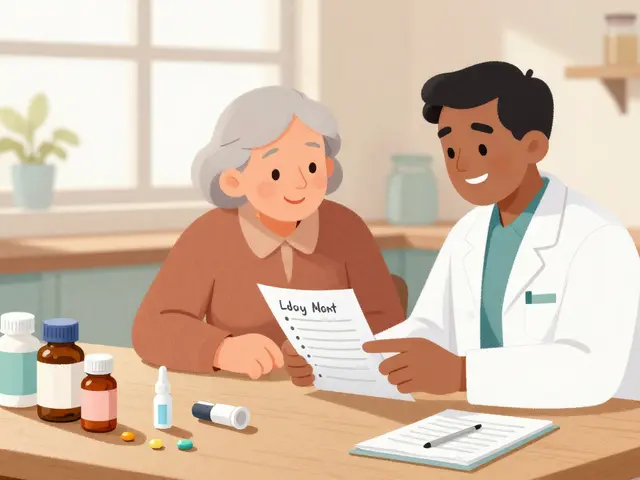
If you’re a patient, don’t panic. But do ask your doctor or pharmacist: “Are there any rare but serious side effects listed here that I should watch for?” Don’t assume they’ll bring it up. Most don’t. A 2022 AMA survey found that 63% of physicians were confused by the frequency data in this section. Many assumed reactions listed only in postmarketing were less dangerous.
Here’s what to do:
- Check if you’re on any other medications. Drug interactions are a major source of unexpected side effects.
- Look for reactions that match your medical history. If you have liver disease, pay extra attention to liver-related terms.
- Know the red flags: swelling, chest pain, sudden weakness, unexplained bruising, severe rash, jaundice, confusion. These aren’t normal.
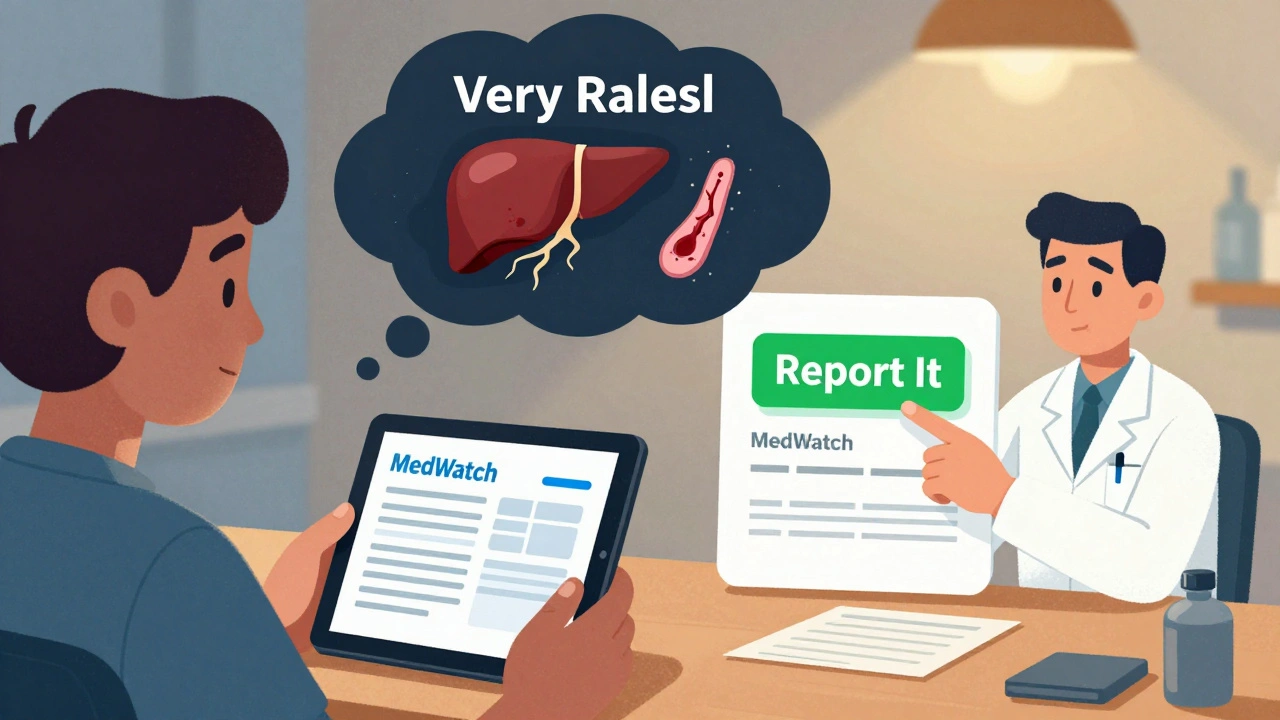
- If you have a reaction, report it. Use the FDA’s MedWatch system (Form 3500). You don’t need to be a doctor. Patients can report.
Pharmacists report that patients who ask about postmarketing side effects get better care. They’re more likely to notice early warning signs and call in before things get serious.
Why This Matters More Than Ever
The FDA is changing how it uses this data. Starting in January 2025, drug companies must submit postmarketing information in a machine-readable format called SPL-ESD. This means the FDA can use AI to scan reports in real time and spot patterns faster. In pilot programs, AI has predicted label changes with 83% accuracy-six to nine months ahead of traditional methods.
Why? Because the old system is too slow. Between 2007 and 2017, 38% of all drug label updates were safety changes. That’s nearly half. And 214% more drugs now require postmarketing studies since 2017, thanks to the 21st Century Cures Act. The global pharmacovigilance market is worth $6.8 billion and growing fast-not because drug companies are being paranoid, but because they’re being forced to be more transparent.
Drug manufacturers now use the same reporting systems for the U.S. and Europe. The European Medicines Agency (EMA) has nearly identical rules. This isn’t just U.S. policy-it’s global standardization.
What Happens When This System Fails
It’s not theoretical. In 2019, the FDA issued 127 warning letters to drug companies for failing to report adverse events properly. Some companies delayed reporting for months. Others buried reports in vague language. One company listed “gastrointestinal discomfort” as the cause of three deaths-when the real issue was a rare heart rhythm disorder.
When this system works, it prevents disasters. The diabetes drug rosiglitazone (Avandia) was pulled from the market in Europe after postmarketing data showed a spike in heart attacks. In the U.S., its label was updated with stronger warnings. Without postmarketing experience, that risk might have gone unnoticed for years.
Bottom Line: Don’t Ignore the Fine Print
Postmarketing experience sections aren’t warnings. They’re early alerts. They’re the drug’s way of saying: “We thought we knew what this could do. But real people are using it-and we’re learning more every day.”
They’re not perfect. They’re messy. They’re delayed. But they’re the best tool we have to catch the side effects clinical trials can’t see. If you’re prescribed a new drug, take five minutes to read Section 6. Ask your doctor: “What’s the worst thing that could happen that’s rare but real?”
That question could be the difference between catching a problem early-or missing it until it’s too late.
Are side effects listed in postmarketing experience less serious than those in clinical trials?
No. The severity of a side effect is not tied to whether it appears in clinical trials or postmarketing experience. A reaction listed as "rare" in postmarketing could be life-threatening, like liver failure or a stroke. Clinical trials only catch common reactions-those affecting 1 in 100 or more people. Rare but deadly reactions often only show up after the drug is used by millions. The language used-like "isolated reports"-refers to how often it’s been seen, not how dangerous it is.
Why are some side effects listed in both clinical trials and postmarketing experience?
Sometimes, a side effect is common enough to show up in clinical trials but becomes more frequent or more severe in the real world. For example, a drug might cause mild nausea in 10% of trial patients, but in postmarketing, reports of severe vomiting and dehydration in elderly patients emerge. The label updates to reflect both the original finding and the new, more serious pattern. This isn’t a contradiction-it’s an evolution of safety data.
If a side effect isn’t listed in the postmarketing section, does that mean it’s safe?
No. The FDA requires labels to include a disclaimer: "The absence of a particular adverse reaction in the postmarketing section does not mean the drug does not cause the reaction." Just because a reaction hasn’t been reported yet doesn’t mean it can’t happen. It might be too rare to have shown up in the data so far, or patients may not have reported it. Always assume there’s more to learn.
How long does it take for a new side effect to appear on a drug label?
There’s no fixed timeline. Serious, unexpected reactions must be reported to the FDA within 15 days. But getting it added to the label can take months to years. The FDA needs enough reports to confirm a pattern-not just one or two cases. In 2022, over 42,000 unexpected serious adverse events were reported, but only a fraction led to label changes. The new AI systems being rolled out in 2025 aim to cut this time by half.
Can patients report side effects to the FDA?
Yes. Anyone-patients, family members, caregivers-can report adverse reactions using the FDA’s MedWatch program (Form 3500). You don’t need a doctor’s note. The FDA encourages patient reports because they often capture details professionals miss, like timing, other medications taken, or lifestyle factors. Over 10,000 patient reports are submitted each year, and many have led to label updates.



12 Comments
lol who even reads this stuff? i just take my pills and hope for the best 😅
I’ve been a pharmacist for 18 years and I still get tripped up by Section 6. The language is so deliberately vague it’s almost like they’re trying to protect themselves more than inform patients. ‘Isolated reports’ sounds harmless until you realize that one of those ‘isolated’ cases was your neighbor’s 72-year-old mom who ended up in the ICU. The system’s not broken-it’s just slow, and patients pay the price while we wait for the data to catch up.
It is imperative to underscore that the postmarketing experience section, as codified under 21 CFR 314.80, constitutes a non-negotiable regulatory obligation incumbent upon pharmaceutical manufacturers. The utilization of MedDRA terminology is not merely a stylistic preference-it is a mandatory lexicon designed to ensure semantic precision across pharmacovigilance datasets. To dismiss this as ‘fine print’ is not merely negligent-it is a dereliction of professional and ethical duty.
i never knew this section even existed till now. i thought all the side effects were listed up front. so if its not on the box, it could still happen? that’s wild. my aunt took that blood pressure med and got dizzy and fell and broke her hip and no one ever said that could happen. guess she was just unlucky. i’m gonna check my next script now.
Ah, the postmarketing experience section-where corporate legalese meets tragic anecdotal poetry. It’s the literary equivalent of a haiku written by a lawyer who’s had too much coffee and not enough sleep. ‘Isolated reports’? How quaint. Like a single teardrop falling in the Pacific. But darling, when that teardrop is a 74-year-old woman’s last breath after her liver surrenders… well, then it’s not poetic. It’s a systemic failure dressed in Helvetica.
Fascinating how the MedDRA taxonomy creates a pseudo-scientific veneer over what is essentially a chaotic, decentralized reporting system. The irony? We’ve built a global pharmacovigilance architecture that relies on human beings-often overworked, underpaid clinicians-to transcribe subjective experiences into rigid ontologies. It’s like trying to map the emotional spectrum using a 12-color crayon box. 🤷♂️
This is actually one of the most important parts of the label that gets ignored. The fact that AI is now being used to detect patterns faster is huge. I’ve seen cases where a drug showed up in FAERS with 12 reports of a rare arrhythmia, and by the time the label changed, 30 more patients had been affected. Real-time signal detection could save hundreds a year. We just need better integration between EHRs and FAERS.
I CAN’T BELIEVE PEOPLE JUST IGNORE THIS. MY COUSIN GOT A NEW ANTIBIOTIC AND GOT A RASH AND NO ONE TOLD HER IT COULD LEAD TO TOXIC EPIDERMAL NECROLYSIS!! SHE WAS IN THE ICU FOR 3 MONTHS!! AND THE DOCTOR SAID ‘IT’S RARE’ LIKE THAT MADE IT OKAY!! WHAT KIND OF WORLD ARE WE LIVING IN WHERE ‘RARE’ MEANS ‘NOT YOUR PROBLEM’?? I’M TELLING EVERYONE I KNOW TO READ SECTION 6 OR STAY HOME!!
we’re all just guessing with these drugs, aren’t we? 🤔 the science says ‘we think this works’ and the label says ‘we saw this weird thing happen to someone once’… it’s like driving a car with a manual that says ‘brakes might work, but sometimes they don’t, especially if you’re wearing socks’. i’m not scared, just… curious. maybe we need to stop pretending we know everything. and maybe, just maybe, we should listen more to the people who actually use the stuff.
this whole system is a joke. america’s the only country that lets drug companies write their own safety reports. we got the best healthcare in the world right? 😒 yeah right. i’d rather take something from germany or switzerland where they actually test things before they sell them. this is just corporate greed wrapped in medical jargon.
i appreciate the breakdown. one thing i’ve noticed is that patients rarely report side effects unless they’re extreme. i’ve seen people ignore mild dizziness or nausea for months because they think it’s ‘just part of getting older’. but those small things can be early signals. if you feel weird after a new med, even a little-report it. even if you think it’s nothing. it might be the clue that saves someone else.
The entire postmarketing infrastructure is a reactive, statistically underpowered artifact of 20th-century pharmacovigilance. The reliance on spontaneous reporting-where reporting bias, underreporting, and confounding variables dominate-is fundamentally incompatible with the complexity of modern polypharmacy. The AI-driven SPL-ESD initiative represents the first meaningful step toward predictive pharmacovigilance, but without mandatory EHR integration and standardized patient-reported outcome capture, it remains a glorified data dump with a fancy acronym.