

Most people don’t think about expiration dates on medicine until they find an old bottle in the back of the medicine cabinet. But what does that date really mean? Is it safe to take that pill if it’s a few months past the date? What about insulin or antibiotics? The answer isn’t simple, and confusing labels make it worse. Expiration dates on medication aren’t just random numbers-they’re based on science, and misunderstanding them can put your health at risk.
What an Expiration Date Actually Means
The expiration date on your medicine isn’t a "use by" deadline that turns the drug toxic the moment it passes. It’s the last day the manufacturer guarantees the medication will work as intended and remain safe under proper storage conditions. That means if you keep your pills in a hot, humid bathroom, they might lose potency long before the date on the bottle. But if stored correctly-in a cool, dry place away from sunlight-they often stay effective well past that date.
The U.S. Food and Drug Administration (FDA) started requiring expiration dates in 1979 after studies showed inconsistent drug stability. Manufacturers test each medicine under different conditions-heat, humidity, light-to figure out how long it holds up. Most pills and capsules last 1 to 5 years. Eye drops? Often 6 months to 2 years. Injections? Usually 2 to 5 years. The date is based on real data, not guesswork.
Common Expiration Date Formats You’ll See
Not all expiration dates look the same. You might see:
- MM/YY (like 08/23) → expires on August 31, 2023
- DD/MM/YYYY (common in Europe) → 15/08/2023 means August 15, 2023
- YYYY-MM-DD (used in China and becoming global standard) → 2023-08-15
- Exp:, Expires:, Use by:, Use before:
If you only see a month and year, assume it expires on the last day of that month. So if it says "04/25," the last safe day is April 30, 2025. Don’t assume it’s the first day-pharmacies and regulators use the end of the month as the cutoff.
Pharmacy Labels vs. Manufacturer Dates
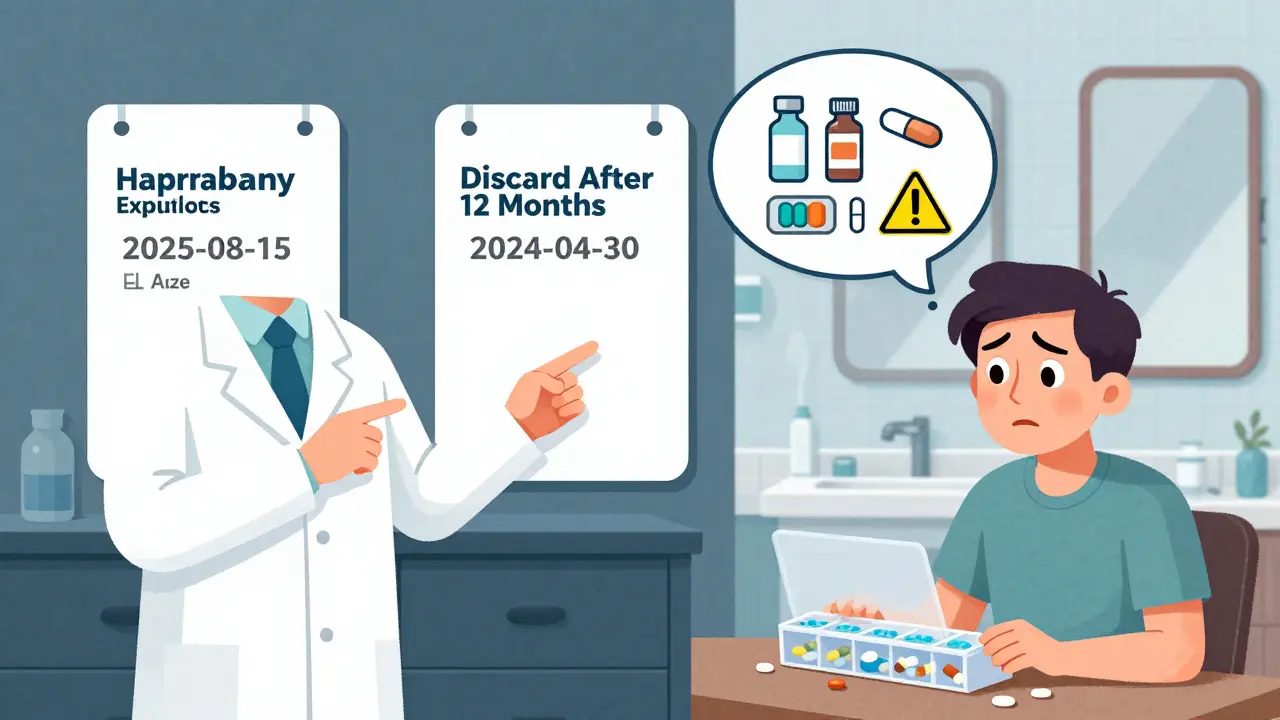
This is where confusion kicks in. When you get a prescription filled, the pharmacy puts its own label on the bottle. That label often says "Discard after 12 months" or "Do not use after 10/2025." That’s not the same as the manufacturer’s expiration date.
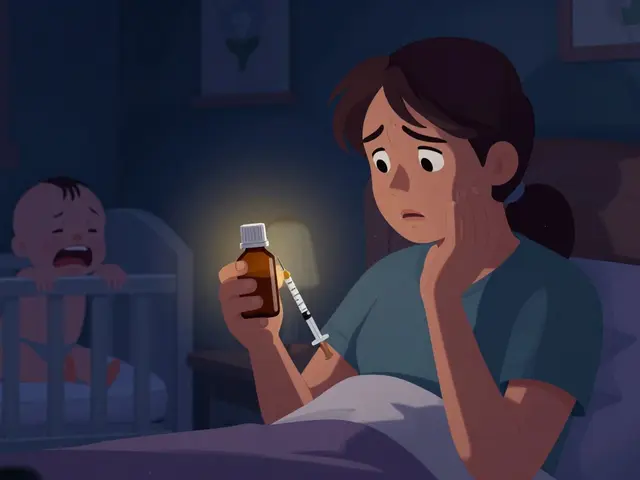
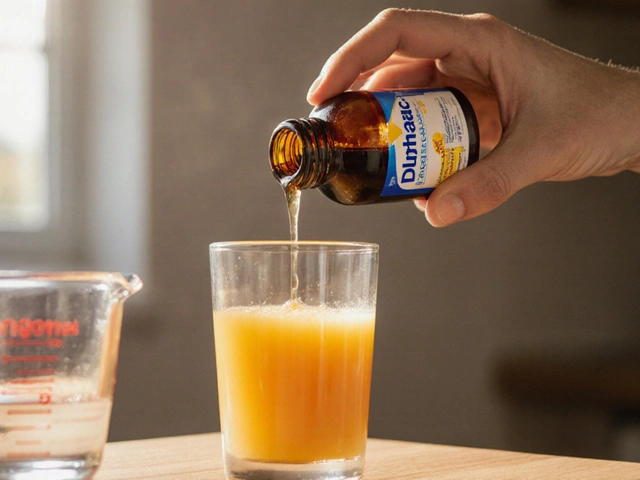
Pharmacies do this because once a pill bottle is opened and repackaged, exposure to air and moisture can affect stability. For most pills, the manufacturer date still applies. But for liquid antibiotics, eye drops, or insulin, the pharmacy’s date is stricter-and for good reason. Some suspensions only last 14 days after mixing. If you’re unsure, ask the pharmacist: "Is this date based on the manufacturer’s testing, or is it your pharmacy’s safety rule?"
Pro tip: Always keep the original manufacturer packaging. If you transfer pills to a pill organizer, keep the bottle nearby. That’s where you’ll find the real expiration date, lot number, and storage instructions.
Which Medications Are Dangerous After Expiration?
Most drugs just lose strength over time. But some are risky. Taking expired versions of these can be dangerous:
- Insulin → Can lose potency and fail to control blood sugar, leading to diabetic emergencies
- Birth control pills → Reduced effectiveness may lead to unintended pregnancy
- Thyroid medications → Inconsistent dosing can cause heart palpitations, weight changes, or fatigue
- Anti-platelet drugs (like aspirin or clopidogrel) → May not prevent clots, increasing stroke or heart attack risk
- Antibiotics → Even if not toxic, weakened antibiotics can fail to kill infections, leading to antibiotic resistance
There’s a myth that tetracycline becomes toxic after expiration. That was true in the 1960s due to outdated manufacturing, but modern versions don’t have that risk. Still, never take any antibiotic past its date.
Storage Matters More Than You Think
Expiration dates assume your medicine was stored correctly. If you keep it in the bathroom, near the stove, or in a hot car, it degrades faster. Heat, moisture, and light break down chemicals.
Most pills are fine at room temperature (68-77°F). But some need refrigeration-check the label. Insulin, for example, must be kept cool. If you’ve left it in a 90°F car for an hour, don’t assume it’s still good.
Also, don’t transfer pills into unmarked containers. A jar labeled "pain meds" doesn’t tell you what it is or when it expires. Use original packaging or labeled pill boxes with clear dates.
How to Check for Signs of Degradation
Even if the date hasn’t passed, look for changes:
- Tablets that are cracked, discolored, or sticky
- Liquids that are cloudy, smelly, or have particles
- Patches that are brittle or don’t stick
- Eye drops that change color or have floating bits
But here’s the catch: most potency loss happens without visible signs. A pill might look perfect but be 30% less effective. That’s why the FDA recommends not using expired medicine unless it’s an emergency and you have no other option.
What the FDA and Other Agencies Say
The FDA’s Shelf Life Extension Program (SLEP), run with the Department of Defense, tested over 100 drugs stored in perfect conditions. Ninety percent remained effective 15 to 66 months past their expiration date. That’s promising-but this was for stockpiled emergency supplies, not home medicine cabinets.
For consumers, the rule stays simple: if it’s expired, don’t take it unless it’s a non-critical drug and you’ve checked with a pharmacist. For life-saving meds like insulin or heart medications, the risk isn’t worth it.
Real Problems People Face
A 2022 study found that 68% of older adults thought "use by" meant the medicine instantly became dangerous after the date. That’s why so many people toss out perfectly good pills. Others keep them too long, risking ineffective treatment.
One Reddit user shared how they threw away a $200 prescription because the pharmacy label said "discard after 6 months," but the manufacturer date was still 2 years away. They didn’t know which one to trust.
Another common mistake: keeping old prescriptions from years ago. If you were prescribed something for a past illness and never used it, don’t assume it’s still safe. Conditions change. Your body changes. The drug might not be right anymore-even if it hasn’t expired.
What You Should Do Right Now
Here’s a simple checklist to keep your medicine safe:
- Check the original packaging for the manufacturer’s expiration date-not the pharmacy label.
- Write the expiration date on the bottle with a marker if it’s hard to read.
- Store pills in a cool, dry place (a bedroom drawer is better than a bathroom).
- Never use insulin, thyroid meds, birth control, or antibiotics past their date.
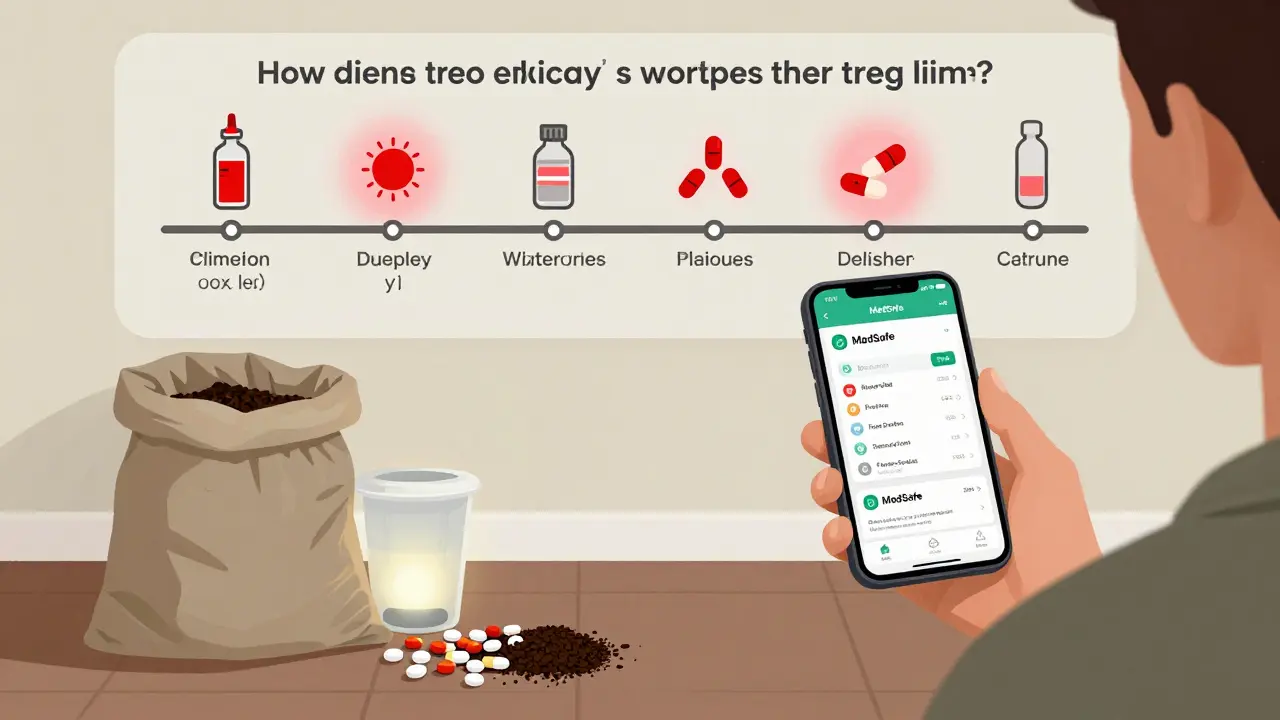
- Use apps like MedSafe or MyTherapy to track expiration dates across multiple meds.
- Ask your pharmacist to write the manufacturer’s date on the label if it’s different from their "discard" date.
- Dispose of expired meds properly-don’t flush them. Use a drug take-back program or mix them with coffee grounds in a sealed bag before tossing.
What’s Changing in the Future
Pharmaceutical companies are starting to use smarter packaging. Some now have QR codes that link to digital expiration info. Others use thermochromic ink that changes color if the medicine got too hot. Merck, for example, added temperature-sensitive labels to its insulin products in late 2022.
The World Health Organization now recommends a global standard: YYYY-MM-DD format. That’s already used in China and the EU. The U.S. is slowly moving that way too. Better labeling will reduce confusion.
But until then, the best tool you have is knowledge. Don’t guess. Don’t assume. Check the label. Ask your pharmacist. Keep the original packaging. Your health depends on it.
Can I still take medicine after the expiration date?
Most medications remain safe and effective for some time after the expiration date, especially if stored properly. However, potency can decrease, and some drugs like insulin, thyroid medication, and antibiotics should never be used past their date due to serious health risks. When in doubt, consult a pharmacist.
Why do pharmacies put different expiration dates on prescription bottles?
Pharmacies assign a "beyond-use" date-usually 1 year from dispensing-to account for changes in stability once the medication leaves its original sealed container. This is especially important for liquids, eye drops, and suspensions. The manufacturer’s date may be longer, but the pharmacy’s date is the one you should follow for safety.
What should I do if my medicine looks different?
If pills are discolored, cracked, or sticky, or if liquids are cloudy or smell odd, stop using them. These are signs of degradation-even if the date hasn’t passed. Contact your pharmacist for a replacement. Never take medicine that looks or smells wrong.
Is it safe to store medicine in the bathroom?
No. Bathrooms are humid and warm, which can cause pills to break down faster. Store medications in a cool, dry place like a bedroom drawer or kitchen cabinet away from the sink or stove. Always check the label for specific storage instructions.
How do I know if a medicine is approved for sale?
In Canada, look for the DIN (Drug Identification Number) or GP number on the label. In the U.S., FDA-approved medications will have clear labeling with the manufacturer’s name and expiration date. If you’re unsure, ask your pharmacist to verify the product’s approval status.
15 Comments
I've had pills from 2018 that still look fine. I don't toss 'em unless they're powdery or smell weird. The FDA study showed most drugs are good for years past the date. Just don't keep 'em in the bathroom like a sauna.
This is so needed! I used to toss out $300 prescriptions because the pharmacy said 'discard after 6 months'... then I found out the manufacturer date was 2 years out. Mind blown. Now I always check the original bottle. 🙌
Yeah right. Like anyone actually reads those tiny print dates. I just shake the bottle and if it doesn't rattle, I take it. Works every time.
The real issue isn't the date-it's the fact that pharmacies slap on their own expiration labels like they're the FDA. You ever ask why? Because they're trying to move inventory. Not because you're gonna die from a 14-month-old pill.
I appreciate the depth of this post. It's rare to see such a thorough breakdown of regulatory nuance versus consumer perception. The distinction between manufacturer and pharmacy expiration dates is critical and often misunderstood. Proper storage conditions are equally vital.
I've always thought expiration dates were more about liability than science. But the SLEP data is compelling. Still... I'd never risk insulin. That's not a gamble. Even if it 'looks' fine. One wrong dose and you're in ICU. Not worth it.
Dude I just started using MedSafe. Game changer. It pings me 2 weeks before anything expires. Saved me from tossing a $180 asthma inhaler that was still good for 8 more months. Also, store meds in a Tupperware in the closet. No heat. No moisture. No drama. 🥶
I keep all my shit in this old cigar box under the bed. Dry. Dark. Cool. Like a vampire’s lair. My blood pressure meds are from 2021 and still kickin’. My pharmacist just shrugged and said 'if it ain’t cracked or smellin’ like regret, you’re probably fine.'
I can't believe people are still falling for this 'pharmacy date' nonsense. This is corporate propaganda disguised as safety. The real reason they put a 12-month label on your bottle? So you come back and buy more. Profit over patient. I'm not buying it.
In India, we often reuse expired meds due to cost. But I always check for physical changes. If the tablet is chalky or the liquid is murky, it's gone. Also, insulin must be refrigerated-even unopened. Heat kills it fast. I learned this the hard way.
This post is a waste of time. People die from expired meds every day. You think the FDA cares? They care about lawsuits. The real danger is you taking something you don't understand. Stop being lazy. Throw it out.
The FDA knows what they're doing. But what about the 20% of drugs that degrade into toxic compounds? You think they test every single batch? Nah. They test one batch per year. The rest? Luck. I don't trust any med past its date. Ever. You're playing Russian roulette with your liver.
I... I just... I don't even know anymore. I mean, I know I should throw it out... but I also know it's probably fine... and I don't want to spend $200 again... and I'm not sick right now... so maybe... maybe I'll just... wait? ... Wait, what was I supposed to do again?
I have a 12-year-old bottle of amoxicillin in my drawer. I took it last year for a sinus infection. I'm fine. The world didn't end. The expiration date is a capitalist myth designed to keep you buying.
Knowledge is power. And power is responsibility. The expiration date is not a cliff-it's a slope. But some medications are on the edge of that slope. When your life depends on it, don't test gravity. Consult. Verify. Protect. Your health is not a gamble. It's a gift.