


More than 4 in 10 older adults in the U.S. take five or more prescription drugs every day. That’s not just common-it’s dangerous. Many of these medications were started years ago for conditions that have changed, or for prevention that no longer makes sense. Yet they keep getting refilled. Every year, deprescribing saves lives, cuts hospital stays, and helps seniors feel better-not worse. But too few doctors and families know when or how to do it.
What Is Deprescribing, Really?
Deprescribing isn’t just stopping pills. It’s a careful, planned process of removing medications that do more harm than good. The term was first used in 2003 by an Australian doctor who noticed that older patients were drowning in prescriptions they didn’t need. Today, it’s backed by solid science: when a drug’s risks outweigh its benefits, or when it no longer matches a person’s goals, it’s time to consider stopping it.This isn’t about cutting corners. It’s about matching treatment to reality. A 90-year-old with advanced dementia doesn’t need a daily statin to prevent a heart attack they’re unlikely to live long enough to have. A frail 85-year-old on multiple blood pressure pills might be falling more often because their meds are too strong. These aren’t edge cases-they’re everyday situations.
When It’s Time to Stop: 4 Clear Signs
Doctors don’t guess when to deprescribe. They look for specific red flags:
- New symptoms that might be drug side effects. Dizziness, confusion, fatigue, stomach bleeding, or sudden weakness aren’t just ‘part of aging.’ They could be caused by a drug. For example, benzodiazepines (like Xanax or Valium) are linked to falls and memory loss in seniors-but are still prescribed far too often.
- Advanced illness or declining function. If someone has late-stage dementia, heart failure, or can no longer walk or dress themselves, many preventive meds lose their value. Cholesterol pills, diabetes drugs, or osteoporosis treatments meant to protect health over decades don’t make sense when life expectancy is measured in months, not years.
- High-risk drugs or dangerous combinations. Some meds are simply too risky for older bodies. The Beers Criteria, updated regularly by the American Geriatrics Society, lists drugs like anticholinergics, sleeping pills, and certain NSAIDs that should be avoided. Combining multiple drugs that slow the brain or lower blood pressure can be deadly.
- Preventive meds with no short-term benefit. If a senior hasn’t had a heart attack, stroke, or broken bone in 10 years, why keep taking aspirin daily? Or a statin if their cholesterol is already low? Prevention only works if you live long enough to benefit. Many seniors are on these drugs because they were started years ago and never reviewed.
How Deprescribing Actually Works
Stopping a pill isn’t as simple as tossing it out. It takes planning. Here’s how it’s done right:
- One drug at a time. If you stop three meds at once and the person feels better-or worse-you won’t know which one caused the change. That’s why doctors start with the most likely culprit.
- Lower the dose first. For blood pressure meds, antidepressants, or steroids, cutting the dose slowly helps avoid withdrawal symptoms like rebound high blood pressure or anxiety.
- Monitor closely. After stopping a drug, check in weekly for two to four weeks. Watch for return of old symptoms, new side effects, or changes in energy, mood, or balance.
- Involve the patient and family. Seniors need to understand why a pill is being stopped. They should know what to watch for and who to call if something feels off.
Studies show that when done this way, deprescribing reduces adverse drug events by 17% to 30%. Hospital readmissions drop by 12% to 25%. And seniors report better sleep, clearer thinking, and less nausea.
Who Should Be Doing This?
It’s not just the doctor’s job. A team approach works best:
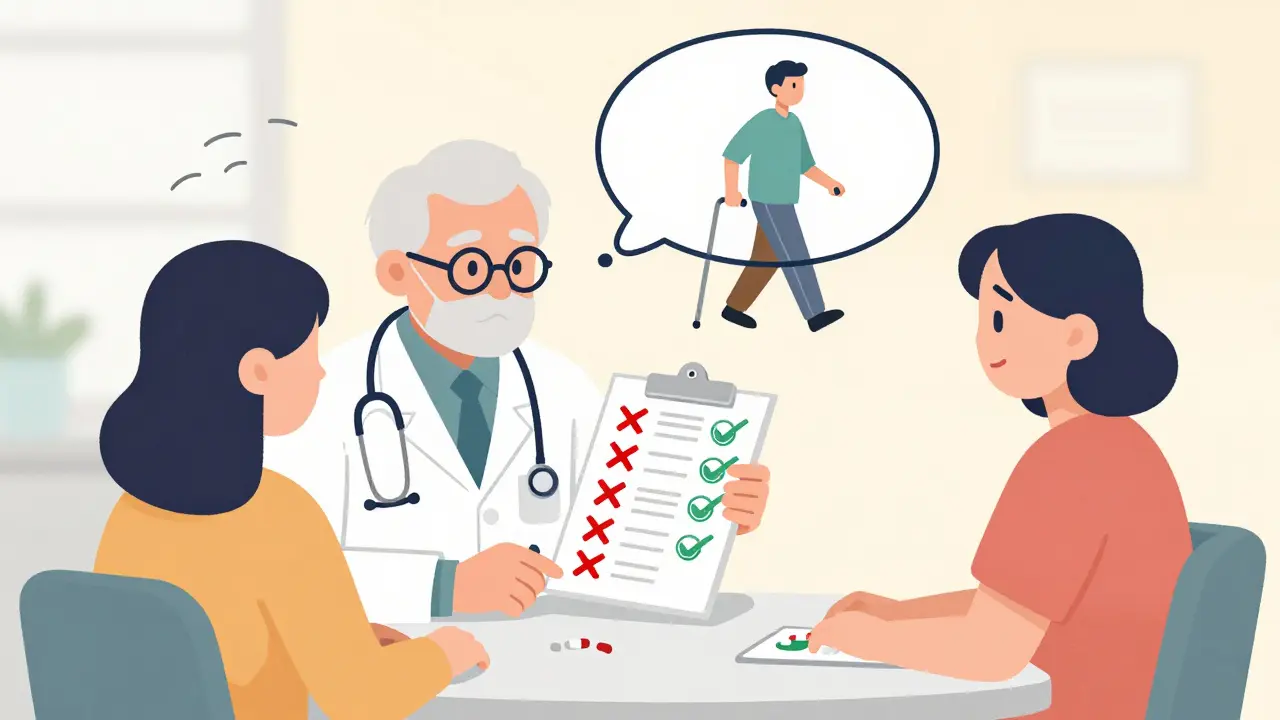
- Clinical pharmacists are experts in drug interactions and side effects. They can review every pill a senior takes and flag the ones that are risky.
- Geriatricians specialize in aging and know which meds are outdated for older bodies.
- Primary care doctors often miss the big picture because they’re juggling multiple conditions. A medication review every 6 to 12 months should be standard.
- Families and caregivers are the eyes and ears. They notice when Mom seems more confused, or Dad is falling more. They need to speak up.
Many hospitals and clinics now have formal deprescribing programs. The U.S. Agency for Healthcare Research and Quality found that pharmacist-led reviews cut inappropriate meds by up to 40% in community-dwelling seniors.
Why Don’t More Doctors Do It?
It’s not laziness. It’s systemic.
Medical training focuses on starting meds, not stopping them. Guidelines tell doctors how to treat high blood pressure, diabetes, or cholesterol-but rarely say, “When to stop.” Many fear legal risk or patient pushback. Others worry that stopping a drug might cause a relapse-even when the drug hasn’t helped in years.
Electronic health records don’t help much either. They remind doctors to renew prescriptions, but rarely prompt them to question them. A 2023 review found only a handful of studies used computer alerts to support deprescribing-and those that did worked.
And then there’s the culture. Patients expect prescriptions. They feel safer with more pills. “If it’s not broken, don’t fix it” becomes “If I’m on it, it must be necessary.” But that’s not true.
Real Examples That Changed Lives
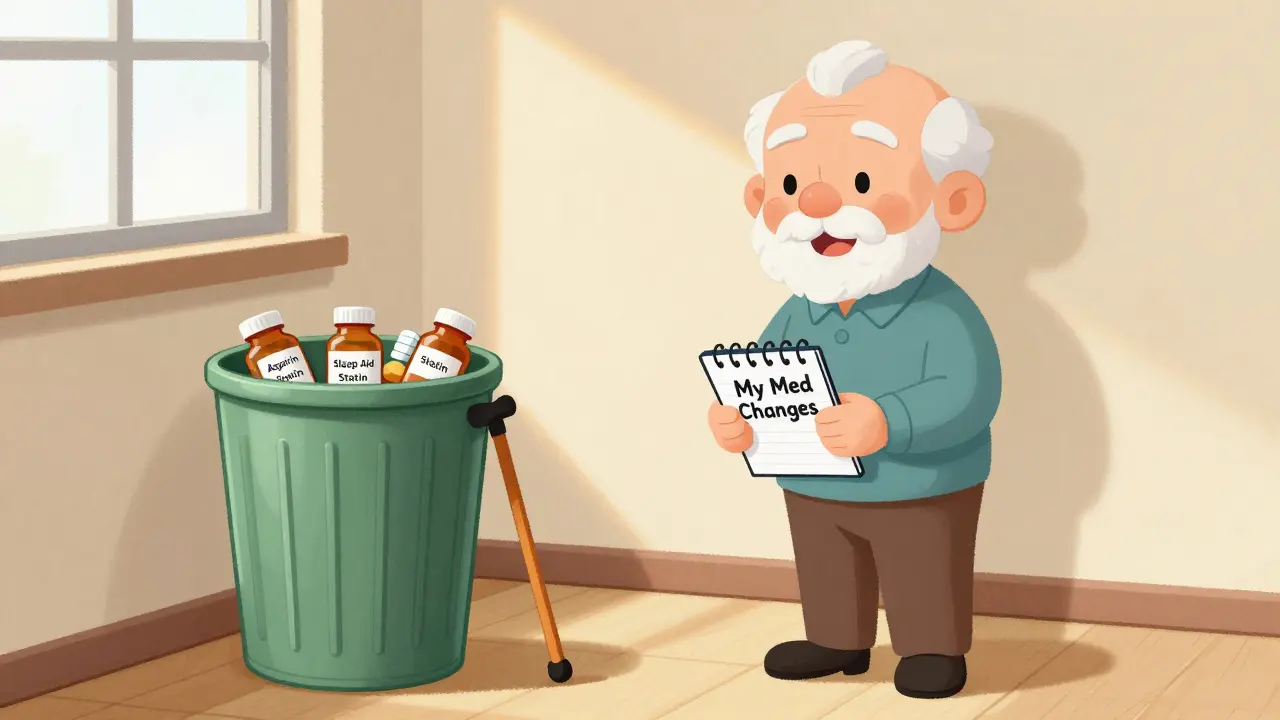
Take Mary, 87. She was on eight medications: blood pressure pills, a statin, a daily aspirin, a sleep aid, an antacid, a bladder med, a vitamin D, and a calcium supplement. She was falling twice a month. Her memory was fuzzy. Her doctor finally did a full review.
They stopped the sleep aid (a benzodiazepine). Within two weeks, she was sleeping better and not falling. They lowered her blood pressure meds-she wasn’t dizzy anymore. They stopped the daily aspirin-she had no history of heart disease. She now takes three meds. She walks without a cane. She remembers her grandkids’ names.
Or Robert, 82, with moderate dementia. He was on a diabetes pill to keep his A1C under 7. But he couldn’t eat regularly, forgot to take pills, and had low blood sugar episodes. His doctor switched him to a less aggressive target. He stopped the pill. His sugar stabilized. He stopped getting confused after meals.
These aren’t rare stories. They’re the norm-if you ask the right questions.
What You Can Do Today
If you’re caring for an older adult, here’s how to start:
- Make a complete list. Write down every pill, patch, inhaler, and supplement. Include over-the-counter meds like ibuprofen, antacids, or sleep aids.
- Ask the doctor: “Is this still needed? What’s it for? What happens if we stop it?”
- Request a medication review. Say: “Can we do a full med check? I’m worried about side effects.”
- Use free tools. Deprescribing.org has printable guides for common drugs like PPIs (heartburn meds), benzodiazepines, and anticholinergics. They include patient handouts and step-by-step plans.
- Track changes. Keep a notebook: “After stopping X, she sleeps better,” or “He’s less confused.” Bring it to appointments.
Don’t wait for a crisis. Schedule a med review like you would a flu shot-every year.
What Happens If You Don’t?
Every year, the U.S. spends $30 billion treating adverse drug reactions in older adults. Most are preventable. A single wrong pill combination can send someone to the ER. A sleeping pill can lead to a broken hip. A statin can cause muscle damage that leads to kidney failure.
And the emotional toll? Seniors feel like their bodies are failing them-not because of age, but because of the drugs meant to help. They lose independence. They lose trust.
Deprescribing isn’t about taking away care. It’s about restoring it. Giving back clarity, safety, and dignity.
Is it safe to stop medications on my own?
No. Stopping some medications suddenly can be dangerous. Blood pressure pills, antidepressants, steroids, and seizure meds can cause serious rebound effects if stopped abruptly. Always talk to your doctor or pharmacist first. They’ll help you taper safely.
What if symptoms come back after stopping a drug?
Sometimes, yes. If an old symptom returns, it might mean the drug was helping. But it could also mean the symptom was caused by something else-like dehydration, infection, or another medication. Don’t restart the drug without talking to your doctor. They’ll help you figure out what’s really going on.
Are over-the-counter meds included in deprescribing?
Absolutely. Many seniors take daily antacids, sleep aids, or pain relievers like ibuprofen without realizing they’re medications. These can cause kidney damage, stomach bleeding, or confusion. They’re just as important to review as prescription drugs.
How often should seniors have a medication review?
At least once a year, and anytime there’s a major change-new diagnosis, hospital stay, fall, or new symptom. If someone takes five or more meds, every six months is ideal.
Can deprescribing improve quality of life?
Yes. Studies show seniors who undergo deprescribing report better sleep, less nausea, fewer falls, improved memory, and more energy. Many say they feel like themselves again-not like a walking pharmacy.
Final Thought: It’s Not About Less Medicine. It’s About Better Medicine.
More pills don’t mean better care. In fact, the opposite is true. For seniors, the goal isn’t to treat every number on a lab report. It’s to live well, safely, and comfortably. That means sometimes, the most powerful medicine is the one you don’t take.


13 Comments
Deprescribing isn't just smart-it's ethical. We've normalized polypharmacy like it's a badge of honor, but it's just medical inertia. A 90-year-old with dementia doesn't need a statin; they need quiet mornings and grandkids' voices.
My grandma was on 11 meds. She couldn't walk. We cut it to 3. She started dancing again. No joke. This post? Lifesaver.
Let me tell you something-I’ve been a geriatric nurse for 28 years, and I’ve seen too many seniors turned into walking pill dispensers. It’s not aging, it’s iatrogenic harm. When you stop the unnecessary meds, people light up like they’ve been given back their lives. One woman stopped her anticholinergic and remembered her wedding day for the first time in 5 years. That’s not magic-that’s medicine done right. Families need to ask, ‘What’s this for?’ and doctors need to listen. It’s not about cutting corners-it’s about cutting the clutter so the real care can breathe. And yes, OTC meds count too-those nightly antacids? They’re robbing calcium from bones. Sleep aids? They’re fall tickets. We’ve got to stop treating symptoms like problems and start treating people like humans.
Oh, so now we’re just gonna stop meds because it’s ‘convenient’? What’s next-discontinuing insulin because ‘he’s old’? This is dangerous populism disguised as wisdom. Medicine isn’t a buffet-you don’t pick and choose based on nostalgia.
It’s not ‘populism’-it’s evidence. The Beers Criteria exist for a reason. And no, we’re not stopping insulin for diabetics. We’re stopping statins for 90-year-olds with dementia who’ve never had a cardiac event. There’s a difference.
Canada’s doing this better than the U.S.? Please. Our docs are just as lazy. My uncle got a new script every visit-even when he couldn’t swallow pills. Pharma pushes, docs cash in, seniors pay with their balance. It’s a racket.
Real talk: I saw my dad go from ‘walking pharmacy’ to ‘walking human’ after a med review. He cried. Not from sadness-from relief. 🙏
One must question the epistemological foundations of deprescribing: Is the cessation of pharmaceutical intervention truly a therapeutic act, or merely a capitulation to systemic under-resourcing in geriatric care? The literature remains ambiguously framed.
While I appreciate the intent behind this piece, I must point out that the term 'deprescribing' is not universally standardized in clinical guidelines. Also, there are documented cases where abrupt discontinuation led to rebound hypertension and withdrawal seizures. Caution is warranted.
My aunt was on 14 meds. She was a zombie. We cut 7. Now she bakes pies, calls me every Sunday, and even started a book club. Who knew less medicine could mean more life? 🎂📚
Let’s be real-this whole ‘deprescribing’ thing is just another way for doctors to avoid responsibility. If you don’t want to treat someone, just stop their meds and call it ‘patient-centered care.’ Meanwhile, the real issue is the lack of geriatricians, not the pills. And don’t get me started on how pharmacies just refill everything automatically. This isn’t a solution-it’s a Band-Aid on a hemorrhage.
In Indonesia, elders take herbs, turmeric, and prayer. No pills. They live to 100, walk barefoot, and laugh loud. Maybe we need less science… and more soul.
Ok but what about the 17% of people who die after deprescribing bc their 'unneeded' meds were actually keeping them alive?? You think this is a one-size-fits-all? You're playing god with grandma's life!!