

Probiotic Compatibility Calculator
This tool helps determine if probiotics are recommended for your antibiotic treatment and which strains to use based on your specific situation.
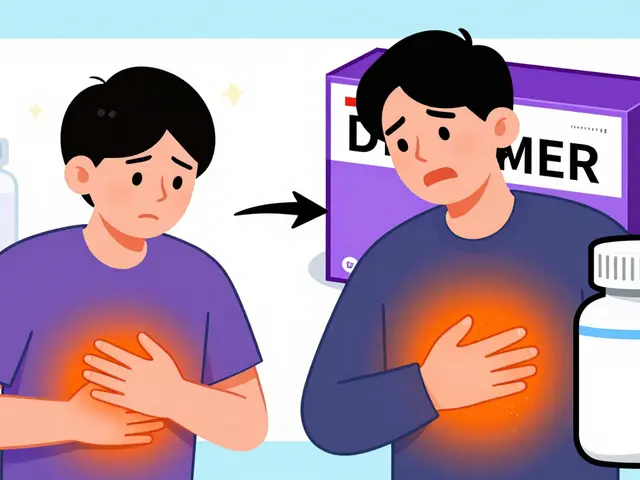
When you’re on antibiotics, you’re not just killing off the bad bacteria - you’re wiping out the good ones too. That’s why so many people end up with stomach cramps, bloating, or worse - diarrhea that lasts for days. It’s not just annoying. For some, it’s dangerous. But there’s a simple, well-studied way to fight back: probiotics with antibiotics.
Why Your Gut Suffers When You Take Antibiotics
Antibiotics don’t pick and choose. Whether you’re taking amoxicillin for a sinus infection or clindamycin for a tooth abscess, these drugs sweep through your digestive tract like a tidal wave. They kill the harmful bacteria causing your infection - but they also wipe out the trillions of helpful microbes that keep your gut healthy. This imbalance is called dysbiosis. The result? Antibiotic-associated diarrhea (AAD) affects up to 30% of adults and 40% of kids on antibiotics. In severe cases, it can lead to Clostridioides difficile (C. diff) infection - a life-threatening condition that causes violent diarrhea, fever, and dehydration. Hospital stays, repeat treatments, and even surgery can follow. The good news? You don’t have to just wait it out. Research shows that taking probiotics while on antibiotics can cut your risk of AAD by nearly half.Which Probiotics Actually Work?
Not all probiotics are created equal. The strain matters more than the brand. Two strains have the strongest evidence backing them up:- Lactobacillus rhamnosus GG - Proven to reduce diarrhea in both children and adults. Used in Culturelle and other top brands.
- Saccharomyces boulardii CNCM I-745 - A yeast, not a bacteria. Works well against C. diff and doesn’t get wiped out by antibiotics.
How to Take Them - Timing Matters
Taking probiotics at the wrong time can make them useless. Antibiotics kill bacteria - including the good ones in your supplement. So if you swallow your probiotic capsule right after your antibiotic, you’re basically feeding the antibiotic. The fix? Space them out.- Take your probiotic 1 to 2 hours after your antibiotic dose.
- Don’t wait until bedtime if your antibiotic is taken in the morning - aim for midday or early afternoon.
- Continue taking probiotics for 1 to 2 weeks after you finish your antibiotic course.
What About Side Effects?
Most people tolerate probiotics just fine. But some notice mild bloating, gas, or stomach rumbling in the first few days. That’s normal. It usually fades within 3 to 5 days as your gut adjusts. But there’s a serious risk for a small group: people with weakened immune systems. If you’re on chemotherapy, have HIV, have a central line, or are recovering from major surgery, probiotics can cause infections. Between 2010 and 2020, 12 cases of probiotic-related bloodstream infections were reported in immunocompromised patients. The FDA and CDC warn against their use in these cases. If you’re unsure, talk to your doctor. Don’t assume it’s safe just because it’s sold over the counter.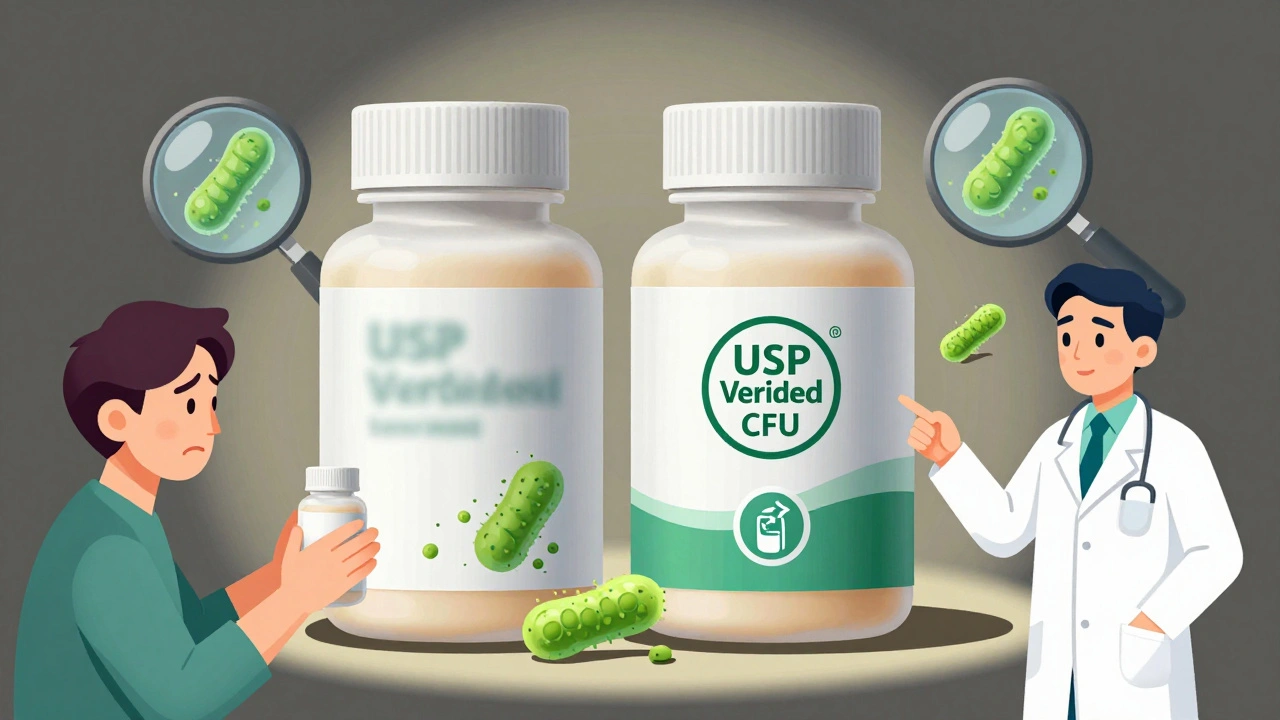
Product Quality Is a Wild West
Here’s the scary part: your probiotic bottle might not contain what’s on the label. Independent testing by ConsumerLab found that 23% to 45% of probiotic products had significantly fewer live bacteria than claimed. Some had none at all. Refrigerated products tend to be more reliable - 78% kept their potency, compared to just 62% for shelf-stable ones. Look for the USP Verified mark. Products with this seal passed strict tests for ingredient accuracy and live bacteria counts. They’re more expensive, but you’re paying for proof - not hope. Avoid mystery blends with 20+ strains. More doesn’t mean better. Stick with products that list a single, proven strain - like L. rhamnosus GG or S. boulardii - with a clear CFU count (10 billion is a good target).When Probiotics Don’t Help - And Why
Not everyone benefits. About 23% of users report no change in symptoms. Why?- Wrong strain - Taking Bifidobacterium instead of GG or S. boulardii.
- Wrong timing - Taking it at the same time as the antibiotic.
- Low quality - The product died on the shelf.
- Wrong infection - Broad-spectrum antibiotics like piperacillin-tazobactam (used in hospitals) cause deeper damage. Probiotics help less here.
What Experts Say
The American Gastroenterological Association (AGA) says don’t use probiotics routinely - mainly because of product inconsistency. But the Infectious Diseases Society of America (IDSA) says: use them for high-risk patients to prevent C. diff. Dr. Elisa Marroquin, lead author of a 2022 review, put it simply: “When participants take antibiotics, we see several consistent changes in bacterial species. But when treatment was combined with probiotics, the majority of those changes were less pronounced and some changes were completely prevented.” The bottom line? If you’re healthy and taking a common antibiotic like amoxicillin or azithromycin, probiotics are worth trying. If you’re in the hospital, on a broad-spectrum drug, or immunocompromised - talk to your doctor first.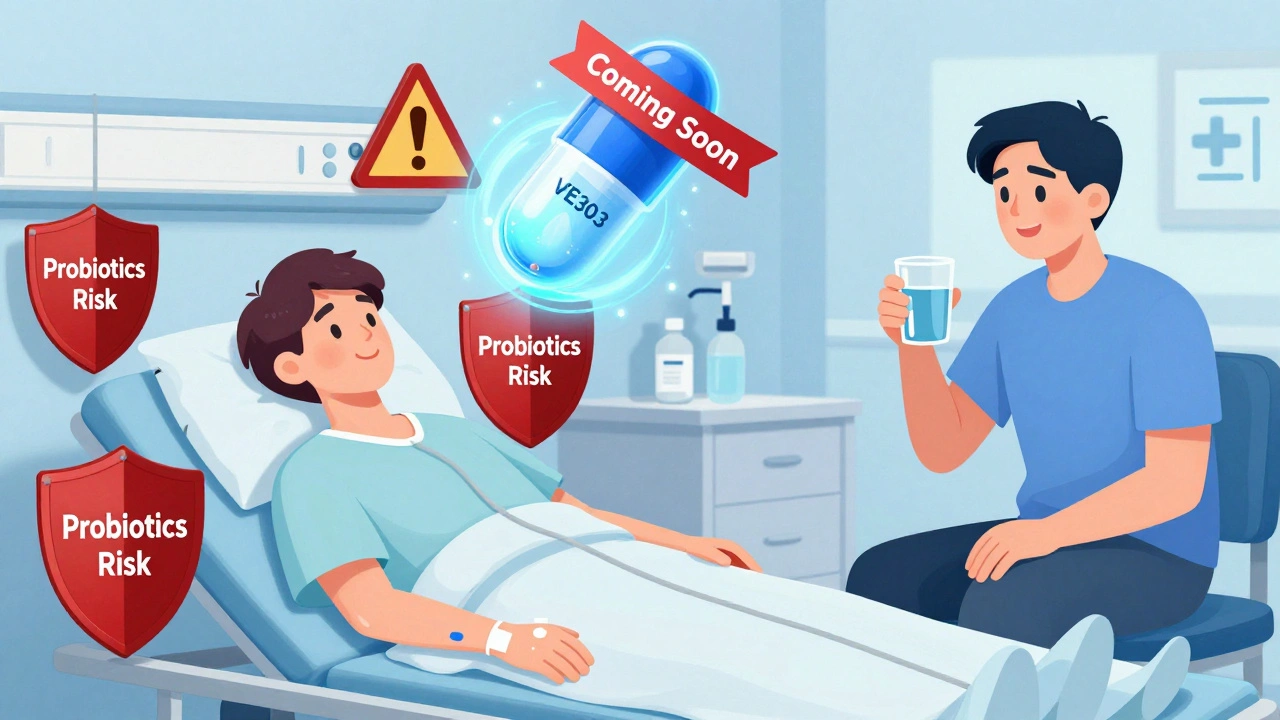
Cost and Accessibility
A month’s supply of a good probiotic costs between $20 and $45 at pharmacies like Walgreens or CVS. Most insurance plans don’t cover it - but it’s still cheaper than treating C. diff, which can cost over $10,000 per episode. You can buy them without a prescription in 92% of countries. No doctor’s note needed. Just read the label. Look for:- Strain name (e.g., Lactobacillus rhamnosus GG)
- CFU count (10^7 to 10^10)
- Expiration date
- Storage instructions (refrigerated = better)
- USP Verified logo (if possible)
The Big New Risk: Antibiotic Resistance in Probiotics
Here’s something most people don’t know: some probiotic products carry genes that make bacteria resistant to antibiotics. A 2025 study in mSphere found that 38% of commercial probiotics contained antibiotic resistance genes - including ones that protect against tetracycline, macrolides, and even vancomycin. These genes can potentially transfer to harmful bacteria in your gut. The FDA is now requiring all new probiotic supplements to be screened for these genes. If you’re buying something new, check if it’s been tested. Stick with brands that publish their safety data.What’s Coming Next
Scientists are already working on the next generation of probiotics. One called VE303 - a precise mix of 8 bacterial strains - reduced C. diff by 76% in early trials. These aren’t available yet, but they’re coming. The goal? Custom probiotics tailored to your microbiome and the specific antibiotic you’re taking. That’s the future. But right now, the best tool you have is a simple, well-chosen strain - taken correctly.Final Checklist: Probiotics + Antibiotics
- ✅ Choose L. rhamnosus GG or S. boulardii
- ✅ Take 1-2 hours after your antibiotic
- ✅ Continue for 1-2 weeks after finishing antibiotics
- ✅ Look for USP Verified or refrigerated products
- ✅ Avoid if immunocompromised, on chemo, or have a central line
- ❌ Don’t use mystery blends with 20+ strains
- ❌ Don’t take at the same time as antibiotics
- ❌ Don’t assume all probiotics are safe - check labels




14 Comments
Been taking probiotics with my antibiotics for years and honestly my stomach hasn't complained once since I started. I just grab Culturelle and take it after lunch, never at the same time as my pill. Life changing if you ask me.
I appreciate the depth of research cited here but I remain skeptical about the clinical applicability of probiotic supplementation given the extreme variability in product formulation and regulatory oversight. The 2013 meta-analysis you reference included studies with heterogeneous methodologies and varying dosages, and the 2022 review, while promising, still lacks standardization across intervention protocols. Without mandatory third-party verification for strain viability and genetic stability, the efficacy claims remain statistically suggestive rather than clinically definitive.
omg yes i’ve been doing this for like 3 years now and i never realized how much it helped until i skipped it once and got the worst diarrhea ever lmao. just take it 2 hours after your abx and dont overthink it. also refrigerated ones are way better i swear.
So many people don’t know this but if you’re on antibiotics and you’re feeling off, probiotics are your best friend. I’ve been a nurse for 12 years and I’ve seen patients bounce back so much faster when they’re on the right strain. Just make sure it’s L. rhamnosus GG or S. boulardii - the rest are basically fancy sugar pills. And yes, timing matters. Don’t chug them together.
Another wellness scam pushed by people who don’t understand microbiology. You think your gut is some delicate flower that needs hand-holding? Antibiotics are medicine. If you can’t tolerate them, maybe you shouldn’t be taking them. Probiotics are just a placebo for people who want to feel in control while ignoring real medical advice.
Interesting. But let us not forget that the human microbiome evolved over millennia without the aid of refrigerated capsules purchased at CVS. Are we not, in fact, disrupting natural resilience by artificially introducing exogenous strains? The notion that we must ‘protect’ our gut from the very mechanism that eradicates pathogens feels… anthropocentric. Perhaps the body knows better than our supplements. 🌱
I took probiotics during my last round of amoxicillin and honestly? I felt like a new person. No bloating, no weird cramps, no ‘why is my stomach doing that’ panic. I even started craving yogurt again. It’s not magic, but it’s like giving your gut a hug while the antibiotics do their thing. 💕
The FDA’s recent push for screening antibiotic resistance genes in probiotics is long overdue. While the benefits are documented, the potential for horizontal gene transfer to pathogenic strains cannot be ignored. Consumers must demand transparency - not just CFU counts, but full genomic screening reports. If a brand won’t publish this, they shouldn’t be on the shelf.
I’ve been on antibiotics 3 times in the last year and each time I got C. diff. I’m not taking any probiotics again. I don’t trust them. I don’t trust the companies. I don’t trust the studies. I just want to be left alone.
Probiotics? Bro. I just eat yogurt. Free. Tastes good. Works fine. Why are we paying $40 for capsules? 🤡
So you’re telling me I need to pay more for something that might not even have the bacteria it claims to have? And now I have to check for antibiotic resistance genes too? Next thing you know, I’ll need a PhD just to buy a supplement. 😏
i got the usp verified one and it was so expensive but like… it actually worked? no gas, no cramps. i dont know why everyone makes it so complicated. just buy the one with the label that says gg or boulardii and take it after your abx. done.
Scientific evidence supports the use of probiotics to mitigate antibiotic-associated gastrointestinal disturbances. The strain specificity and temporal separation from antibiotic administration are critical. Adherence to recommended protocols yields statistically significant reduction in incidence of diarrhea. Further, product integrity through refrigeration and verified labeling enhances efficacy. A prudent approach is advised.
Okay but have you considered that maybe your gut doesn’t need saving? Maybe antibiotics are supposed to mess you up a little? Like, evolution didn’t design us to pop pills and then chase them with probiotics like we’re in a spa. Maybe the real solution is not taking antibiotics unless you absolutely have to. And maybe the fact that we’re even having this conversation means we’ve gone too far down the rabbit hole of pharmaceutical dependency. Just saying. 🌿