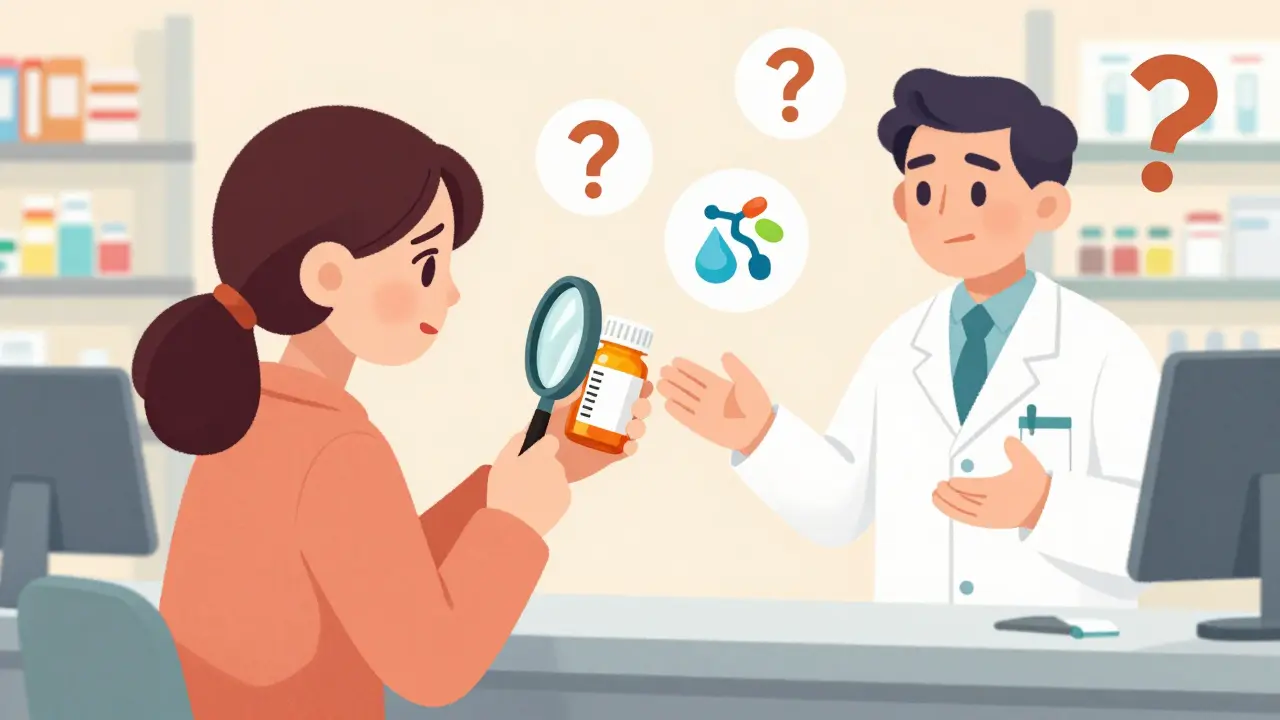


Every year, over 4.9 billion prescriptions are filled in the U.S. But how many of those labels are actually understood? You walk out of the pharmacy with a bottle in hand, glance at the tiny print, and assume everything’s fine. But what if you missed something critical? A wrong dose. A dangerous interaction. A storage requirement that ruined your medicine. These aren’t rare mistakes-they happen every day, and most of them are preventable.
What’s on your prescription label? Don’t guess-ask.
Your prescription label isn’t just a receipt. It’s a safety document. The FDA requires nine key pieces of information to be on every label: your name, the prescriber’s name, the drug name (both brand and generic), strength, dosage form, quantity, directions for use, number of refills, and pharmacy contact info. But that’s just the baseline. Many labels include extra details-expiration dates, storage instructions, warnings, and even Medication Guides for high-risk drugs like opioids or blood thinners.
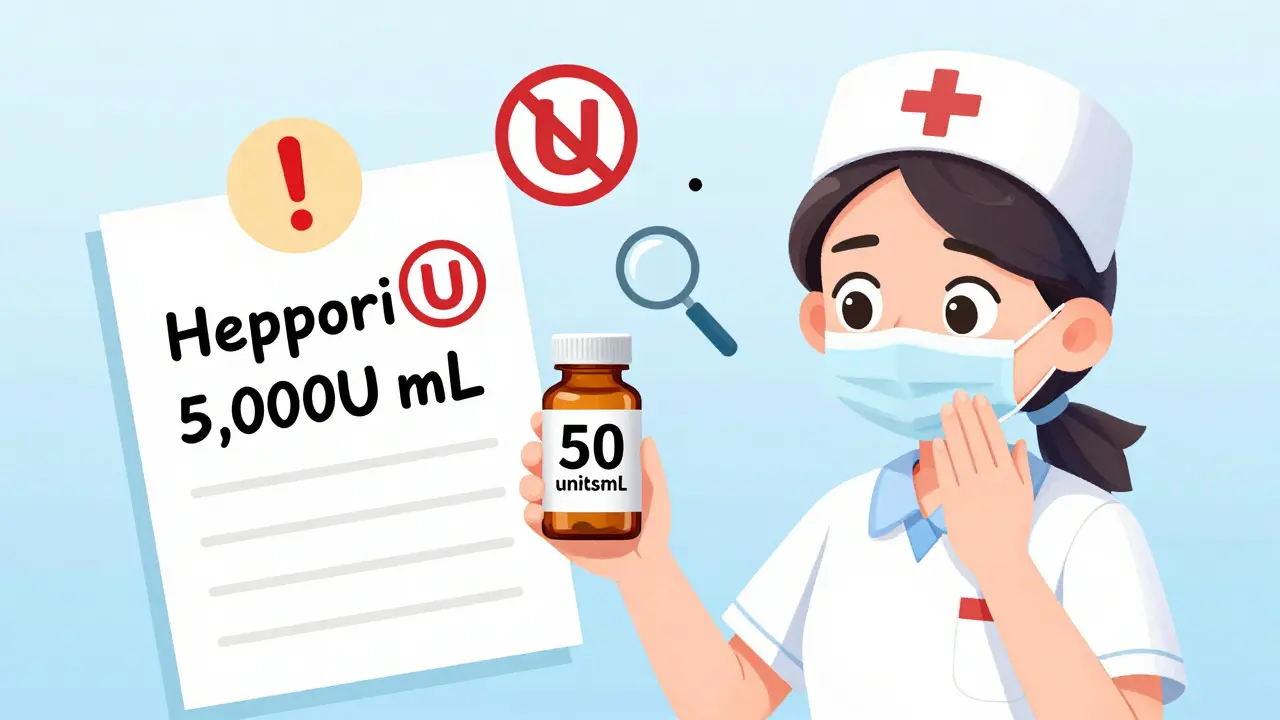
Here’s the problem: 80 million American adults struggle to read and understand basic medical instructions. That’s not about intelligence-it’s about how the information is presented. Small font. Cluttered layout. Medical jargon. Abbreviations like “QD” or “BID” that even some nurses forget. If you don’t ask questions, you’re playing Russian roulette with your health.
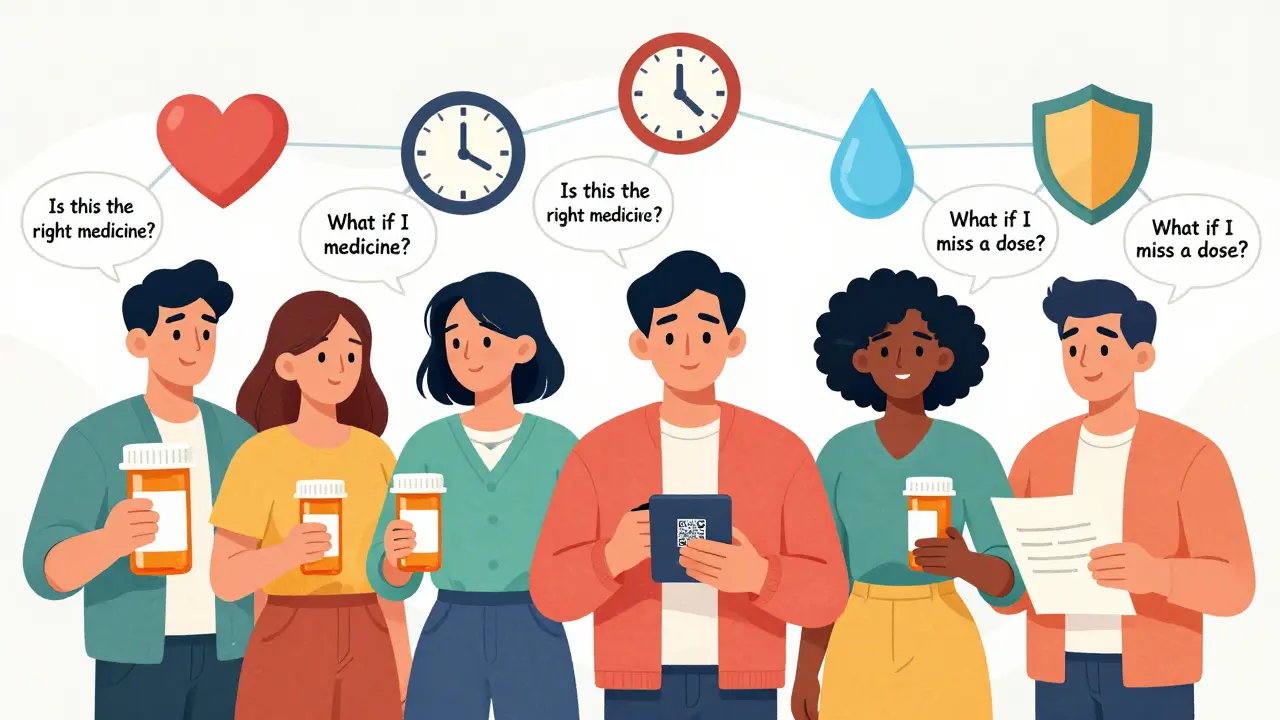
Ask: Is this the right medicine for me?
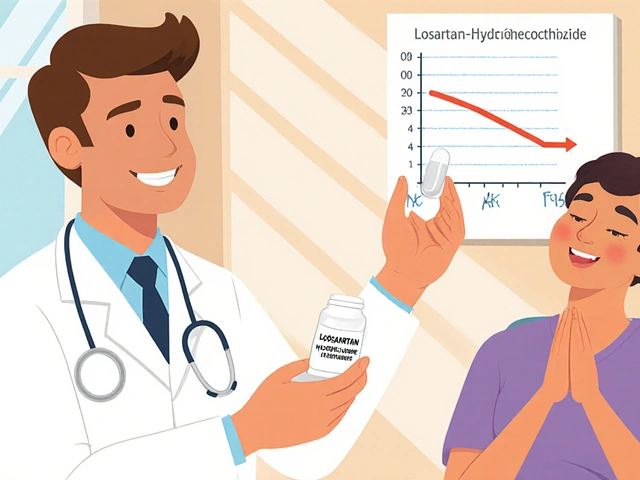
Medication errors start here. You might think your doctor prescribed “Lisinopril,” but the label says “Lisinopril-Hydrochlorothiazide.” That’s a combo drug-two medications in one pill. Did your doctor know you were already on a diuretic? Did they mean to add this? Or did a pharmacy mix up your script with someone else’s?
Always compare the label to what your doctor told you. If your blood pressure pill used to be a white round tablet and now it’s a blue oval, ask why. Check the generic name-sometimes pharmacies switch brands to save money, and that can change how your body reacts. Ask: “Is this the exact medicine my doctor ordered?” Don’t assume. Verify.
Ask: What’s the correct dose and timing?
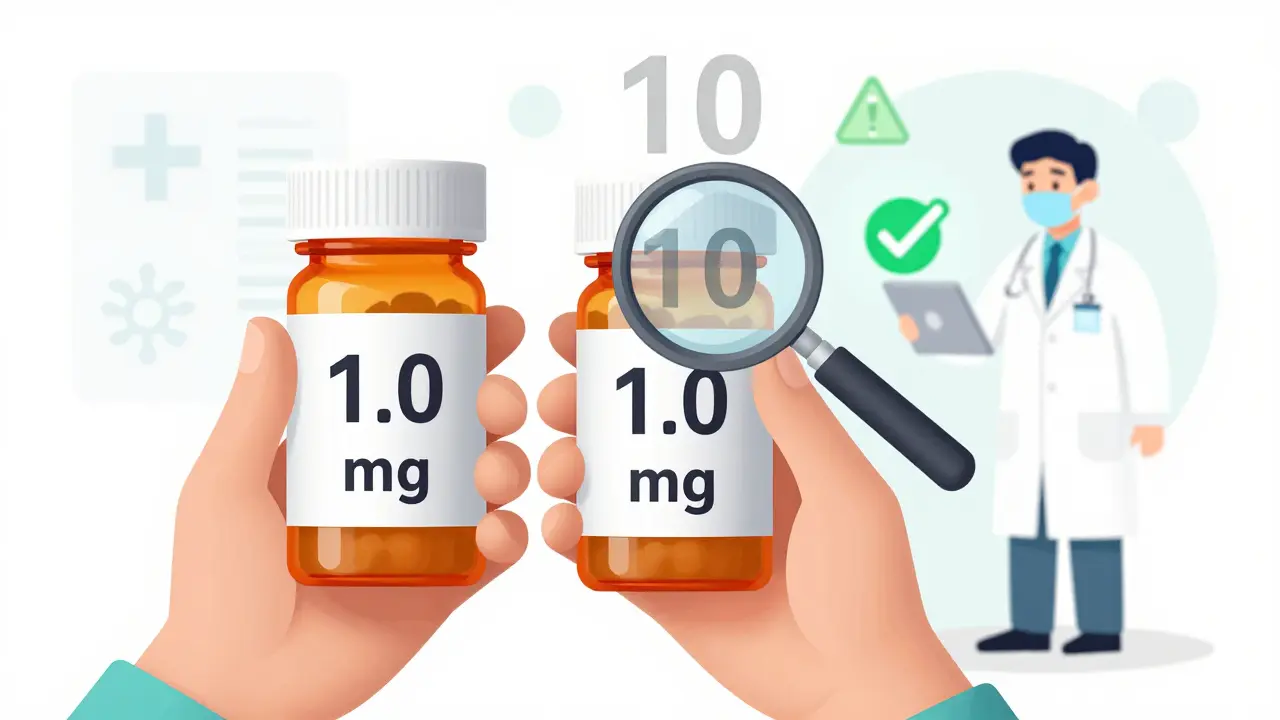
“Take one by mouth daily” sounds simple. But what does “daily” mean? Morning? Night? With food? On an empty stomach? If the label says “Take as needed,” what counts as “needed”? Is it for pain? For anxiety? When should you stop?
One patient took her insulin “before meals” but didn’t realize the label meant before each meal-not once a day. She ended up in the ER with low blood sugar. Another took his antibiotic with dairy, killing its effectiveness. The label didn’t say “avoid dairy,” but the pharmacist knew. That’s why you need to read it aloud with them.
Ask: “Can you read the directions out loud so I can repeat them back?” This isn’t just helpful-it’s proven to cut errors by 58%. If you’re unsure, ask for a printed copy of the instructions or a phone call reminder.
Ask: How should I store this?
Most people think all pills go in the bathroom cabinet. They’re wrong. Seventy-eight percent of prescriptions need room temperature storage (68-77°F). But 15% need refrigeration. That includes insulin, certain antibiotics, and even some eye drops. One patient kept her estrogen patch at room temperature for two weeks-because the tiny print on the back of the label said “refrigerate.” She didn’t notice until her symptoms returned.
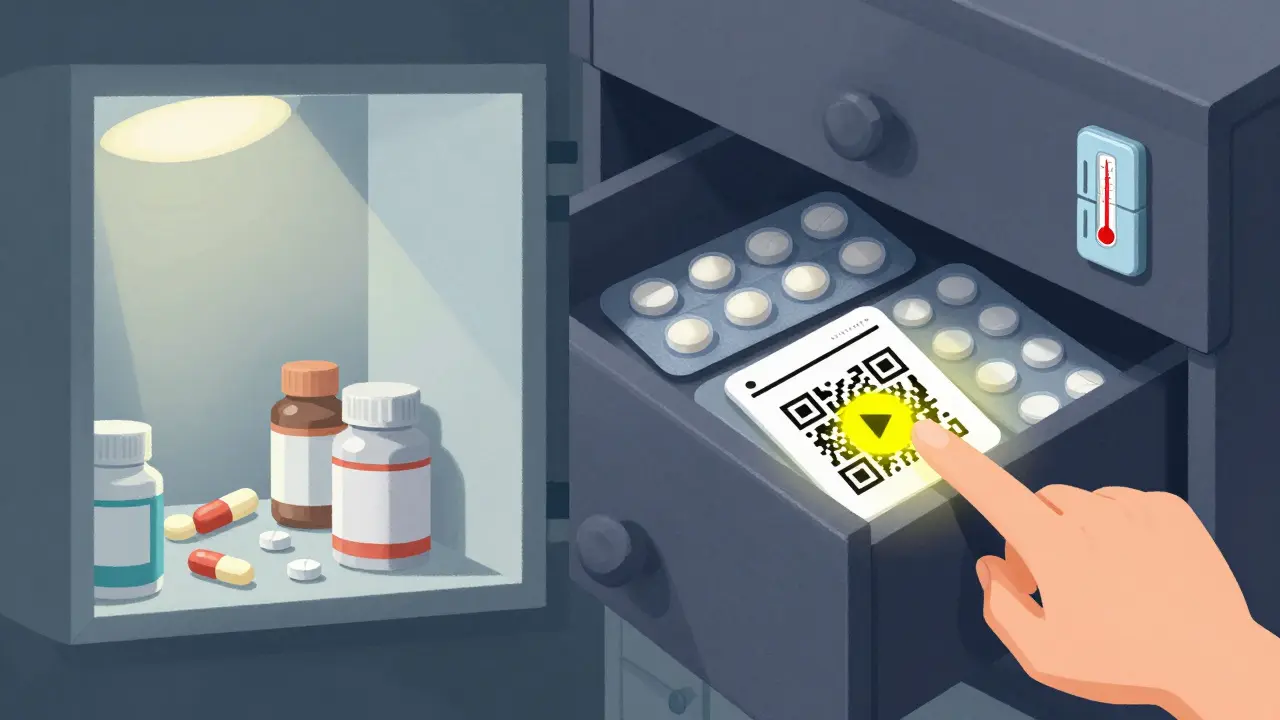
Ask: “Does this need to be kept cold?” Then ask: “Where should I keep it?” Don’t just nod and walk out. If you’re unsure, take a photo of the storage section. Some pharmacies now offer QR codes on labels that link to video instructions. Scan it. Watch it. Save it.
Ask: What happens if I miss a dose?
Life happens. You forget. You’re traveling. You’re sick. But what do you do? Take two pills the next day? Skip it? Double up? The answer varies wildly by drug. For some, doubling up is dangerous. For others, skipping even one dose can trigger a relapse.
Ask: “If I miss a dose, what’s the safest thing to do?” Write it down. Or better yet, ask the pharmacist to text you a reminder. Many pharmacies now offer automated alerts for missed doses. Ask if they have that service.
Ask: Can this interact with anything else I take?
You’re not just taking one pill. You’re taking a cocktail. Maybe you’re on blood pressure meds, a daily aspirin, a multivitamin, and an over-the-counter sleep aid. That’s four potential interactions. Some vitamins block antibiotics. Grapefruit juice can turn a cholesterol drug into a poison. Even herbal supplements like St. John’s Wort can cancel out birth control.
Ask: “Does this interact with any of my other medications or supplements?” Bring a list-even if it’s on your phone. Pharmacists see hundreds of drug combos every day. They’ll spot something your doctor missed. Don’t be shy. It’s their job.
Ask: How long will this last? When do I refill?
“Three refills” doesn’t mean you can take it for three months. It means you can get it refilled three times before your doctor needs to reauthorize. If your prescription says “30 tablets, take one daily,” that’s one month. But if you refill early because you ran out, you might be flagged for misuse-or worse, you’ll run out again before your next appointment.
Ask: “How many days will this last if I take it exactly as directed?” Then ask: “Do I need a new prescription after the last refill?” Some states require a new script for controlled substances. Others let you refill automatically. Know the rules. Ask before you’re out.
Ask: Is there a cheaper or simpler version?
Pharmacies often stock multiple brands or generic versions. Sometimes, the brand-name version costs $120. The generic? $12. But the label doesn’t say that. And if you’re on Medicare Part D, your coverage tier might make one version cheaper than another.
Ask: “Is there a lower-cost alternative?” Or: “Can I get this in a different form? Like a liquid instead of a pill?” Some people can’t swallow tablets. Others need smaller doses. Pharmacists can often switch you to a different strength or delivery method without needing a new prescription.
Ask: Are there side effects I should watch for?
“Mild nausea” on the label doesn’t tell you when to panic. If you start having chest pain, swelling, or confusion, you need to know whether that’s normal or dangerous. High-risk medications like opioids, blood thinners, and seizure drugs come with specific warning signs.
Ask: “What side effects mean I should call you or go to the ER?” Get the top three red flags. Write them on your phone. Show them to a family member. One woman ignored dizziness after starting a new heart medication-until she fell and broke her hip. The label said “dizziness possible.” It didn’t say “if you feel faint, sit down and call immediately.”
Ask: Do I need a Medication Guide?
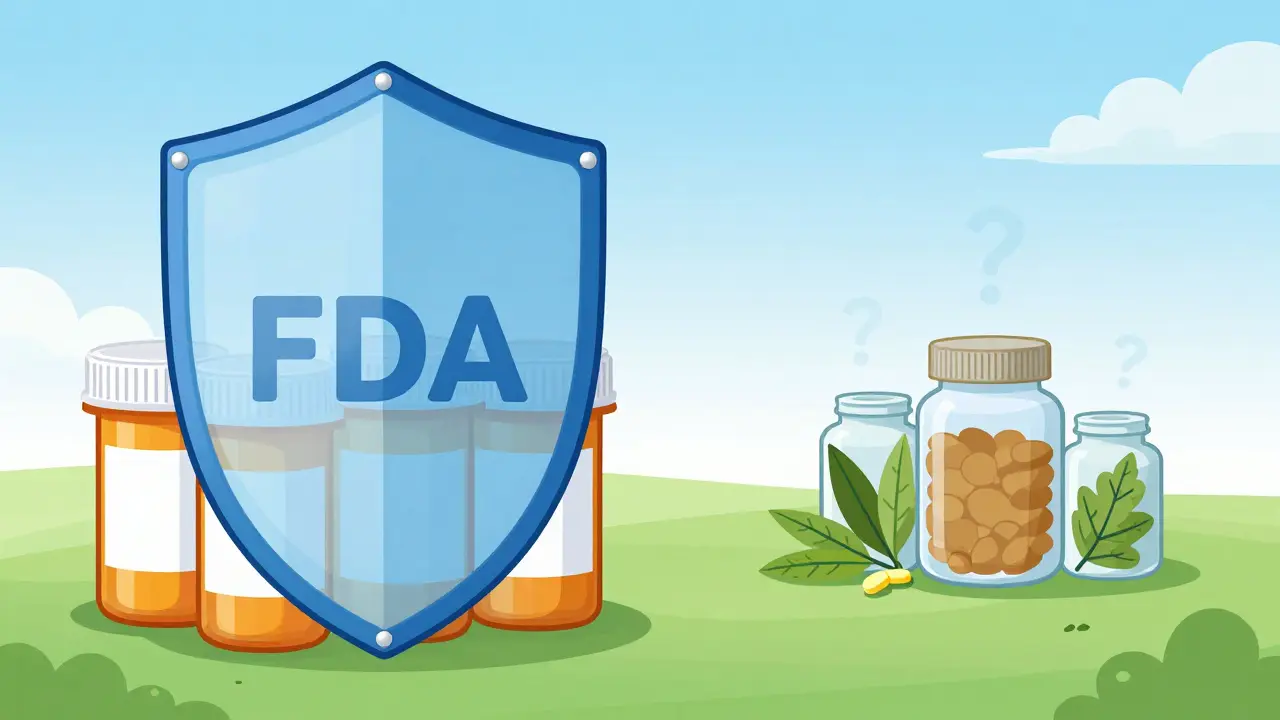
For 107 high-risk drugs, the FDA requires a separate printed guide-usually 2-3 pages long. These cover risks like birth defects, suicidal thoughts, or life-threatening reactions. But pharmacies don’t always hand them out unless you ask.
Ask: “Is there a Medication Guide for this?” If they say no, ask why. If they say yes, read it. Don’t just take it and toss it. Keep it with your other medical papers. You’ll thank yourself later.
What if the label is hard to read?
One in four Americans over 50 have trouble seeing small print. One in five speak limited English. The label doesn’t change for them. But you can.
Ask for large-print labels. They’re available at 92% of U.S. pharmacies. Ask for a translated version. The Affordable Care Act requires it if you need it. Ask for a verbal explanation. Independent pharmacies do this 78% of the time. Chain pharmacies? Less so. Don’t be afraid to say, “I need you to explain this again.”
Some pharmacies now use QR codes that link to video instructions in multiple languages. Scan it. Watch it. Save it. The FDA is pushing for this to become standard by 2026.
What if something feels off?
You’ve asked all the questions. The label looks right. But something still feels wrong. Maybe the pill looks different. Maybe the taste is off. Maybe you’ve never had this reaction before.
Trust your gut. Call the pharmacy. Ask: “Can I double-check this prescription?” Most will recheck the original order with your doctor. Some will even send you a new bottle with a handwritten note: “Verified by pharmacist.”
Patients who ask questions reduce adverse drug events by 47%. That’s not a guess. That’s from the American Association of Colleges of Pharmacy. Every question you ask is a shield. Don’t wait for a mistake to happen. Ask before you take that first pill.
What should I do if the prescription label has a typo?
If you spot a typo-like your name spelled wrong, the wrong drug name, or incorrect dosage-do not take the medication. Call the pharmacy immediately. Most will recheck the original prescription with your doctor and issue a corrected label. Never assume it’s a harmless mistake. Even small errors can lead to serious harm.
Can I ask the pharmacist to explain the label in simpler terms?
Yes, and you should. Pharmacists are trained to translate medical jargon into plain language. Ask: “Can you explain this like I’m 12?” or “What does ‘take on an empty stomach’ actually mean?” They’ve done this hundreds of times. There’s no such thing as a dumb question when your safety is on the line.
Why do different pharmacies label the same drug differently?
Each state has its own pharmacy rules. Some require generic names; others allow brand names only. Some mandate larger fonts; others don’t. Also, pharmacies use different software systems, which can change how information is displayed. That’s why your blood pressure pill might look completely different at CVS versus your local pharmacy-even if it’s the same drug. Always verify the details, not just the appearance.
Is it safe to take expired medication?
The expiration date is the last day the manufacturer guarantees full potency and safety. Most pills are still safe after expiration, but some-like insulin, liquid antibiotics, or nitroglycerin-can become dangerous. If the label says “discard after” a certain date, follow it. If you’re unsure, call the pharmacy. They’ll tell you whether it’s risky.
Do I need to keep the original prescription bottle?
Yes. The bottle contains the official label with all required information, including the pharmacy’s phone number and lot number. If you have a reaction or need to return the medication, you’ll need that info. Even if you transfer pills to a pill organizer, keep the original bottle until the prescription is fully used.
Next steps: Make this a habit
Don’t wait until you’re confused or sick to ask questions. Make checking your prescription label part of your routine. Every time you pick up a new prescription, spend two minutes at the counter. Verify your name. Confirm the drug. Ask about storage. Read the directions aloud. Check the refill count. If you’re unsure, ask again.
Bring a friend. Write notes. Use your phone to record the pharmacist’s explanation. Save the Medication Guide. Scan the QR code. These aren’t extra steps-they’re your safety net. The system isn’t perfect. But you can be. Ask. Verify. Repeat. That’s how you protect yourself-and your family-from preventable harm.


9 Comments
So let me get this straight... we’re supposed to interrogate our pharmacist like they’re a CIA asset just to not die from a pill? 🤡 I mean, I get it, but why does my life feel like a spy movie where the only way to survive is to ask 17 questions before swallowing a tiny white lie?
This is one of the most vital pieces of health advice I’ve read in years. 🙌 Every single point here is a lifeline-especially the part about reading directions aloud. It’s not just about safety, it’s about empowerment. You’re not just a patient-you’re the CEO of your own body. Take charge. Ask. Verify. Repeat. Your future self will thank you. 💪❤️
I mean, honestly, if you can’t read a prescription label, maybe you shouldn’t be taking pills at all? Like, come on. It’s not rocket science. Just look at the words. If you need someone to read it to you, maybe get glasses or stop pretending you’re too busy to care.
I’ve been on 12 different meds in the last 3 years and every single time I walk out of the pharmacy, I feel like I just survived a battlefield. One time I took a pill that made me hallucinate my cat speaking Spanish. The label said 'may cause dizziness.' DIZZINESS?! I thought I was being possessed. I cried. I called my mom. I still haven’t forgiven the pharmacist.
Bro, this is beautiful. You’re not alone. I’ve seen grandmas in Lagos holding up bottles like they’re holding the Holy Bible, asking their nephew to translate the tiny print. We need more of this. Not just in the U.S.-everywhere. Your voice is a gift. Keep speaking up. The system may be broken, but you? You’re the fix. 🙏🌍
Did you know the FDA doesn’t even require pharmacies to use standard fonts or spacing? This whole thing is a corporate scam to sell more meds. They want you confused so you keep refilling. I’ve seen the same pill in 5 different shapes at 3 different stores. It’s not an accident. It’s designed. And they call it healthcare
i mean... like... why are we even doing this? like, if you dont get it, maybe you just... dont need the medicine? like, i dont need to know how my toaster works to eat toast. why do pills have to be this complicated?
PLEASE-do not skip this. Every single recommendation here is backed by real data. Ask for the Medication Guide. Ask for large print. Ask for the QR code. Ask for a call-back reminder. Ask for a second opinion. Ask. Ask. ASK. And if the pharmacist rolls their eyes? Find a new one. Your life isn’t negotiable. This isn’t ‘being difficult’-this is being smart. And if you’re reading this and you’re a caregiver? Share this. Print it. Tape it to the fridge. This is the most important thing you’ll do this year.
Stop. Just stop. If you need to ask this many questions, your doctor is incompetent. Get a new one.