
Sodium Impact Estimator
Your Current Profile
Average range: 90-200
500 mg
3500 mg
5000 mg
Most Americans consume ~4,500 mg daily.
Projected Outcome
Estimated New Systolic BP
--
mm Hg
Potential Drop:
-- mm Hg
- Start by entering your details.
AHA Goal
<1,500 mg
Max Limit
2,300 mg
Avg US Diet
~4,500 mg
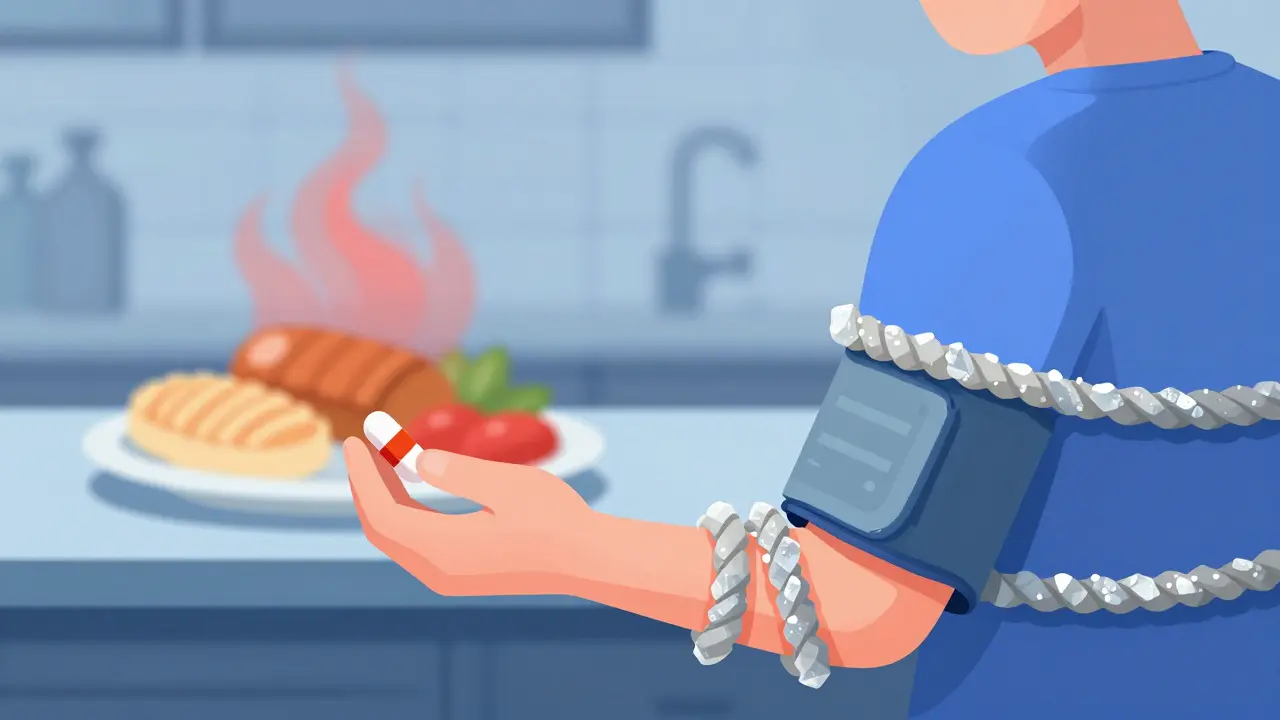
Imagine taking your daily pill to lower blood pressure, only to have it work at half its potential because of what’s on your plate. It sounds unfair, but it is the reality for millions of people managing high blood pressure. You might be doing everything right-taking your meds, getting enough sleep, and exercising-but if you are ignoring sodium, you are fighting with one hand tied behind your back.
The connection between salt and blood pressure medication is not just a suggestion; it is a biological fact. Recent research shows that reducing sodium doesn't just help your body naturally; it actually makes your drugs work better. This article breaks down exactly how much salt affects your treatment, why some medications struggle against high sodium, and how you can adjust your diet without giving up flavor.
The Science Behind Salt and Your Pills
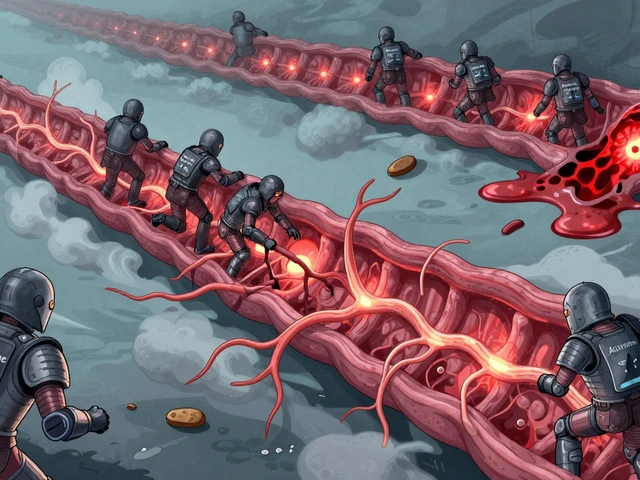
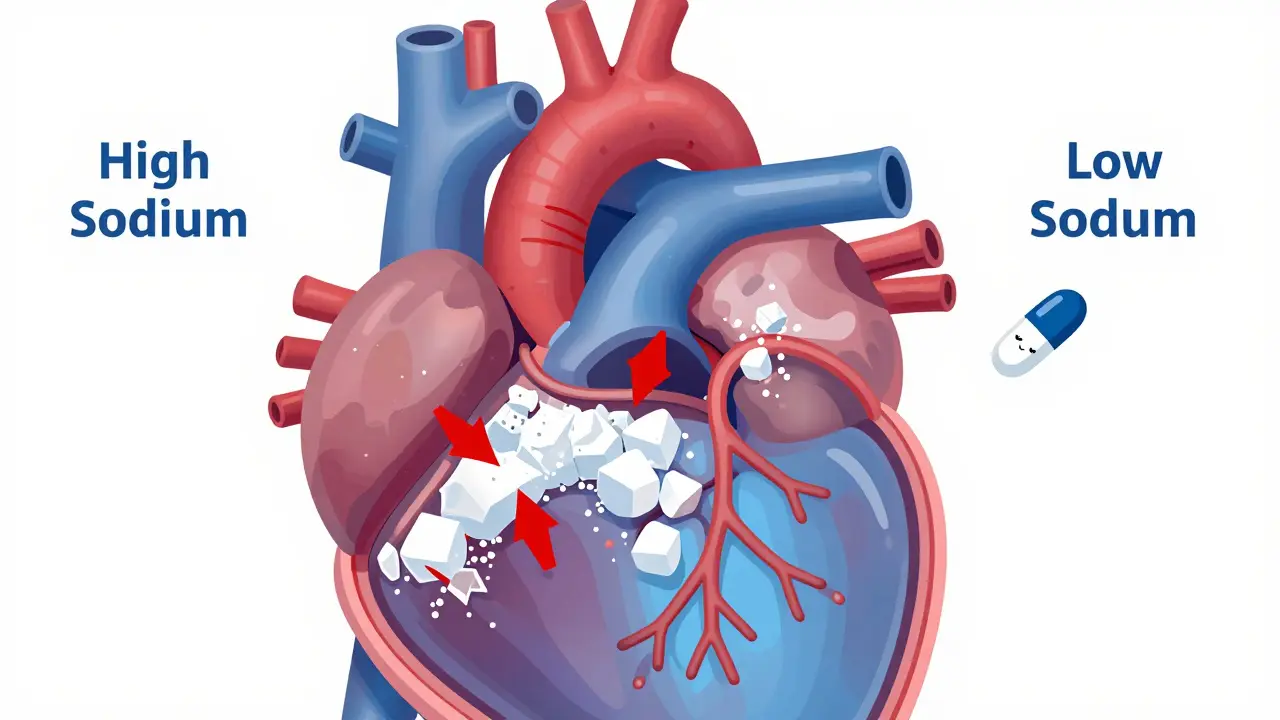
To understand why salt interferes with your treatment, we need to look at how your body handles fluid. Sodium holds water. When you eat too much salt, your body retains more fluid to dilute that sodium. This extra fluid increases the volume of blood in your vessels, which raises the pressure against your artery walls. Think of it like turning up the faucet in a garden hose-the more water (volume) flowing through, the higher the pressure.
Your blood pressure medications are designed to counteract this pressure, but they have limits. A landmark study published in JAMA (November 13, 2023) by researchers from Vanderbilt University Medical Center and Northwestern Medicine revealed a striking truth. The study involved 213 participants, many of whom were already on medication. They found that when these individuals cut their salt intake by about one teaspoon (2,300 mg) per day, their systolic blood pressure dropped by an average of 6 mm Hg.
That 6 mm Hg drop is significant. It is roughly equivalent to the effect of starting a new first-line medication, such as an ACE inhibitor. More importantly, the study showed that 70-75% of people saw a reduction in blood pressure when they lowered sodium, regardless of whether they were currently taking pills or not. This proves that diet and medication are not separate tracks; they are partners.
| Dietary Scenario | Average Systolic BP Change | Clinical Significance |
|---|---|---|
| Usual Diet (High Sodium) | Baseline (~125 mm Hg) | No change |
| Low-Sodium Diet (-2,300 mg/day) | -6 mm Hg | Equivalent to adding a medication |
| Very Low-Sodium Diet (500 mg total) | -8 mm Hg vs High Sodium | Maximum dietary benefit observed |
Which Medications Are Most Affected?
Not all blood pressure drugs react to salt in the same way, but several major classes rely heavily on low sodium levels to function optimally. If you are on any of the following, your doctor likely emphasizes salt restriction for a specific reason.
- ACE Inhibitors and ARBs: These drugs (like lisinopril or losartan) work by relaxing blood vessels. High sodium causes vascular stiffness and resistance, which directly opposes the relaxing effect of these medications. Dr. Egan, cited in American Medical Association reports, notes that "several blood pressure medications work better when we have less salt in the diet." For ACE inhibitors, excess salt can blunt their ability to lower pressure significantly.
- Diuretics (Water Pills): Drugs like hydrochlorothiazide or furosemide are designed to flush excess sodium and water out of your body. If you keep pouring salt into the system, the diuretic has to work overtime. Eventually, it may not be able to keep up, leading to fluid retention and rising blood pressure despite being on the medication.
- Calcium Channel Blockers: While slightly less sensitive than ACE inhibitors, these drugs still face challenges in high-sodium environments because sodium impacts endothelial function (the health of the inner lining of your blood vessels).
The synergy here is powerful. Reducing sodium enhances the efficacy of these drugs through physiological mechanisms like reduced plasma volume and decreased vascular resistance. This means you might achieve your target blood pressure with a lower dose of medication, potentially reducing side effects.
How Much Salt Is Too Much? Realistic Targets
Most Americans consume far more sodium than they realize. The average intake hovers around 4,500 mg per day, which is nearly double the maximum recommended limit. But what should your target be if you are on medication?
The American Heart Association (AHA) recommends an ideal limit of 1,500 mg daily for adults with high blood pressure. However, they acknowledge that 2,300 mg is the absolute maximum for most people. The JAMA study highlighted that even moving from a high-sodium diet to a "usual" diet (reducing by ~2,300 mg) yields massive benefits. You do not need to reach zero sodium-that would be dangerous-but cutting back to under 2,300 mg is a game-changer.
Here is the catch: only about 10% of the sodium you eat comes from the salt shaker. Roughly 70% comes from processed foods, restaurant meals, and packaged snacks. The other 20% is naturally occurring in foods like milk and meat. This means hiding the salt shaker won’t solve the problem. You have to read labels.
Practical Steps to Lower Sodium Without Losing Flavor
Cutting salt feels like losing control over your food. Many people worry their meals will taste bland. But flavor is not just about salt; it is about acid, heat, and herbs. Here is how to manage your intake effectively while keeping your meals enjoyable.
- Read the "mg", Not the "%": Nutrition labels often show % Daily Value, which can be confusing. Look for the milligram (mg) amount. Aim for products with less than 140 mg of sodium per serving. This is considered "low sodium."
- Swap Condiments: Soy sauce, ketchup, and salad dressings are sodium bombs. One tablespoon of soy sauce can contain over 900 mg of sodium. Switch to low-sodium versions or use vinegar-based alternatives. Lemon juice and balsamic vinegar add brightness without the salt.
- Use Potassium-Rich Substitutes (With Caution): Potassium helps balance sodium in your cells. Salt substitutes containing potassium chloride can be effective. Warning: If you have kidney disease or take certain medications like ACE inhibitors or potassium-sparing diuretics, talk to your doctor before using these substitutes, as too much potassium can be harmful.
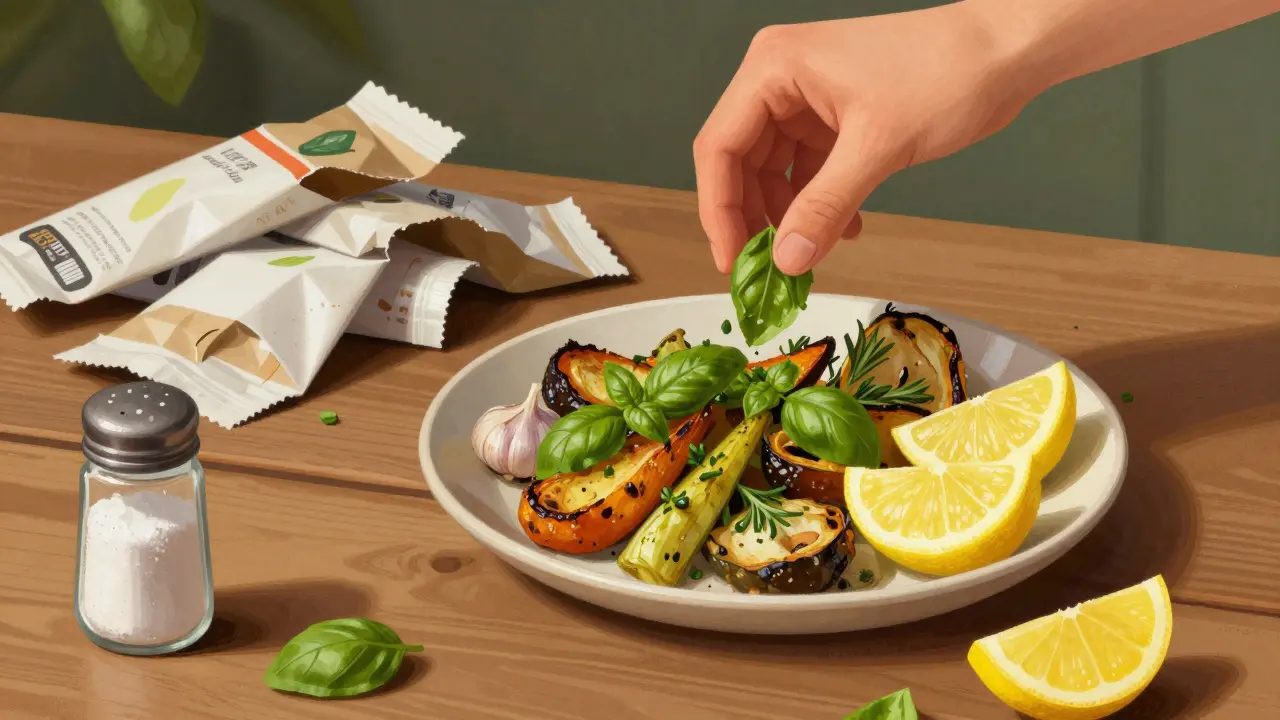
- Cook from Scratch: Home cooking gives you total control. Use garlic, onion powder, chili flakes, and fresh herbs like basil or cilantro to build depth. Roasting vegetables brings out natural sweetness, reducing the need for salty seasonings.
- Rinse Canned Goods: If you use canned beans or vegetables, rinse them thoroughly under water. This simple step can remove up to 40% of the added sodium.
Who Benefits Most? Understanding Salt Sensitivity
You might wonder, "Does this apply to me?" The answer is likely yes, even if you don't think you are sensitive to salt. About 25-30% of the population is considered "salt-sensitive," meaning their blood pressure rises sharply with increased sodium intake. However, the remaining 70-75% also see benefits from reduction, just perhaps to a lesser degree.
Certain groups are more prone to salt sensitivity:
- Older Adults: As we age, our kidneys become less efficient at filtering out sodium. The JAMA study noted that older participants experienced more pronounced blood pressure drops when reducing salt.
- People with Hypertension: Those who already have high blood pressure are generally more responsive to sodium changes than those with normal pressure.
- Black Individuals: Research consistently shows that Black populations tend to have higher rates of salt sensitivity and derive greater blood pressure benefits from sodium restriction compared to other demographic groups.
Even if you fall into the "non-responsive" category, lowering sodium reduces strain on your heart and kidneys. Dr. Egan points out that high salt diets increase protein in the urine, a sign of kidney stress. Medications used to protect the kidneys (like ACE inhibitors) work poorly when there is extra salt in the diet. So, reducing salt protects your organs, even if the blood pressure number doesn't plummet dramatically.
Long-Term Health Implications
Managing sodium isn't just about today's blood pressure reading; it is about long-term survival. The American Heart Association estimates that if the entire U.S. population reduced sodium intake to 2,000 mg daily, it could prevent between 280,000 and 500,000 cardiovascular deaths over a decade. That is a staggering number.
For individuals, the stakes are personal. Uncontrolled high blood pressure damages arteries, leading to heart attacks, strokes, and kidney failure. By combining medication with a low-sodium diet, you create a synergistic effect. You are not just treating symptoms; you are removing the root cause of the pressure. This approach allows many patients to stabilize their condition with fewer drugs and lower doses, minimizing the risk of side effects like dizziness or fatigue.
The future of hypertension management is shifting toward this integrated model. Researchers are developing digital tools, including mobile apps that track sodium intake and alert users to medication interactions. The goal is personalized medicine, where your diet is tailored to support your specific drug regimen. Until then, the simplest tool remains your fork.
Frequently Asked Questions
Can I stop taking my blood pressure medication if I reduce salt?
No, never stop taking prescribed medication without consulting your doctor. While reducing salt can significantly lower blood pressure, it is meant to complement medication, not replace it abruptly. Some patients may eventually lower their dosage under medical supervision, but sudden cessation can lead to dangerous spikes in blood pressure.
How quickly does reducing salt affect blood pressure?
The effects can be surprisingly fast. Studies show that measurable blood pressure reductions can occur within one week of switching to a low-sodium diet. However, long-term consistency is key to maintaining these benefits and protecting your heart and kidneys.
Is sea salt or Himalayan pink salt healthier than regular table salt?
No. Chemically, sea salt, Himalayan salt, and table salt are all primarily sodium chloride. While specialty salts may contain trace minerals, the amounts are negligible and do not provide health benefits. They still raise blood pressure just like regular salt. Focus on reducing total sodium intake, regardless of the source.
What are the biggest hidden sources of sodium in a typical diet?
The top culprits include bread and rolls, pizza, sandwiches, cold cuts and cured meats, soup, burritos and tacos, and chicken and turkey dishes. Processed foods account for about 70% of sodium intake. Reading nutrition labels on packaged goods is essential to identifying these hidden sources.
Are there risks to eating too little sodium?
Extreme sodium restriction (below 1,500 mg) can be risky for some individuals, particularly those with kidney disease or adrenal insufficiency, as it may lead to hyponatremia (low blood sodium). However, for most people with hypertension, staying below 2,300 mg is safe and beneficial. Always discuss drastic dietary changes with your healthcare provider.