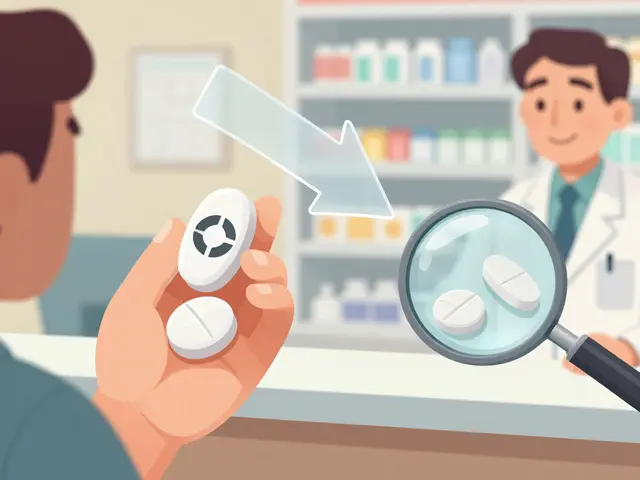

Imagine walking into a pharmacy and picking up a medication that costs a fraction of the brand-name price. You trust it works because it’s approved by the same agency that cleared the original drug. But how does that happen? The FDA generic drug approval process is the engine behind this affordability, yet it remains one of the most misunderstood regulatory pathways in healthcare. It isn’t just about copying a pill; it’s a rigorous scientific proof that your cheaper alternative behaves exactly like the expensive original inside your body.
If you are a manufacturer, a student, or simply a curious patient, understanding this mechanism demystifies why some drugs have generics while others don’t, and why the timeline varies so wildly. This guide breaks down the Abbreviated New Drug Application (ANDA) system, the legal framework of the Hatch-Waxman Act, and the practical steps required to get a generic drug onto store shelves in the United States.
The Foundation: Why Generics Exist
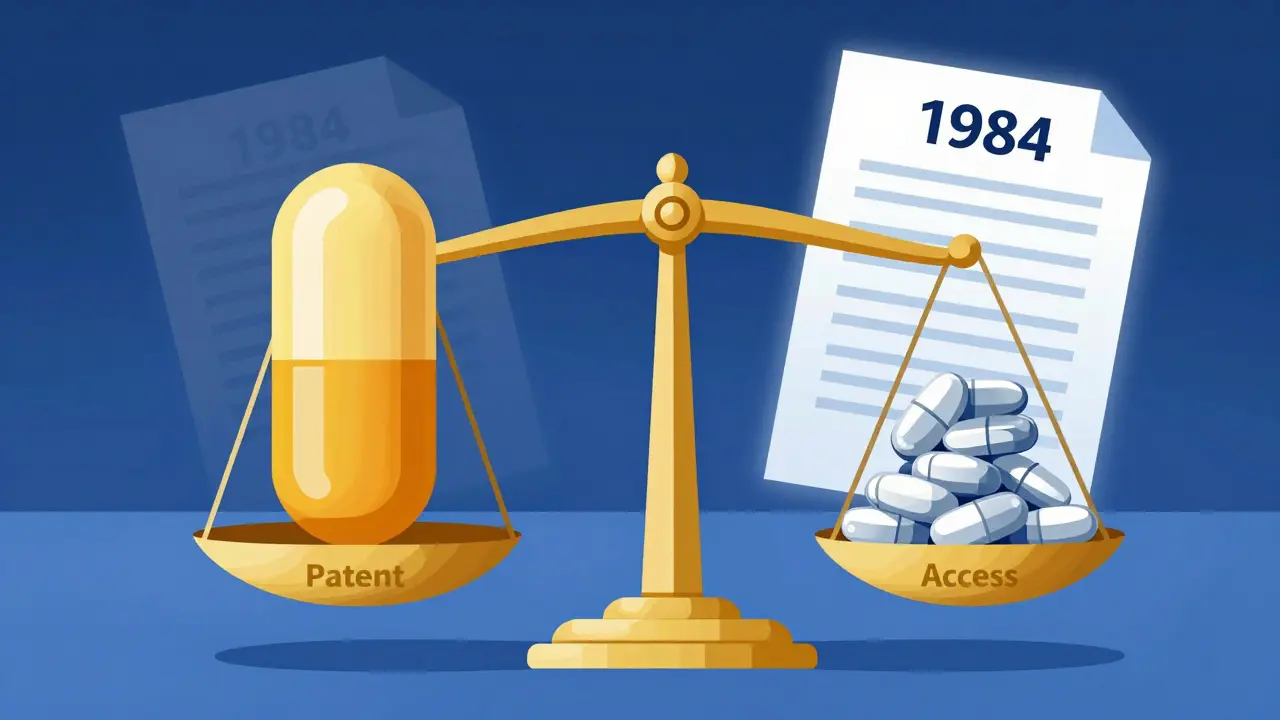
To understand the process, you first need to understand the law that created it. Before 1984, pharmaceutical companies held monopolies on their drugs for decades after patents expired, keeping prices high. The Hatch-Waxman Act, officially known as the Drug Price Competition and Patent Term Restoration Act of 1984, changed everything. It established a balance: brand-name companies could extend patent terms slightly to compensate for time lost during FDA review, but in exchange, they had to share safety data with generic manufacturers.
This legislation introduced the concept of the Reference Listed Drug (RLD). An RLD is the original brand-name product that serves as the benchmark. Generic manufacturers do not need to prove their drug is safe or effective from scratch-they only need to prove it is equivalent to the RLD. This "abbreviated" approach saves years of clinical trials and billions of dollars, allowing generics to hit the market faster and cheaper.
Step 1: Preparing the Abbreviated New Drug Application (ANDA)
The core document in this process is the Abbreviated New Drug Application (ANDA). Unlike a New Drug Application (NDA) for brand-new medicines, an ANDA focuses on equivalence. You cannot submit an ANDA until the brand-name drug’s patents have expired or you are challenging them legally.
Preparing an ANDA is a massive undertaking involving cross-functional teams. Here is what goes into the dossier:
- Chemistry, Manufacturing, and Controls (CMC): Detailed data proving you can manufacture the drug consistently. This includes specifications for raw materials, manufacturing processes, and quality control tests. Your facility must comply with Current Good Manufacturing Practices (cGMP).
- Bioequivalence Studies: Clinical data showing the generic enters the bloodstream at the same rate and extent as the brand-name drug.
- Labeling: The generic label must match the RLD’s label almost exactly, except for changes related to inactive ingredients or manufacturer-specific details.
- Patent Certifications: You must certify whether the RLD’s patents are still active and, if so, whether you intend to challenge them.
All submissions must follow the electronic Common Technical Document (eCTD) format. This standardizes how regulators read your data, ensuring nothing gets lost in translation. As of 2023, the FDA requires specific module structures, including administrative info, summaries, quality data, and labeling.
Step 2: Demonstrating Bioequivalence
This is the scientific heart of the ANDA process. Two drugs can have the same active ingredient but behave differently in the body due to formulation differences. For example, one might dissolve too slowly, leading to lower effectiveness.
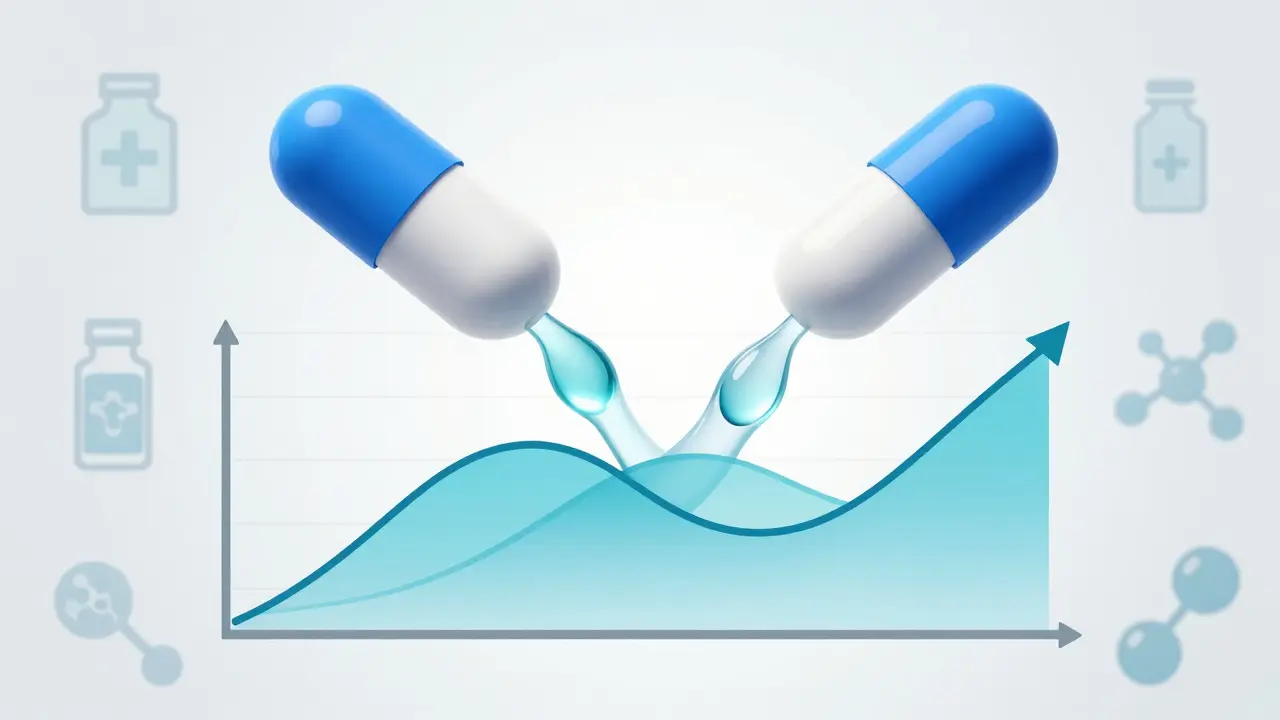
To prove Bioequivalence, defined as delivering the same amount of active ingredients into a patient's bloodstream in the same amount of time as the brand-name drug, manufacturers conduct clinical studies. These typically involve 24 to 36 healthy volunteers who take both the generic and the brand-name drug under controlled conditions.
Researchers measure blood levels of the drug over time. The FDA uses statistical metrics-specifically the Area Under the Curve (AUC) and Maximum Concentration (Cmax)-to determine if the generic falls within an acceptable range (usually 80% to 125%) compared to the brand. If the curves overlap significantly, the drugs are considered bioequivalent. For complex products like inhalers or topical creams, these studies are much harder to design and often require specialized guidance from the FDA.
Step 3: FDA Review and Inspection
Once submitted, the ANDA enters the review queue managed by the FDA’s Center for Drug Evaluation and Research (CDER), specifically the Office of Generic Drugs (OGD). Under the Generic Drug User Fee Amendments (GDUFA IV, effective 2023-2027), the FDA aims to review 90% of original ANDAs within 10 months.
The review process unfolds in stages:
- Filing Review (60 days): The FDA checks if the application is complete. If critical sections are missing, they issue a Refusal to File letter. If it passes, the clock starts ticking for the full review.
- Detailed Review: Scientists evaluate the CMC data, bioequivalence results, and labeling. They may send Information Requests (IRs) asking for clarifications. Responding to these promptly is crucial; delays here push back the approval date.
- Facility Inspection: The FDA inspects the manufacturing sites to verify cGMP compliance. A failed inspection can halt approval regardless of how good the paperwork looks.
About 75% of ANDAs get approved in the first cycle. The remaining 25% receive a Complete Response Letter (CRL), which outlines major deficiencies that must be fixed before the drug can be approved. This often means repeating bioequivalence studies or reformulating the product, adding months or even years to the timeline.
Navigating Patents and Exclusivity
The ANDA process doesn’t exist in a vacuum; it’s intertwined with intellectual property law. The Orange Book lists all approved drugs and their associated patents. When filing an ANDA, manufacturers must choose one of four certifications:
- Paragraph I: No patent information listed for the RLD.
- Paragraph II: Patents exist but have already expired.
- Paragraph III: Patents exist and will expire on a specific future date. Approval is delayed until that date.
- Paragraph IV: Patents exist but are invalid or will not be infringed. This is a legal challenge.
If you file a Paragraph IV certification, you trigger a 30-month stay where the brand-name company can sue you for patent infringement. If you win-or if the patent expires-you become eligible for 180-Day Market Exclusivity. This reward gives the first successful challenger a head start in the market, free from competition from other generics. This incentive drove the generic launch of blockbuster drugs like Humira, generating billions in sales for early entrants.
Challenges and Real-World Timelines
While the ideal timeline is 10 months, reality is messier. Industry professionals report that simple oral solids (like tablets) often meet the target, but complex generics face hurdles. A senior regulatory manager noted in 2023 that an extended-release metformin ANDA took 11.2 months due to multiple information requests. Conversely, a complex nasal spray faced three Complete Response Letters over 28 months, costing millions in additional testing.
Common reasons for rejection include inadequate CMC documentation (32% of cases) and flawed bioequivalence protocols (28%). To mitigate these risks, successful companies invest heavily in pre-submission meetings with the FDA to align on study designs before spending money on clinical trials.
| Feature | New Drug Application (NDA) | Abbreviated New Drug Application (ANDA) |
|---|---|---|
| Primary Goal | Prove safety and efficacy of new molecule | Prove equivalence to existing RLD |
| Clinical Trials | Extensive Phase I-III trials required | Bioequivalence studies only (usually) |
| Average Cost | $2.6 billion per drug | $1-5 million per application |
| Development Time | 10-15 years | 3-4 years |
| Regulatory Focus | Innovation and novel risk/benefit | Manufacturing consistency and bioequivalence |
The Impact on Healthcare
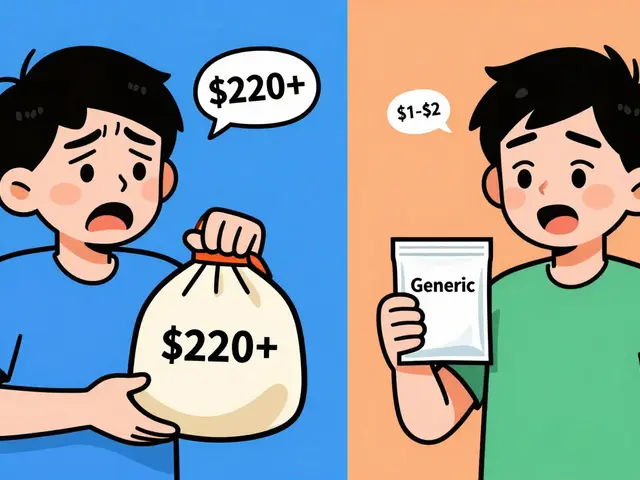
The success of this system is measurable. Generic drugs now account for 90% of prescriptions filled in the U.S., yet they represent only 23% of total drug spending. According to the Congressional Budget Office, generic entry reduces drug prices by 80-85% in the first year alone. This savings amounts to approximately $373 billion annually for the U.S. healthcare system.
However, critics point out nuances. Dr. Aaron Kesselheim of Harvard Medical School has highlighted cases where manufacturing differences in generics led to varied clinical outcomes, particularly for narrow therapeutic index drugs (medicines where small dose changes matter greatly). The FDA continues to refine its standards to address these concerns, emphasizing that "pharmaceutical equivalence" must translate to true clinical reliability.
Future Trends: AI and Complex Generics
Looking ahead, the ANDA process is evolving. The FDA is piloting artificial intelligence tools to triage documents, aiming to cut administrative review time by 25% by 2025. Additionally, the Complex Generic Drug Products Initiative is releasing draft guidances for difficult formulations like inhalers and patches, helping manufacturers navigate previously gray areas.
As biologics become more common, the line between generics and biosimilars blurs. While biosimilars follow a different pathway (BLA rather than ANDA), the principles of comparability remain similar. By 2026, we expect to see 10-15 biosimilar approvals annually, further expanding access to affordable treatments.
How long does it take to get FDA approval for a generic drug?
Under GDUFA IV, the FDA targets reviewing 90% of original ANDAs within 10 months. However, the total development time from project start to approval is typically 3-4 years, including bioequivalence studies and manufacturing setup. Delays can occur if the FDA issues Information Requests or Complete Response Letters requiring additional data.
What is the difference between a generic drug and a biosimilar?
Generic drugs are copies of small-molecule chemical drugs (like aspirin) and must be identical in active ingredient. Biosimilars are highly similar to biological products (like insulin or monoclonal antibodies) produced in living cells. Because biologics are complex, biosimilars allow for minor differences and follow a different regulatory pathway (Biologics License Application) rather than the ANDA process.
Why are some generic drugs more expensive than others?
Price depends on competition. If only one generic manufacturer exists, prices remain higher. Once multiple manufacturers enter the market, prices drop significantly. Additionally, complex generics (like injectables or inhalers) cost more to develop and produce, which can keep prices elevated compared to simple tablets.
Can I switch between brand-name and generic drugs safely?
For most drugs, yes. The FDA ensures bioequivalence, meaning they work the same way in the body. However, for narrow therapeutic index drugs (such as warfarin or levothyroxine), doctors may prefer patients stay on one specific manufacturer to avoid subtle variations in absorption. Always consult your healthcare provider before switching.
What happens if a generic drug fails FDA inspection?
If a manufacturing facility fails a cGMP inspection, the FDA may refuse to approve the ANDA, suspend existing approvals, or issue warning letters. Manufacturers must correct the violations and pass a follow-up inspection before they can sell the drug. In severe cases, the FDA can seize products or shut down facilities.
What is the Orange Book?
The Orange Book, formally titled "Approved Drug Products with Therapeutic Equivalence Evaluations," is published by the FDA. It lists all approved drug products along with their patent and exclusivity status. Generic manufacturers use it to determine when they can file an ANDA and whether they need to challenge existing patents.