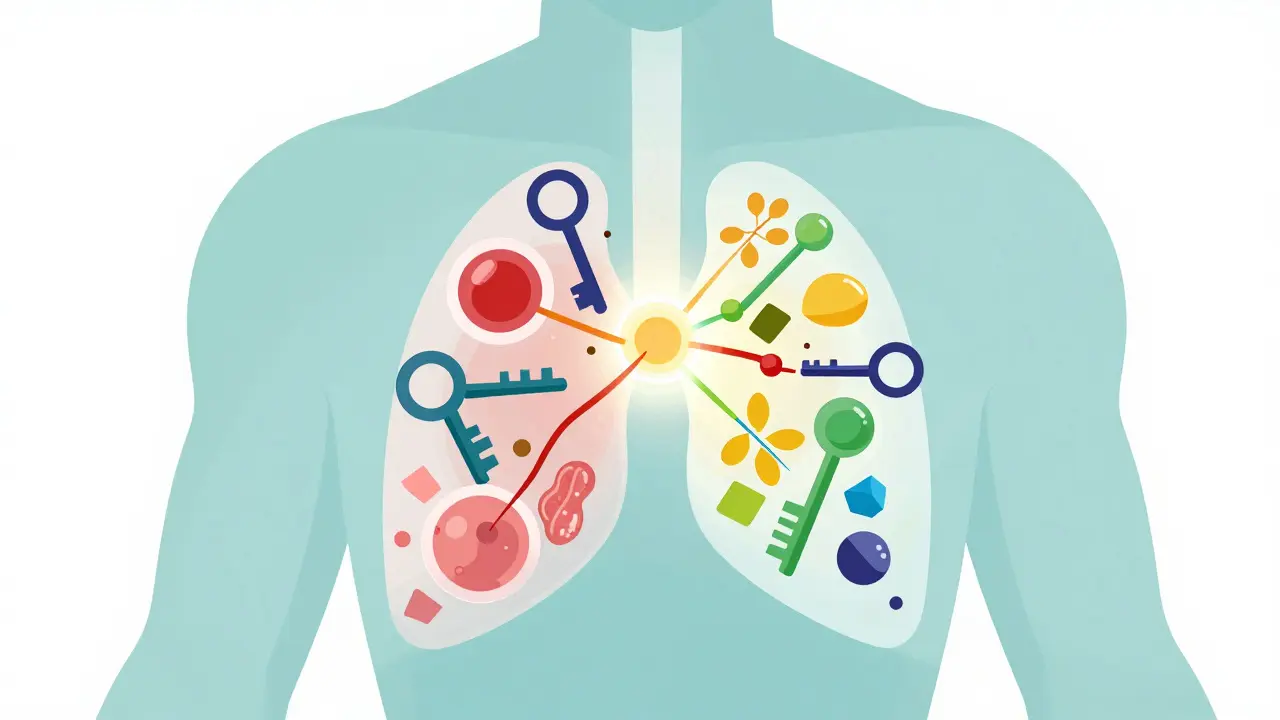


Have you ever looked at a blood test result that showed a red arrow pointing up, yet felt perfectly fine eating the very food listed on the page? You aren't alone. In the world of allergy diagnosis, a positive result doesn't always mean you have an allergy. It usually means your immune system has met a substance before, but whether that meeting causes a rash, wheeze, or swelling depends on more than just a number. Understanding Specific IgE Testing is about bridging the gap between what the lab reports and what your body actually does.
This testing method measures allergen-specific immunoglobulin E antibodies in your blood. While it sounds technical, the core concept is straightforward: your immune system creates markers when it perceives a threat. These markers attach to mast cells throughout your body. Later, when those cells meet the same trigger again, they release histamine and other chemicals, causing symptoms. The goal of the test isn't just to see if you have these antibodies, but to determine if the level is high enough to predict a clinical reaction.
The Evolution of Diagnostic Methods
To understand modern testing, it helps to know where we started. Decades ago, doctors used something called the Radioallergosorbent Test, or RAST. Introduced commercially in the 1970s, it was groundbreaking because it didn't require scratching the patient's skin. However, early versions were only qualitative-they told you "yes" or "no." They couldn't tell you how much antibody was present. This limitation often led to overdiagnosis.
Today, we rely on highly sensitive quantitative methods like ImmunoCAP, which has become the industry standard in many major laboratories worldwide. Unlike the old paper-based disks, this technology uses a flexible hydrophilic polymer inside a capsule to capture antibodies with incredible precision. The shift from simply detecting presence to measuring exact amounts-usually in kilo units per liter (kUA/L)-has changed how doctors approach treatment. Instead of guessing based on a binary result, physicians can now look at levels to estimate risk.
For example, if you suspect a peanut allergy, a modern assay might detect an extremely low level of antibody that poses almost no risk versus a very high level that suggests a severe reaction is likely. This precision is why current standards discourage broad screening. If you get tested for fifty things you've never reacted to, statistical probability says you'll turn up positive for a few anyway. That noise rarely helps management.
Decoding Your Lab Report
Receiving a blood report with terms like kUA/L and grade scales can feel overwhelming. Most labs use a two-part reporting system. First, they give you a numerical value. Second, they categorize that value into a class or grade from 0 to 6. A result below 0.35 kUA/L typically falls into Class 0, meaning negative. As the number climbs, so does the likelihood of a true allergy. For instance, a Class 3 or higher often correlates strongly with symptomatic reactions to common aeroallergens like pollen or dust mites.
However, there is a critical nuance here that often gets missed: concentration does not equal severity. You can have a Class 6 result and tolerate small amounts of the allergen without a problem, or conversely, have a low-level reaction with minimal sensitization. This is where the doctor's role becomes vital. They must cross-reference your blood numbers with your physical history. If you eat shellfish weekly with no issue, a borderline-positive IgE result is likely a false alarm or reflects non-IgE mediated mechanisms that the blood test cannot see.
A significant portion of confusion comes from comparing Specific IgE to Total IgE. Total IgE measures the sum of all IgE antibodies in your blood, regardless of what they target. If you suffer from eczema or asthma, your Total IgE might run naturally high. Imagine a specific allergen result sitting at 0.5 kUA/L. In a person with a total level of 1,000 kUA/L, that 0.5 represents a negligible fraction. But in someone with a total of 1 kUA/L, it accounts for half of their circulating antibodies. Without looking at the total picture, a weak signal might be misinterpreted as a strong one.

Blood Test Versus Skin Prick Test
You might wonder why your doctor orders a blood test instead of pricking your skin. Both methods have distinct advantages, and neither is strictly superior. Skin prick testing is generally preferred first because it demonstrates biological activity-it proves the antibodies are binding to your skin mast cells right now. It is also faster and cheaper. Studies suggest skin testing might catch about 15-20% more cases of sensitivity than blood tests for common airborne allergens.
However, specific IgE blood testing shines in scenarios where skin testing fails. If you have severe eczema covering a large part of your body, there might be no good skin left to test. Or perhaps you take antihistamines daily that block the skin's ability to flare. Stopping medication for several days just for a skin test isn't always practical or safe. In these situations, a venous draw is far less invasive.
There is also the issue of systemic safety. Rarely, skin exposure to potent allergens like latex or specific proteins can trigger a full body reaction. While uncommon, blood testing removes that risk entirely. Furthermore, certain specialized tests like Component Resolved Diagnostics (CRD) are often better suited to blood assays. This advanced technique looks at individual protein components rather than whole allergens, helping distinguish between true allergies and harmless cross-reactivity.
| Feature | Skin Prick Test (SPT) | Specific IgE Blood Test |
|---|---|---|
| Invasiveness | Mildly invasive (surface scratch) | Invasive (needle stick/blood draw) |
| Medication Interference | Antihistamines block results | No effect from most medications |
| Time to Result | Immediate (15-20 minutes) | Delayed (3-5 business days) |
| Sensitivity | High (~15% higher for aeroallergens) | High (comparable for many food allergens) |
| Ideal Candidate | Clean skin, stable meds | Eczema, on meds, pregnancy, children |
Common Pitfalls and Misinterpretations
One of the biggest mistakes patients make is ordering large "panels" without clinical guidance. Some websites allow you to request testing for 20 or 30 foods at once. Recent clinical guidelines explicitly advise against this. Research shows that testing panels with twenty-plus items can generate false positive rates approaching 60%. Simply put, if you cast a wide net, you will pull up trash along with the fish.
Another major pitfall involves food mix tests. Older methodologies combined multiple allergens into one sample to save money. Validation studies from 2023 found these mixtures produced false positives and negatives exceeding 30% of the time. If you think you are allergic to eggs, testing against a "dairy/nut/grain mix" won't tell you the egg caused the problem. Individual specific IgE testing based on your actual symptoms remains the gold standard.
We must also talk about the difference between sensitization and clinical allergy. Having the antibody means you are sensitized, but becoming allergic means you have symptoms. Consider Latex-Fruit Syndrome. You might react to bananas or kiwi because the proteins resemble latex proteins, even if you are not exposed to rubber gloves. Advanced CRD testing helps untangle this by identifying which specific protein triggers the antibody. For cashews, distinguishing between the true allergenic storage proteins and related proteins prevents unnecessary elimination diets.

When Testing Changes Management
Dr. Robert Boyle, a consultant in pediatric allergy, emphasizes a simple rule: do not test unless the result changes what you do next. Is the outcome of a positive test going to alter your diet? Will it justify starting immunotherapy? If the answer is no, the test adds cost and anxiety without benefit.
Testing is most valuable when initiating desensitization therapy. Before starting shots for bee stings or grass pollen, doctors need baseline numbers to ensure your current load isn't dangerously high. Similarly, before re-introducing peanuts to a child's diet after a period of avoidance, specific IgE trends help assess if the natural tolerance has returned.
Weakly positive results (between 0.35 and 0.70 kUA/L) require extra caution. These are often dismissed by laypeople as "negative," yet they represent genuine sensitization in some contexts. Conversely, ignoring them can lead to accidental exposure risks in vulnerable environments. Always bring the report back to your specialist who understands how to weigh the numbers against your lifestyle risks.
Next Steps After Diagnosis
Once you have confirmed results, the path forward depends on the severity. For mild seasonal allergies, avoiding pollen peaks and using saline rinses may suffice. For severe IgE-mediated food reactions, strict avoidance combined with carrying emergency epinephrine injectors is mandatory.
If the goal is long-term tolerance, you might explore allergen immunotherapy. Whether through subcutaneous injections or sublingual tablets, the aim is to retrain your immune system so it stops attacking harmless proteins. Specific IgE levels are monitored every year to track progress. Usually, dropping levels signal that you are healing, though the correlation isn't perfect. Sometimes antibodies stay elevated even when you have outgrown the clinical reaction.
Can I stop taking my antihistamines before a blood test?
No, you do not need to stop antihistamines for a blood test. Unlike skin prick testing, medications do not interfere with the accuracy of serum IgE results. However, consult your doctor before stopping any chronic medications.
Does a high IgE number mean my allergy is more severe?
Not necessarily. While higher levels increase the statistical probability of a reaction, they do not guarantee severity. Some people with very high levels tolerate small exposures, while others react severely to tiny amounts despite lower levels.
What is Component Resolved Diagnostics?
This advanced blood test identifies IgE against individual protein components within an allergen. It helps distinguish real allergies from cross-reactivities, preventing unnecessary food eliminations.
How long does it take to get results?
Standard turnaround time is 3 to 5 business days. Some rare allergens require referral to specialized labs, which may extend this window. The test itself is not urgent and does not provide immediate management solutions.
Why are total IgE levels included in the report?
Total IgE provides context for specific results. High background levels due to asthma or eczema can make low-grade specific responses harder to interpret accurately without knowing the total pool.




15 Comments
I wanted to share that stopping antihistamines is definitely not required for the blood draw unlike the skin prick method. The medication won't change the antibody levels in your serum so you can stay comfortable while waiting. It helps to know you don't have to stop your routine just for the venous test. This saves a lot of stress for people dealing with daily allergies.
The distinction between sensitization and actual clinical allergy remains the most critical takeaway for patients navigating this process.
It really takes some time to understand the full scope of what these numbers mean for your daily life when you are living with chronic conditions that fluctuate based on environment. You spend so much time reading the reports but sometimes the report does not match how you feel physically in your body right now which creates anxiety. The technology is amazing and they keep refining the ways we measure antibodies so that we get better data points over time. But you still need a human doctor who knows how to interpret those data points against your actual history of reactions because labs are cold places that do not know you personally. They see the protein binding but they do not see the rash or the wheezing that happens when you breathe in a certain room during spring. My own cousin went through this exact process last year and she spent weeks avoiding foods she did not actually need to avoid which was incredibly hard for her mentally. We need more education on how to read the classes properly because Class 3 is different than Class 6 even though both say positive on the paper sheet. It feels overwhelming when you open the envelope and see red arrows pointing up everywhere on the page without context notes attached to the results. Doctors often forget to explain that Total IgE changes everything when you look at the fraction of specific antibodies against the background noise of your immune system. Without knowing your total load it is easy to panic over a small number that would be negligible in a healthy person with low baseline counts. Skin prick tests are faster but sometimes they just cause more confusion if you have broken skin from eczema or psoriasis flares all over your arms. Blood draws save that pain and let you test while staying on your normal medication schedule without skipping doses for three days straight. The shift from old qualitative methods to quantitative ones has helped so many families find peace with safer eating habits at home. Yet there is still this lingering fear that a lab result means you are doomed to react every single time you encounter the trigger which is rarely true in modern medicine. Understanding Component Resolved Diagnostics helps separate the wheat from the chaff in terms of cross reactivity issues that affect your lifestyle choices significantly.
We also need to remember that interpretation varies by specialist so second opinions are valuable when the results seem unclear or scary.
Some people act like these tests predict the future perfectly but nothing is ever that simple in biology. The numbers are useful but treating them as absolute law is a bit silly. Anyone relying solely on the lab report without history is bound to make mistakes.
i seen this alot where people get tested for evething and then cant eat half the foods on the planet. its crazy how the panels catch so much false positives if you dont tell the doc what symptoms u had. dont waste ur time getting random blood drawn without a real reason or history backing it up. the lab techs just want to sell more kits i guess.
That is such a great point about unnecessary panels causing confusion for so many families trying to manage diets. Sometimes we just want answers so badly that we forget to listen to our own bodies first. Your history tells the best story about what is actually safe to eat. Take a deep breath and focus on the foods you tolerate well rather than the scary list.
While colloquialism aids engagement, one must recognize the philosophical implications of immunological markers as mere indicators rather than definitive truths. Sensitization is a state of being but not necessarily a state of illness until provoked by environmental factors. The dichotomy between presence and reaction defines the clinical utility of these assays.
Everyone is acting like blood tests are magic but they miss a lot of things that skin pricks catch better. You think the hydrophilic polymer is the holy grail but it just costs more money for similar accuracy. Doctors love selling blood work because it pays better than spending ten minutes asking about your diet history honestly.
Wow!!! This article is actually spot on and I love that!!! 😊😍 Why do people ignore the warning signs?? 🙄 The difference between class 3 and class 6 is HUGE and everyone needs to know this! 🚨🚫 Do not panic if you see a number!!! It does not always mean you are in danger of dying instantly!!! 💉🛑 Keep calm and carry on eating safe things!
The medical industry pushes these expensive tests regardless of symptom presentation and it drains patients dry. Nobody wants to admit that guessing might have worked just fine without the bill. We are fed information that sounds scientific but lacks practical application for daily life.
Safety is paramount when dealing with potential anaphylaxis triggers in any household environment. We cannot afford to be negligent regarding allergen exposure protocols for our children or vulnerable adults. These tests give us the evidence needed to protect our national health standards against unregulated reactions.
This is too hard to read for most people. They use big words that we do not know. Just tell us if the food is bad or not.
I almost freaked out when my son got a class 4 for peanuts but then found out he ate them constantly. The panic was real until the doctor explained the difference between markers and reactions. It felt like the world ended for a moment before reality came back into focus.
We must demand accurate diagnostics that actually help us live better lives without unnecessary restrictions. The trend towards broad screening panels is a financial scheme that harms patient confidence in their own bodily functions. Stop listening to marketing and start trusting clinical judgment backed by history.
Remember that trends in IgE levels over time are often more valuable than a single snapshot measurement taken years ago. Monitoring those numbers helps track the success of therapies like immunotherapy or avoidance strategies. Patience is key when interpreting these longitudinal data points.