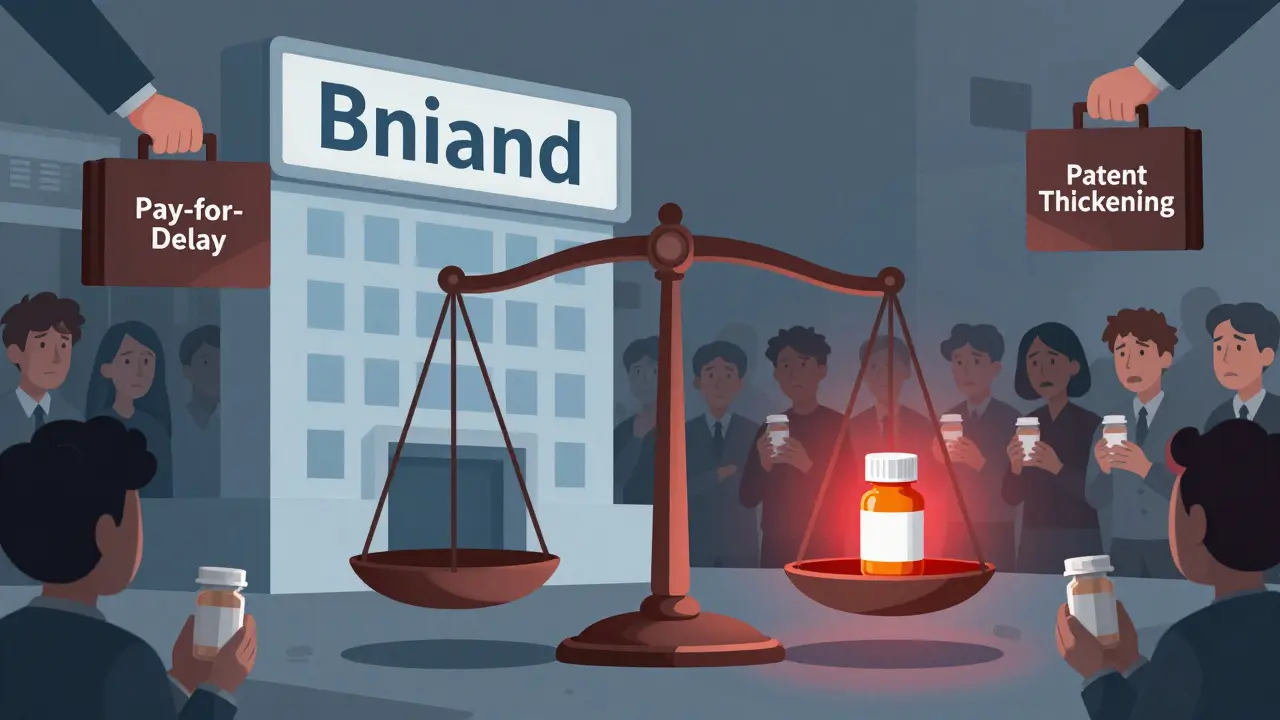
Generic drugs save Americans billions every year. In 2012 alone, they cut prescription costs by $217 billion. But behind those savings is a quiet, complex battle - one where big drug companies use legal tricks to keep cheaper versions off the market. This isn’t about innovation. It’s about control. And antitrust laws are the only thing standing between consumers and inflated prices.
The Hatch-Waxman Act: A Deal That Went Off the Rails
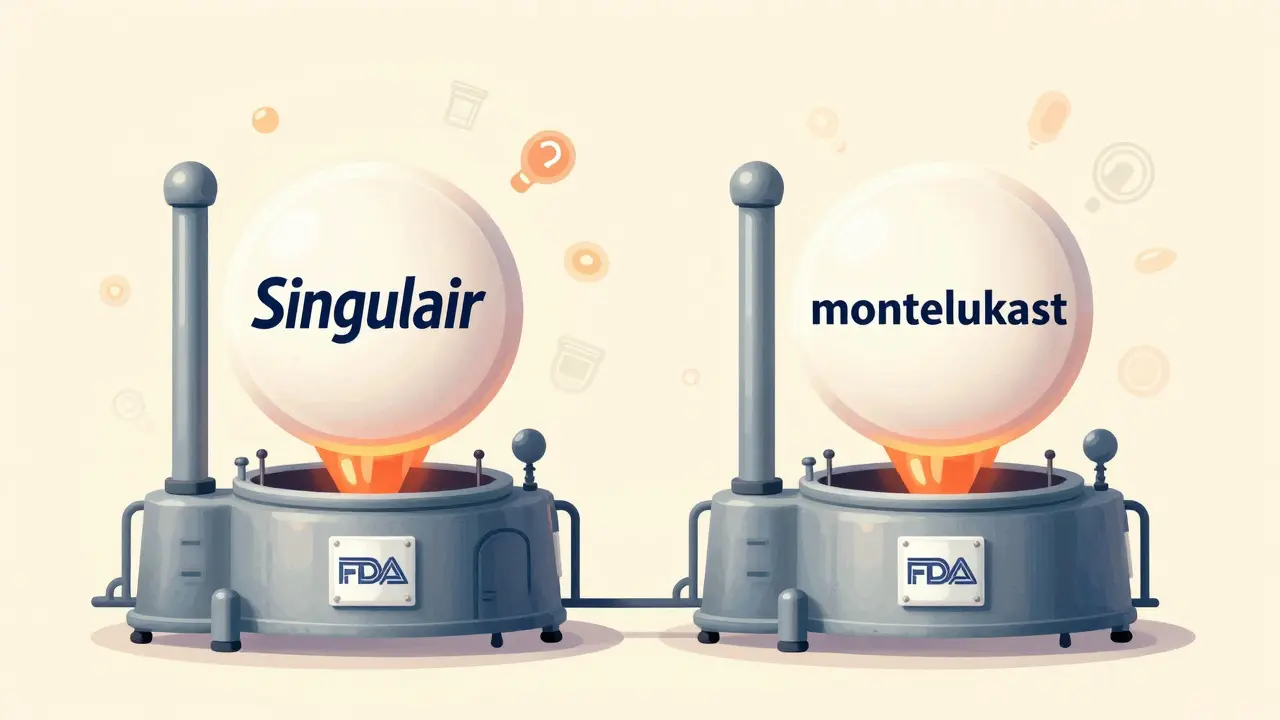
In 1984, Congress passed the Drug Price Competition and Patent Term Restoration Act - better known as the Hatch-Waxman Act. It was supposed to be a win-win. Brand-name companies got extra patent time to make up for delays in FDA approval. Generic makers got a fast-track path to market. And the first generic company to challenge a patent got 180 days of exclusive sales. That was the incentive: be first, win big. But over time, that incentive got twisted. Instead of racing to be first, some generic companies started getting paid to stay away. That’s called a "pay-for-delay" deal. A brand-name company pays a generic maker not to launch its cheaper version. The generic gets a cut. The brand keeps its monopoly. And patients? They keep paying full price. The Federal Trade Commission (FTC) has been fighting this for years. Between 2000 and 2023, they took action in 18 pay-for-delay cases. Settlements totaled over $1.2 billion. In 2013, the Supreme Court ruled in FTC v. Actavis that these deals aren’t automatically legal just because they involve patents. If the payment is large and unexplained, it’s a red flag.How Pay-for-Delay Works in Real Life
Take Gilead Sciences. In 2023, they paid $246.8 million to settle claims they blocked generic versions of their HIV drug Truvada. The deal? Gilead agreed to let generics enter the market - but only after delaying them for years. The money wasn’t for research. It wasn’t for licensing. It was a bribe to buy time. This isn’t rare. In the U.S., there are more than 100 known pay-for-delay deals since 2000. Some involve millions. Others involve hundreds of millions. The pattern? The brand keeps its pricing power. The generic gets a windfall. Patients pay more. And it’s not just cash. Sometimes, the payment comes in the form of exclusive distribution deals, licensing rights, or even promises to delay launching competing products. The FTC calls these "reverse payments" - because instead of generics paying brands for access, it’s the other way around.The Orange Book Game
The FDA keeps a list called the Orange Book - a public directory of patents linked to brand-name drugs. Generic companies must check this list before filing their applications. If they challenge a patent listed there, they trigger the 180-day exclusivity clock. But here’s the problem: some brand companies abuse this system. They list patents that shouldn’t be there - patents on packaging, dosing methods, or even expired ones. In 2003, the FTC took action against Bristol-Myers Squibb for listing a patent on a drug’s capsule shape to block generics. The patent had nothing to do with the drug’s chemistry. But it delayed competition for years. This tactic is called "patent thickening." It’s not illegal on its own. But when done intentionally to confuse or stall generic entry, it becomes an antitrust violation. The FTC has called this out repeatedly. Courts have sometimes agreed. But enforcement is slow, and the damage is done by the time a case ends.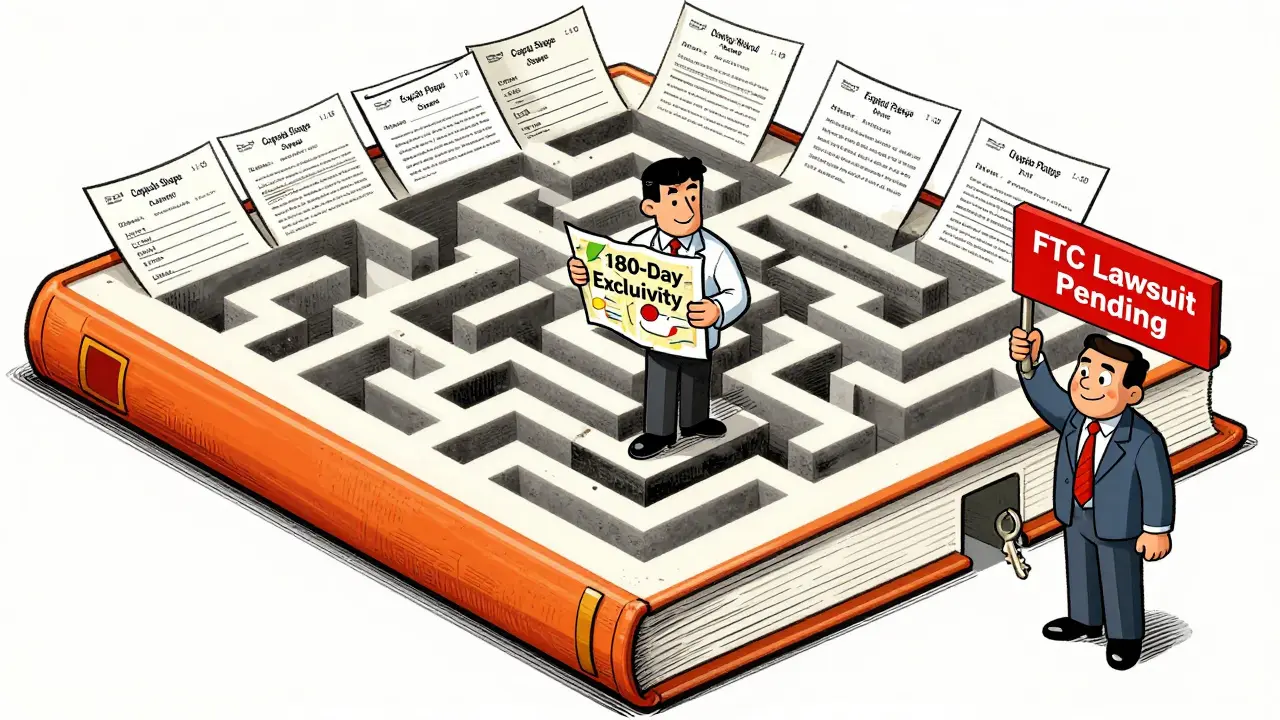
Product Hopping and Other Tricks
Another common trick is "product hopping." A brand company makes a tiny change to its drug - say, switching from a pill to a tablet, or adding a new flavor - and then pushes doctors and patients to switch. The original drug? It gets pulled from the market. The generic version? It can’t launch because the new version has a fresh patent. AstraZeneca did this with Prilosec and Nexium. Prilosec was a blockbuster heartburn drug. When its patent neared expiration, AstraZeneca launched Nexium - a slightly modified version. They spent hundreds of millions marketing it as "better," even though clinical studies showed little difference. Within months, Prilosec was off the market. Generic Prilosec couldn’t enter because there was no original version left to copy. The courts didn’t find this illegal - but the FTC called it a "gimmick." And it worked. Nexium became a billion-dollar drug. Patients paid more. And generic makers were locked out.Sham Petitions and Regulatory Abuse
Then there’s the "sham citizen petition." Anyone can file a petition with the FDA asking them to delay approval of a generic drug. It’s meant to raise safety concerns. But some companies file petitions they know are baseless - just to slow things down. In 2023, the FTC sued Teva Pharmaceuticals for filing dozens of these petitions to block generic versions of Copaxone, a multiple sclerosis drug. The petitions claimed safety issues that didn’t exist. The FDA rejected them all. But by the time the agency got around to reviewing them, the 180-day window for the first generic had expired. Teva kept its monopoly. The FTC says this was a deliberate delay tactic. The case is still pending. This isn’t just a U.S. problem. In the European Union, companies have withdrawn marketing authorizations in certain countries just to block generic entry. Others have misled patent offices to extend protection. The European Commission estimates these delays cost European consumers €11.9 billion every year.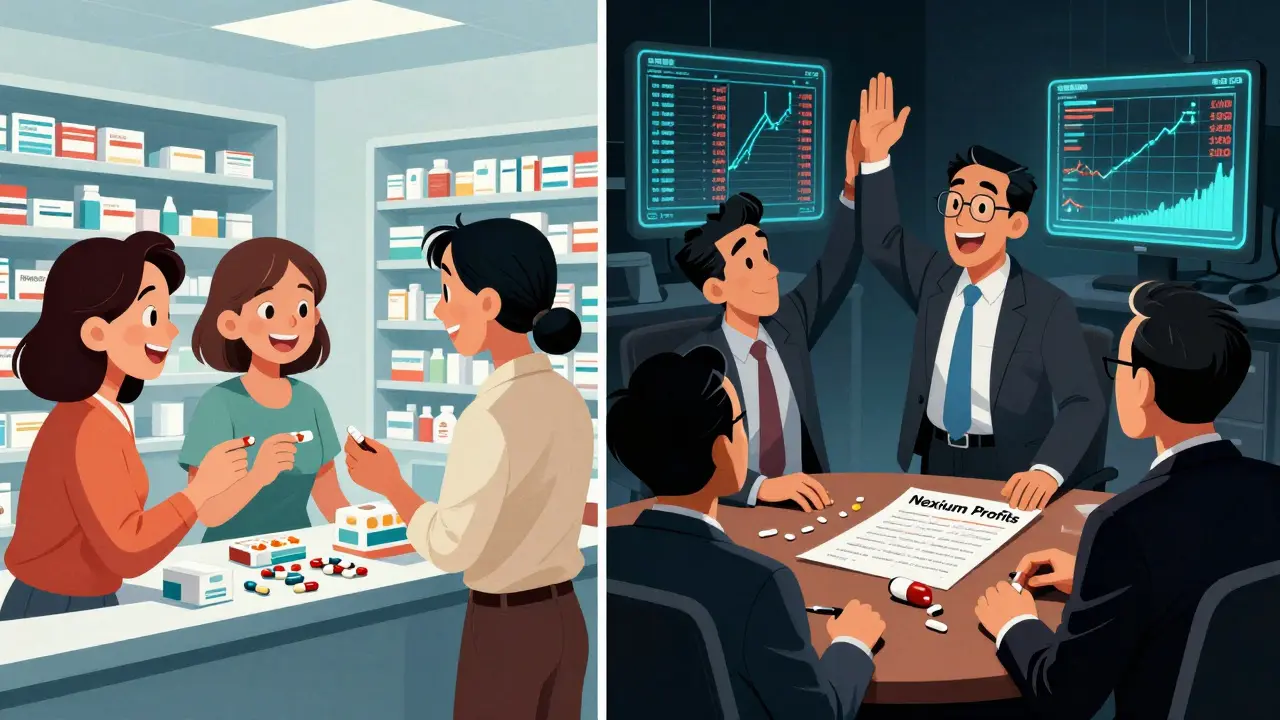
China’s New Rules and the Rise of AI Enforcement
China just released new antitrust guidelines for pharmaceuticals in January 2025. For the first time, they explicitly ban five "hardcore" anti-competitive behaviors: price fixing, output limits, market division, joint boycotts, and blocking new technology. They’ve already punished six cases - five of them involved price fixing through messaging apps and algorithms. What’s new? China is using AI to monitor drug prices across online pharmacies and hospital systems. Algorithms flag sudden price spikes or coordinated behavior between competitors. It’s faster, more precise, and harder to hide. The U.S. and EU are catching up. But enforcement still relies on complaints, investigations, and court battles - which take years. China’s approach shows what’s possible when regulators combine legal tools with real-time data.Why This Matters to Real People
Behind every dollar saved by generics is a person who can afford their medicine. In 2022, a Kaiser Family Foundation survey found that 29% of U.S. adults skipped doses or didn’t fill prescriptions because of cost. Many of those drugs had generic versions - but they weren’t available yet. Why? Because of pay-for-delay deals. Because of product hopping. Because of fake petitions. The Congressional Budget Office estimates generic competition cuts drug prices by 30% to 90%. That’s not theory. That’s real savings. A $1,200 monthly drug drops to $200. A $300 insulin vial drops to $25. That’s life-changing. But when competition is blocked, those savings vanish. And the cost doesn’t just hit patients. It hits insurers, Medicare, Medicaid - and ultimately, taxpayers.What’s Next?
The FTC is pushing for stronger rules. They want to make pay-for-delay deals harder to hide. They want to limit how patents can be listed in the Orange Book. They want to crack down on product hopping. But legal tools alone won’t fix this. We need transparency. We need faster FDA reviews. We need penalties that hurt more than they pay. And we need to remember: this isn’t about patents. It’s about people. The Hatch-Waxman Act was meant to bring down prices - not to give drug companies a playbook for keeping them high. The next time you hear about a new drug deal, ask: Who’s really winning? Is it the patient? Or just the company?What is the Hatch-Waxman Act and how does it affect generic drugs?
The Hatch-Waxman Act of 1984 created a legal pathway for generic drug companies to enter the market faster by allowing them to rely on the safety data of brand-name drugs. It also gave the first generic manufacturer to challenge a patent 180 days of exclusive sales. This was meant to speed up competition and lower prices. But over time, companies have exploited this system through pay-for-delay deals and patent manipulation, reducing its intended benefits.
What are pay-for-delay agreements in the pharmaceutical industry?
Pay-for-delay agreements happen when a brand-name drug company pays a generic manufacturer to delay launching its cheaper version. These deals are often hidden in settlement agreements after patent lawsuits. The FTC considers them anti-competitive because they prevent market entry and keep prices high. The Supreme Court ruled in 2013 that such payments can violate antitrust laws if they’re large and unexplained.
How do companies use the Orange Book to block generic competition?
The Orange Book lists patents linked to brand-name drugs. Generic companies must address each patent before launching. Some brand companies list weak, irrelevant, or expired patents to create confusion and delay. The FTC has taken action against companies like Bristol-Myers Squibb for this practice. When too many patents are listed, generic makers may avoid filing altogether - or waste years in legal battles.
What is product hopping and why is it controversial?
Product hopping is when a drug company makes a minor change to its medication - like switching from a pill to a capsule - then pulls the original version from the market. This blocks generic versions of the old drug from entering because there’s no identical product left to copy. While not always illegal, it’s widely seen as a tactic to extend monopolies. AstraZeneca’s switch from Prilosec to Nexium is a well-known example.
How do antitrust laws differ between the U.S., EU, and China?
The U.S. focuses on pay-for-delay deals and sham petitions, with enforcement led by the FTC and DOJ. The EU targets regulatory abuse, like withdrawing marketing approvals to block generics in specific countries. China’s 2025 guidelines explicitly ban price fixing, market division, and algorithm-based collusion, and use AI to detect anti-competitive pricing patterns. All three regions are targeting delays in generic entry, but China’s approach is more proactive and tech-driven.
How much money do generic drugs save consumers?
Between 2005 and 2014, generic drugs saved U.S. consumers $1.68 trillion. In 2012 alone, savings reached $217 billion. The Congressional Budget Office estimates generics reduce drug prices by 30% to 90% compared to brand-name versions. Without generic competition, many essential medications would be unaffordable for millions of people.



12 Comments
Generics save lives and wallets. Why are we still letting corporations play games with our medicine?
It’s time to stop pretending this is about innovation.
pay for delay? more like pay to kill competition lol
big pharma is just a cartel with a license
Let’s be real - this isn’t just antitrust. It’s systemic corruption baked into the FDA’s approval process. The Orange Book isn’t a directory, it’s a weapon. Patent thickening? That’s corporate espionage dressed up as IP law. And the FTC? They’re playing whack-a-mole with billion-dollar bribes while patients ration insulin.
They call it ‘settlements.’ I call it bribery with a footnote.
The Supreme Court ruling in Actavis? A paper tiger. No one’s going to jail. No CEO’s losing their yacht. Just fines that are tax deductions.
And don’t get me started on product hopping - switching from a pill to a tablet isn’t innovation, it’s legal sabotage.
China’s using AI to catch this? We’re still waiting for Congress to finish their coffee break.
The Hatch-Waxman Act was supposed to be a bridge to affordability. Now it’s a toll road owned by Pfizer and Gilead.
Every time you hear ‘patent pending,’ think ‘price gouging in progress.’
These companies don’t fear competition. They fear transparency.
And guess what? The FDA’s own data shows 70% of Orange Book patents are irrelevant.
So why isn’t this a criminal investigation? Because the regulators used to work for these companies.
It’s not a market failure. It’s a design flaw. Intentional. Profit-driven. And utterly, disgustingly legal.
It’s wild how we’ve turned medicine into a boardroom chess game while people skip doses to afford rent.
Generics aren’t ‘cheap alternatives’ - they’re the difference between living and dying.
And yet, we treat them like they’re some kind of second-class science.
Meanwhile, the same companies that lobby against price caps spend millions on ads telling you their new ‘miracle’ pill is ‘revolutionary’ - even when it’s just a differently colored pill.
Product hopping isn’t innovation, it’s performance art for shareholders.
And pay-for-delay? That’s not a business strategy - it’s a moral bankruptcy.
We’re not just losing money. We’re losing trust.
But here’s the thing: people are waking up. The outrage isn’t quiet anymore.
And when enough of us stop buying into the lie, the whole house of cards falls.
It’s not about hating pharma.
It’s about refusing to let them profit from our suffering.
And honestly? If China’s using AI to fix this before we do… maybe we need to ask why we’re still using paper files and lobbying donations as policy tools.
Oh, how quaint - the FTC is ‘fighting’ pay-for-delay deals.
As if a bureaucrat with a PowerPoint deck can outmaneuver a pharma exec who owns three vacation homes and a private jet named ‘Insulin Express.’
And the Orange Book? A beautifully curated museum of legal fiction.
Patent thickening? How poetic - corporations weaponizing the very system meant to protect innovation.
And let’s not forget product hopping - the pharmaceutical equivalent of changing the color of a car so you can charge $10,000 more for it.
Bravo, capitalism. You’ve turned healthcare into a Shakespearean tragedy with a 30% profit margin.
Meanwhile, the patients? They’re just the chorus - silent, suffering, and always paying.
Structural antitrust enforcement in pharma is fundamentally misaligned with the agency capture paradigm inherent in regulatory capture theory. The Orange Book is a classic example of institutional rent-seeking behavior amplified by path dependency in FDA procedural norms.
Pay-for-delay constitutes a non-cooperative Nash equilibrium where incumbent monopolists extract supernormal profits through collusive settlement structures.
Product hopping is a form of strategic obsolescence - a deliberate depletion of the reference drug’s market viability to circumvent generic entry thresholds under the Hatch-Waxman framework.
And AI-driven price monitoring? That’s just algorithmic surveillance masquerading as regulatory innovation.
China’s approach is technically superior but culturally incommensurate with U.S. legal pluralism.
Bottom line: without breaking up the top 10 pharma conglomerates, all enforcement is performative.
I wonder how many of these pay-for-delay deals involve companies that also fund medical research at universities.
Is there a link between funding and delayed generic approvals?
Just… curious.
It is, of course, profoundly disconcerting to observe the erosion of ethical governance within the pharmaceutical-industrial complex - a phenomenon that has, in recent decades, metastasized into a systemic violation of the public trust.
One cannot help but be moved by the tragic irony: that the very legislation designed to foster accessibility - the Hatch-Waxman Act - has been perverted into an instrument of corporate hegemony.
And yet, the FTC’s tepid enforcement actions, while symbolically laudable, are woefully inadequate to address the magnitude of this moral and economic catastrophe.
One must ask: where are the criminal indictments? Where are the executives held accountable? Where is the justice?
It is not merely a failure of policy - it is a failure of character.
People forget - generics aren’t just cheaper. They’re the reason my dad took his meds every day.
Thank you for writing this.
Thank you for highlighting the human impact behind these legal maneuvers. The data is compelling, but the real story is in the patients who can’t afford their prescriptions.
Policy change must be driven by empathy, not just economics.
Let’s ensure any reform centers on access, not corporate profit margins.
I used to work in a pharmacy.
Every week, someone would cry because their insulin was $500.
Then a generic came out - $25.
They hugged me.
That’s what this is about.
Not patents.
Not profits.
People.
Im sorry to say but i think we need to remember that the original intent of hatch-waxman was good.
Its not the law that broke.
Its the people who twisted it.
Maybe we need to fix the enforcers not just the rules.
Just a thought.