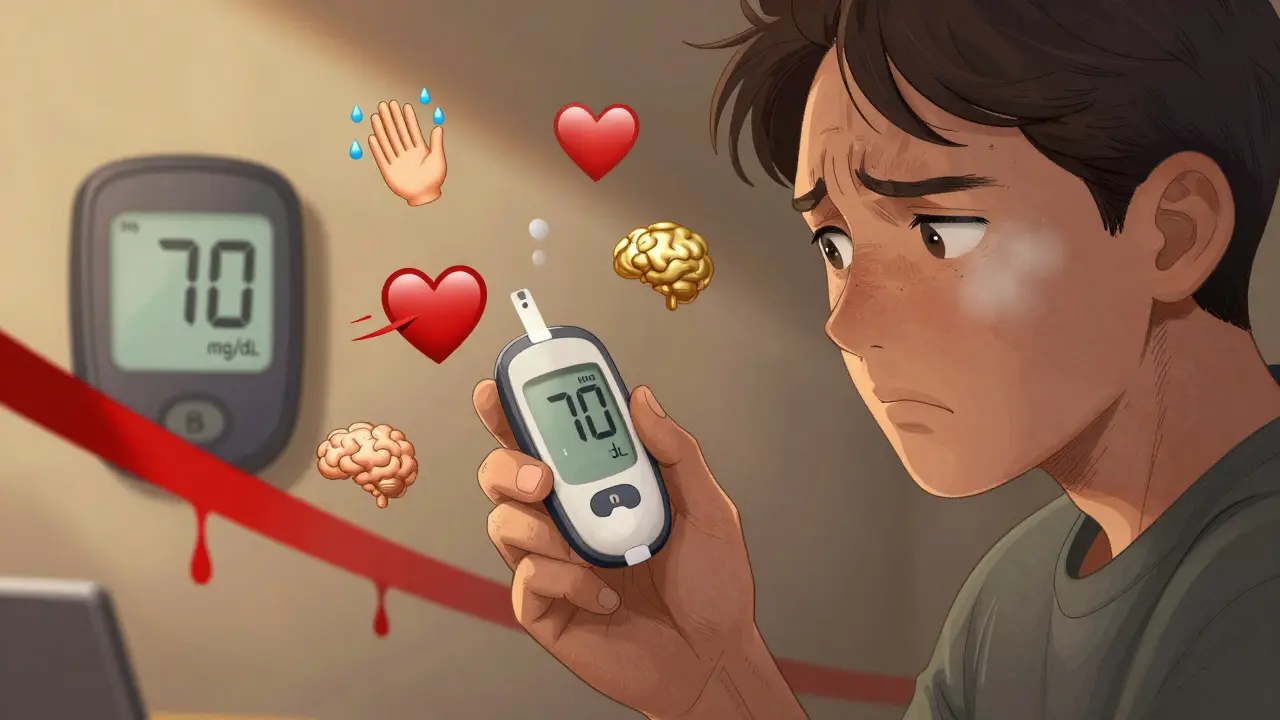

When your blood sugar drops too low, your body doesn’t just feel off-it can shut down. You might shake, sweat, get confused, or even pass out. For someone with diabetes, this isn’t rare. About 47% of people with Type 1 diabetes experience low blood sugar at least once a week. And for many, it happens without warning. Hypoglycemia isn’t just a nuisance-it’s a medical emergency that can lead to seizures, coma, or death if not treated fast. The good news? You can learn to spot it, treat it, and mostly avoid it altogether.
What Counts as Low Blood Sugar?
< p>Low blood sugar, or hypoglycemia, is defined as a blood glucose level below 70 mg/dL (3.9 mmol/L) in people with diabetes. For those without diabetes, the threshold is lower-at 55 mg/dL (3.1 mmol/L)-but the symptoms can be just as dangerous. The American Diabetes Association breaks it down into three levels:- Level 1: Glucose between 54 and 69 mg/dL. You might feel shaky or hungry.
- Level 2: Glucose below 54 mg/dL. This is serious. Your brain starts struggling.
- Level 3: Severe hypoglycemia. You can’t treat yourself. You need help.
It’s not just about the number. How you feel matters more. Some people feel symptoms at 70 mg/dL. Others don’t notice anything until it’s at 50. That’s why tracking your personal signs is just as important as checking your meter.
How Do You Know You’re Having a Low?
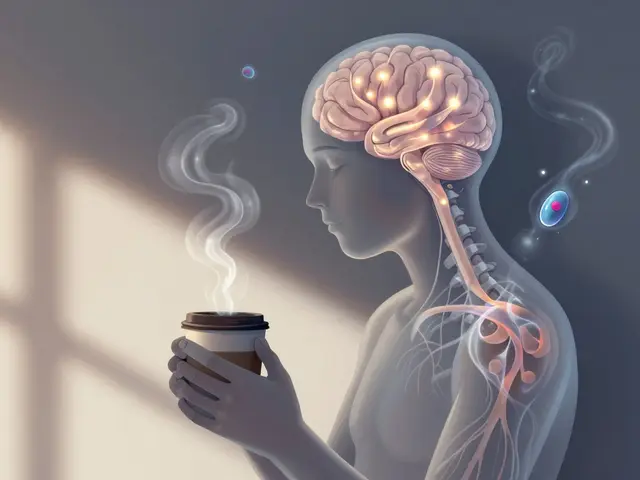
Your body sends two kinds of signals when blood sugar drops. One is physical-your adrenaline kicks in. The other is mental-your brain is starving.
Adrenergic symptoms (your body’s alarm system):
- Shaking or trembling (hands can shake at 8-12 times per second)
- Sweating (even if it’s cold)
- Heart racing (over 100 beats per minute)
- Feeling anxious or jittery
Neuroglycopenic symptoms (your brain is running out of fuel):
- Blurred vision
- Confusion or trouble thinking
- Dizziness or weakness
- Slurred speech
- Seizures or unconsciousness (below 45 mg/dL)
Here’s the scary part: after years with diabetes, many people lose these warning signs. This is called hypoglycemia unawareness. It affects 25% of Type 1 patients after 15+ years. They don’t feel anything until it’s too late. That’s why continuous glucose monitors (CGMs) are a game-changer. They alert you before you feel symptoms.
What Causes Low Blood Sugar?
In people with diabetes, low blood sugar almost always comes from a mismatch between insulin, food, and activity.
- Too much insulin (or other diabetes meds): This causes 73% of episodes. Taking your usual dose but skipping a meal or eating less than planned is the most common mistake.
- Not enough carbs: Eating too little, especially after taking insulin. A sandwich instead of a full meal? That’s often enough to trigger a drop.
- Exercise without adjustment: Even a 30-minute walk can lower blood sugar by 30-50 mg/dL. If you don’t eat extra carbs or reduce insulin, you’re setting yourself up for a crash.
- Alcohol: Especially on an empty stomach. Alcohol blocks your liver from releasing stored glucose. One drink can cause low blood sugar hours later-even while you’re sleeping.
- Delayed digestion: After gastric bypass surgery, food moves too fast. Blood sugar spikes, then crashes hard-sometimes below 50 mg/dL within 2 hours.
Non-diabetics can get low blood sugar too, but it’s rare. Two main types:
- Reactive hypoglycemia: Drops after meals, often linked to stomach surgery or prediabetes.
- Fasting hypoglycemia: Could signal a tumor (like insulinoma), liver disease, or hormone problems. Needs medical testing.
How to Treat a Low Blood Sugar Episode
If your blood sugar is below 70 mg/dL and you’re feeling symptoms, act fast. The standard rule is the 15-15 Rule:
- Consume 15 grams of fast-acting carbs.
- Wait 15 minutes.
- Check your blood sugar again.
- If still below 70, repeat.
What counts as 15g of fast carbs?
- 4 glucose tablets
- 1/2 cup (4 oz) of regular soda (not diet)
- 1 tablespoon of honey or sugar
- 1 tube of glucose gel
Don’t use chocolate or candy bars. Fat slows down sugar absorption. You need fast-acting carbs-no delays.
For severe hypoglycemia (Level 3)-when someone is confused, unconscious, or seizing-you need glucagon. Injectable glucagon works in under 10 minutes. Nasal glucagon (Zegalogue) is just as fast and easier to use. Every person with diabetes on insulin should have glucagon on hand-and their family, coworkers, or friends should know how to use it.
Studies show glucagon works in 85% of severe cases when given correctly. But if no one knows how to use it, it’s useless. Practice with a trainer kit. Keep it in your bag, car, and workplace.
How to Prevent Low Blood Sugar
Prevention isn’t guesswork. It’s strategy.
1. Use a Continuous Glucose Monitor (CGM)
CGMs don’t just show your number-they show the trend. A drop of 3 mg/dL per minute is a red flag. Modern CGMs can alert you 20-30 minutes before you hit a low. Some even auto-suspend insulin delivery when blood sugar starts falling. The IN CONTROL trial found this feature reduces nighttime lows by 44%.
2. Adjust for Exercise
If you’re going to be active for more than 45 minutes:
- Reduce your basal insulin by 20-50%
- Eat 15-30g of carbs before or during exercise
- Check your blood sugar before, during, and after
Even walking after dinner can cause a drop hours later. Don’t skip checking at bedtime if you exercised.
3. Balance Carbs and Insulin
Learn your insulin-to-carb ratio. For most people, 1 unit of insulin covers 10-15g of carbs. If you’re unsure, work with a diabetes educator. Miscalculating this is the #1 cause of lows.
4. Avoid Alcohol on an Empty Stomach
If you drink, eat food with it. And never go to bed with a low or even normal blood sugar after drinking. Set an alarm to check your glucose at 2-3 a.m.
5. Plan for Nighttime
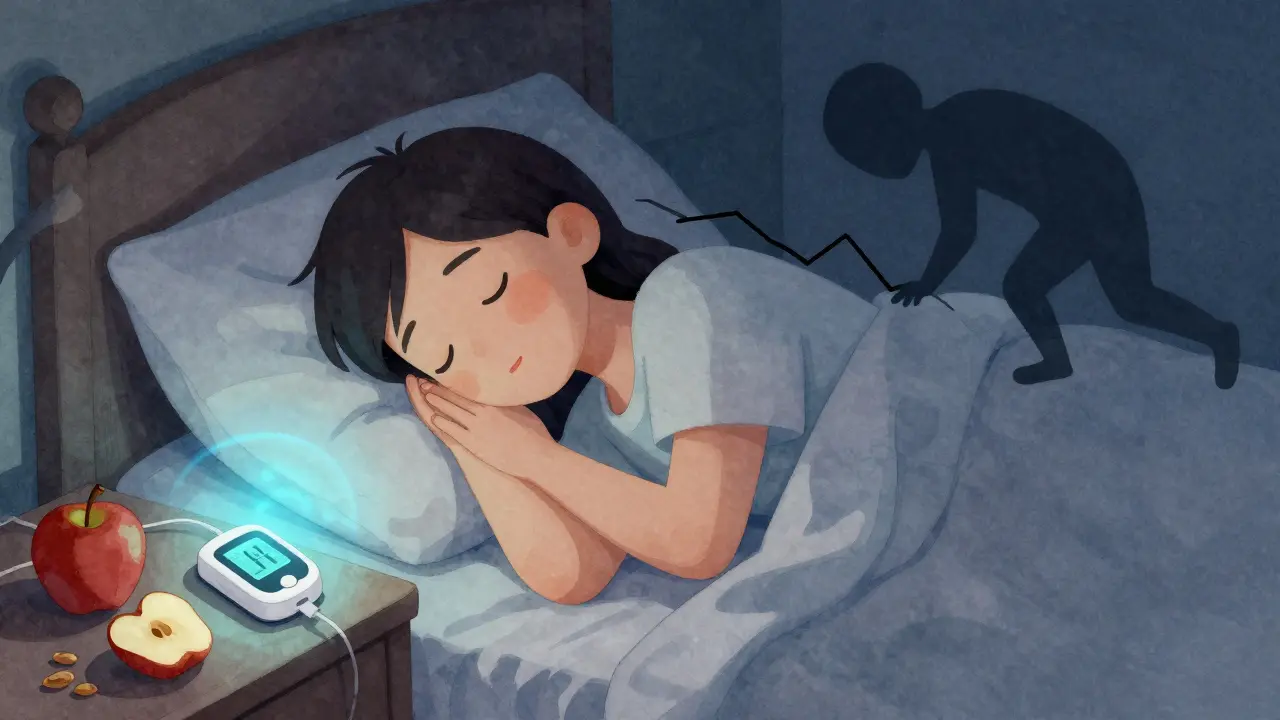
Nighttime lows are the most dangerous. They’re silent. You can die in your sleep. This is called “dead-in-bed syndrome”-it accounts for 6% of unexpected deaths in young Type 1 patients.
Prevent it by:
- Checking your blood sugar before bed (aim for 90-150 mg/dL)
- Eating a small snack with protein and complex carbs if your level is below 100 mg/dL
- Using a CGM with overnight alarms
What to Do When Others Don’t Recognize It
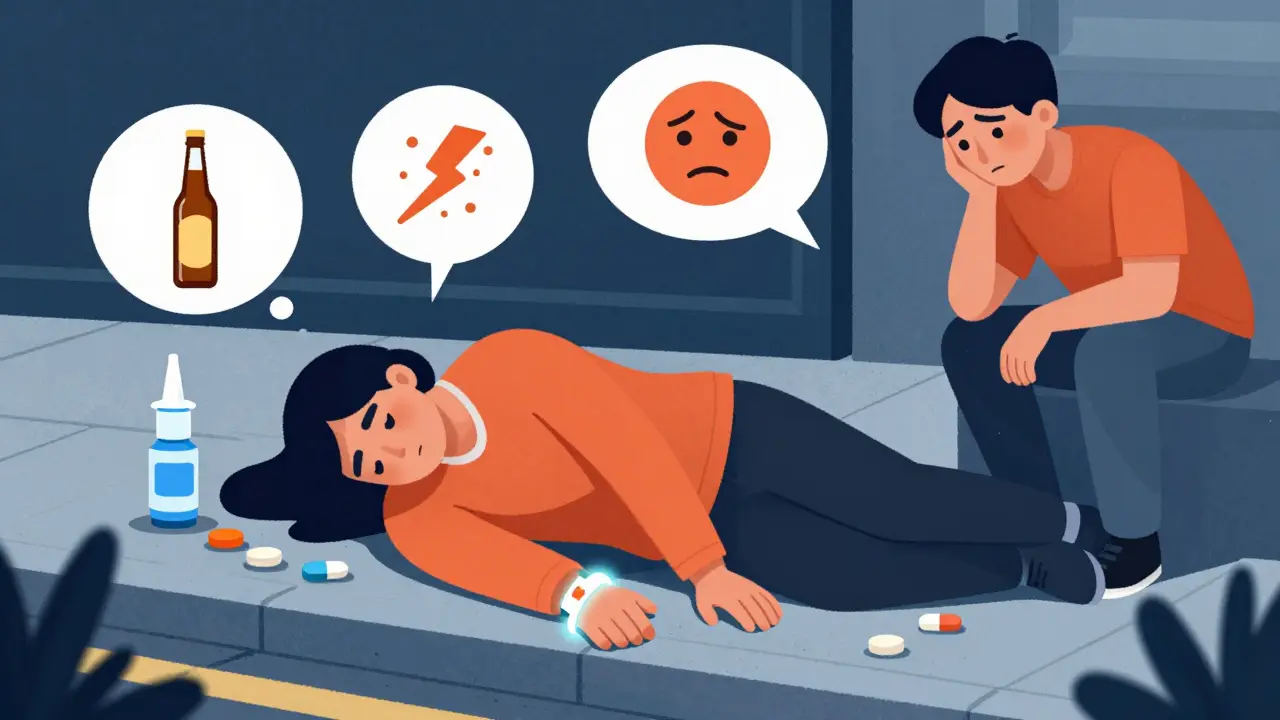
People often mistake hypoglycemia for drunkenness. Slurred speech, confusion, stumbling-it looks like intoxication. A 2023 NHS England report found that over 32% of hypoglycemia-related 911 calls were initially misdiagnosed as stroke or alcohol poisoning.
Wear a medical ID bracelet. Tell coworkers, friends, or family: “If I act strange, I might be low. Give me juice or glucose tabs. Don’t wait.”
And if you’re with someone who’s unconscious and you don’t have glucagon? Call emergency services immediately. Do not put anything in their mouth. They could choke.
What’s New in Hypoglycemia Management
Technology is changing the game.
- Dasiglucagon (Zegalogue): A nasal spray that works in 94% of cases within 15 minutes-faster and easier than injections.
- Artificial pancreas systems: Like Tandem Control-IQ. These systems automatically adjust insulin based on real-time glucose levels. They cut time below 54 mg/dL by over 3 hours per week.
- Predictive algorithms: NIH-funded projects are testing AI that can predict a low 45 minutes ahead using glucose trends, activity, and meal data.
- Glucose-responsive insulin: In trials, this new insulin type turns itself off when blood sugar drops below 70 mg/dL. It could eliminate lows altogether.
These aren’t science fiction. They’re here now. If you’re on insulin, ask your doctor about CGMs, predictive alerts, or closed-loop systems. They’re not just convenient-they save lives.
When to Call a Doctor
See your healthcare provider if:
- You have frequent lows (more than 2 per week)
- You’ve had a severe episode (needed glucagon or emergency help)
- You’ve lost your warning signs
- You’re having lows without obvious cause (like skipped meals or exercise)
Recurrent lows mean your treatment plan needs tuning. Don’t wait until you’re hospitalized. Talk to your doctor about adjusting insulin doses, meal timing, or adding a CGM.
And if you’re not diabetic but keep getting low blood sugar? Get tested. It could be something serious-like an insulinoma or adrenal problem. Don’t ignore it.
Can you have low blood sugar without diabetes?
Yes, but it’s rare. Non-diabetic hypoglycemia usually falls into two categories: reactive (after eating) or fasting (during long gaps between meals). Reactive hypoglycemia can happen after weight-loss surgery or in early prediabetes. Fasting hypoglycemia may point to a tumor, liver disease, or hormone disorder. If you’re not diabetic and keep having lows, see a doctor for blood tests and evaluation.
How long does it take to recover from a low blood sugar episode?
Most people feel better within 10-15 minutes after taking 15g of fast-acting carbs. But full recovery-especially after a severe episode-can take hours. Your body needs time to restore liver glycogen. Don’t drive or return to work until you’ve had two normal readings, at least 15 minutes apart. Fatigue and brain fog can linger even after your sugar is back to normal.
Why do I get low blood sugar at night even when I check before bed?
Your body’s insulin needs change overnight. Even if your bedtime glucose is fine, your liver may release less glucose while you sleep, or your insulin may still be peaking. Exercise earlier in the day can also cause delayed drops. CGMs are the best tool here-they show trends, not just snapshots. If you’re having nighttime lows regularly, talk to your doctor about adjusting your evening insulin or adding a bedtime snack with protein and slow carbs.
Is it safe to drive with diabetes?
Yes-but only if you manage your blood sugar carefully. At 50 mg/dL, your reaction time and decision-making are as impaired as if you had a 0.08% blood alcohol level-the legal limit for drunk driving in most places. Always check your glucose before driving. Carry fast-acting carbs in your car. Never drive if your level is below 70 mg/dL. If you feel symptoms while driving, pull over immediately. It’s not worth the risk.
Can stress cause low blood sugar?
Stress usually raises blood sugar-but in some people, especially those with long-standing diabetes, it can trigger lows. This happens when stress leads to skipped meals, reduced food intake, or changes in insulin timing. Also, if you’re anxious, you might overcorrect with insulin or exercise more than usual. Track your patterns: if lows follow stressful events, adjust your plan accordingly.
What’s the best snack to prevent nighttime lows?
A snack with both protein and slow-digesting carbs works best. Examples: a small apple with peanut butter, a handful of nuts with a piece of whole-grain toast, or cottage cheese with a few berries. Avoid sugary snacks-they cause a quick spike and then a crash. The goal is steady glucose release through the night.
Does glucagon expire? What if I use an old one?
Yes, glucagon expires-usually 2-3 years from manufacture. Using expired glucagon is risky. It may not work. Always check the date. Keep a backup. If you’re unsure whether it’s still good, replace it. Many pharmacies offer free replacement programs for expired kits. And practice with a trainer kit every 6 months so you’re ready if you ever need it.
Final Thoughts
Hypoglycemia isn’t a sign of failure. It’s a signal. Your body is telling you something’s out of balance. With the right tools-CGMs, glucagon, carb counting, and awareness-you can prevent most lows. And if one happens, you’ll know exactly what to do. The goal isn’t perfection. It’s safety. You don’t have to live in fear. You just need to be prepared.