
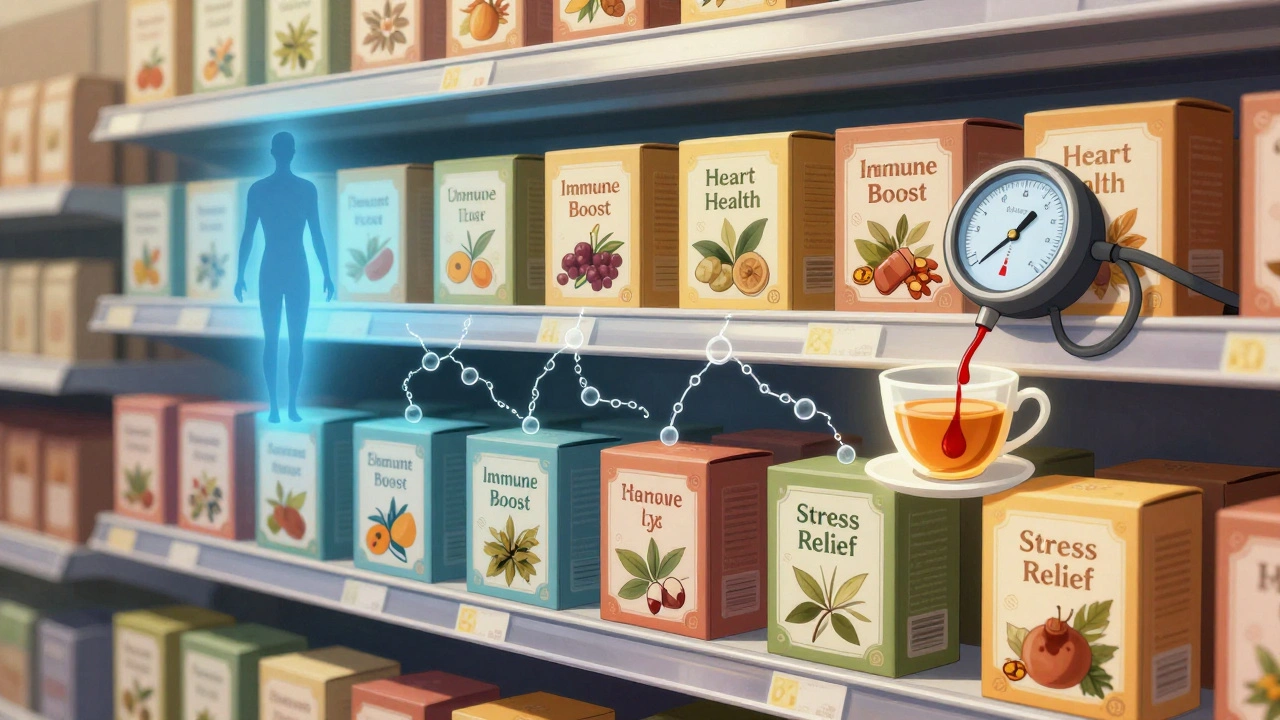
Many people drink herbal teas thinking they’re harmless-just a warm, natural sip of comfort. But if you’re taking prescription medications, that cup of chamomile, green tea, or hibiscus might be doing more than soothing your throat. It could be changing how your medicine works-sometimes dangerously.
Why Herbal Teas Aren’t Always Safe with Medicines
Herbal teas aren’t regulated like drugs. That means they don’t go through the same safety testing before hitting store shelves. The FDA treats them as food, not medicine. So while a label might say "100% natural," that doesn’t mean it’s safe to mix with your pills. The real issue isn’t the tea itself-it’s the active compounds inside. Plants like green tea, St. John’s wort, and hibiscus contain chemicals that can interfere with how your body processes medications. These interactions happen in two main ways:- Pharmacokinetic: The tea changes how your body absorbs, breaks down, or gets rid of the drug.
- Pharmacodynamic: The tea either boosts or weakens the drug’s effect on your body.
High-Risk Herbal Teas and the Medications They Interact With
Not all herbal teas are risky-but some have clear, documented dangers. Here are the top ones to watch out for, especially if you’re on chronic medication.Green Tea
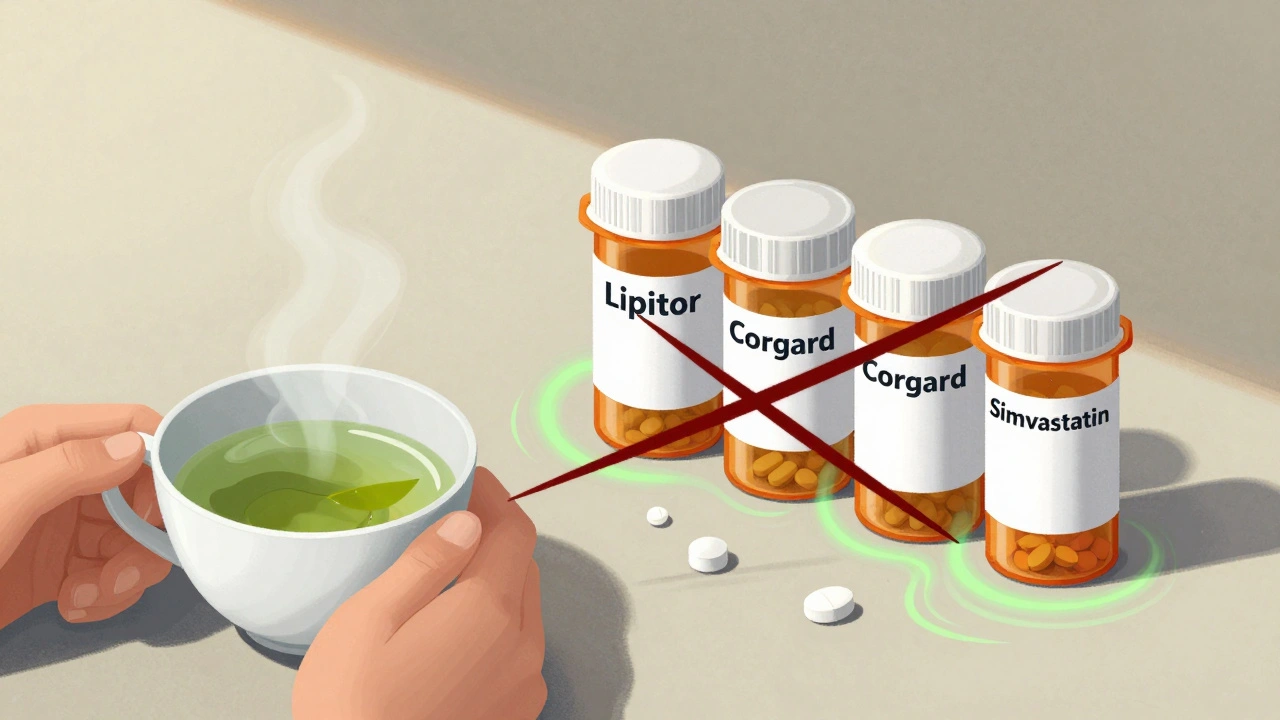
Green tea is one of the most studied herbal teas-and one of the most dangerous when mixed with certain drugs. It contains epigallocatechin gallate (EGCG), which can cut the effectiveness of several key medications:- Atorvastatin (Lipitor): Green tea reduces blood levels by 31-39%, making it less effective at lowering cholesterol.
- Nadolol (Corgard): A 2023 clinical trial found that three cups of strong green tea daily dropped nadolol levels by 85%. That’s enough to make blood pressure control fail.
- Simvastatin: Green tea extract can increase simvastatin levels by 2.3 times, raising the risk of muscle damage.
St. John’s Wort
St. John’s wort is often used for mild depression-but it’s a powerful enzyme inducer. It speeds up the liver’s ability to break down drugs, which means they leave your body too fast. It affects:- Antidepressants (SSRIs like sertraline)
- Blood thinners (warfarin)
- Birth control pills
- HIV medications
- Transplant drugs like cyclosporine
Hibiscus Tea
Hibiscus tea is popular for its tart flavor and claims of lowering blood pressure. But if you’re already on ACE inhibitors like lisinopril or losartan, hibiscus can push your blood pressure too low. Studies have shown systolic pressure dropping below 90 mmHg in patients drinking hibiscus tea daily while taking these drugs. That can lead to dizziness, fainting, or even falls-especially dangerous for older adults.Chamomile
Chamomile is often called a gentle tea. But it contains apigenin, which may interfere with enzymes that break down birth control pills, making them less effective. It also has mild blood-thinning properties. If you’re on warfarin or aspirin, chamomile can increase your risk of bruising or bleeding. The effect isn’t as strong as ginkgo or garlic, but it’s still there-and cumulative.Goldenseal
Goldenseal is sometimes brewed as a tea for colds or digestion. But it’s one of the most potent inhibitors of CYP3A4 and CYP2D6 enzymes-the same ones that process over half of all prescription drugs. It can dangerously raise levels of:- Statins
- Beta-blockers
- Anti-anxiety meds
- Some cancer drugs
Ginkgo Biloba
Ginkgo is marketed for memory and circulation. But it’s a known blood thinner. When taken with warfarin, aspirin, or even NSAIDs like ibuprofen, it increases bleeding risk. The Mayo Clinic documented cases of brain bleeds and internal bleeding in people who took ginkgo with blood thinners. The risk isn’t theoretical-it’s been seen in hospitals.Who’s Most at Risk?
You don’t have to be taking a dozen pills to be in danger. But certain groups face higher risks:- Older adults: 70% of adults over 65 use herbal supplements, but only 25% tell their doctor. Many don’t realize tea counts as a supplement.
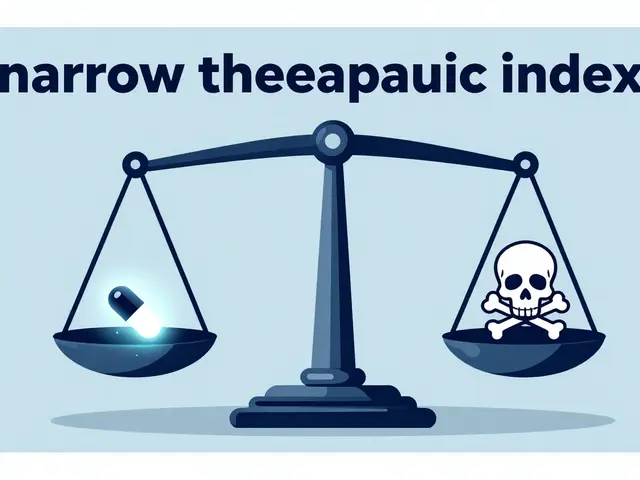
- People on narrow-therapeutic-index drugs: These are medications where the difference between a helpful dose and a toxic one is tiny. Examples: warfarin, digoxin, cyclosporine, theophylline, lithium.
- People on multiple medications: The more drugs you take, the higher the chance of a hidden interaction.
- Those with liver or kidney problems: Your body’s ability to process both drugs and herbs is already reduced.
What You Should Do
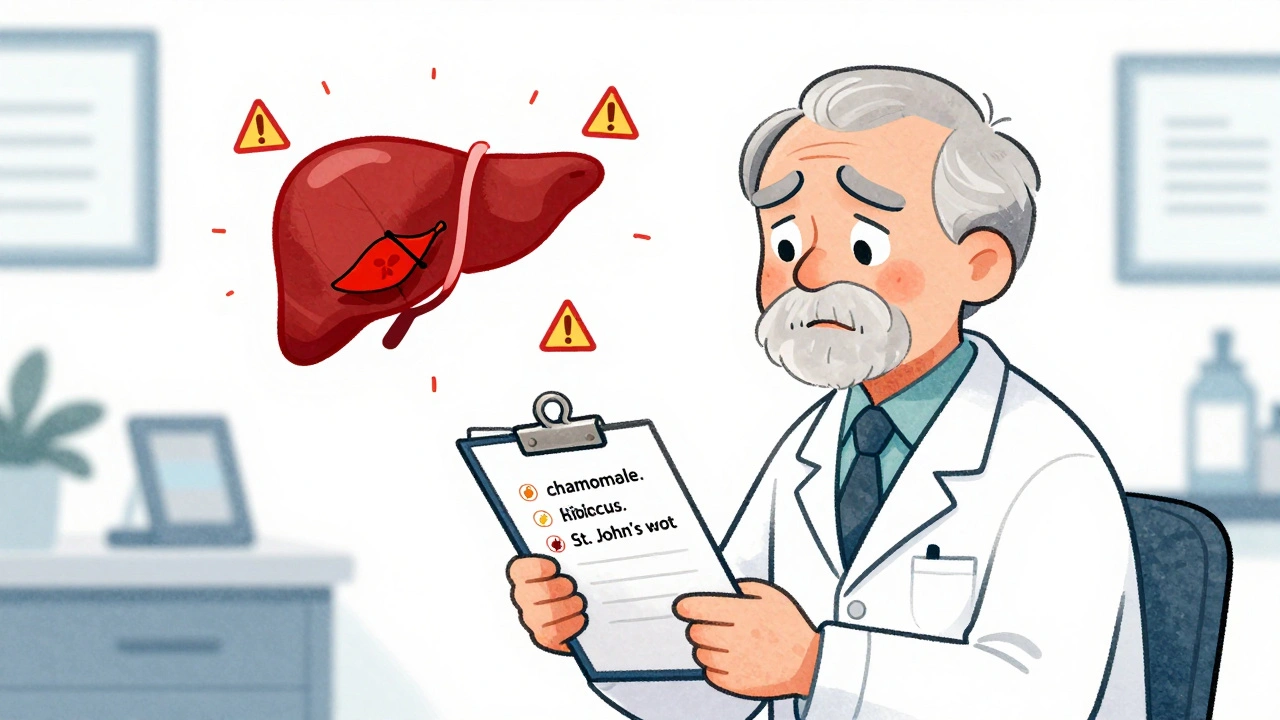
You don’t have to give up herbal tea. But you need to be smart about it.- Make a list of everything you take. Not just pills. Include herbal teas, vitamins, and supplements. Write down how often and how much you drink.
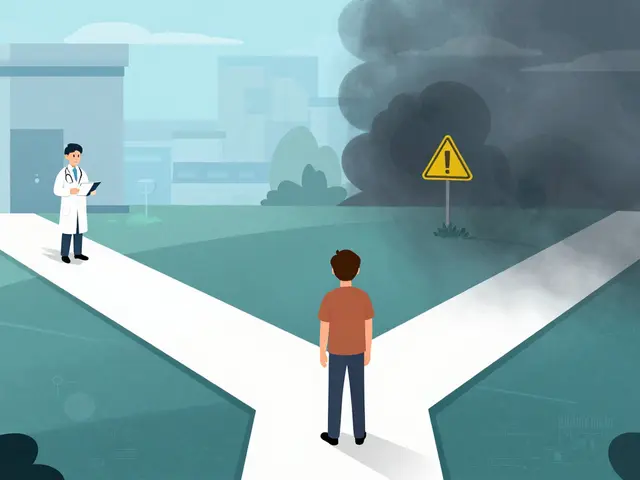
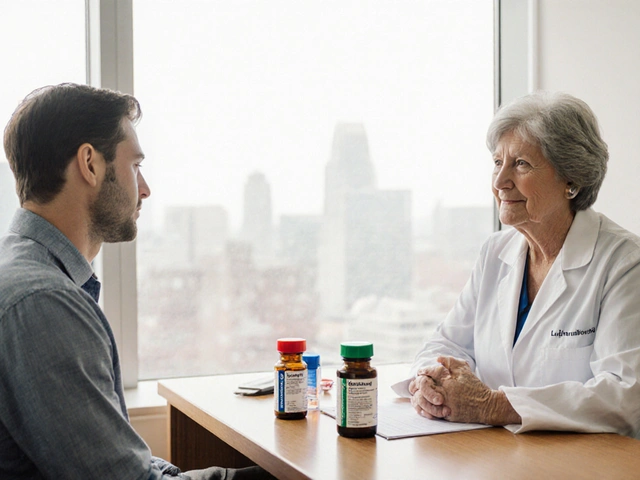
- Show this list to your doctor and pharmacist every time you visit. Don’t wait for them to ask. Say: "I drink herbal teas. Can you check if any of them interact with my meds?"
- Avoid herbal teas if you’re on warfarin, digoxin, cyclosporine, or theophylline. Unless your provider says it’s safe, skip them.
- Don’t assume "natural" means safe. The FDA has issued warnings: "Natural does not mean safe."
- Be cautious with functional tea blends. Many now combine 5-10 herbs. No one knows how they interact with each other-or your meds.
What Your Doctor Should Be Asking
Doctors aren’t always trained to ask about herbal teas. But they should. During medication reviews, they should specifically ask:- "Do you drink any herbal teas regularly?"
- "Which ones? How many cups a day?"
- "Have you noticed any changes in how you feel since you started drinking them?"

15 Comments
So now even tea is a government plot to control us? I drink chamomile every night and my blood pressure is fine. They just want you to buy more pills.
One must acknowledge the profound epistemological dissonance inherent in the conflation of botanical infusions with pharmacological agents. The regulatory apparatus of the FDA is fundamentally ill-equipped to adjudicate the nuanced bioactivity of phytochemical constituents, which operate along vectors entirely distinct from synthetic pharmaceuticals. Thus, to equate natural with safe is to commit a category error of monumental proportion.
They don't want you to know this. Big Pharma owns the FDA and the tea companies. They let you drink chamomile because it's cheap and makes you docile. But if you start asking questions about green tea and statins? That's when they come for you. I know someone who stopped taking Lipitor and switched to green tea and now he's fine. They buried the study.
lol so now even tea is a drug? i drink hibiscus every day and my doc never said nothin. they just want you scared so you keep buying their $500 pills. natural means safe dumbass. why do you think every culture in history drank tea? because it kept em alive not because it killed em
It's easy to think of tea as harmless. But everything we take into our bodies has an effect. Even water. Maybe the real question isn't whether tea interacts with meds, but whether we're listening closely enough to our bodies when they try to tell us something.
While I deeply appreciate the comprehensive nature of this exposition, I must respectfully emphasize that the cultural significance of herbal infusions in traditional systems such as Ayurveda and Traditional Chinese Medicine cannot be reduced to mere pharmacokinetic interactions. The holistic context of consumption, including intention and ritual, remains an essential dimension often overlooked in Western biomedical paradigms.
Let me tell you something about the pharmaceutical industrial complex and how they've systematically erased the wisdom of our ancestors in favor of profit-driven chemical manipulation. They don't want you to know that hibiscus has been used for centuries to regulate blood pressure because if you knew that you'd stop buying their overpriced lisinopril and they'd lose billions. This isn't science-it's corporate control disguised as medicine. And they're coming for your chamomile next.
People are dying because they think 'natural' means 'safe.' You're not a free thinker-you're a liability. Your grandma drank tea and lived to 90? Good for her. But you're not her. You're one bad interaction away from an ER visit. Stop being so damn careless with your life.
Pharmacokinetic interactions are not theoretical-they're quantifiable. EGCG inhibits OATP1B1 and OATP2B1 transporters with IC50 values in the low micromolar range. When combined with statins metabolized via CYP3A4, the AUC increases by 2.3x per clinical pharmacology studies. This isn't anecdotal. It's a validated pharmacodynamic risk profile. If you're on simvastatin and drinking green tea, you're playing Russian roulette with rhabdomyolysis.
Interesting post. I've seen patients stop their blood pressure meds because they started drinking hibiscus tea and then got dizzy walking to the bathroom. It's not about fear-it's about awareness. A little caution goes a long way. Maybe just space your tea and meds by a few hours? That’s often enough.
i used to drink green tea with my lipitor until my muscles started aching so bad i couldnt walk. i told my dr and she said oh wow you shouldve said something sooner. now i drink it 4 hours after my pill and im fine. just be smart not scared. your body talks, you just gotta listen.
I used to think herbal teas were just cozy little rituals-until my mom had a near-fatal bleed after adding ginkgo to her warfarin regimen. She didn’t even realize it was an herb. She called it ‘memory tea.’ Now I keep a little list taped to the fridge: tea names, meds, spacing. It’s not about giving up comfort-it’s about keeping the people you love safe.
Let us not forget the historical precedent: in 18th-century Europe, aristocrats drank tea laced with opium for ‘nervous disorders’-and no one questioned it. Today, we demonize chamomile because it interferes with birth control pills, yet we glorify pharmaceuticals that cause depression, weight gain, and suicidal ideation. Who is really the greater danger? The plant? Or the system that commodifies healing and pathologizes nature?
I think this is a great reminder that we all need to be more curious-not scared. Maybe the answer isn’t to stop drinking tea, but to ask better questions. What’s in it? How much? When? With what? A little curiosity can save you from a lot of trouble.
my dr never asked about my tea and i never thought to tell her. now i bring a list every visit. i write it down even if it’s just ‘chamomile 1 cup night.’ small thing. big difference. don’t wait for them to ask-tell them. they’re busy but they care.