



Why a Medication Review Matters
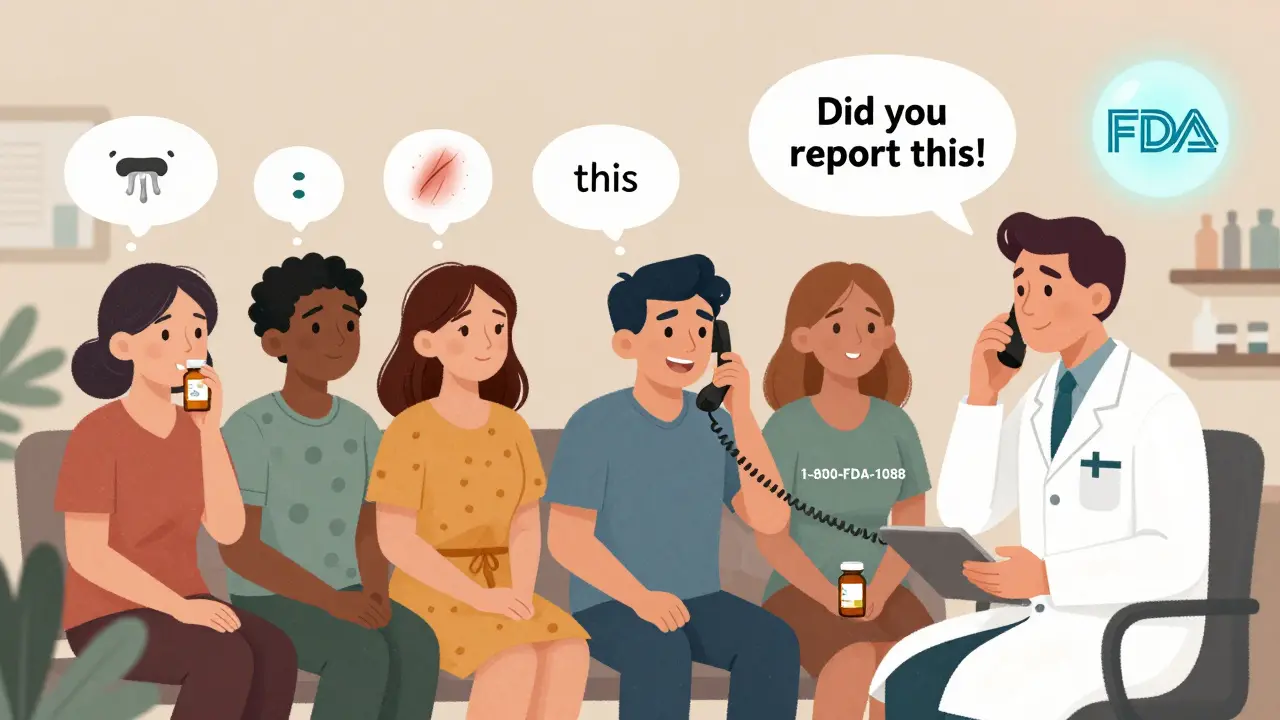
Every pill, patch, inhaler, or supplement you take affects your body. When you’re on five or more medications, the risk of harmful interactions, side effects, or wrong dosages goes up fast. A medication review isn’t just a check-up-it’s a safety net. It’s when your doctor or pharmacist sits down with you to look at everything you’re taking, not just the prescriptions, and asks: Is this still helping? Is it safe?
Many people don’t realize that skipping a medication review can lead to serious consequences. Some clinics stop issuing refills entirely if you haven’t had a review in over a year. Others limit your supply to a month until you attend. This isn’t bureaucracy-it’s protection. Medication reviews became standard in the early 2000s because older adults, especially those seeing multiple specialists, were ending up in the hospital from drug clashes. Today, it’s routine for anyone on multiple meds to have one at least once a year.
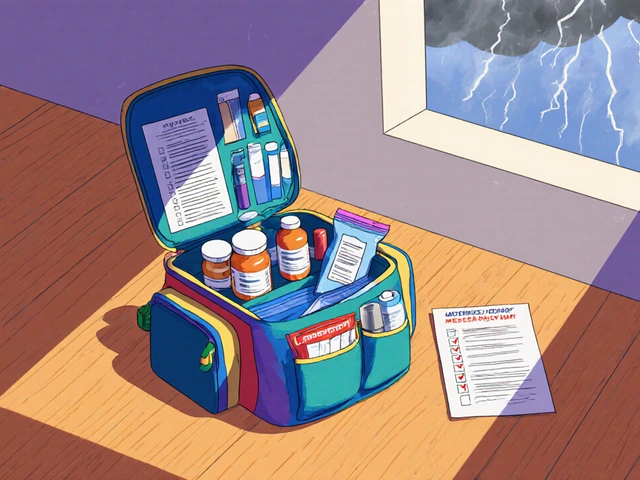
What You Need to Bring
Don’t rely on memory. Don’t say, “I think I take two of those.” Bring it all. Literally everything.
- All prescription medications in their original bottles
- Over-the-counter drugs like ibuprofen, antacids, or sleep aids
- Vitamins, minerals, and herbal supplements-even if you think they’re “natural” and harmless
- Topical creams, eye drops, inhalers, patches, and liquid medications
- Any leftover pills from old prescriptions
The Northern Health and Social Services Board says it plainly: “By medicines we mean anything you take.” That includes the turmeric capsule from the grocery store, the melatonin you bought online, and the cough syrup you used last winter. If you didn’t take it in the last 30 days, still bring it. Seeing the bottle helps your provider spot expired meds or duplicates.
Create a Simple Medication List
Write down each medication in this order:
- Name-exact brand or generic name (e.g., “Lisinopril 10 mg”)
- Dosage-how much you take (e.g., “1 tablet daily”)
- Time of day-morning, night, with food, etc.
- Why you take it-e.g., “for high blood pressure,” “for joint pain,” “for anxiety”
- Prescribing doctor-who wrote the script?
- Side effects you’ve noticed-dizziness, nausea, sleepiness, rashes, mood changes
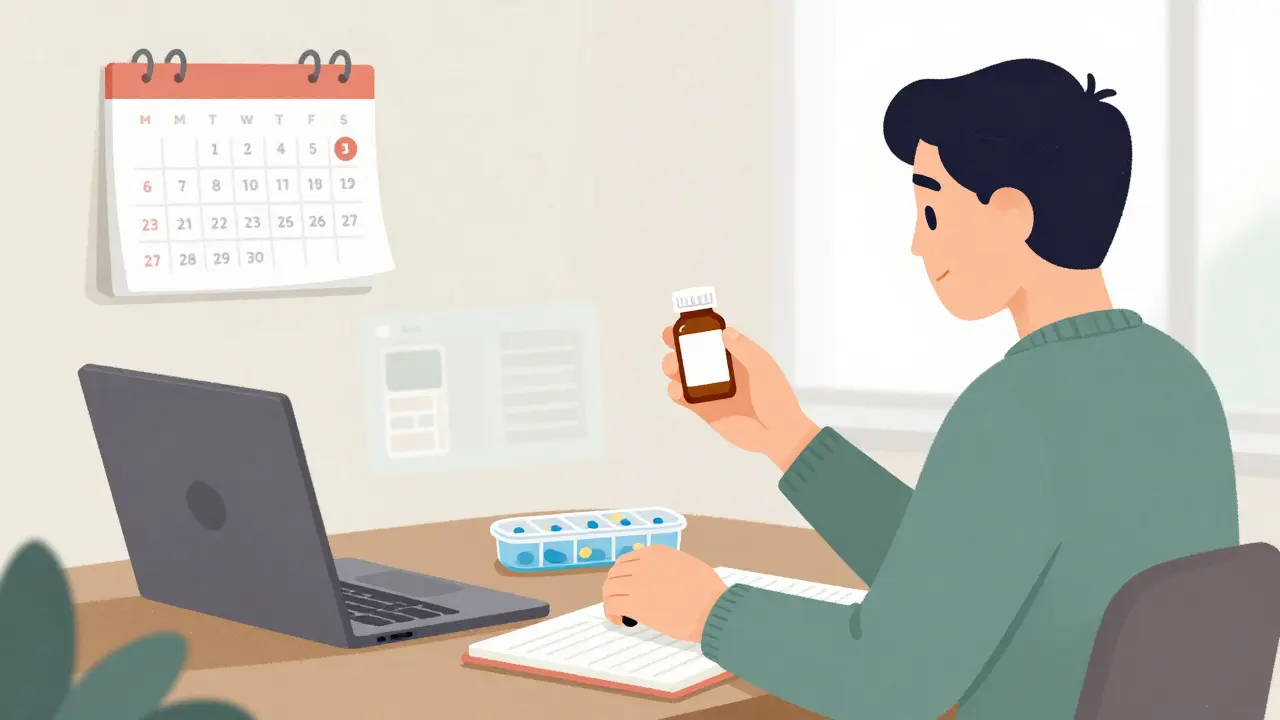
Use a notebook, phone notes, or a printable template. Don’t skip the side effects. If you’ve felt unusually tired since starting a new pill, write it down. If your stomach’s been upset for weeks, note it. These aren’t complaints-they’re clues.
For people with Parkinson’s, timing is critical. A 15-minute delay in taking levodopa can mean the difference between walking and being stuck. Write down exact times: “7:00 AM, 10:00 AM, 1:00 PM, 4:00 PM.” If you use a pill organizer, bring it too.
Think About Your Goals
What do you want from your medications? Are you trying to:
- Reduce dizziness so you don’t fall?
- Get better sleep?
- Feel less pain so you can walk the dog?
- Stop taking something that makes you nauseous?
Write down one or two priorities. This helps your provider focus. A medication review isn’t just about checking boxes-it’s about improving your life. If you’re taking five pills for blood pressure, but your real goal is to stop feeling dizzy when you stand up, say that. That’s the conversation that leads to changes.
Prepare Your Questions
Don’t wait until the end to remember what you wanted to ask. Write them down ahead of time. Here are common ones:
- Is this medication still necessary?
- Could any of these be causing my fatigue/constipation/brain fog?
- Is there a cheaper or simpler version?
- Are there non-drug options I should try?
- What happens if I stop this one?
- Do any of these interact with my supplements?
Don’t be afraid to ask if something feels off. If you’ve been taking a pill for years and suddenly feel worse, that’s not normal. Your provider needs to know.
What If You’re Doing a Telehealth Visit?
Virtual appointments are common now-and they require extra prep. Since your provider can’t see your meds, you must show them clearly.
- Set up your phone or tablet on a stand so your hands are free
- Have all your medications laid out on a table in front of you
- Open each bottle one at a time and read the label aloud
- Keep your medication list on screen or in your hand
- Test your camera and mic before the call
- Have a backup device ready in case of tech issues
Parkinson’s UK says this is especially important for remote reviews. Without seeing your pills, your provider can’t spot expired meds, duplicate prescriptions, or incorrect dosing. Your visual checklist becomes their eyes.
What Happens During the Review?
The appointment usually lasts 20 to 45 minutes. Your provider will:
- Go through your list, one by one
- Ask about side effects and how you’re feeling
- Check for interactions between drugs and supplements
- Look for pills you don’t need anymore
- Discuss if any doses can be lowered or switched
- Explain why each medication is still being used
They might say, “You’re taking two different painkillers that do the same thing.” Or, “This blood pressure med makes you dizzy-let’s try something else.” Or, “You’ve been taking this antidepressant for three years. Are you still feeling low?”
You’re not just a patient here-you’re part of the team. If you disagree with a recommendation, say so. You have the right to understand why each drug is prescribed.
What to Do After the Appointment
Don’t assume everything is done when you walk out.
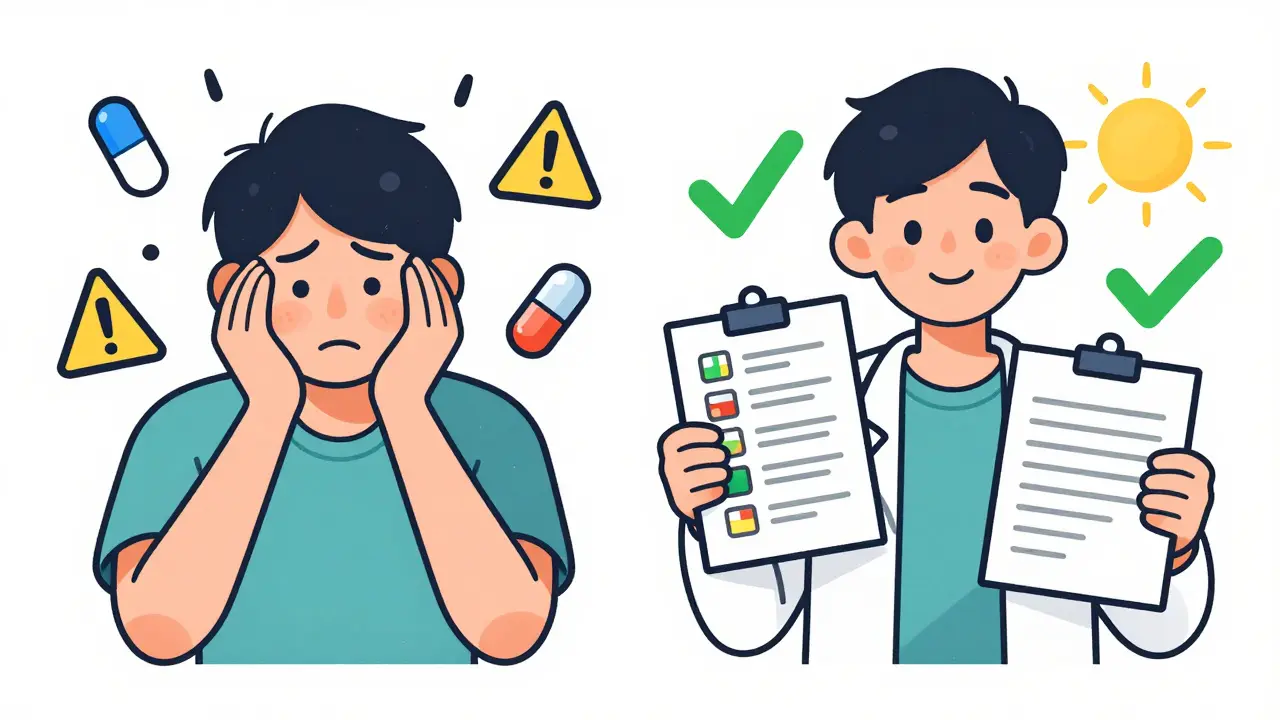
- Ask for a written summary of changes
- Confirm which meds to stop, start, or change
- Ask when to follow up
- Update your personal medication list right away
- Tell your pharmacy about any changes so they don’t refill something you’re stopping
Some people stop taking a med because they thought it was “done,” only to get sick later. Make sure you know exactly what’s changed and why.
What If You Can’t Get to the Clinic?
If you have trouble leaving home because of mobility issues, chronic illness, or lack of transport, ask about home visits. Some clinics, especially in rural areas, offer them. The Northern Health and Social Services Board says you need to request this when booking-don’t wait until the day before.
Some pharmacies also offer phone or video consultations with clinical pharmacists. These are free in many NHS and Medicare systems. Ask your doctor if this is an option.
What Happens If You Don’t Show Up?
It’s not just about missing an appointment. Some clinics have strict policies. After sending three reminders, they may:
- Limit your prescriptions to a 30-day supply
- Stop renewing refills until you attend
- Require you to schedule before any future prescriptions are issued
This isn’t punishment. It’s because unreviewed medication regimens lead to hospitalizations. One study found that 30% of medication-related ER visits in older adults were preventable with a simple review. Your provider isn’t being harsh-they’re trying to keep you safe.
Final Tip: Make This a Habit
Don’t wait for a letter from your clinic. Set a reminder in your phone for once a year. Update your list every time you get a new prescription or stop a pill. Keep the list in your wallet, phone, or with a family member. If you ever have an emergency, first responders need to know what you’re taking. A medication review isn’t a one-time task-it’s part of staying healthy long-term.




12 Comments
This is so needed! I forgot my meds list last time and ended up getting confused with my blood pressure pills. Took me weeks to sort it out. Bring everything, even that random gummy vitamin you take because your cousin swears by it.
I just did my first med review last week and honestly? Life changing 😊 I brought every bottle including the expired cough syrup from 2020 and my pharmacist actually caught a duplicate! I felt so seen
I can't believe how many people don't realize that supplements aren't regulated like prescriptions... I had a client who was taking 17 different herbs and didn't know half of them interacted with her heart meds. Please, please bring everything. Even the 'natural' stuff. It's not a judgment, it's a safety net.
There's a philosophical weight to medication that most people ignore. We treat pills like neutral tools, but they're extensions of our bodies' negotiations with time, decay, and control. Each bottle is a silent contract between biology and bureaucracy. When we skip reviews, we're not just neglecting procedure-we're abandoning the dialogue between self and system. The body remembers every dose. The system rarely does.
Bring the bottles. Seriously.
The detail about Parkinson’s timing is critical. I’ve seen patients lose mobility not because their meds stopped working, but because the rhythm was off by 20 minutes. The brain’s dopamine clock doesn’t care about your schedule. If you’re on levodopa, treat it like insulin-precision matters. And don’t assume your pill organizer is accurate; I’ve found misaligned doses in 40% of them during reviews. Bring the actual organizer, not just the list.
This guide is cute. But let’s be real-this entire system is designed to keep you dependent. Doctors don’t want you to get better. They want you to keep coming back. They profit from your pills. Why do you think they make you bring every bottle? To make you feel guilty for not taking them all. You’re being manipulated. Ask yourself: who really benefits from your lifelong medication routine?
I can't believe people still fall for this. You think your doctor actually cares? They're just checking boxes so they don't get sued. Half the time they don't even look at your supplements-they just nod and say 'keep taking them.' And don't get me started on the pharmacy-they'll refill something you stopped two years ago because their system is a glitchy mess. This whole 'review' is theater. You're better off just quitting everything and going keto.
I don't trust this. Why does the government care so much about my pills? Who's tracking this data? Are they linking it to my Social Security? My insurance? My voting record? I read somewhere that the CDC uses med lists to predict who's 'at risk' for 'social dependency.' I'm not bringing anything. I'll take my chances. I'm not a lab rat.
I brought my meds to my review and the pharmacist asked about my CBD oil. I said I got it from a guy in the parking lot. She just stared at me. Then she said 'honey, I'm not judging'... but I swear she was. I'm not taking that stuff anymore. And I'm not going back. She made me feel like a junkie for using something that helped my anxiety.
I’m from a country where medication reviews aren’t common, and I didn’t realize how much we take for granted here. In my home country, people refill prescriptions for years without ever talking to a provider. I had a friend who was taking antidepressants for 12 years without a single check-in. She didn’t know they were causing her tremors. I showed her this guide. She cried. It’s not just about safety-it’s about dignity. You deserve to know why you’re taking what you’re taking.
I want to thank the author for writing this. As a nurse who coordinates med reviews for elderly patients, I see how much fear and confusion surrounds this process. Many patients think they’re being punished for forgetting a pill or taking something 'wrong.' But this isn’t about blame-it’s about collaboration. The most powerful moment in every review is when someone says, 'I didn’t know I could ask to stop this.' You’re not a burden. You’re a partner. Keep asking. Keep showing up. Your life matters more than the script.