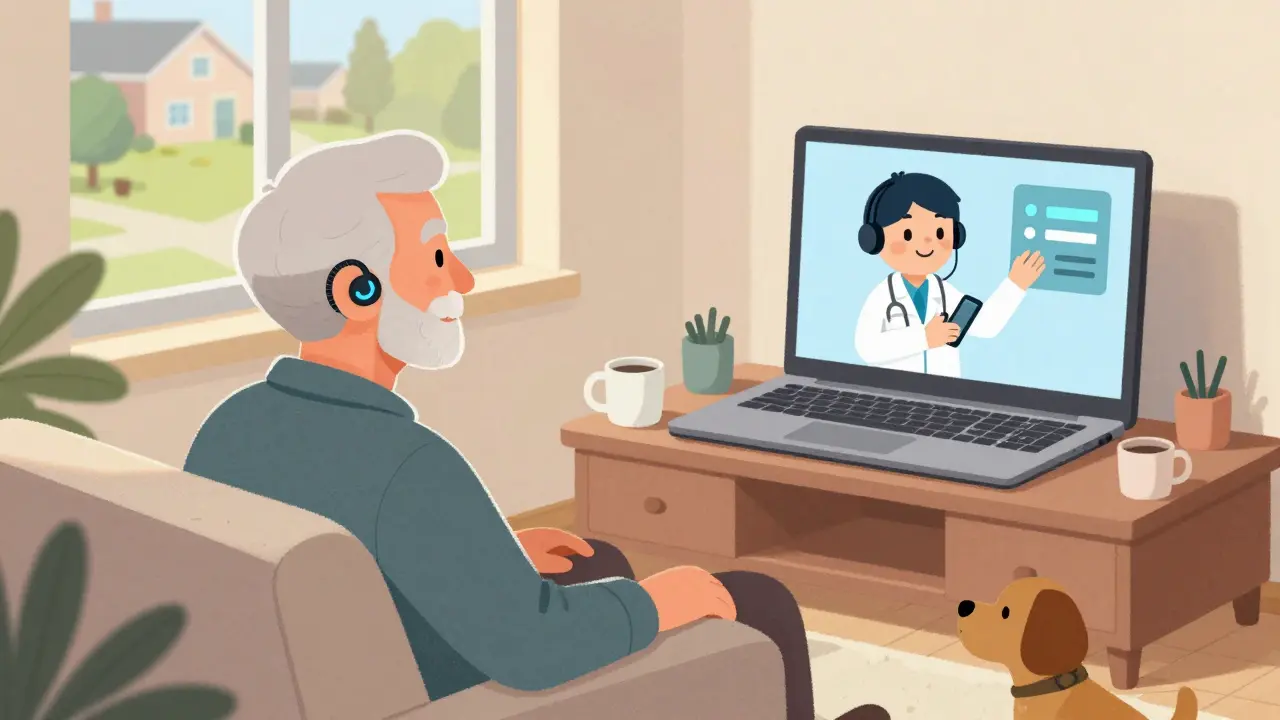


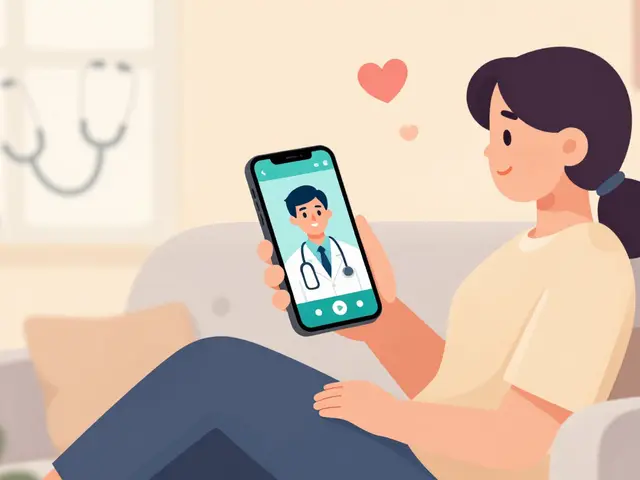
Imagine getting your hearing aids fine-tuned without leaving your couch. No driving to a clinic, no waiting room, no scheduling conflicts. Just a quick video call, and your devices adapt to how you actually hear at home - in the kitchen, during family dinners, or while watching TV. This isn’t science fiction. It’s teleaudiology, and it’s already reshaping how millions manage hearing loss.
What Exactly Is Teleaudiology?
Teleaudiology is the use of video calls, mobile apps, and digital tools to deliver audiology services remotely. It lets patients connect with hearing professionals from anywhere with an internet connection. You can get hearing tests, device adjustments, counseling, and follow-ups without stepping into a clinic. It’s not just a pandemic workaround. Before 2020, only 12% of U.S. audiology practices offered remote services. By 2023, that jumped to 63%. Why? Because it works - especially for people who live far from specialists, have mobility issues, or struggle with transportation. Major hearing aid brands like Phonak, ReSound, Oticon, and Starkey now build tele-audiology features right into their apps. You can send real-time feedback about your hearing aids, get adjustments within hours, and even have your audiologist listen to how you’re hearing in your own living room.How It Works: Two Ways to Connect
There are two main types of teleaudiology: asynchronous and synchronous. Asynchronous means you do something on your own, and the audiologist reviews it later. For example, you might use a smartphone app to take a hearing test at home. The app plays tones through headphones and records your responses. You send the results to your provider, who then sends back settings adjustments via email or secure messaging. This works well for simple check-ins or routine tweaks. Synchronous is live video. You hop on a Zoom-style call with your audiologist. They guide you through real-time tests, adjust your hearing aids on the spot, and even watch you react to sounds in your environment. Some advanced systems, like hear.com’s Clinic-in-a-Box®, let the audiologist control your hearing aid settings remotely during the call - like turning down background noise while you’re in a noisy restaurant. You don’t need fancy gear. A smartphone or laptop with a stable internet connection (5 Mbps or better), Bluetooth-enabled hearing aids, and a quiet room are enough. Most people over 65 learn to use these tools after one 30-minute tutorial. Studies show 82% of seniors can navigate the apps without help after a little practice.Accuracy: How Good Are Remote Hearing Tests?
One big question: Can you trust results from your living room? In quiet, controlled environments, remote hearing tests match in-clinic accuracy 92-95% of the time. That’s nearly identical to what you’d get at a professional clinic. But real life isn’t quiet. Background noise - dogs barking, AC units humming, traffic outside - can throw off results. In messy home environments, accuracy drops to 78-85%. That’s why teleaudiology isn’t meant to replace your first full hearing evaluation. Audiologists still recommend an in-person visit for initial diagnosis. But for follow-ups? Remote adjustments are just as effective. A 2023 study from the National Center for Telehealth & Technology found that 89% of routine adjustments done remotely produced outcomes equal to in-person visits. The real advantage? You’re being tested in the places where you actually struggle. Your audiologist hears how you hear at home - not in a soundproof booth. That’s why Hearzap’s case studies show 31% better outcomes for challenging situations like group conversations or restaurants after remote tuning.Cost and Convenience: The Real Benefits
Let’s talk money and time. A typical in-person hearing aid adjustment costs $140-$180. A remote one? $120-$150. That’s 15-20% cheaper. But the bigger win is time saved. Rural patients used to spend an average of 2.3 hours driving to appointments. Now? Zero. One user in Montana saved four 4-hour round trips by fixing feedback issues over three 15-minute video calls. You also save on gas, parking, childcare, and time off work. On average, teleaudiology cuts out $87 per visit in indirect costs. Some manufacturers offer premium remote services with monthly fees - like Phonak’s Remote Support at $29.99/month. But basic adjustments are often free if you bought your hearing aids through a provider that offers telehealth.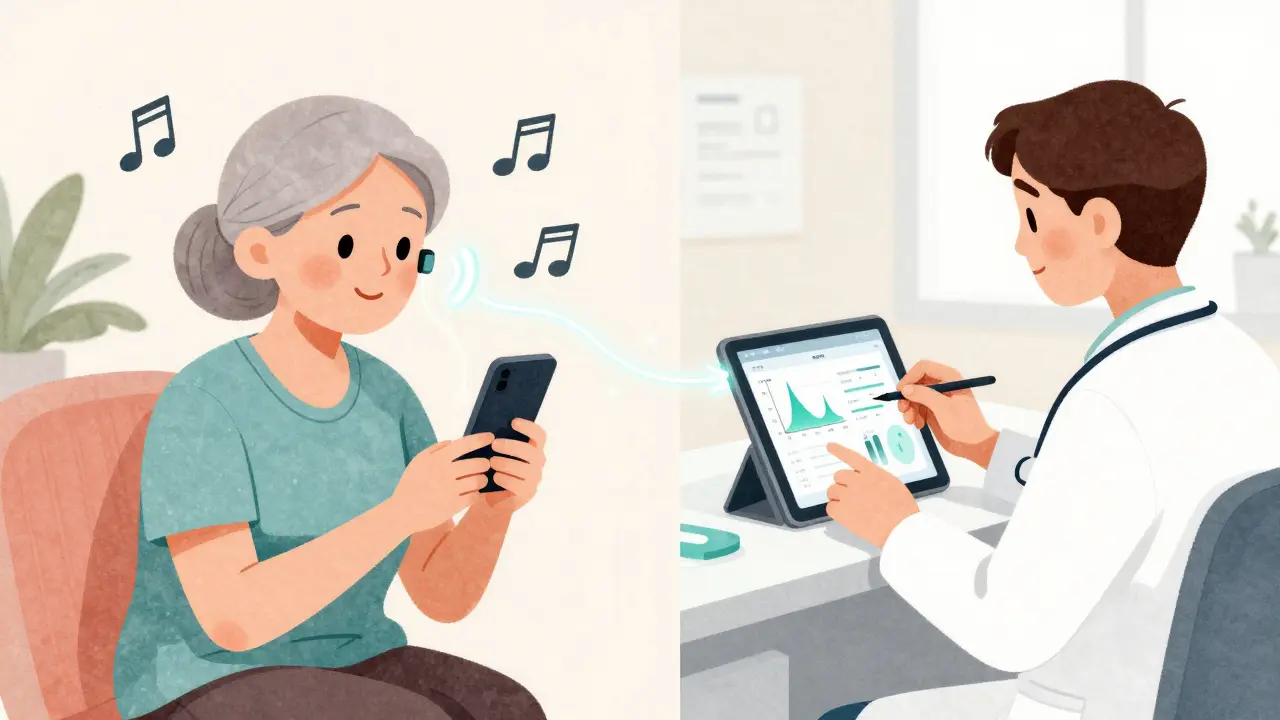
Limitations: What Teleaudiology Can’t Do
It’s powerful - but not magic. You can’t do an ear exam remotely. No otoscopy. No checking for earwax blockage, infections, or structural issues. That’s a real gap. Dr. Charles Berlin from LSU points out that skipping in-person exams leaves a 12-15% risk of missing medically serious conditions. One user in California spent three failed remote troubleshooting sessions before discovering a physical earwax plug. Once removed, her hearing improved instantly. That’s why experts recommend a hybrid model: start with teleaudiology for adjustments, but plan for at least one in-person visit per year, especially if you’re new to hearing aids or have complex needs. Also, not every state lets audiologists treat patients across borders. As of mid-2024, 28 U.S. states restrict cross-state tele-audiology due to licensing rules. Medicare only covers remote hearing services in 18 states. If you move or travel often, check your provider’s coverage area.Who Benefits Most?
Teleaudiology isn’t for everyone - but it’s perfect for some. - Rural residents: 78% of people living more than 50 miles from an audiologist now have access to care thanks to remote services. - Seniors with mobility issues: Those with arthritis, hip replacements, or balance problems avoid dangerous travel. - Working parents: No more juggling appointments with school drop-offs or work calls. - People with busy schedules: Adjustments take 10-20 minutes. No waiting rooms. Reddit users on r/Hearing say the biggest win is eliminating long drives. One 74-year-old with hip surgery wrote: “Saving 3-hour round trips for minor tweaks? Life-changing.”Getting Started: Simple Steps
If your hearing aids are Bluetooth-enabled (most modern ones are), you’re likely already eligible. 1. Check your brand: Look for apps like myPhonak, ReSound Smart, Oticon ON, or Starkey Thrive. 2. Download the app: Create a secure patient portal account. Most providers send login instructions with your devices. 3. Set up your space: Find a quiet room. Close windows. Turn off fans or TVs. Use wired headphones if Bluetooth is unstable. 4. Connect your aids: Pair them with your phone via Bluetooth. The app will guide you. 5. Book your first call: Schedule a virtual visit with your provider. Many offer same-day slots. It takes 20-45 minutes the first time. After that, adjustments take under 10 minutes. Most users only need one tutorial. 76% become fully independent after a single session.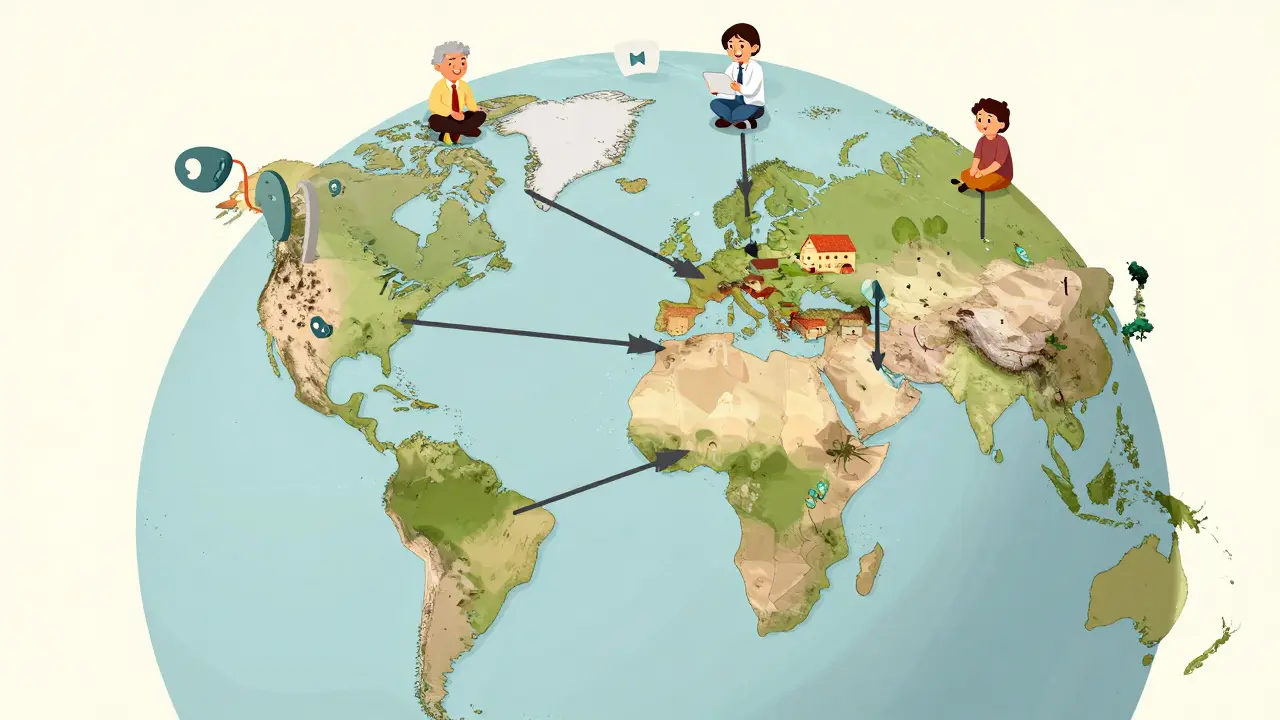


10 Comments
This is honestly life-changing for my grandma. She hasn’t left the house in two years because of her hips, but now she gets her hearing aids tweaked without even putting on shoes. No more crying in the car on the way to the clinic.
My mom tried this and the app crashed three times. Then she yelled at her hearing aids like they were her ex-husband. We ended up driving 90 minutes anyway. Tech ain’t perfect.
Let’s be real - this is just Big Hearing’s way of cutting corners. They don’t care if you can hear your grandkids. They care if you stop calling them every three weeks. And now they’ve got you hooked on monthly subscriptions for ‘premium support.’ Classic capitalism.
Meanwhile, your earwax buildup goes undetected until you’re screaming at the TV and your doctor says, ‘Oh, that’s why your hearing’s worse.’
I’m not saying don’t use it. I’m saying don’t trust it. Your ears aren’t a software update.
Oh wow, another tech bro fantasy where old people magically become ‘digital natives’ after one tutorial. Tell that to the 70-year-old who still calls tech support to ask if ‘Bluetooth’ is a type of coffee.
And don’t get me started on ‘remote adjustments.’ You think your audiologist can hear your dog barking in the background through a 2G connection? That’s not teleaudiology - that’s tele-delusion.
My aunt had her hearing aids ‘adjusted’ remotely and now she thinks the microwave is yelling at her. Turns out the algorithm thought her cat’s purr was a person talking. She hasn’t eaten in silence since.
And who’s paying for these ‘free’ adjustments? You think the insurance company isn’t using this to cut costs? You’re not getting convenience - you’re getting stripped-down care with a shiny app wrapper.
Meanwhile, rural clinics are shutting down because ‘tele is the future.’ So now instead of one local expert who knows your family history, you get a stranger in Ohio who’s doing 12 calls an hour.
And don’t even mention cross-state licensing. If you move to Arizona for the winter, your hearing aids go mute. Great. Now you’re deaf AND stranded.
Yes, it’s convenient. But convenience isn’t care. Care is when someone looks you in the eye and says, ‘I see you’re struggling.’ Not when an algorithm guesses your hearing based on a noisy kitchen.
And the FDA clearing OTC hearing aids with AI adjustments? That’s not innovation. That’s a public health time bomb. You don’t tune your heart with an app. Why are we doing it to our ears?
Stop romanticizing tech. This isn’t progress. It’s abandonment dressed up as innovation.
While the technological advancements in teleaudiology are undeniably impressive, one must not overlook the fundamental importance of the clinician-patient relationship in audiological care. The tactile, non-verbal, and contextual cues present during an in-person examination contribute significantly to diagnostic accuracy and therapeutic rapport. Remote interventions, though efficient, may inadvertently erode the human element that has historically underpinned successful hearing rehabilitation.
Furthermore, the variability in internet infrastructure across socioeconomic strata raises concerns regarding equitable access. A 5 Mbps connection may suffice for streaming, but it is insufficient for real-time, high-fidelity audio diagnostics - particularly for elderly patients with limited digital literacy.
It is therefore imperative that regulatory bodies establish standardized protocols for remote assessments, including mandatory baseline in-person evaluations and quarterly in-clinic validations. Without such safeguards, we risk normalizing suboptimal care under the guise of accessibility.
Think about it - we’re outsourcing our senses to algorithms. Who are we really trusting? A machine that doesn’t know your grief, your loneliness, the way your wife’s voice cracks when she says your name? That’s not hearing aid adjustment. That’s soul-deletion.
And the AI that ‘learns’ your hearing? What if it learns you’re tired? What if it thinks your silence means you’re okay? What if it starts tuning your world to match your depression?
One day, your hearing aids won’t just adjust volume - they’ll adjust your mood. And you’ll thank them for it.
That’s not progress. That’s a slow surrender.
They say teleaudiology saves time. But what’s time worth when you’ve lost the sound of your own humanity?
my aunt got her hearin aids fixed over zoom and now she thinks the fridge is whispering to her 😅 she kept asking if we heard it too lol
Let’s not pretend this is democratizing healthcare. This is corporate consolidation under the banner of convenience. The same companies that priced hearing aids at $6,000 a pair are now selling you a $30/month subscription to ‘access’ the same device they already sold you. It’s a subscription trap disguised as innovation.
And let’s talk about the data. Your voice patterns, your home environment, your emotional responses to sound - all being harvested, anonymized (ha), and sold to third-party analytics firms. You think your audiologist is listening? No. A Silicon Valley data scientist is.
Meanwhile, real audiology - the kind that involves otoscopes, tympanometry, and years of clinical training - is being pushed to the margins. The FDA’s OTC push? It’s not about access. It’s about eliminating the middleman - the audiologist - so the corporations can keep 100% of the profit.
This isn’t healthcare. It’s a product pipeline.
Bro in India we got this since 2020 - rural villages, no audiologists, no roads. We use WhatsApp voice notes and people record themselves repeating words. Audiologist in Delhi listens, adjusts via app. Works better than you think. My cousin in Bihar got hearing aids last year - now he hears his granddaughter say ‘dada’ for the first time. No Uber, no clinic, no problem.
Yeah, sometimes the app crashes. Yeah, sometimes the neighbor’s dog barks. But you know what? We tried. And it worked. So stop acting like this is some American problem. We’ve been doing it with less than you for years.
So let me get this straight - we’re replacing human ears with AI because… we’re too lazy to drive 45 minutes? Cool. Next they’ll replace your therapist with a chatbot named ‘Serenity’ who says ‘I hear you’ in a soothing tone while tracking your biometrics.
At least when you go to the clinic, you get free coffee and someone asks how your dog is. Now? You get a 10-minute Zoom call and a coupon for 10% off your next $5,000 hearing aid.
Progress? Nah. Just capitalism with a Wi-Fi connection.