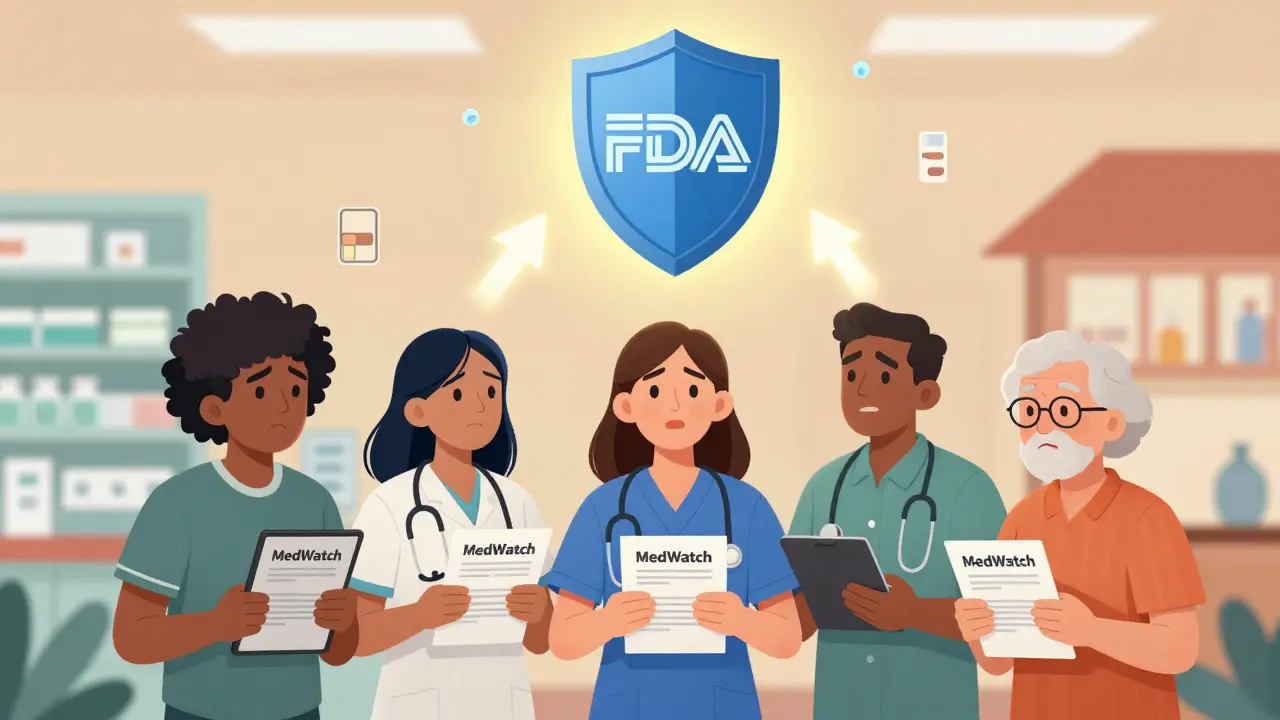

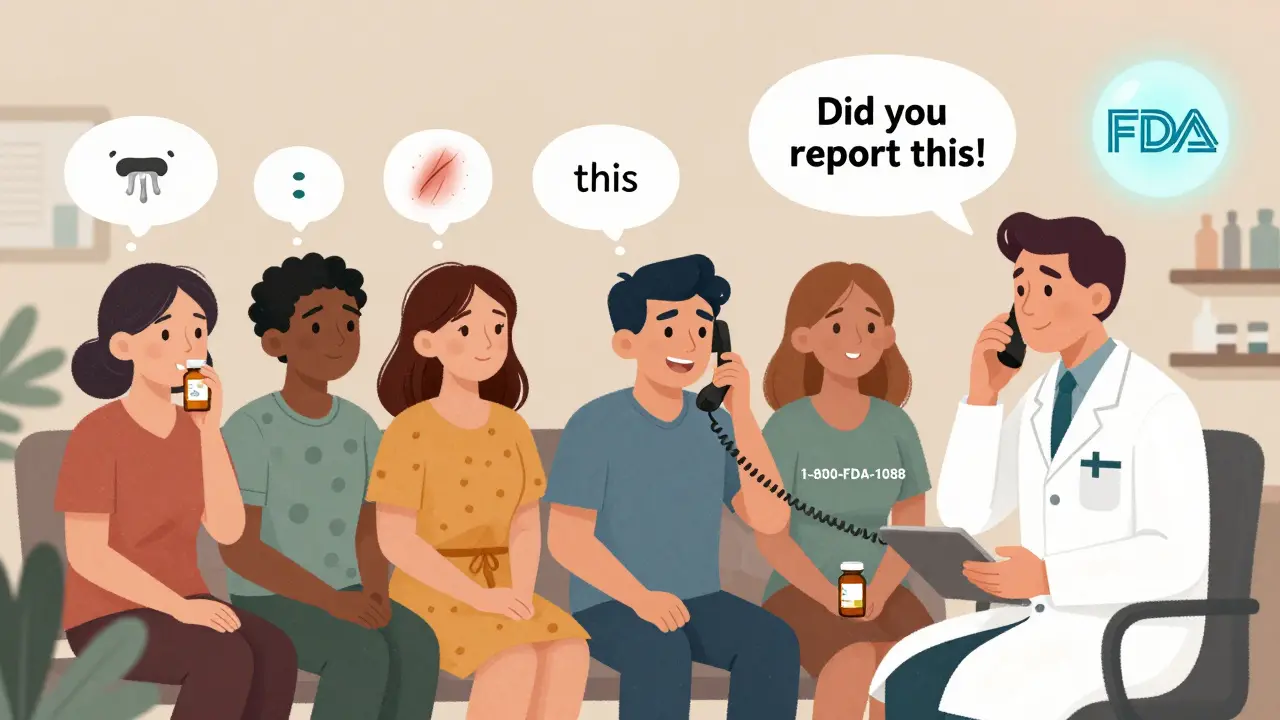
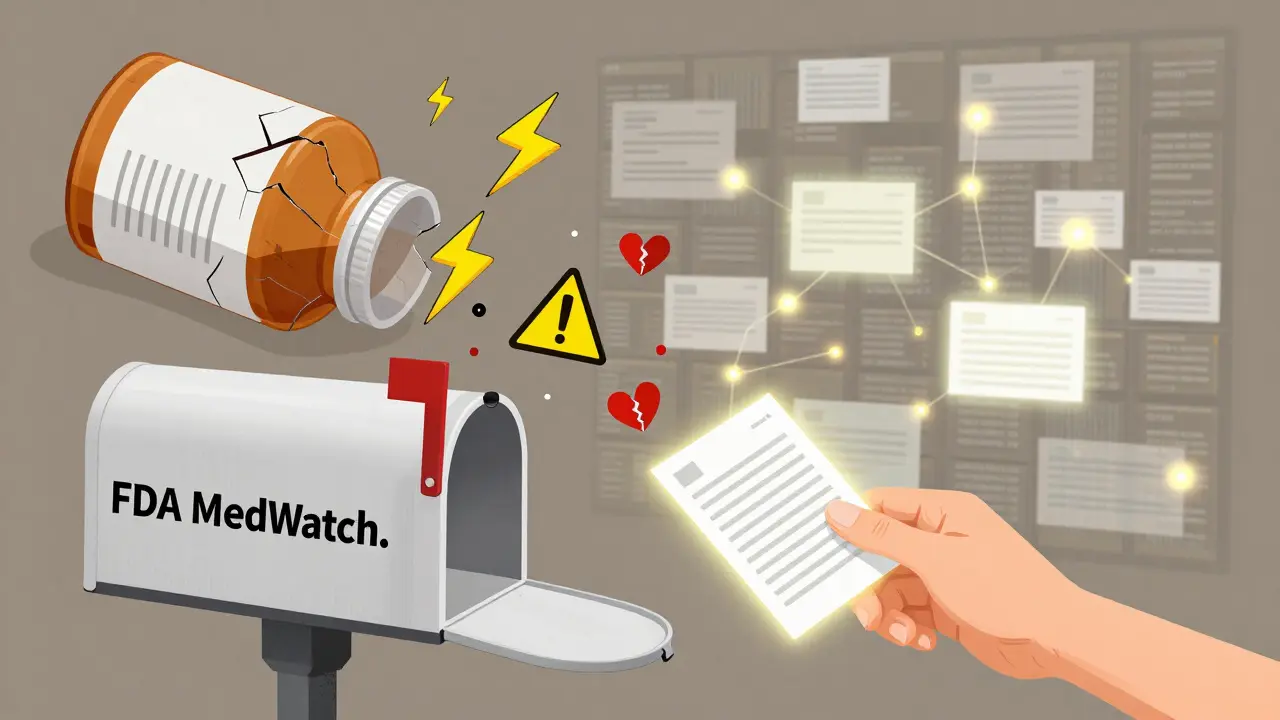
Every year, over 1.3 million reports of bad reactions to medicines and medical devices flood into the FDA. Most of these come from drug companies. But the rest? They come from people like you-doctors, nurses, pharmacists, and patients who noticed something wrong and decided to speak up. That’s the power of MedWatch. It’s not just a form on a website. It’s the FDA’s earliest warning system for dangerous drugs that slipped through clinical trials.
What Exactly Is MedWatch?
MedWatch is the U.S. Food and Drug Administration’s official system for collecting reports of harmful side effects from medicines, medical devices, dietary supplements, and even some foods and cosmetics. It launched in 1993, long before smartphones or electronic health records. But even today, it’s still the main way the FDA finds out when something on the market turns out to be more dangerous than expected.Think of it like a smoke alarm for drug safety. Clinical trials test drugs on thousands of people. But real life is messier. Millions use the same drug. People take it with other meds. They have different health conditions. That’s when hidden risks show up. MedWatch catches those signals-sometimes before anyone else notices.
The system runs on two types of reports: mandatory and voluntary. Drug makers and hospitals must report serious problems. But doctors, patients, and caregivers? They can report voluntarily. And that’s where the real impact happens. Without those personal reports, the FDA wouldn’t know about rare but deadly reactions like liver failure from a common painkiller or sudden heart rhythm problems from an antibiotic.
Who Should Report and When?
You don’t need to be a doctor to report. If you’re a patient, caregiver, pharmacist, nurse, or clinician-and you see something unusual after someone takes a medication or uses a device-report it. You don’t have to be sure it was the drug’s fault. The FDA says: “If you’re unsure, report it anyway.”Here’s what counts as reportable:
- Death
- Hospitalization (or prolonging a hospital stay)
- Disability or permanent damage
- Life-threatening reaction
- Birth defect from a drug taken during pregnancy
- Any serious reaction not listed in the drug’s official warning label
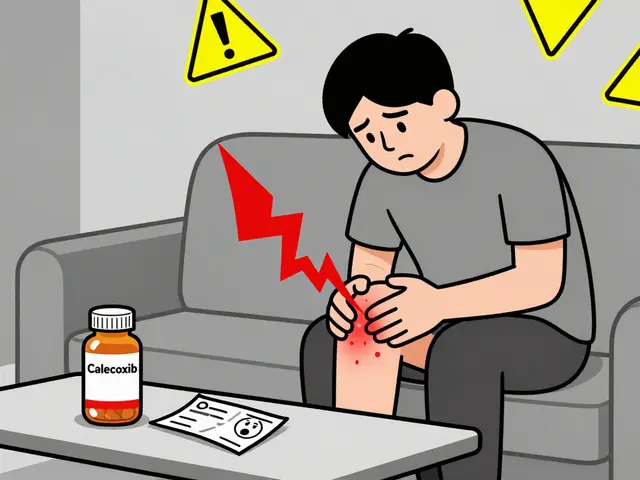
Examples? A 72-year-old woman develops sudden, severe skin peeling after starting a new blood pressure pill. A teenager has a seizure after taking an over-the-counter cold medicine for the first time. A diabetic patient goes into kidney failure after using a new supplement marketed as “natural insulin support.” These aren’t common. But they’re serious. And they need to be reported.
How to File a Report: The Three Forms
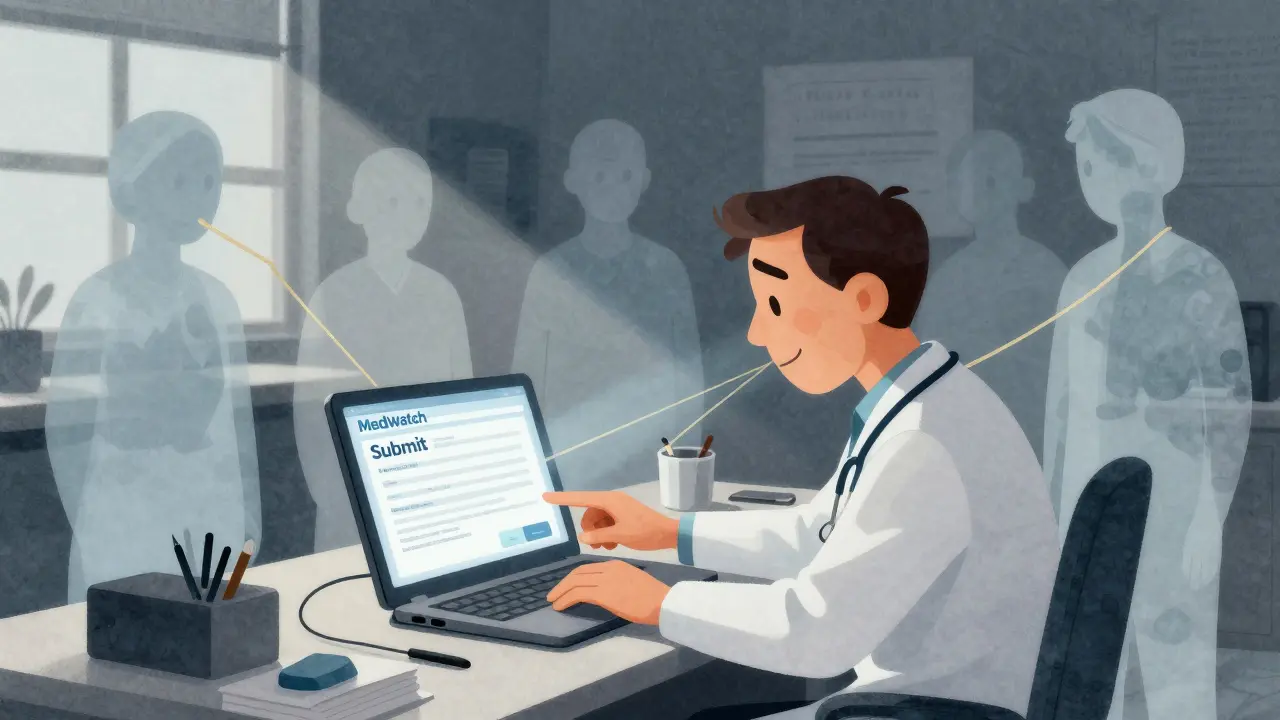
The FDA offers three simple forms, all free and available online. You don’t need special training.- FDA Form 3500 - For healthcare professionals. This is the most detailed version. It asks for medical history, lab results, timing of the reaction, and what was done to treat it. Takes about 15-20 minutes.
- FDA Form 3500B - For patients and consumers. Written in plain language. No medical jargon. Available in English and Spanish. You can fill it out on your phone. Most people finish in under 20 minutes.
- FDA Form 3500A - Only for manufacturers, importers, and hospitals. They’re legally required to use this one.
You can submit reports online at fda.gov/medwatch, by phone (1-800-FDA-1088), or by mail. Online is fastest. You’ll get a confirmation email. No account needed.
What Information Do You Need?
You don’t need to be a medical expert to fill out the form. But having these details handy helps:- The name of the drug, device, or supplement (including brand and generic names)
- When the person started taking it
- When the reaction started
- How long it lasted
- What happened (describe symptoms clearly: “rash that spread,” “chest pain,” “confusion,” etc.)
- What was done to treat it (e.g., “went to ER,” “stopped the drug,” “received IV fluids”)
- Outcome (did they recover? Are they still sick? Did they die?)
- Other medications or supplements they were taking
- Age, sex, and basic medical history (if known)
Don’t worry if you don’t have all the details. The FDA says incomplete reports are still valuable. Better to report with gaps than to stay silent.
Why Do So Few People Report?
Here’s the hard truth: only about 6% of serious adverse reactions ever make it to MedWatch. That means 94% vanish into the noise.Why? Time. Doctors say they don’t have 15 minutes during a packed clinic day. Patients don’t know how. Some think, “It’s probably just a side effect.” Others assume someone else already reported it.
A 2023 survey of 1,200 U.S. physicians found 68% rarely or never report. The biggest reason? Uncertainty. “Was it the drug? Or was it the patient’s diabetes?”
That’s exactly why the FDA says: “You don’t need to prove causation.” Your report doesn’t have to be a scientific paper. It just has to be a real event. The FDA’s data scientists will sort out the rest.
What Happens After You Report?
Your report goes into the FDA Adverse Event Reporting System (FAERS), a massive database with over 15 million entries since 1968. Analysts look for patterns. If 10 people report the same rare heart rhythm problem after taking a new cholesterol drug, that’s a signal. The FDA might:- Update the drug’s warning label
- Require a new boxed warning (the strongest type)
- Order the company to run a new safety study
- Issue a public alert
- In extreme cases, pull the drug from the market
But here’s the catch: you’ll likely never hear back. Over 87% of reporters say they got no follow-up. That doesn’t mean your report didn’t matter. It means the system works silently in the background. You’re helping protect someone you’ll never meet.
How MedWatch Compares to Other Systems
The European Union uses EudraVigilance. Canada has its own system. But in the U.S., MedWatch is the only one that lets patients report directly. Other countries rely mostly on doctors and hospitals.MedWatch also covers more than just drugs. Dietary supplements? Yes. Medical devices like insulin pumps or hip implants? Yes. Even serious allergic reactions to food or cosmetics? Yes. That’s unique. Most systems focus only on prescription drugs.
Still, MedWatch isn’t perfect. It’s manual. It’s slow. AI tools can now scan social media and electronic records to find safety signals faster. The FDA is testing AI to help sort through the 1.3 million reports each year. But until those tools are fully rolled out, human reports are still the backbone.
Real Impact: Stories Behind the Numbers
In 2010, a few reports of severe skin reactions linked to a common arthritis drug started piling up. No one thought much of it at first. Then more came. Then more. The FDA reviewed the data, found a pattern, and added a black-box warning. Today, that drug comes with a clear alert: “Stop immediately if you develop blisters or peeling skin.”That warning saved lives. And every single report that led to it came from a patient, a nurse, or a pharmacist who took 15 minutes to click a button.
Another case: a popular OTC sleep aid was linked to confusion and falls in older adults. Reports trickled in. The FDA reviewed them, updated the label, and added a warning for people over 65. Now, pharmacists warn customers before they buy it.
These aren’t rare. They happen every year. But they only happen because someone reported.
How You Can Help Improve the System
You can do more than just report. You can spread the word.- Keep a printed copy of the MedWatch form in your medicine cabinet or pharmacy waiting room.
- When you’re prescribed a new drug, ask: “What side effects should I watch for?” Then, if something bad happens, report it.
- If you’re a healthcare provider, make reporting part of your routine. Even one report a month adds up.
- Share the link with patients. Say: “If you feel something strange after taking this, go to fda.gov/medwatch. It only takes 15 minutes.”
The FDA’s 2023-2027 plan includes a new “MedWatch Plus” initiative to make reporting easier-mobile apps, automatic EHR integration, alerts when patients report side effects. But none of that matters if people don’t use it.
MedWatch isn’t broken. It’s underused. And that’s the real danger.
Final Thought: Your Report Could Save a Life
You might think, “I’m just one person. What difference can I make?”Consider this: In 2022, the FDA approved 37 new drugs-the third-highest number ever. More drugs mean more chances for hidden dangers. The system can’t catch them all. It needs you.
Reporting to MedWatch isn’t complicated. It doesn’t cost anything. It doesn’t require a medical degree. All it takes is noticing something wrong-and choosing to speak up.
That’s how safety changes. Not through laws or audits. But through people who care enough to report.
So if you see something-say something. It’s that simple.

11 Comments
MedWatch is one of those systems that works because people actually use it. I’ve filed a few reports after seeing weird reactions in my clinic-mostly older patients on new combos. The form’s not perfect, but it’s the only game in town. No one’s coming to save us with AI yet. We’ve got to be the sensors.
I reported my mom’s rash after she started that new blood pressure med. Took me 12 minutes on my phone. Got an auto-reply saying ‘thank you.’ Didn’t hear back. But I still did it. What’s the alternative? Let someone else get hurt because we were too lazy?
My pharmacy has a printout of the 3500B form taped to the counter. I hand it to patients when they pick up anything new. Most don’t read it. But some do. One guy came back a week later saying he caught a reaction early because he remembered the form. Small wins.
Big Pharma knows MedWatch is a joke. They bury the real bad stuff in fine print. The FDA? They’re on the payroll. I’ve seen it. You think your little report changes anything? Nah. It just makes you feel good while they keep selling. Wake up. This whole system’s rigged.
Let’s be clear: the fact that 94% of serious adverse reactions go unreported isn’t a failure of public awareness-it’s a failure of systemic negligence. The FDA’s outdated infrastructure, the lack of integration with electronic health records, the absence of mandatory reporting for non-prescription products, and the complete lack of incentive structures for patients to report-all of these are deliberate policy failures that prioritize corporate liability over human life. This isn’t about individual responsibility; it’s about institutional malfeasance masked as civic duty.
Why are we even talking about this? We’re the only country that lets regular people report drug reactions. Europe? They just let the doctors do it. Canada? Same. We’re overcomplicating it. Just make it mandatory for every script. Done. No forms. No emails. Just auto-send from the pharmacy system. Stop making patients into unpaid FDA interns.
lol i reported my bf’s anaphylaxis after taking that new migraine med and got a form email that said ‘thank u for ur input’ like im some kind of volunteer. meanwhile the drug still sells like candy. the system is a joke. someone needs to sue the fda for false advertising.
Just wanted to say thank you to everyone who reports. 💙 I’m a nurse, and I’ve seen too many patients get dismissed because ‘it’s probably just a side effect.’ Your report might be the one that saves the next person. Don’t doubt it. You’re doing important work. Even if no one thanks you. 🙏
Okay but have you seen how long the 3500B form is? Like, it asks for your blood type, your neighbor’s phone number, and whether you’ve ever had a pet hamster. It’s designed to discourage people. And don’t even get me started on the website-it looks like it was built in 2005 with Geocities code. The FDA doesn’t want reports. They just want to look like they care.
why are you wasting time on this when the real issue is that america lets anyone sell supplements with zero testing. medwatch is just a distraction. fix the root problem
I appreciate the post. I’ve been telling my patients for years: if something feels off after a new med, report it. Doesn’t matter if you’re not sure. I fill out the 3500 for them when they come in. One woman’s report last year helped flag a dangerous interaction with a common diabetes drug. No fanfare. No press. Just quiet, vital work. Keep doing it.